
Showing posts with label Literary Theory. Show all posts
Showing posts with label Literary Theory. Show all posts
Thursday, January 8, 2015
Monday, January 12

Tuesday, January 6, 2015
Tuesday, January 6
1) Why might this course be called "Introduction to Literature"? Haven't you been properly "introduced" to literature already?
2) What do you anticipate will happen during our study of The Lion King and literary criticism/theory?
3) Do you think you are--or have been--a Feminist critic, Marxist critic, or Psychoanalytic critic?
4) How do you anticipate Term Tuesdays will change? (Click "Term Tuesdays" to see the terms laid out for each Tuesday this semester.)
5) Who is this man pictured here?

Friday, March 14, 2014
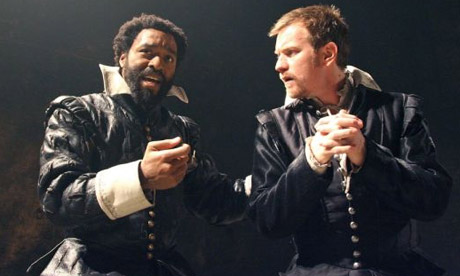
Othello Task--due April 17
OR
Discuss statements on the Othello Anticipation Guide in 300+ words. Why do you dis/agree with them?
Saturday, February 15, 2014
Poetry Blog Task--due March 27
Select another poem by an author in the Google Drive folder I shared with you. This poem may not already be in the Google Drive folder. In 300+ words, analyze, explicate, dissect, translate, and rank--with rationale as to why--this poem above/below the same author's poem/s already in the Google Drive folder.
For instance, find a poem by Anne Sexton at poets.org and juxtapose/rank it against "The Addict."


For instance, find a poem by Anne Sexton at poets.org and juxtapose/rank it against "The Addict."

Thursday, February 13, 2014
Yann Martel In-Class Task February 24
1. Search for a link about Yann Martel. Look for a site
 others might bypass. Read the content carefully.

2. Paste the link here and write a 150+ words summary of the main ideas the link offers.
3. Write a poignant, provocative, thorough question you would like Martel to answer when we are privileged to Skype with him next month on a date TBD during an eighth period--thanks to Erin Buse who assertively tracked him down and asked with great tact and tactic!
Thursday, January 23, 2014
Life of Pi Blog Task--due March 6

“an author who has enriched the human mind, increased its treasure, and caused it to advance a step; who has discovered some moral and not equivocal truth, or revealed some eternal passion in that heart where all seemed known and discovered; who has expressed his thought, observation, or invention, in no matter what form, only provided it be broad and great, refined and sensible, sane and beautiful in itself; who has spoken to all in his own peculiar style, a style which is found to be also that of the whole world, a style new without neologism, new and old, easily contemporary with all time.”
Wednesday, January 1, 2014
Martel's Mastery--due February 13
How is this 93-page exposition particularly masterful? Write 300+ words about the ways Martel develops Pi's character, both covertly and overtly, before the real action actually starts (the ship sinks). In doing so, you must use two Tuesday terms and two literary criticism/theory terms (make these four terms bold by typing them in between these characters: < b >bold </ b >).


Kesey Excerpt--due January 23
Ken Kesey experienced situations most readers wouldn't even consider while dreaming. Type 300+ words about an excerpt--one you give the page number and paragraph number for--that only Kesey could have written. Expound on Kesey's inventiveness, imagination, and authenticity.


Tuesday, December 31, 2013
In-Class Blog Task January 7
Respond to this statement: Professors listen better than teachers.


These are three of my very best.
You will also react to a classmate's ideas about the above statement.
These are three of my very best.
You will also react to a classmate's ideas about the above statement.
Friday, December 21, 2012
Thoughts Thursday--due January 31
Write 300+ words on one of the following options:
1) What Christian allusions/parallels rank as the most poignant for you?
2) What lens(es) help you interpret this novel best? Marxist, Feminist, Freudian--or others you have researched and come to own...
3) What concept we discussed, whether briefly or at length, struck you as particularly fascinating and relevant? Type 300+ words extending our discussion(s) to your life experiences and the world's vastness.

Key Ideas and
Details
Craft and
Structure
Integration of
Knowledge and Ideas
1) What Christian allusions/parallels rank as the most poignant for you?
2) What lens(es) help you interpret this novel best? Marxist, Feminist, Freudian--or others you have researched and come to own...
3) What concept we discussed, whether briefly or at length, struck you as particularly fascinating and relevant? Type 300+ words extending our discussion(s) to your life experiences and the world's vastness.

READING
Key Ideas and
Details
RL.11-12.1 Cite strong and thorough textual
evidence to support analysis of what the text says explicitly as well as
inferences drawn from the text, including determining where the text leaves
matters uncertain.
RL.11-12.2 Determine two or more themes or central ideas of a
text and analyze their development over the course of the text, including how
they interact and build on one another to produce a complex account; provide an
objective summary of the text.
RL.11-12.3 Analyze the impact of the author’s choices regarding
how to develop and relate elements of a story or drama (e.g., where a story is
set, how the action is ordered, how the characters are introduced and
developed).
Craft and
Structure
RL.11-12.4 Determine the meaning of words and phrases as they are
used in the text, including figurative and connotative meanings; analyze the
impact of specific word choices on meaning and tone, including words with
multiple meanings or language that is particularly fresh, engaging, or
beautiful. (Include Shakespeare as well as other authors.)
RL.11-12.5 Analyze how an author’s choices concerning how to
structure specific parts of a text (e.g., the choice of where to begin or end a
story, the choice to provide a comedic or tragic resolution) contribute to its
overall structure and meaning as well as its aesthetic impact.
RL.11-12.6 Analyze a case in which grasping a point of view
requires distinguishing what is directly stated in a text from what is really
meant (e.g., satire, sarcasm, irony, or understatement).
Integration of
Knowledge and Ideas
RL.11-12.7 Analyze multiple interpretations of a story, drama, or
poem (e.g., recorded or live production of a play or recorded novel or poetry),
evaluating how each version interprets the source text. (Include at least one
play by Shakespeare and one play by an American dramatist.)
RL.11-12.9 Demonstrate knowledge of eighteenth-, nineteenth- and
early-twentieth-century foundational works of American literature, including
how two or more texts from the same period treat similar themes or topics.
Range of Reading
RL.11-12.10 By the end of grade 11, read and comprehend
literature, including stories, dramas, and poems, in the grades 11–CCR text
complexity band proficiently, with scaffolding as needed at the high end of the
range.
By the end of grade 12, read and
comprehend literature, including stories, dramas, and poems, at the high end of
the grades 11–CCR text complexity band independently and proficiently.
Thursday, December 13, 2012
Thoughts Thursday--due January 10 and 17
 |
| Louis Althusser |

W.11-12.1 Write arguments to support claims
in an analysis of substantive topics or texts, using valid reasoning and
relevant and sufficient evidence.
- W.11-12.1a Introduce precise, knowledgeable claim(s), establish the
significance of the claim(s), distinguish the claim(s) from alternate or
opposing claims, and create an organization that logically sequences
claim(s), counterclaims, reasons, and evidence.
- W.11-12.1b Develop claim(s) and
counterclaims fairly and thoroughly, supplying the most relevant evidence
for each while pointing out the strengths and limitations of both in a
manner that anticipates the audience’s knowledge level, concerns, values,
and possible biases.
- W.11-12.1c Use words, phrases, and clauses as well as varied syntax to
link the major sections of the text, create cohesion, and clarify the
relationships between claim(s) and reasons, between reasons and evidence,
and between claim(s) and counterclaims.
- W.11-12.1d Establish and maintain a formal style and objective tone while
attending to the norms and conventions of the discipline in which they
are writing.
- W.11-12.1e Provide a concluding statement or section that follows from
and supports the argument presented.
Thursday, September 29, 2011
Critical Lens Blog Task--due Thursday, October 27

Select any exhibit and analyze it with 300+ words. Use the "Critical Lenses 101" flexbook. Look in the EXACT way the "Critical Lenses 101" flexbook tells you to as a critic. Ask the EXACT questions the "Critical Lenses 101" flexbook tells you to ask. Have the "Critical Lenses 101" flexbook with you as you study your exhibit and as you write this blog task. You must use at least four vocabulary words from the flexbook to earn maximum credit. Remember: grade = your effort to improve your intellect.
“EXHIBIT” = novel, play, song, job, sculpture, film, poem, concert, painting, myth, sketch, poster, artwork, photograph, t-shirt, television show, biography, board game, military situation, college visit, speech, advertisement, event, place/building (school, office), game, brochure, practice, rehearsal, ritual, haircut/style, website, routine, suit coat, celebrity...
(View and write about the pictured film, Full Metal Jacket, for this blog task or extra credit if you'd like.)
Tuesday, September 20, 2011
Literary Criticism Research Blog Task--due Thursday, October 13

Click on "Literary Criticism & Theory Links" on the right hand margin of this blog until you find something to research that you 1) like and 2) enjoy. With 300+ words, summarize what you researched and apply your new knowledge to One Flew Over the Cuckoo's Nest. The links will grant you insights into a way to interpret Kesey's novel. Make a connection from the theory to the novel. (If you need, you may look up other sites that provide critical theory on literature by websearching.)
Do not write in vague, fluffy, meaningless, empty ways. Use specific references and terms.
Do not write in vague, fluffy, meaningless, empty ways. Use specific references and terms.
Wednesday, September 14, 2011
Critical Lens Analysis--due September 29

Select any exhibit and analyze it with 300+ words. Use the "Critical Lenses 101" flexbook. Look in the EXACT way the "Critical Lenses 101" flexbook tells you to as a critic. Ask the EXACT questions the "Critical Lenses 101" flexbook tells you to ask. Have the "Critical Lenses 101" flexbook with you as you study your exhibit and as you write this blog task. You must use at least four vocabulary words from the flexbook to earn maximum credit. Remember: grade = your effort to improve your intellect.
“EXHIBIT” = novel, play, song, job, sculpture, film, poem, concert, painting, myth, sketch, poster, artwork, photograph, t-shirt, television show, biography, board game, military situation, college visit, speech, advertisement, event, place/building (school, office), game, brochure, practice, rehearsal, ritual, haircut/style, website, routine, suit coat, celebrity...JERSEY SHORE is much more interesting when viewed under the lenses! This is a picture of four ids, is it not?
Wednesday, August 17, 2011
One Flew Over the Cuckoo's Nest & Literary Criticism/Theory Blog Task--due Thursday, September 15
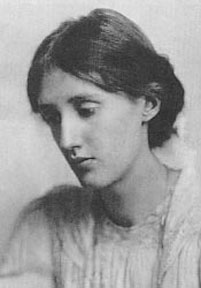
How can you use the lenses to interpret One Flew Over the Cuckoo's Nest more compellingly than the casual reader? Type 200+ words discussing your knowledge of the lenses and what they help you uncover in Kesey's terrific text.
(Pictured is famous feminist theorist Virginia Woolf.)
(Pictured is famous feminist theorist Virginia Woolf.)
Monday, August 15, 2011
Practice Blog Task--Performed in class on Tuesday, 8/30

Type 100+ words expressing an epiphany (or "aha" moment) you experienced during our study of The Lion King. Which lens is most helpful or revealing for you? What have you learned from the "Lenses 101" flexbook I made for you? What has been most interesting thus far?
Also, in a separate comment, sincerely compliment a classmate's statement from class or a classmate's work on this blog task.
Also, in a separate comment, sincerely compliment a classmate's statement from class or a classmate's work on this blog task.
Wednesday, March 16, 2011
Who/What is your "Richard Parker"?--due Tuesday, April 12

Pi Patel stuck with Richard Parker is a fascinating analogy to the human condition.
Pi = humans and humanity
Richard Parker = death, fear, danger, mortality, knowledge, ignorance, obstacles, suffering, mistreatment, motivation, beauty, awesomeness, power-- which are all part of the HUMAN CONDITION. We are stuck with many obstacles, but we live on. We have enormous potential and power, too.
In your life, what specifically is your "Richard Parker"? Write 314+ of your own words answering this question.
Tuesday, November 2, 2010
Literacy Autobiography Lens Analysis--due Tuesday, December 14

Your Literacy Autobiography essay--in which you examine how you have gradually become a fine reader, writer, listener, speaker, and thinker--is due Friday, December 17.
Include the MLA citation. Example: Munsch, Robert N. The Paper Bag Princess. Buffalo, NY: Firefly Books, 2009.
This blog task relates directly. Select a children's book and analyze it through one, two, or all three lenses. Keep in mind my model demonstrations over The Paper Bag Princess & Fix-it. Analyze with 300+ words. Look up and use at least three "tough terms" from the Critical Lens 101 Handout.
This blog task is worth 100 points, so do not include filler/fluff. Analyze & dig. Respond with passion, polish, and proof.
Bloom's Literary Reference--due Tuesday, Nov. 30

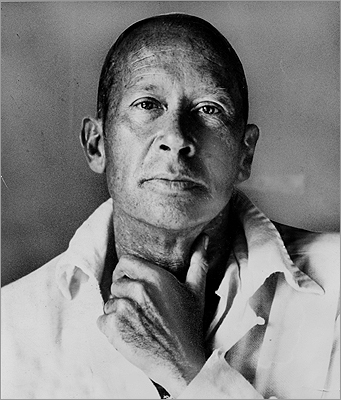
Harold Bloom is a famous literary scholar. This is his picture. Our BVHS Library has access to his collections of essays about famous literature, including One Flew Over the Cuckoo's Nest. Go to the BVHS website and under "Student Resources" click on "Library" to find the Bloom's Literary Reference Online. Once there, login and search for One Flew Over the Cuckoo's Nest. Take time to study an essay about Cuckoo's Nest, then write 300+ words of your own responding to the essay. Summarize the essay you read. Include the title and the author of the essay to which you're responding. Copy/paste 30-40 additional words from the actual entry you study at Bloom's Literary Reference Online.
OR you may search for 1984 by George Orwell, then summarize and respond to an essay about Eric Arthur Blair's great dystopian novel.
- This blog task is worth 100 points, so do not include filler/fluff. Analyze & dig. Write with passion, polish, and proof.
Username: "brandon" Password: "valley"
Wednesday, September 8, 2010
Critical Lens Analysis--due Tuesday, Oct. 19


Select any exhibit and analyze it with 300+ words. Use the "Critical Lenses 101" handout. Look in the EXACT way the "Critical Lenses 101" handout tells you to as a critic. Ask the EXACT questions the "Critical Lenses 101" handout tells you to ask. Have the "Critical Lenses 101" handout with you as you study your exhibit and as you write this blog task. If you do not refer to the "Critical Lenses 101" handout enough or effectively, your grade will be cut in half because you are not following directions and are not thinking in the directed way.
“EXHIBIT” = novel, play, song, job, sculpture, film, poem, concert, painting, myth, sketch, poster, artwork, photograph, t-shirt, television show, biography, board game, military situation, college visit, speech, advertisement, event, place/building (school, office), game, brochure, practice, rehearsal, ritual, haircut/style, website, routine, suit coat, celebrity (like Brian Urlacher of the Chicago Bears, pictured here in an Old Spice advertisement)...
Subscribe to:
Posts (Atom)