 |
| Actor Irrfan Khan as the adult Pi Patel in the movie. |
Showing posts with label Close Reading. Show all posts
Showing posts with label Close Reading. Show all posts
Wednesday, February 18, 2015
Life of Pi blog task--due February 26

Friday, December 21, 2012
Thoughts Thursday--due February 28

Find a negative review of Life of Pi (the novel OR film; or, the critique could involve Moacyr Scliar or Beatrice & Virgil) to (dis)agree with in 300+ words. Name the reviewer, summarize the review's main points (at least three), then assert yourself.
W.11-12.1 Write arguments to support claims
in an analysis of substantive topics or texts, using valid reasoning and
relevant and sufficient evidence.
- W.11-12.1a Introduce precise, knowledgeable claim(s), establish the
significance of the claim(s), distinguish the claim(s) from alternate or
opposing claims, and create an organization that logically sequences
claim(s), counterclaims, reasons, and evidence.
- W.11-12.1b Develop claim(s) and
counterclaims fairly and thoroughly, supplying the most relevant evidence
for each while pointing out the strengths and limitations of both in a
manner that anticipates the audience’s knowledge level, concerns, values,
and possible biases.
- W.11-12.1c Use words, phrases, and clauses as well as varied syntax to
link the major sections of the text, create cohesion, and clarify the
relationships between claim(s) and reasons, between reasons and evidence,
and between claim(s) and counterclaims.
- W.11-12.1d Establish and maintain a formal style and objective tone while
attending to the norms and conventions of the discipline in which they
are writing.
- W.11-12.1e Provide a concluding statement or section that follows from
and supports the argument presented.
W.11-12.2b Develop the topic thoroughly by selecting the most significant
and relevant facts, extended definitions, concrete details, quotations,
or other information and examples appropriate to the audience’s knowledge
of the topic.
W.11-12.2c Use appropriate and varied transitions and syntax to link the
major sections of the text, create cohesion, and clarify the relationships
among complex ideas and concepts.
W.11-12.2d Use precise language, domain-specific vocabulary, and
techniques such as metaphor, simile, and analogy to manage the complexity
of the topic.
W.11-12.2e Establish and maintain a formal style and objective tone while
attending to the norms and conventions of the discipline in which they
are writing.
W.11-12.2f Provide a concluding statement or section that follows from
and supports the information or explanation presented (e.g., articulating
implications or the significance of the topic).
W.11-12.4 Produce clear and coherent writing in which the development, organization, and style are appropriate to task, purpose, and audience.
Thoughts TUESDAY--due February 12

W.11-12.10 Write routinely over shorter time frames for a range of tasks, purposes, and audiences.
Thoughts Thursday--due January 24
150+ words: Why has One Flew Over the Cuckoo's Nest been canonized by many literary scholars? What does it do for/to readers?
150+ your words: What are your favorite passages and why? Type at least two excerpts, with page numbers properly placed in parentheses before the periods, to show Kesey's techniques.


AND
150+ your words: What are your favorite passages and why? Type at least two excerpts, with page numbers properly placed in parentheses before the periods, to show Kesey's techniques.


- W.11-12.2b Develop the topic thoroughly by selecting the most significant
and relevant facts, extended definitions, concrete details, quotations,
or other information and examples appropriate to the audience’s knowledge
of the topic.
- W.11-12.2c Use appropriate and varied transitions and syntax to link the
major sections of the text, create cohesion, and clarify the relationships
among complex ideas and concepts.
- W.11-12.2d Use precise language, domain-specific vocabulary, and
techniques such as metaphor, simile, and analogy to manage the complexity
of the topic.
- W.11-12.2e Establish and maintain a formal style and objective tone while
attending to the norms and conventions of the discipline in which they
are writing.
- W.11-12.2f Provide a concluding statement or section that follows from
and supports the information or explanation presented (e.g., articulating
implications or the significance of the topic).
Wednesday, March 16, 2011
Who/What is your "Richard Parker"?--due Tuesday, April 12

Pi Patel stuck with Richard Parker is a fascinating analogy to the human condition.
Pi = humans and humanity
Richard Parker = death, fear, danger, mortality, knowledge, ignorance, obstacles, suffering, mistreatment, motivation, beauty, awesomeness, power-- which are all part of the HUMAN CONDITION. We are stuck with many obstacles, but we live on. We have enormous potential and power, too.
In your life, what specifically is your "Richard Parker"? Write 314+ of your own words answering this question.
Compliment the Novel--due Tuesday, April 5

Compliment a specific feature or element (symbols, word choice, pacing, exposition, characterization, conflict, chapter length, narrative structure...or choose your own from a literature website) of Yann Martel's great novel Life of Pi. Show at least three specific examples of Martel's use of your selected feature or element. Quote each of your three examples. Write 314+ of your own words.
Sunday, September 5, 2010
Cuckoo's Nest Excerpt Analysis--due Tuesday, Oct. 5

(1) For this task, type a favorite excerpt of 30+ words directly from the novel, placing quotes before and after the copied words and including the page number. If you are copying quotes that are in the novel already, be sure to place single quotes where Kesey has double quotes.
(2) Then, discuss in 300+ words why this excerpt enlightens, entertains, puzzles, provokes you--why this excerpt is a favorite.
Kesey is a literary genius who has improved countless minds with this insightful and insane narrative. Know his great novel inside the mind and out.
Friday, May 21, 2010
Author/Artist Email Replies Spring 2010

The comments here are the email replies we received from Yann Martel, Tomislav Torjanac, Andrea Offermann, and Tomer Hanuka.
1-4: 1st Hour
5-8: 3rd Hour
9-12: 5th Hour
13-16: 6th Hour
17-20: 7th Hour
1-4: 1st Hour
5-8: 3rd Hour
9-12: 5th Hour
13-16: 6th Hour
17-20: 7th Hour
Thursday, May 20, 2010
Sculpture Poetry

Type your poems here. I'd be thrilled to have you share them with the world. First you traced with your eyes--then with your hands. Then you moved and bellowed noises, some bizarre, others modest. The result was a collection of fantastic poetry.
This is a picture of one of my favorite poets, T.S. Eliot. My son's middle name is a tribute to Eliot, whose "The Love Song of J. Alfred Prufrock" is utterly brilliant.
Saturday, March 20, 2010
Tomer Hanuka Artist Interaction

These are excellent questions my students posed to Tomer Hanuka, accomplished Israeli artist. Hanuka responded with insights and thoughtfulness that will inform our writings.
Student-Author Interaction: Yann Martel's Responses

I will post Yann Martel's direct responses to our questions here. These are his exact words, copied from emails I receive.
2009 Yann Martel Questions & Responses

Each of our class periods asked author Yann Martel a question. Here are the questions and his responses he typed from Portugal.
Sunday, January 10, 2010
Our Favorite Films--due Thursday, January 21

What are some of your favorite films? Why are these films your favorite? What about them makes you like them--what features/aspects are excellent? How do they affect you (scare, entertain, delight, puzzle, inspire, etcetera)? Are you able to relate to the protagonist(s)? Why do you care about the characters and what happens to them? What about the plot, setting, or ___________ helps you like this film? Why is this film memorable for you? Write 300+ scholarly words here to earn points. Do not merely summarize your favorite films. Answer my questions above.
(This is a picture of actor Charlie Sheen in one of my favorite films, Platoon, winner of many awards, including Best Picture, in 1986.)
Thursday, September 10, 2009
Analyzing One Flew Over the Cuckoo's Nest due Saturday, Sept. 12, by midnight

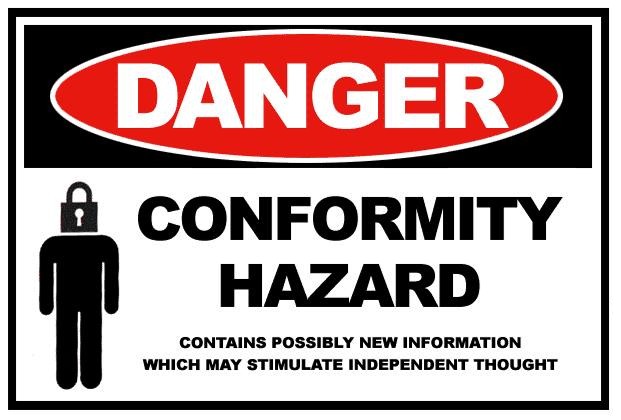

A.) In what specific ways have you been forced to conform (conditioned, controlled, vegetized, roboticized, zombiefied, brainwashed) so that your individual traits may only be used to benefit the/a system you're a part of? How are you shunned or when you do not do what you "should"? What are your general thoughts about conformity? Is "independent thought" possible?
B.) In what specific ways have you been allowed or encouraged to be a free-spirited individual who cultivates all the particular, inherent talents and abilities you were given?
And how is our great motto this year, "Like No Other," ironic and connected to our study of One Flew Over the Cuckoo's Nest? Is this the main problem these men face--they simply are "different"? (By the end of the novel, you will have an enlightened perspective, thanks to Kesey.)
Tuesday, March 31, 2009
Fiction's (Un)Intended Effects

"Fiction is true because it speaks about what it means to be human. It's reality, often times, being so superficially analyzed, that is false." --Yann Martel
Respond to the quote above and/or to these "Functions of Fiction" and "Functions of the Artist"--do you agree that Life of Pi or other books we've read this year accomplish these functions?
Functions of Fiction
- Show beauty and possibilities of language.
- Create meaning; make events matter.
- Make symbols mean something.
- Make nothing mean something.
- Order, structure, and understand the world.
- Order and attempt to understand what it means to be "human."
- Open the world up to us.
- Understand life.
- Understand self.
- Lift our spirits.
- Reveal, examine, explore, show, explode something.
- Teach us something (stories can accomplish this better than lectures, right?).
- Relate past to present to future.
- Give us perspective.
- Make us wonder.
Functions of the Artist/Author
- Be a cultural analyst/evaluator.
- Challenge or upset the status quo, which glazes over and oppresses (be a renegade or watchdog).
- Explore/expose the "taboo."
- Discuss the "undiscussable."
- Examine the question--does "honesty" = "truth."
- Instruct and delight us.
- Make us explore beliefs, views, ethics.
Monday, March 23, 2009
2009 International Artist Interaction & Insights

How are novels (literary fiction) like paintings, sculptures, photographs, songs, themes (musical) and/or scores?
Andrea Offermann, renowned artist from Germany whose piece "The Ship Sank" is right here, responded to this question. Click the "comments" to read her exceptional perspectives.
Mr. Goheen and Mr. Kessler responded intelligently, too. Now that you're farther into the novel, what do you say?
Sunday, March 22, 2009
Tomer Hanuka's Art


Tomer Hanuka's art is fascinatingly revealing and symbolically-driven. He has responded expertly to my questions. What do you wonder about his choices in representing this novel? (He has told me that growing up in Israel, under the constant threat of annihilation, is much like Pi's experience under/with Richard Parker's rule.)
Sunday, March 15, 2009
The Asymptotic Nature of Life of Pi

This novel definitely has asymptotes. Throughout its plot, Martel's story approaches the impossible, but can never be quite labeled as "impossible." Similarly, a curve on a graph will approach an asymptote, but will never, ever connect with that asymptote.
The graph { f(x) = 1/x } on the left comes to mind: a math metaphor.
f(x)=1/x
Much of the novel is almost unbelievable. What do you buy? What do you sell?
Thursday, February 26, 2009
Lord of the Flies Similarities & Differences--due Thursday, March 5, by Midnight

Use all of our exercises--notes, discussions, lectures--to accomplish this exercise. Write 200+ words, showing similarities and differences Lord of the Flies has to anything you have ever read, seen, or heard. We've begun this exercise in written and spoken form already; now, structure and expand your ideas. Jack is like the Joker, but how? In what scenes?
Be specific and use all the critical thinking skills you've developed to earn up to 30 points. Show you've invested some time and some thought.
Tuesday, February 10, 2009
Lord of the Flies, Project 2090, and Film Deconstruction Paper: In class on Wednesday, February 11.

(1) Type two excerpts from Lord of the Flies (pp. 7-75) and include their page numbers.
- The first excerpt must display a revealing dialogue exchange between characters. What is not being said that should be said? What might a character's words be masking/covering? What do these words reveal about a character? What is being heard or not heard by the intended listener? What could/should be said that is not? Is Golding accurate in his depiction of the speech patterns of young boys?
- The second excerpt must show masterful use of language to show--not tell--the reader a setting or action. What sense(s) is Golding stimulating? (see, hear, touch, taste, perceive/feel)
(2) Type your initial ideas for what your group will do for Project 2090, which will be held from April 14-20. You get wisdom from elders, then share it with the class, presenting for 45 minutes. To whom will you speak? What will you ask these wise, venerable, respectable interviewees? Will you have up to 15 minutes of filmed material? What sort of handout will you have? What sort of powerpoint slides will you have? (leave the republican vs. democrat stuff out)
- How, specifically, will we prevent WWIII (LOTF) and dystopia (1984)?
- How will we, as a society, heed the urges of our collective reason and/or superego?
- How will we remain unique, if that's possible?
- How will we be better Americans?
- How can we think for ourselves?
(3) What are you thinking for your film deconstruction paper? Are you leaning toward comparing the two LOTF film versions, or selecting your own single film to deconstruct? (I saw Nick and Norah's Infinite Playlist last night--and could definitely deconstruct many aspects of it.)
- How might a director and producer make LOTF differently than another?
- Or, what might you say about a single film, if that is your route?
Subscribe to:
Posts (Atom)