Showing posts with label Film Deconstruction. Show all posts

Tuesday, February 16, 2010

Model Essay & Model Presentation Assessment--due Tuesday, March 2


In 400+ words, assess (judge, evaluate) the model essays and model presentation I have provided you. You have essays by Tom Eitreim, Erik Hanson, Casey Strand, and by yours truly (me). Do these models help you? In what ways do they help you? What, specifically, will help you as you attempt to create your own projects? What strategies will you use from them? Though his essay is intelligent, I think Eitreim summarizes Spiderman far too much; doing so probably hurt his grade at SDSU, too, I think (unless his professor instructed him to summarize--I guess having to summarize does make one view extremely carefully and closely; I saw Tom Eitreim this weekend--he was following the assignment guidelines). The first weeks of this College Bound English unit have been modeling, which is my effort to show you what I expect regarding the length and depth of the critical thinking required for film deconstruction. Does seeing model essays help you? Did my model team presentation on Apocalypse Now, Platoon, & Full Metal Jacket help you? How? Why?
Will you use a Feminist, Marxist, or Freudian lens in your film analysis?
I just corresponded with Dr./Prof. Skip Willman (see his sweet guitarist picture here), one of many terrific professors at USD, and he told me you are doing precisely what he would like you to before entering his and Dr./Prof. John Dudley's composition/writing/English/literature/critical thinking courses. (After an undergraduate career at Augustana College, I earned my Master of Arts in Literature degree from USD last summer.)
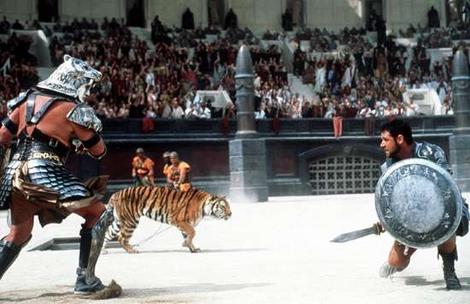
(These are pictures from two films I cannot stop watching once I discover they're on television: The Shawshank Redemption & Gladiator.)

Film Terms Glossary & Different Shot Types Handouts--due Thursday, February 25


For this blog task, first select five terms from the Film Terms Glossary handout (yellow) and write 200+ words on how these five terms (A) will help you write a scholarly, analytical essay and/or (B) will help you perform a scholarly, analytical team presentation . How do these terms enlighten your knowledge, help you think critically, and be less ignorant? What, precisely, will you say in your individual essay and/or team presentation?

Second, select five terms from the Different Shot Types handout (blue) and write 200+ words on how these five terms (A) will help you write a scholarly, analytical essay and/or (B) will help you perform a scholarly, analytical team presentation. How do these terms enlighten your knowledge, help you think critically, and be less ignorant? What, precisely, will you say in your individual essay and/or team presentation?
You should have a total of 400+ words in a single comment on this blog task. Remember, this number is a minimum. Doing half as much will demonstrate half as much time and effort invested. But, of course, do not sacrifice quality for quantity, either. Do a thorough, critical, committed job.

Both of these handouts may be accessed at our class wikispace as well.

(This is a poster advertising one of my recent favorite films, Lymelife, an independent movie with a small budget, but powerful themes and messages. The tagline on the poster reads "THE AMERICAN DREAM SUCKS." It is the duty of our storytellers to show us life as it really is--this movie succeeds indeed.)

It is more than likely that you will experience units like this one in your required freshman writing/composition courses, I'm proud to let you know.

Film Deconstruction develops and requires many skills, including:


  • detail analysis

  • symbol interpretation

  • cultural representation exploration

  • literary device recognition

  • artistic technique assessment

Friday, February 5, 2010

Film Deconstruction Links--Due Tuesday, February 23


Select three links on the right-hand column of this class blog, under the heading "Film Deconstruction Links." Explore and read these three links thoroughly. Then write 150+ words per link--450+ total words--summarizing what these links offer and responding to each link's usefulness to your understanding of film analysis and to your understanding of collegiate expectations of critical thinking. Copy/paste a little information that you find particularly useful and interesting (does not count toward your 450+ words). Professors want to combat ignorance by any means necessary; they want you thinking as critically as possible. Good thing you're doing such good work these days.

(This is actor John Malkovich in the Coen Brothers' film Burn After Reading, which is a puzzling character study. The characters are brilliant people merging with moronic people; this merger creates awful behavior by them all. Casey Strand wrote about this film--see the sample essay I gave you.)

Anticipation Guide Topics--Due Tuesday, February 16


Select three statements from the "Anticipation Guide for Film Deconstruction Unit" handout you received in class. For each of the three statements you select, write 150+ words--for a total of 450+ words--explaining why you agree or disagree with the statements. To what extent do you agree with these statements? Why? Be thorough. Be scholarly. Prove you're thinking hard about your Team Presentation and Individual Essay. (A Marxist "reading" of Cinderella enlightens us and exposes a lot of underlying, subconscious meaning. The only/best way to get fame, power, and wealth--to climb the "social ladder"--is by being beautiful and having a Fairy Godmother? Be sure to use the critical lenses we have studied in your Individual Essay.)

Monday, January 11, 2010

Film Deconstruction Debate--Part 1 due Tuesday, February 2; Respond to Another Student--Part 2 due Tuesday, February 9


For Part 1, answer these questions: Why is it productive to write analytically about film? Why do universities devote entire courses (and film study programs/film study majors/film study minors) to writing analytically about film? Does deconstructing a film--rather than casually watching--increase or decrease the enjoyment of the film? Why? Having this debate here and in class will decidedly increase critical thinking levels. Write 300+ words to earn points. For Part 2, respond to another student, agreeing, disagreeing, and/or building on what s/he typed. Write 300+ scholarly words to generate critical thoughts. When you are done with Part 2, you will have two comments on this blog task. These are pictures of three of my all-time favorite films, Mean Girls, P.S. I Love You & Office Space.

Get Going on Your Film Deconstruction Essay--due Tuesday, January 26


Which film are you deconstructing in your essay? What features/aspects (camera work, lighting, soundtrack, pacing, sequencing, dialogue, etcetera) of this film are you analyzing deeply, carefully, deliberately? Further, answer some questions here from the handout I gave you entitled "Film Deconstruction Paper." Lastly, answer these questions, inserting various features/aspects into the blank: Why is _______________ like that? What effect does ________________ have/create for the viewer? If you answer these questions fully, you will be a Deconstructionist. Write 300+ scholarly words here to earn points--up to 40.
(No Country for Old Men painting from blakeloosli.com.)

Sunday, January 10, 2010

Our Favorite Films--due Thursday, January 21


What are some of your favorite films? Why are these films your favorite? What about them makes you like them--what features/aspects are excellent? How do they affect you (scare, entertain, delight, puzzle, inspire, etcetera)? Are you able to relate to the protagonist(s)? Why do you care about the characters and what happens to them? What about the plot, setting, or ___________ helps you like this film? Why is this film memorable for you? Write 300+ scholarly words here to earn points. Do not merely summarize your favorite films. Answer my questions above.


(This is a picture of actor Charlie Sheen in one of my favorite films, Platoon, winner of many awards, including Best Picture, in 1986.)

Sunday, March 8, 2009

Deconstruction Practice--Due Tuesday, March 17, at Midnight


Which film deconstruction that we performed in class most stimulated your critical thinking skills? Which film deconstruction that we performed in class relates most closely to your four page paper?


Refer to the right side of this screen for what earns you points. This is an image from Mean Girls, a highly "deconstructible" film.

Thursday, February 26, 2009

Film Freewrite--due Tuesday, March 10, by Midnight


Freewrite (even ramble) about the film you're close viewing/deconstructing for 200+ words. Answer the questions I pose to you on the "Film Deconstruction Paper" handout.

It is not enough to merely state that a film is good or bad, or its aspect is good or bad. For example, it is not enough to say that The Shawshank Redemption is "powerfully written" or "expertly acted." What is real close viewing is noticing that we need the old, institutionalized prisoner named Brooks to be let out and sent to that apartment before Red goes there. That plot device creates tension for us and misleads us expertly.

You should also include the three required sources you plan on using: the online film review, the article found through our BVHS library database(s), and the printed physical book source. Refer to my sample paper and to the Kaleb Paulsen Stepbrothers example. Your grade will reflect your intelligent use of sources and your critical thinking level.

This exercise will help you generate ideas you did not know you even had for your paper which is due March 17, Tuesday. Show critical awareness to earn credit--up to 30 points.

See my sample paper about We Own the Night. See Eitreim's and Hanson's, too. Also, see my other site called Liticism for important samples and links.