How can you use the lenses to interpret One Flew Over the Cuckoo's Nest more compellingly than the casual reader? Type 200+ words discussing your knowledge of the lenses and what they help you uncover in Kesey's terrific text.
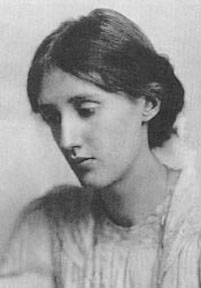
(Pictured is famous feminist theorist Virginia Woolf.)
(Pictured is famous feminist theorist Virginia Woolf.)

99 comments:
While reading this story about people in the ward, I realized that if you take a Marxist approach it begins to show more than it appears to. You begin to realize that the nurses and doctors symbolize the rich and powerful people. The acutes and the ones that don’t really belong, like McMurphy, but want to escape symbolize the middle class that still have a chance to succeed and get to the upper class when they get to the outside. Then the Chronics, like Chief, symbolize the poor, disabled, and outcasts of society that most likely won’t be given a chance to succeed and get the outside world to become successful in life. Then if you take a Feminist lense to this story you realize that it has completely flopped what society actually is. The women run the show while the men are either the workers or the mentally handicapped people who need help. This is completely controversial with society because we have a more male dominant society in the world. Finally, if you use the Fruedian point of view in this story, a little more will appear too. Something had to have happened to Chief to make him act the way he does. No normal person like him would fake they were deaf and mute to prevent themselves from interacting. He must have been abused either emotionally or physically as a child to force him to hide himself from the rest of the patients there.
While reading this story about people in the ward, I realized that if you take a Marxist approach it begins to show more than it appears to. You begin to realize that the nurses and doctors symbolize the rich and powerful people. The acutes and the ones that don’t really belong, like McMurphy, but want to escape symbolize the middle class that still have a chance to succeed and get to the upper class when they get to the outside. Then the Chronics, like Chief, symbolize the poor, disabled, and outcasts of society that most likely won’t be given a chance to succeed and get the outside world to become successful in life. Then if you take a Feminist lense to this story you realize that it has completely flopped what society actually is. The women run the show while the men are either the workers or the mentally handicapped people who need help. This is completely controversial with society because we have a more male dominant society in the world. Finally, if you use the Fruedian point of view in this story, a little more will appear too. Something had to have happened to Chief to make him act the way he does. No normal person like him would fake they were deaf and mute to prevent themselves from interacting. He must have been abused either emotionally or physically as a child to force him to hide himself from the rest of the patients there.
Clark 2
When reading this book i found using the Marxis lens is the best. It shows you how he describes the doctors and nurses as rude rich people. It also shows how the black people are trying to get back at the white people for what they did to them. Treating the white people with disrespect. Just like how they are treated by whites. It also shows how he must have been abused either emotionally or physically as a kid to have him end up where he is today. I also think they are very feminist. He makes the girls there appear like robots and machines. He makes them out to be ugly. They want us to picture these women as bad, evil, ugly people. Chief keeps telling people that he is deaf and dumb so that way they leave him alone. This from reading doesn’t really work out for him. They say that they are dogs and smell the fear of others. It also seems weird that the women in this book are higher up in the world then the men are. And even the black people in this book are higher up then some of the whites. This in some places is unheard of.
Jones 1
In "One Flew Over the Cuckoo's Nest" the Feminest lens has an approch. The women or the nurse have more power then the men or patient. He says women are like robots and no one cares for them. The Marxis lens also takes a role. For instant the patients are known as the lower class who are poor, were as the nurses and the three black men are the upper class or more rich. Then there's McMurphy who doesn't know who he is either rich or poor so he would be considered the middle class section. Then the Fruedian lens takes a role also in this novel. Cheif is he trying to be deaf to hide something or is he trying to say he is deaf so the doesn't end up like the others?
brannan7
In this gripping novel i resorted to using the Freudian lens. It helps me realize that alot of these people in here feed their ids instead of using there superegos to conceal them all in all i saw how McMurphy feed his id by having sex alot or incinuating he did. There is an account about how he raped a girl but he said it was consentual. They all do/or try to do what ever it is they want to weather that, that is what got them in there like some of them said they took there sisters to bed or had thoughts and did things with other guys they did what they wanted how they wanted. Also it shows how things in there past made them the way the are in the book. Like Harding he probably is gay and growing up he got made fun of and beat up or was neglected and abused by his dad and/or his mom because it wasnt normal. Then now that hes older he married the pretiest women he could find to try to cover it up. Also nurse Ratchet has always struggled with her good looks and has always been ignored or her opinion didnt matter so she covers them up and is a control freak around the hospitol. That is what i have interpreted this novel as and i will continue using the Freudian lens but i am open to the other to i just dont see them doing me any justice at this point but i would love to be shown other wise in the discussion on wednsday.
Fontenille7
In “One Flew Over the Cuckoo’s Nest” we see several literary devices that take some time to realize are even there. In “The Lion King” it seemed much easier to pick them out while we watched. However, if you take a closer look you realize that the book has all of the literary devices, but I’ll be focusing on the Marxist, Racist and Sexist approaches. You could make a case of the nurses and doctors being the “rich” like we saw in “The Lion King” and the patients being the “poor” like the hyenas and Scar. Also, you will notice how poorly the blacks treat the whites. Could this possibly be the black people getting back at the white’s for their centuries of mistreatment? Finally, you will notice in the Feminist lens the respect and hatred that is pointed toward “The Big Nurse”. She is portrayed as hot. She is large in areas where men enjoy it. However, she tries to resemble herself as a man. She wears shirts portraying that she may not be as flattering in spots as they really are. And she acts nearly like a man, turning into a tractor. Most women don’t turn into a tractor, or at least we don’t portray them to.
Rokeh 7
While reading One Flew over the Cuckoo’s Nest, I used a more of a feminist lens. In this book a woman pretty much runs the whole ward. She is “the Big Nurse” and makes the final say on everything. What she says goes, and everyone obeys and listens. Her “minions” you could say, or the black men work under her. They do everything for Nurse Ratched, anything she says they will do. It is very racial because Kesey has black men working for a woman. And in the time he wrote the book, it was a big time for women to break free from the “confines” of the home and get out into the work place and have men work under them. And in this book he does that, and not only has that made Nurse Ratched one of the most feared characters in the book, she is the only woman in the novel. In this book there are only male patients, and male workers, and a male doctor, and a male public relations person. She is the big and bad boss. Kesey had a vision that someday a woman will rule such male dominated professions, and be equal to or greater than to a man. Nurse Ratched is his representation of that. Zangara 2
The Marxist lens is very broad and can be applied to almost any novel. Most of the patients on the ward, McMurphy being an exception, have been born so low on the social ladder there is not even be a rung within reach to initiate the climb up. They’re set for absolute and utter failure. Pete Bancini is an excellent example. Complications at birth scarred him with two large dents on the sides of his head. The dents are just visible tokens of his severe brain damage, which has subjected him to a life of struggling with tasks a 6 year-old could complete with ease. Cases like this are constant and the situation patients like this face is a very prominent theme of the novel. In contrast, Nurse Ratched has been hired to dictate the entire ward. She oppresses the patients by spying on them, mentally attacking them, and physically threatening them though her subordinates or other means. She has so much power she doesn’t know how to control it. She screams Hubris…
Since One Flew Over the Cuckoo’s Nest is a story of a mental institution, the Freudian lens plays a monumental role in our understanding of the novel. The patients have almost no superego to speak of, which is often a direct effect of their illness. All they can do is satisfy their id by reporting other peoples’ business in the log book, ranting off/acting out over small issues, and openly expressing their unsatisfiable libidos. Many of the patients have also experienced events in their life which have resulted in their institutionalization or further worsened their quality of life. Take Ellis for example. The EST must have been so traumatic to cause him to stand at the wall pretending to be crucified all day every day… It was like a 9.4 magnitude earthquake for his conscious. It destroyed it as Fat Man destroyed Nagasaki. His psyche is all but gone now.
Many people say the feminine role in this novel is reversed. I believe it is set straight as a die! Just look at her title- Nurse!! It can’t be more feminine than that! You need to look at the big picture. Her boss/the institutions president is the father, Nurse Ratched is the mother, and the patients are the children. She must tend to her children as her boss reels in funds, deals with the public, and manages admissions. It may seem like she has a lot of power, but she sure isn’t at the top of the food chain by any means! Also, her large breasts emphasize her sexual role in society- to feed men’s libidos and bear/nurse children. Breasts are a sign of femininity, and having large ones just reiterates her role in society.
Hosman5
While reading “One Flew Over the Cuckoo’s Nest” I’ve interpreted the events through a Marxist and Feminist lens. Dating back in history men were considered to be the more powerful figures in society, leaving women in the dust. Women had to fight their way through cultural and social boundaries in order to get equal rights. This novel goes against the norm and fights conformity, making women or Big Nurse the most powerful character in the mental ward of the hospital. She has total control of every happening of each patient and other staff member in there. Her being the only woman in the ward also shows quite a bit of power on her end, she dominates over all of her male patients. Through a Marxist lens, racial status comes into play. According to history blacks, just like women, were considered to be under white males, but now they switched roles. Big Nurse has three black assistants, this goes against all cultural norms in the time period the book was written. Also under a Marxist lens is financial status. Along with power, comes money. Nurse Ratched and her black assistants are considered to be ‘rich’ compared to the ‘poor’ patients. Visually, Nurse Ratched is very high on a ranking scale, while the male patients are at the lowest point. This is a very controversial novel, especially in the time period in which it was written, it challenged many opinions, as it still does. McDonald 2.
While studying the Novel "One Flew Over the Cuckoo's Nest", I've looked at situtations through the Marxist and Feminist lens. During the time period that Ken Kesey has written in the men had the power and women had certain things they were expected to do. This novel goes against that. For example, Big Nurse is the one with power, while the men are the people expected to follow the woman's rule. Nurse Ratched and the black men are the 'rich' whom have higher power and rights. The patients are the 'poor' whom have rights but are following the higher power. Feminist lens is showing that woman in this novel are robots whom are mean,powerful, and the one in charge over men. The black men are partnered with Big Nurse as a stable help to conform the patients into what she wants the entire mental ward to become as well as the rest of society. Nurse Ratched has the non-conformists get 'brainwashed', then some get let out into the world to change those around them to become like what he has from the ward.
The roles have switched from what they are in society, challenging us on our opinions and outlooks on situations.
South 7
While reading One Flew Over the Cuckoo's Nest I first started by looking at it in the Marxist approach. In this book the author is showing symbols and separation of classes.First, the symbol is the three black boys. Just like in the lion king as the three hyenas. Representing Cerberus, the three headed dog which basically means the darkside. And second the separation of classes by the people in the psyche ward as the lower class, the black boys as a middle class, and Nurse Ratched as the higher class because shes in charge. Which brings me to the next approach, the Feminist lens. So far they are approaching the women as the "bosses" so far I've only read about one main character women and she is in charge and runs the place. I haven't read about any patients that are women. Just men. And finally the Freudian lens. My example is Nurse Ratched. She is a women but by the way she represents herself and dresses shows otherwise, such as her trying to be something she isn't. Also by the way she takes control. Possibly in her childhood she might've not had any control over anything or anyone so subconsiously she took this job because she feels impowered to finally have control over something. This book shows many ways to look at the different lenses and even though I like taking the marxist approach I believe that this book shows more throught the Freudian lens because the setting is in the Psyche Ward, which mostly deals with emotional and head problems. But not only with the patients but even for the people working there.
Seydel 7
In "One Flew Over the Cuckoo’s Nest" many different literary lenses can be utilized to view the novel. To me, the most prominent lens throughout the novel so far has been the Freudian Lens. It’s obvious why this lens would be used in a novel set in a mental instiution. The sanity of each of these characters is threatened everyday by the Big Nurse and her followers. The patients in this instiution are nothing but puppets playing Ratched’s game. They no longer think for themselves and follow the monotonous everyday routine. Patients in this ward use other’s mistakes to satisfy themselves. For example, Ratched laid out the log book knowing precisely that the patients would use it to award themselves for doing a “good deed” to the ward. The punishments the patients endure is also an example of this lens. Morally, shocking a person in the brain or handing out random labotomies is highly unethical, yet Ratched continues to view these as “treatment” for speaking out against her or disobeying the rules. Shehas ruined the joy of being human, of having memories, and of thinking for oneself for many of these patients. And this cruality is only obvious to those who choose to see it.
The Marxists Lens also plays a large role throughout the novel. In society, around the era when the novel was written, The Civil Rights Movement was taking place. Before this, whites were to superior to blacks, yet in this novel the roles are reversed. This is almost a contradiction to the Marxist theories. Blacks are supposed to be low class and uneducated at this time but the three black boys are responsible for a majority of what the white patients do. Patients are even frightened of them and their power. They abuse their abilities and become what was also seen in "The Lion King" as Cerberus, representing the villianous side. Nurse Ratched would be considered high class within the instituition because of her power, also a symbol of the Marxist lens. A critic of this lens would see Ratched as an independent, intelligent figure who knows how to use her power to coerce others to do as she orders. No one disobeys her without the fear of her “treatment” at the back of their mind.
Donovan 7
While beginning to read “One Flew Over the Cuckoo’s Nest” I started to interpret the book using the Marxist lens. During the reading you see how the ward is divided up or ranked. The nurses and doctors represent the higher class or the rich. The patients in the ward are symbolized as the poor. The nurses and doctors are obviously at a higher rank than the rest because they are in charge of everyone else. The patients are the lower class because they are controlled and don’t have their own way of living just like the poor. The blacks have an interesting role in this novel. They seem to be at higher power than the mentally ill white men. When this book was written the blacks were not at a higher rank then anyone. They were at the bottom of the food chain just like the poor, mentally ill men in the novel. Another way of analyzing I used with the lenses was the feminist lens. Tying in with the Marxist lens the nurses have the highest power. The Big Nurse is the head nurse in charge of all the men. Women are not usually placed above men, but in this case they are. It shows the possible way of women being in charge during the time period of the book. Back when the book was written the women and blacks didn’t have a say in anything or much power. This book shows a major twist with the social classes and gender roles. Hovde 2
In "One Flew Over the Cuckoo's Nest" we can discover so much if you actually look a little in depth into the book more than the average reader does. If you compare Miss Ratched and McCmurphy, they really are not all too different. While looking through a marxist lens, you can see that they are each trying to strive for power over everyone else. Miss Ratched realizes that McCmurphy is trying to overtake her, but she tries to discourage him. One example is when she repeatedly calls McCmurphy by the improper name. Although she attempts this many times, she fails to get under his skin.
Looking through a feminist lens, I can see that this novel is very sexist. I agree with Rokeh in how Kesey reveals Miss Ratched as "hot" but she acts like a man, and tries to gain control over all men in the ward.
Finally, while looking through a Freudian lens, I can see that most of the patients at this ward feed their id. Now it is tough to sit here and criticize how they don't ever try to ignore their id, because they are men who are mentally ill. But not all of the acutes and chronics serve their id all the time. Some of the patients even ignore their id better than McMurphy does. All he wants to do is gamble and take over control of the place. I think that this novel reveals much more through any three of the lenses than if you were just a common reader. McClanahan 1
While reading One Flew Over The Cuckoo's Nest you can use the Marxist lens to understand how the ward is divided into classes. The Big Nurse is in the rich upper class with the doctor's, followed by the aides. The patients are the lower class poor people who are being controlled and beat down. They are even afraid to laugh which tells us Big Nurse has enough power to be compared to Hitler. She even brainwashes the patients before they are released back into society, making them zombies and living life blind. A Feminist critic would be glad to know, however, that the gender roles have been switched in this novel; a woman is in charge of the ward instead of a man. This is unusual because Mr. Kesey wrote this novel when women and black people didn't have much say in society. Is it possible that this might mean that Ken Kesey is a Feminist or that he just wants people to look at society differently? We can use the Freudian lens to see how past experiences cause the characters in the ward to behave the way they do. One of the aides saw his mother raped when he was young and saw his father hung. This makes him want to get revenge on white people by invading the patients' space with the thermometer and de-humanizing them. These lenses help me analyze this intense novel a little better.
Huntimer 2
While reading “One Flew Over the Cuckoo’s Nest” I have realized many themes and ideas that deal with the Marxist and Feminist lens. The book does not resemble what we think society would have looked like in the 1960s. A woman and three black men are the ones who run the combine and this definitely goes against what society would have accepted. It is giving power to people who usually wouldn’t have power and authority in the 1960s. Looking at it through a Marxist lens the nurse and the doctors represent the rich and very powerful people. The Chronics and Acutes represent the poor people who really have no say in what they do or how things are run. For example, the patients are forced to take a pill and finally one of the patients, Taber, didn’t want to take the pill and got released. I think this relates to America and how we, the Americas, just go with what our government and people around us tell us to do and if you go against what society accepts you are looked down upon just like Taber was. I think Kesey is not just writing a book but trying to teach the readers a lesson and more aware of the world they live in.
Van Hemert, 5
In “One Flew Over the Cuckoo’s Nest” all three lenses are present. The Marxist lens can be used to see that rank is used in this work of fiction, the patients that have the least problems; the acutes are ranked higher on the scale than what the vegetables or chronics are. Also Chief tells us those who can survive treatments are the strongest patients, just like a how a Marxist critic would view an exhibit, the weak die off and the strong, become the wealthy ones on the top of the ladder. A reader can use the Freudian lens to view how the nurses and doctors run the clinic. They get into every patients head and make them like robots, making sure the patients can never satisfy their ids. The nurse also controls the patient’s days, nights, when they sleep, and what they can say in front of everybody. Also the nurses and doctors are satisfying their ids by bossing all these patients around and getting into the patient’s heads. The feminist can be used to show that women should be in power, just like Nurse Ratched. She has that clinic in tip top shape, and doesn’t let anything interfering with how its run. This is a prime example of how women can be just as good as men, if a nurse can run a clinic like this than a women can do just about anything they put their minds too. Using these different lenses to view this work of art has shown me that Ken Kesey was doing more than writing a book, he was doing that plus trying to transform America at the same time.
Sundvold, 2
You can use multiple lenses when reading this novel. One lens that stands out the most to me is the Freudian lens. McMurphy is constantly following his id and doesn’t care about anything else because he has no family and no one to take care of. Nurse Ratched is trying to have her narcissistic bliss by having everyone do what she wants them to when she wants them to. You can also take a Marxist view from this book. Nurse Ratched and all of her assistants and the black boys are like the government. They control everything you do. If you don’t do what they want you to then you get est., which is electrical shock therapy. All of the patients are like the lower class doing whatever they can to get on the governments good side. During group therapy they all just pick on one person's faults. McMurphy calls this a pecking party which is exactly what they are doing to one another just putting each other down constantly. Harding talked about the wolves and the rabbits and says that nurse Ratched, the black boys, and her assistants are like the wolves and that the acutes, chronics, and everyone else are like the rabbits. They just try and stay out of the wolves’ way and they hide so they don’t get in trouble.
Bridgit Zens 1
By studying One Flew Over the Cuckoo’s Nest readers will begin to interpret the author’s point of view through the different lenses. For me, the most prominent lens was the Marxist. The book showed a vast difference between the upper class and lower class in society. Kesey had Nurse Ratched represent the rich or upper class. She had complete control over the ward just like in society the rich have most of the power. The middle class was represented by the workers of the ward because they had to “obey” Miss Ratched. The patients in the hospital symbolize the poor, lower class. They are the people with disabilities and have lost the genetic lottery to some extent. By looking through the Marxist lens we get a better understanding of how the three classes are different in society. Also, Kesey implies that women should not have power when analyzing the story through a Feminist approach. Throughout the story Nurse Ratched is shown doing terrible acts to the patients. Kesey is practically showing us what could potentially happen if we allow females to have power. In addition, the Freudian lens can be used to look into a deeper meaning of this story. The patients are clearly satisfying their “ids” in the ward. They have very little responsibilities. McMurphy is especially satisfying his “id”. He knows he is not “crazy” but he chooses to be in the hospital instead of working. McMurphy is living care-free in the ward instead of contributing to the outside world known as society. One Flew Over the Cuckoo’s Nest brings to life many controversial ideas when studying it.
Pollema 2
Using the three different lenses while reading this book makes a person see so much more beneath the surface. For example when using the Marxist lens you see that the social ladder is evident. For instance the vegetables are the lowest on the ladder followed by the chronics who are so far gone with a disability that they'll never get to return to society. The acutes are next on the ladder because they are simply being repaired and then soon going to be released back into every day life. The highest position on the ladder are the workers. They have the most power over all the individuals in the institution. Nurse Ratched has the highest power, or so she feels, over the nurses below her and the patients. She tries to make them feel intimidated so that they never try to test her. If you choose to read through a Feminist lens you will find that Nurse Ratched is taking on a mans role by being in charge of the ward but also taking on a females job by being a nurse. Nurse Ratched feels she will come across more intimidating if she hides her large breasts and bosom. She doesn't wanna feel feminine or appear that way to the men of the institution, if they viewed her that way she would lose all sense of authority. When reading this novel through a Freudian lens you would see that McMurphy is following his id by choosing to gamble away his money and take on no responsibility. He later chooses to be admitted to the institution to maybe feel like he has a place to call home and be cared about by another person. When reading this novel with any of the three lenses we have studied you get so much more insight to whats going on and it helps you understand the novel so much better. You have an advantage over just a common reader.
Grimmius 1
I think we can use all forms of the lenses. Feminist lens because in The Cuckoo's Nest the female which is the Big Nurse, Nurse Ratchet is in charge. Also she is on top of the food chain so to speak she is higher up than the male doctor, and the blacks, acutes, and chronic, and everyone else in there. Next is the Marxist lens at the time this book was written everyone knew who the so to speak "lower" class was and it wasn't the whites and Miz. Ratchet made it that way because she made the black people on top of the whites on the food chain. So when she told the blacks to do something they hurt the whites like the whites hurt them in society.. Just a little pay back. Now the Freudian lens I think of is when Chief acts like he is deaf so he gets out of telling people what he really thinks or hearing what people really think about him.. But reading though pages 101 McMurphy scares Chief so he somewhat knows that he is playing around and knows that he can hear everything that is being said. But Chief is to afraid to come out of his comfort shell and tell anyone that he can hear them and talk.. Because he afraid of what they may say or do.He has been living this way since his was put in this psyche ward, and he doesn't want to stop living the way he does.
Merkel.1
During One Flew over the Cuckoo’s Nest I found that the Marxist lens was very noticeable. Big Nurse Ratched is the most powerful. Also because Big Nurse is the most powerful it makes it seem like a feminist lens too. Usually the men are the masculine, in charge, and most dominant ones, but in this case it is definitely Nurse Ratched. All of the patients are so scared of her even though she has never lost her cool. That is pretty powerful of her. The Doctors and three black boys are also part of the Marxist lens. The three black boys control and do things to the patients to make them feel better about the way they might’ve been treated when they were slaves. I can also see Chief Bromden as part of the Marxist lens, he is in control of himself. He makes everyone else think that he’s deaf and he keeps things to himself so that he has no way of getting in trouble. For me that would be very difficult to do in a mental institution since I would know that I wasn’t crazy. Freudian lens is used by the patients using their id to tell Big Nurse about the other patients so that they’ll get punished and the patient that told her will get a reward by getting to sleep in the next morning. McMurphy also uses his id to try to get the other patients to go along with him on his bet about him getting Big Nurse to completely explode for the first time ever.
Meyer 2
In “One Flew Over the Cuckoo’s Nest,” I felt that using the Freudian lens was most intriguing. All the patients in the ward are considered to be “insane” because they do what their Id tells them to instead of being conformed like the rest of the world and following their super ego. Big Nurse Ratched is the only normal one and her goal is to try make all the patients act as robots like all other humans by giving them the same routine everyday. They have to wake up at the same time everyday, wear identical clothes as one another, and even take pills to alter their brains into thinking differently or just not thinking at all turning them into “vegetables”.
Also, by using the Marxist lens you can clearly see the different social classes. Big Nurse Ratched is the high class. She bosses around the black guys who represent the middle class, and they work for her treating the mental patients which represent the low class with disrespect. The patients are also at the bottom in society because instead of helping them recover from their mental illnesses we would rather just lock them up in a mental institution, give them pills so they can’t think for themselves, and just leave them there to die. We do this because it is easier to keep them imprisoned then to allow them the opportunity to function in our society.
Finally, looking from the Feminist lens it is very sexist against women. Although they made it so a woman is in charge, she plays a very evident mother role. She is expected to treat the patients as her children by feeding, clothing, and making sure they stay detained in the ward and do not escape. She is compared to the mother figure because she protects the patients from the outside world just like a mother would protect her young child from society.
Hoff 5
While reading One Flew Over the Cuckoo’s Nest I looked at it mostly through the Marxist lens. In this mental facility the doctors and wardens represent the rich and powerful people in society. They control everything and everyone. The chronic patients represent the poor. The patients seem ‘dead’ in this novel; they don’t have a choice and no one outside of the facility sees them. Poor people are also in a way ‘dead’. We know they are out there but we don’t let them have a say in what goes on around them. There is also the middle-class represented by the acute patients. They have a better chance of getting out of the hospital and onto a better life just like the middle-class. In today’s society the government tries to make everyone conform. They want you to get an education, raise a family, and put money back into the economy. In this novel, the facility tries to make all of them conform so that they all look the same and act the same. I also looked at this book through the feminist lens. Ken Kesey gives a woman, Nurse Ratched, all the power. She controls all the patients and wardens. This might signify that he doesn’t mind if a woman is in control.
Christensen 2
While reading One Flew Over the Cuckoo’s Nest, the lens I see most of the time is the feminist lens. The way the patients portray Nurse Ratched as the woman who has all the power in the ward. Because usually men have the high power. For the Marxist lens the white woman has more power than the black boys or any black person and that is how it is in the book. Nurse Ratched is the highest class in the ward, even higher than the doctor, who is a man. The next class is the black boys, they don’t have the most power, but they are still in charge of all the patients. They tell them what to do, where to go, and what they have to do at a specific time. Then, finally, is the acutes, chronics, wheelers, and the vegetables. They are the lowest class , they have to be told what to do because most of them can’t do anything for themselves. The acutes can take care of themselves, but the chronics, wheelers and the vegetables can’t because they don’t know what’s going on. And finally the Freudian lens. The patients talk about how Nurse Ratched is a hot, sexy, and more filled out. Nelson1
While reading One Flew Over the Cuckoo's Nest, I mostly used the Marxist lens to see deeper into the novel. I noticed that the Big Nurse and other doctors represent the rich in society. They are the ones with all the power and control all the other classes. McMurphy and the Acutes represent the middle class. They are the ones that want to leave the dreadful ward, They have a chance to be fixed and become the upper class. Chief and the Chronics represent the poor. They are the ones that get pushed around. They will probably never get out due to the fact that they have gave up and rather be in the ward than the outside world. In a Freudian lens you will see that there has to be a good reason for Chief to act deaf and dumb. A man of that stature would not normally get pushed around. Chief must have had many problems on the outside world to make him give up on leaving the ward. In a Feminist lens you can also infer that the novel is flipped upside down from society. The Big Nurse is the one in control, not a man. The men are the ones being fixed or are the workers. When you use lenses you can peek through the pages and see more of what the author is trying to convey.
Brown, 2
To pick the best lens for analyzing "One Flew Over the Cuckoo's Nest" would be nearly impossible. Feminism lens characteristics are seen in the ward but with the "gender rolls" reversed. Nurse Ratched, a female, is in charge and basically rules the ward containing men. However, they depict Ratched as a rather masculine figure, instead of a womanly one. When taking the Marxist lens, the social ladder is quite evident thus far. Nurse Ratched is at the top and in complete control through insinuation and cruelness. Next on the "ladder" would be the workers and aides because they are under control of Ratched but still have more power than the lower class. Lastly, the acutes followed by the chronic patients represent the lowest part of the social ladder. Being a patient at the hospital would grant you little power and all loss of an independent self. Finally, Freudian lens could be evident when viewing the ward and how it's an anti-sexuality environment. Ratched is said to have these enormous breasts and curvy bosom but hides the feministic features under her clothing. All of the men patients are ruled by a woman and seem to be pretty emasculated. When McMurphy walks into the hallway after a shower with just a towel on, Ratched is appalled. Once he drops the towel he is wearing a pair of boxers with white sperm whales representing Moby Dick, a rather phallic symbol. Freudian's lens I feel was the more challenging out of the three, but also the more humorous and entertaining.
NELSON-7
While reading “One Flew Over the Cuckoo’s Nest” I could analyze the book better by looking through the three lenses. The Marxist lense was the easiest for me to spot. It starts off with the ward being separated. The Nurse is on top, then the black boys, then the acutes, then the chronics, and lastly the vegetables. They are all different on the social ladder and the nurse is on top and being represented by a wolf and rich, while the patients are rabbits and poor at the bottom. This is all because they were born with a disability. By them being born into this state they are forced to stay with there like people in society and the hospital does this by separating them into different areas. The nurse being on top of the social ladder leads into the feminist lense. It is unusual for woman to be the head of power, especially in this time period. Men are usually the leaders and have control of the woman. At the hospital, though, nurse is in charge of everybody and they are all men. She controls the black boys and they usually tell the patients what to do. This is opposite of the usual social ladder in this time period. Back then the white men were above everyone while the blacks were lower then everyone; even the mentally ill. By the novel making the ladder go this way it is changing the perspective on how we look at woman, blacks, and the mentally ill. The last lense that I analyzed with was the Freudian lense. This is constantly shown throughout the book. At the hospital the nurse messes with everyone’s mind. She makes them think that they are always wrong or second guess themselves. She has total control on whatever the patients do by giving them certain medications and “training” them to obey what she or the black boys say, do, or think. By the nurse controlling the patients it not only affects them but everyone else in the hospital. Doctors can’t even stand it and want to be switched out of the floor. She isn’t letting anyone think for themselves making it impossible to become normal again and fit into society.
Benz 7
Taking on the novel One Flew Over the Cuckoo’s Nest, one could use the Freudian approach. The patients, more like prisoners, are in constant battle with their perception on life. Some of the patients can’t seem to separate between what is real and what isn’t. Chief pictures the nurses as robots, mindless metal filled with rust and gadgets. McMurphy, on the contrary, has put on a successful front that he is sane. He even satisfies his id by boasting about his sexual experiences, but the other men are still thankful for him. Maybe the patients see him as gift from God who was sent to lighten the mood of the dreary place through his sense of humor. McMurphy could subconsciously be healing himself in the process because laughing, for him, is an escape too, even if he doesn’t realize it. Freud once said "Discovery often occurs only when one is willing to ignore the obvious and focus upon the curious detail that has the appearance of fortuitousness and the aura of triviality." He is saying that we need to look for a deeper meaning in things and not just look at what is said or done verbatim. In this book, McMurphy appears to be the sanity that holds the group together, and laughter is what keeps them all from completely losing themselves in the midst of conformity.
Merkel2
Using lenses to critically analyze the book One Flew Over the Cuckoo's Nest can open a reader's eyes to many things. Lenses are a great way to express the ideas of many different social groups in a critical and significant format. Reading through these lenses, Freudian, Marxist, and Feminine, helps a reader enjoy the book. If these lenses aren't used the reader can still enjoy the book, just not to the extent of someone who uses lenses. Also, the reader can use the lenses in different ways. For example, while using a Marxist lens one might infer that the ward represents the world and how it oppresses the poor, the poor being the chronics. Along with this the reader might infer that Nurse Ratched represents the rich and the acutes middle class. A reader looking through a Freudian lens might see the book from a whole different perspective. They might infer that McMurphy represents the author, Ken Kesey. While a feminist lens might question why the ward is full of just men and not women. Although these lenses aren't necessary to enjoy a book, they help understand what the author could possibly be trying to get across. One who doesn't use these lenses might miss a most important underlying theme.
Beukelman 2
Although there are many different lens to look at “One Flew Over the Cuckoo’s Nest” but the one that I find best fitting is the Freudian lens. The Freudian lens is all about the sociology of humans and patients in mental institution are mainly there to deal with their mental status. The men in the institution are there because they are hiding from society and getting away from their past. For example McMurphy seems somewhat normal when he first comes in but as time goes on he seems to become more like the other patients. The Big Nurse’s id tells her that she needs to control the patients but her ego is holding her back so she uses the logbook to do it in a controlled manner. Also her ego tells her that she shouldn’t be doing anything to the patients so she has the black boys and the doctors do everything while she over watches them. Chief doesn’t like to be controlled so he acts deaf and dumb so that none of the other patients can take advantage him because he in not scared of them. Although he thinks that the Big Nurse is like a tractor and she could easily do anything to him if he disobeys her.
Guinn 7
The three lenses that we have been taught are Freudian, Feminist, and Marxist. All three of these lenses have been shown in the novel One flew over the cuckoo's nest by Ken Kesey. The first lens Freudian is shown a lot threw ought the book. This lens looks at a persons psyche, their id, superego, dreams, and about a persons dreams. One example of a this is when chief has a dream because he doesn't take his pill. In the dream Blastic is killed just like a cow would be. He is hung upside down and his throat is cut. When they cut him open rust and glass ooze out. The Feminist lens is a little different it looks at things that have to do with gender and the roles that both women and men play. In the novel it is pointed out that if the ward were a society it would be matriarchal one because the nurse controls every thing that the men do. Lastly the Marxist lens looks at social class, money, and power. In the novel power is a big deal mostly because nobody has any except the nurse. Everything changes when Mcmurphy tries to get a little power for himself and the others by getting the goat on nurse rachet. If he does this the other men might not be so scared and therefor they will start to fight to get some power for them selfs.
Dede 1
In the book One Flew Over the Cuckoo's Nest using several different lenses can assist in understanding the novel more clearly. From the begining, viewing from a Marxist lens makes one realize that the establishment, (ward in which the story takes place and people who are in charge) is definatly in control. Nurse Ratched and her followers, mainly nurse has all control of what goes on in the ward. Like in society with a Marxist lens, the rich (Big Nurse) has most control and best opportunities in life, where as the patients in the ward; acutes and chronics (poor) do not get a chance to ever be in control or have many opprotunities to better themselves. Also with a Marxist approach of reading, the part where the nurse and patients have a pecking party the doctor says that the ward is democratic and that all patients have a vote and voice for what goes on inside the ward. This however, is not true and similar to our society, we honestly don't have that big of a say of what goes on in government, and the patients certaily don't have a say on anything. A Freudian critic approach could be another way of digging deeper into what the author is getting at. For example, the black boys who do what is told from the Big Nurse for jobs around the ward tend to follow their ids over there super egos. The black boys do mean things to the patients by impulse. A super ego would tell someone to be nice and helpful to the patients, but the boys' ids tell them to basically rape patients in Chief Bromen's mind. Another way we can view the book is from a feminist lens. Through this lens we find that the women in this novel are put in power above men. Nurse Ratched has total control of the ward, where as the male doctors just do as the nusre says. Viewing the novel this way also indicates that the novel is against having females in charge. When the nurse gets upset, quite often, Chief can "see" her turning into a big tractor, semi, monster. This can imply that maybe women in this case are not as caring as everyone makes them out to be. With these lenses, we can take a differnt look at several passages to infer differnt messages the book is offering.
Austin Carlson PD: 1
One Flew Over the Cuckoo’s Nest is full of great examples of the three critical lenses. I found the Marxist lens the simplest to pull from this novel. The book clearly separates the characters into different categories. The Nurses, black boys, and the doctors are on top because they have power on the ward thus, successfully climbing the social ladder. The Acutes are next on ladder making them the middle class. These are the people that haven’t figured out how to conform to society’s expectations and because of this they are getting “fixed” in the hospital. Last are the Chronics. The Chronics are the farthest on the ladder because they are vegetables, meaning they are unable or haven’t contributed to the society’s needs. They are representing the minorities and the disabled people. This extraordinary book also could be looked at through a feminist lens. During this time period, the men were known to hold power and it would be extremely rare to find that the women have power over the men. One Flew Over the Cuckoo’s Nest does just that. Nurse Ratchet, the head nurse, is in charge of everybody attending or working on the ward, including the males. She is a bitter woman that follows through with that power. Ratchet controls every moment the patients encounter, such as the medicine they take, how they interact with each other, the punishments they have to endure, and when the can be shaven. Ratchet is symbolizing the idea that women can never have power over men because allowing this would turn into complete chaos according to the society in this time period. The Freudian lens can easily be used throughout this novel by just using Nurse Ratchet as a reference. She controls the bodies within the ward, which eventually starts to control the mind as well. She has the patients overanalyzing everything and second guessing their every thought or action. She makes the patients believe they are always wrong and with this comes low self-esteem. The patients continuously hear negative feedback so; they too start to believe they’re failures that can never be “fixed” to conform to society.
Tofteland 2
As I began to read "One Flew Over the Cukoo's Nest" I discovered there were many different types of lens in this book. For one it definitely has a Marxist approach. By this I mean that it shows how the whites are still superior to blacks, but the black boys do have some pretty good roles. The patiens in the ward are on the low level of society. They have been degraded and basically are a lower class.
The Freudian part of this story is the patients basically having no ego or super ego. The patients in the book have expierenced traumatic physical injuries as well as very serious injuries.
As looking at the story in a Feminist point of view, you can see the Director of the asylum as a father. Nurse Ratched as a mother looking over her kids (Patiens). The father may not do much for the asylum, but the nurse is always busy. Kinda like the 50's where women were supposed to have supper ready for the husband, while the men just get served.
Keller Pd.5
In One Flew Over the Cuckoo's Nest, I mainly notice the Marxist Lens being used. It displays the differences in the power from the patients to the nurses/aides. The patients are being displayed as the poor people, and the rich have to “watch over them” and keep them from ruining the order of things. You can also see a bit of the Freudian Lens. It is not hard to tell Ken Kesey wrote this book as McMurphy being him. Ken Kesey was a hippy and did not want to conform, much like how McMurphy likes to defy the rules in the ward. The Feminist Lens can be used to look at how woman hold much of the power. They control the whole ward, which is all males. Nurse Ratched is the mastermind behind the whole machine. She even has power over the Doctor Spivey, who according to status should be the boss. Viewing through the Freudian Lens again, one can infer that the “black boys” working there are trying to get revenge on the whites for all the mistreatment they, and their ancestors, have endured. Nurse Ratched hired them for that sole purpose because it would make her job, keeping the ward under control, easier.
MPeterson 2
The three lenses we have learned in class really open your eyes to see more than just words in a story. The Freudian, Marxist, and Feminist lenses really allow you to analyze a novel. Without the use of these lenses the novel will still be fun to read, but you don’t learn the information that could be buried beneath what may seem like just a paragraph to a common reader. The Marxist lens looks at power, money, and how you’re placed in society. An example in the novel One Flew Over the Cuckoo’s Nest would be how Nurse Ratched represents most of the power in the ward and would be placed in the highest class in society. While the chronics would be placed in the lowest class in society and have no power at all. An example of the Freudian lens would be that McMurphy is listening to his id by choosing to gamble, and mess around with women rather than growing up and learning to take responsibility. The last lens is the Feminist, an example of this would be that Nurse Ratched is so called taking a man’s role of running things, but society says it should be the other way around. In fact Nurse Ratched’s supervisor is a woman. Society thinks males are dominant, and they should be the leaders and the ones in charge, just because that’s the way it’s always been.
Eigenberg 5
I believe this novel could be analyzed using a Marxist lens. You see a lot of power in this novel coming from the big nurse. She has power over the patients, the doctors and even the people above her. She uses her power to shape the unit into something she believes is perfect. She does not ever let anyone challenge her power or else she changes them weather it is through surgery or just sending them up to the ward above hers to get them out of her way. Even though the doctors know she is doing stuff wrong she still holds power over them because she can manipulate them into thinking she is doing the right thing or that if they speak up they are going to lose their job. She has had many doctors quit on her because of the fact that they were being changed from who they were and that the people closest to them didn’t even want to be around them anymore. She has the power to get the patients to turn on each other just to try to get her approval, she doesn’t even have to say anything she just has to give them a look and they give up all the information she wants just like that. She is stunned at the challenge McMurphy brings to her because he wont just sit down and listen like the rest of the patients weather old or new do. They just listen and do what they are told but he for some reason isn’t affected by the power she seems to hold. He goes in trying to change things, trying to become the head honcho.
Corliss Pd.7
I can use the Feminist lens to say that the Big Nurse has all the power and has everyone under her whipped. She controls EVERYTHING, for example she controls time, patients, the other doctors, and the three black boys. I can also use the Marxist lens by saying that a white person is in control of everything, especially blacks and mental people. Also McMurphy has one the genetic lottery because he’s handsome, strong, and powerful. All the patients are starting to like him and follow his ideas of take over the mental institute. It can also be compared to ‘survival of the fittest’. McMurphy isn’t mental like everyone else and he is become quite powerful in the institute. The Freudian lens can be viewed from the Big Nurse. She has abnormally big breast, which can be proceeded has sexual to this kind of a critic. She’s described has very sexy looking by most of the patients. I would also say that a critic of Freudian lens would say that the Big Nurse would be considered as a sex symbol in the institute. After viewing these different perspectives of lenses, these lenses definitely play a big role in this book to reveal Kesey’s text.
-J. Nelson 7
When reading "One Flew Over the Cuckoo's Nest" a normal reader would most likely attempt to read the novel and get completely, and utterly confused. A reader who has been educated with the different types of lenses (Marxist, Feminine, and Freudian) they would be able to interpret the novel with a totally different perspective. Looking at this novel with your Marxist lenses on, you would see how Nurse Ratched and all of her "minions" are the rich, powerful rulers of the ward, and the Acutes, Chronics, and anyone else are the poor, weak peasants. If you were educated in with the Feminine lens, you would see how the gender roles are reversed in this novel. Nurse Ratched is CLEARLY the one who controls EVERYTHING within the psychiatric ward, which is the complete opposite of who society believes should be in control. Now, if you were to read this novel with the intellect of sighting different events with the Freudian lens, you would see how a large majority of this novel deals with some connection between the Id and Superego. For example, the bet that McMurphy makes is clearly a sign of his Id controlling him, and how he has to "out-do" everyone. Another example would be how the "red pill" seems to help Chief Bromden control his schizophrenia and his hallucinations, which allows him to be able to sleep "sanely".
Johnston 5
One Flew Over the Cuckoo's Nest is full of symbols and situations that can be examined through lenses. For instance, the patients are constantly waging war within their own minds. The patients are a little messed up mentally so it's harder for them to function properly. I see their Id being much stronger than their superego. McMurphy got sent to the ward for fighting and f$!%ing too much. He is very irresponsible and likely wanted to get sent to the ward so he could avoid work. Chief Bromden has constant hallucinations and to struggle in seeing what's real and what's make-believe.
I get the vibe that Kesey may be slightly anti-feminist. He shows the few women in this film through a negative point of view. Nurse Ratched is shown as some sort of robot devil that "fixes" patients in cruel ways. McMurphy is convinced he can make her crack while not being subdued by her decently attractive features. Nurse Ratched runs the ward and this book is somewhat a reverse society. Though we may not want to believe it, the world is/has been run by men. Ratched has changed this stereotype and has the men (besides R.P.) cowering in fear. Kesey may have an odd view of women due to something from his past.
A Marxist critic like myself loves this exhibit. The ward is just like our society in many ways. The nurses can be seen at the upper class ruling over the lower class patients. This book is all about conforming to what society wants you to be. The men have been sent here because they don't function well in the outside world. McMurphy is a rebel to this conformity and refuses to lose his originality. Kesey is much like R.P. in how they are both a little strange and rebellious. Kesey fought conformity by being a major hippie and pulling pranks on the stuffy types. R.P. continues to push Ratched's buttons while acting naive.
I also see the inmate Pete to be especially lower class. He is always soo tired much like the working class. It's interesting to see how the patients are rabbits and the nurses are wolves. The wolves force the rabbits to conform and hold all of the power. The ward isn't as democratic as it seems with the wolves having the final say in everything. The wolves are much like the government ruling over the citizens. Kesey most likely wasn't a fan of the government when he wrote this book.
Klumpp 2
Examining One Flew Over The Cuckoo's Nest using the various lenses we've learned can be very revealing. To start, the Marxist lens is a very prominent one in this novel. There are very distinct social levels in their asylum. Between the Big Nurse / Staff / Acutes / Chronics we can see how they could very easily represent economic or racial division in real life. Throughout the book McMurphy completely disregards this and rebels. Kesey may be representing himself through McMurphy; he's trying to show how he feels about conformity and distinct social levels in the real world. I have mixed feelings whether or not examining this through a Freudian lens is very revealing or not. McMurphy for example shows a very strong case of his id completely controlling his actions and doing whatever is on his mind and pleases him. For most of the characters though, they don't always have a clear reason for what they do. Many are so misguided and confused, trying to explain their actions with Freudian psychology seems like a waste of time. I found the feminist lens to be decently revealing because the book has a distinct clash between males and females. Ratched being in charge and making everything a living hell could influence readers to subconsciously start to feel that it is a bad thing to have a woman in power. Also, the main reason that Harding even seems to be in the institution is because he's feminine. This clearly indicates that the readers are led to believe that this is a negative quality.
Geurts Pd. 2
The three lenses that you have taught us are the Femenist lens, the Marxist lens and the Freiudian lens. They all are different ways to look at movies, books, and other works of art. Looking through a Femenist lens you can infer that in the book the power struggle between men and women is present but the roles are reversed. The men are all the patients and you do not here anything about any female patients. The women have the real power even over the doctors,which seems really odd, and also have complete control of the place. Looking through a Marxist lens you can see that the social ladder is developed with the patients being broken up into two sections based on how crazy they are and then the black boys and then the doctors and finally the nurses. Through the Fruedian lens you can see that Mcmurphy is only serving his id by switching to the insane asylum from the work farm because its alot more easy and he can con them easier
Wible 5
When readying through the first 100 pages of “One Flew Over The Cuckoo’s Nest”, I used a Marxist lens a majority of the time. The Asylum is a place where certain individuals, who can’t function the way society wants them to, can come to be fixed. This is much like a modern high school. You come to learn how to succeed and act in the real world. If you do not follow the rules set by a school, you will be sent somewhere where you can be fixed and controlled. This is a lot like sending a student to Saturday school, East Dakota, or JDC who hasn’t followed the rules. Another Marxist view is that in the book Nurse Ratched is trying to change everyone and make each one conform. McMurphy however, is someone Nurse Ratched can’t control. Nurse Ratched has been able to manipulate everyone else in the ward but McMurphy is a rebel to Nurse Ratched’s conformity and will not assimilate with the rest of the patients. I think Ken Kesey was alluding to himself when he wrote “One Who Flew Over The Cuckoo’s Nest” Kesey was a drug addicted, free caring, hippie when he wrote his novel. He was a rebel much like McMurphy. I think a lot of this book's themes are allusions to things that happened during Ken Kesey’s lifetime.
Klumpp 5
You could use the lenses in so many ways in this novel. One way I find it more compelling is through the Marxist lens. It’s pretty apparent that the nurses and the doctors and even just the staff in itself are the rich, enviable people in this society. They have authority over all the other people and they might even abuse that sometimes. Also, Nurse Ratchet is continuously watching the patients through the glass window. To me, this sounds like the novel is dehumanizing the patients and they are in a sort of cage and the nurse is watching from outside of it as a civilized being in this society. The acutes would come next as the kind of middle class. They aren’t completely “cuckoo” and are trying to be to saved. Last would be the Chronics. They are definitely rock bottom, and maybe even through the floor, on the social ladder. They have no hope of being saved and basically are just vegetables. Another lens that could be used in the Feminist lens. Nurse Ratchet is female. She also holds the most control in the ward. This was sort of unexpected to me because it’s during a time when women had little to no power whatsoever. However, she owns it, and she uses it alright.
Swanson1
In One Flew Over the Cuckoo's Nest, the specific lens that hovers above the others is the Marxist lens. The narrator seems to drill it into our heads throughout the book thus far that whites are superior to blacks. The blacks do have important roles in the book and each of their jobs in the ward are of great importance, however, they are always referred to as a group called "the black boys". The patients who are closer to a "vegetable", even chronics, are of less importance it seems. There's no hope in "fixing" them or making them completely normal again, so they are shoved to the back burner.
Right from the start, we discovered Ken Kesey to be a definite feminist. It is clear that nurse Ratched is the mother bird of the whole insane asylum. She takes care of the patients just like a mother should. She assists them in everyday activites, gives them their medications, holds meetings for the patients to sort of admit their mistakes...ect. It is obvious nurse Ratched is in our favor as a reader.
Looking through the Freudian lenses, so far, the only patient who I think of is McMurphy. Throughout the whole first half of the book, we learn from his life experiences he shares, his id controls him. Nurse Ratched even warns others that he is a sex addict, and it's obvious. The only things he brings up in the meeting is on that topic. He constantly talks about women and sex both.
One main idea that really struck me was the pill. During the meeting, none of them have taken their pill which allows them to act normal in a sense and to an extent. I believe they are all given the pill each day to numb them. We should all be glad we have ups AND downs as we go through life because the patients can't control how their life flows anymore. They are all controlled like zombies 24/7.
Hoffman 5
In the novel One Flew over the Cuckoo’s nest you can use many lenses including Marxist, Feminist, and Freudian; but I find that the Marxist is most present in this exhibit. The Marxist lens is all about money and more importantly power. So far in this book the main plot point is around the power struggle between rebellious R. P. McMurphy and the tyrannical Nurse Ratched. Using the Marxist lens you can see that perhaps Ken Kesey meant for this power struggle to be symbolically representative of the struggle that went on between the hippies and the “man” during the 1960’s. McMurphy represents the hippies who wanted to be free and do what they wanted and Nurse Ratched represents the “man” who wanted everyone and everything to be perfect in her perfect ward. Also if you look at this novel from a feminist point of view its rather confusing. On one hand Ken Kesey puts a team of female nurses led by Nurse Ratched in charge of the ward (notice the similar sound between the word ward and world, maybe he wants us to read into that to believe that the ward is just a miniature version of the whole world) which would lead one to believe that this is a pro-feminist exhibit. In contrast, anti-feminism views are represented by Chief Bromden who sees all the female nurses as Nazi robots who want to fix him. Sadly most if not all of this would have been far too complex for the casual reader to comprehend.
Sivertson P 5
Psychoanalysis is the foundation of the Freudian Lens. If you have any knowledge of this whatsoever, you can infer there will be a great deal of Freudian theories in a book that is plotted in a mental hospital. All of the patients in the ward act on their superegos making an effort to keep order. They do this because they are scared of Nurse Ratched. If they act on their superegos and don’t slow down the assembly line, everything is calm and cool. Nurse Ratched always has a smile on her face until she gets flustered, especially by the newest patient, R. P. McMurphy. McMurphy only acts on his id. He also has a very high ego.
If you look at the book with a Feminist lens you will see that for this time period, women were not in control of anything. This was very untypical and a feminist critic would argue to say the ward is a whole other world inside the real world. The power and control in this world is completely opposite of the real world. With the female nurses on top telling the blacks what to do, controlling the patients, and having male doctors beneath them. They have all the power and have since Nurse Ratched took over the ward.
The Marxist lens would show wealth and social class. Referring to the book, the terms rabbit and wolf are used. They explain that the people in the ward are the lower class, socially and that they stay that way. Rabbits are eaten by wolves if they don’t learn to stay away when near a wolf. The wolf or the rich will devour the rabbit. Viewing this with a Marxist lens shows me that the rich will always stay that way, the same goes for the poor. They don’t have the resources to become wolves. They stick to what they know.
Weisenbach. 1.
In “One Flew Over the Cuckoo’s Nest” we see several literary devices as the story unravels. The Marxist lens was the first and most obvious for me to identify. The ward is split up into classes starting with Nurse Ratched at the top representing the rich and powerful. The rest of the nurses and even the doctor would be considered to be the upper middle class; while the black boys would part of the working middle class. This is unusual for the time period since African Americans were being oppressed and given the worst jobs. The acutes are still hovering between the poor under class and the middle class. Sadly the chronics are representing the poor with no hope and just thrown to the side.
The feminine lens is evident throughout the book. The big Nurse Ratched is in charge of the whole ward, but from Chief Bromden point of view she’s terrible at it. Also, the Nurse is described as a perfect woman with a big bosom; however, she tries to cover them up and appear manlier. From a different point of view, Nurse Ratched could be viewed as a motherly figure. She tries to conform her patience eventually prepare them to rejoin the outside world.
Finally, while looking through a Freudian lens, I can see that the patients at this ward feed their ids. They’re expected to conform to the ward though. They have to wake up at the same time every day, wear identical clothes, and even take pills to alter their brains into a more manageable mind frame.
Krege 1
The three lenses that we have learnd in college bound are Marxist, Freudian, and Feminist. I would say probably all three of the lenses have been shown in "One flew over the cuckoo's nest" by Ken Kesey. The Marxist lens looks at stuff like money, power and social class. In the novel power is a preaty big deal because only the nurses have it. And everything really starts to change when Mcmurphy tries to get a littlebit of power for himself and for the others by getting the goat on nurse rachet. If he does this the other men might not be scared and will then start to fight for power for themselves. I think Freudian is shown quite a bit threwout this novel. This lens would look at a persons psyche, their id, superego, dreams, and about a persons dreams. An example I found is when chief has a dream, due to him not taking his pill. In this dream Blastic is killed just like a cow would be. He is hung upside down and his throat is cut. When they cut him open rust and glass ooze out. The Feminist lens is different because it looks at things that have to do with gender and the roles that women and men have to do. In this novel it is pointed out that if the ward were a society it would be matriarchal because the nurse controls every thing that the men do in this novel.
Blair 1
As I was reading, in the beginning of book I noticed that by using the Marxist’s lens, there were several examples of Marxism. First of all, it’s incredibly racist that the three lackeys, or rather, the three black assistants are the ones to clean up all the mess of the patients, as well as the other nurses and doctors. This being in a time period where that was probably the highest job a black person could get, still seems degrading in its own right. Also, when you look at Chief, it’s also a bit of racism there since he’s half Indian, half Caucasian, and even though he’s a patient he’s also stuck with the job of cleaning up after others with sweeping. Even as you look at the patients themselves, it still seems like there’s a class between them, the Chronics Vs. the Acutes. Since the Chronics can’t really take care of themselves or function as well as the Acutes, it seems that the Acutes are more acceptable and treated more like people, unlike the Chronics really.
By using the Freudian Lens, while analyzing Nurse Ratched’s character, the thing that stood out most to me was that she was indeed a wolf in a sheep’s clothing. Although she appears doll like, harmless, and womanly she is the complete opposite of what she visually seems to be. She’s harsh, and uses her power to humiliate others to boost her own sense of being and sense of power / or hold on the ward.
Prd. 1 Hauser
In _One Flew Over the Cuckoo's Nest_ every lens has the potential to interpret the book. With the Feminist lens, it's as though gender roles are reversed. The females are gifted with power, and the ability to control day to day life for the male patients. The males, it seems, are powerless, scared; they are weak. Next is the Marxist lens. With the Marxist lens, is laughter money? McMurphy seems to be the rich one in this exhibit, he has more to live for. His life has more meaning compared to the other patients because he has control and the ability to exist without fear. There are also social classes in One Flew Over the Cuckoo's Nest: The chronics are are the Proletarians, the Acutes the Bourgeois. I do not believe, though, that the Marxist lens is the best way to examine this novel. Last but not least is the Freudian lens. The patients do not really use their id or superego, or even their ego. They trudge along day to day, doing what they are told, unthinkingly. They live with constant fear. Nurse Ratchet and the black boys, though, are constantly fulfilling their ids wants. The patients are their playtoys, the ward their play ground.
Stirrat 5
While reading One Flew Over the Cuckoo's Nest, I use the Marxist lens to look more into this novel. In this novel, Nurse Ratched and the other nurses represent as the rich people in society, they have all the power and control all the classes. McMurphy, acutes and chronics seek to be the poor people, they dont get any power and dont get the opportunities to be better in life like Nurse Ratched. Also add that the black boys are on top, yet they might not have all the power like Nurse Ratched, they get more opportunities than the acutes and chronics; the black boys get back at the white people. While looking at the Feminist lens, you can see how the gender roles are affected, Nurse Ratched as being a girl and have the rule over everyone. Society would say that males are dominant and that men have always been the one in charge of things. Finally the Freudian lens. The patients in most people's eyes are prisoners, they constantly better with their lives and cant do a thing about it. Also you see McMurphy as the one who holds the group together and keeping them to have a laugh once in awhile keeps the patient from loosing control in conformity.
Hillman 1
While using the Marxist lens, I noticed the division of classes. The doctors and nurses are at the top of the social ladder while the patients are at the bottom. The power in this novel is switched around compared to our society’s norm. The women and blacks have all the power, while the men are patients and controlled by the women. Although Nurse Ratched is in control and a powerful female she is not liked. She uses her power to try and have complete control over all in the ward. She even has control over the doctors because of her wickedness and intimidation. McMurphy’s only purpose in his life seems to be satisfying his id. He simply does whatever pleases him and only cares about himself. He wants to change the way the other patients feel about the ward and Nurse Ratched. Chief has some psychological issues. He has many hallucinations and visions that make the reader stop and think about what is happening. It gives a different look on things and really gets your mind working and thinking. The imagery and thoughts Kesey uses in these dreams is mind blowing and really makes you go, “Wow, how does someone think of something like this?”
Wickett 5
In One Flew over the Cuckoo’s Nest, we can use the lenses to interpret the book more compellingly than a normal reader. The Marxist Lens to interpret the book better than someone who does not use the lens. By using the Marxist Lens, in the scene of the rabbits and the wolf, you can infer that Mrs. Ratched, the wolf, is higher on the social ladder than the rabbits, the psychopaths at the ward. Also when we use the Feminist Lens, we can tell that this ward does not really care about that, because Mrs. Ratched runs the ward, and then the three African Americans help Mrs. Ratched out. And lastly the psychopaths at the ward, which are mostly all white. We can also use the Freudian Lens to look at all of the people. We can think that they use this lens because there must be some sort of reason that all of these people are this way, or acting this way. For the ones that are not just acting like they are crazy, that they really are, might have had some problems at home when they were younger, or even when they were older, that made them become the person that they have become.
Drexler 5
The Marxist lens part of this book is the social class of the patients and the nurses. The patients would represent the lower class, like the poor. While the nurses represent the almighty powerful higher class! Then you split the patients between chronics and the acutes. Obviously, the chronics are the lowest class and acutes are at the top of the ladder. The Feminist lens to this exhibit is how the message of woman being “evil” comes from how afraid the men are of Nurse Ratched. This is saying how men in the world should be afraid of all women in the world. We’re controlling and horrific to men. Which I do not agree with, because some women in the world today are controlled by men, and some beaten. If Nurse Ratched wasn’t being controlling and horrible, the men might take advantage of her and something bad might happen. Like what Hovde 2 says, about how back when this book was written, woman and blacks did not have much power or say in anything. This book shows the twists and flip flop of gender rolls. Olson 2
While reading and analyzing One Flew Over the Cuckoo’s Nest, I realized I was analyzing it mostly through the Marxist lens. The highest social class in this novel is Miss Ratched, the black boys, and the other doctors. The middle social class would be the acutes and the lower social class would be the chronics. The highest social class is the rulers, they set the rules and make sure every patient follows them or else there will be consequences. Whereas the middle and lower social classes have to just follow the rules unless they want the consequence of shock therapy or correction. The middle and lower social classes, meaning the acutes and chronics, don’t interact with each other because Miss Ratched brainwashed the acutes into thinking that they will turn into being exactly like the chronics if they interact with them. Everyone in the social classes compete to get information about each other to put in the log book so that they will get a special reward. The special reward is usually being able to sleep in for another hour. The highest social class interacts mostly among themselves unless they are bossing the other classes around and making them do work. The ward is sort of like a dictatorship society. Miss Ratched is like Hitler where she controls everything and is head of everything and makes decisions on her own without the consent or thoughts of the doctors and black boys. I analyzed this while I was reading from the beginning of the book to page 41. When I read further I noticed that on page 49 it states that “the goal of the Therapeutic Community is a democratic ward, run completely by the patients and their votes, working toward making worthwhile citizens to turn back Outside onto the street.” I believe this is false because as we are reading they make it seem as if the ward is not at all run by the patients and their votes, but by Miss Ratched alone. Miss Ratched is turning the patients into robots to go out into the world and just go with the flow. That does not make a worthwhile citizen if they don’t do anything for the world. The social classes interact by the middle and lower classes all being run by the highest social class in the ward. Everyone in itself is under the rule of Miss Ratched.
Sorensen 7
I see a lot of use of the lenses in One Flew Over the Cuckoo’s Nest . There really isn’t one that is used more than the other, because you can percieve everything in more than one way. Using the Fruedian lens, you can see that McMurphy obeys his id by the way it talks about all of his sexual tendencies. Through this lens, you also see that what Chief Bromden says may be the truth but yet it may not be. At the beginning of the novel, Chief says “it’s the truth, even if it didn’t happen.” I interpreted that to mean that what he says may not be true, but for him it’s what happened. The white whales on McMurphy’s shorts when he takes off his towel can be concieved as a phallic symbol. Like the white whale Moby-Dick, or as sprem. Through the Marxist lens, you can definitely see the different social classes. The nurses are above the Acutes and the Acutes are above the Chronics. Also, the part where it compares everyone on the ward to rabbits and wolfs is through the Marxist lens. The patients are all suppose to be rabbits that the wolf, Miss Ratched, weakens so that she can control them and have them do and act as she says. Through the Feminist lens, Miss Ratched is the Big Nurse, which is in charge of the ward, but she is dressed to look more masculine. It’s almost as if she is really a guy but just looks like a girl. One of the patients, Mr. Harding, is made out to seem like he is gay, but he has this “hot” wife to cover it up.
Bennett 7
When reading the book One Flew Over the Cuckoo’s Nest you can see all of the lens we’ve learned about. Looking through the feminist lens you see all of the women are nurses, which is a very stereotypical job for a girl to have. Even back in war times all nurses were girls and today when you think of a nurse your mind automatically pictures a lady. Furthermore, all of the girls we’ve met so far haven’t been nice to the patients. Nurse Ratched constantly seeks control, which could represent a girl always wanting control in a relationship.
When looking through a Marxist lens you notice all of the social classes. Nurse Ratched and other nurses, the black boys, and the doctor are all higher up in the institution. They keep the order and they set the standards for everyone. I look at the acutes as a sort of middle class. They have more self control, and have more potential than the chronics, but still aren’t as high up as the nurses and doctors. They have possibilities in their future still. The chronics are the lower class. They’re dirty and unintelligible. They will never leave the institution and will never grow anymore in life. McMurphy, not belonging in the institution, should fit in the upper class, but since he’s checked in as a patient should either belong to the middle or lower class. I don’t see him really belonging in either the middle or lower class.
The Freudian lens I didn’t notice much, but I definitely saw it when McMurphy was trying to get Ratched’s goat. When he had his white whale shorts on the whales represented sperm whales, or a phallic symbol. He is the only one showing sexuality in the institution where Ratched is trying to keep any type of sex related items or thoughts out of the institution.
Speiser 7
The Marxist lens is very pro dominant in the Cuckoo's Nest. The book is mostly based off of power or the lack of power. Nurse Ratched is the leader of the ward and has the most power. The black boys are the nurses assistants and show that they have the second hand in power. All of the patients in the ward are strained from any power, until R.P. McMurphy shows. He is hope for the power of the patients. None of the patients respond right away to McMurphy's aggressiveness. They all think that once Nurse Ratched gets to him, he will be a walking vegetable just as they are. When the patients observe Nurse Ratched unable to handle McMurphy, a few become interested. The patients think that men have nothing overpowering about themselves compared to women, except for sexual violence. Nurse Ratched poses as a catalyst to this stereotype. The patients do not think that they can overcome Nurse Ratched even with sexual violence. That doesn't stop McMurphy from trying. McMurphy comes out of the shower with just a towel on and tells the nurse that he doesn't have any clothes to wear and eventually he takes off his towel. Underneath his towel, he is wearing black satin boxers with white whales on them. If looked at through a Freudian lens, this could be a huge sexual symbol from McMurphy trying to test Nurse Ratched. The white whales are represented as Sperm Whales which is obviously very sexual of McMurphy. McMurphy feels a lot of power when he wins the bet of making the nurse break down. Through-out the story, there is a slight, but obvious switch in power when McMurphy shows up. The Feminist lens is fairly positive in this book. Nurse Ratched, a women, is in charge of all of these grown men in an institution and she has three black boys who are under her complete control. Bromden has no self confidence at all and it seems as though it is because of his wife. Bromden has dove shaped hands and limp-wristed friends coming to the house asking about him. This portrays Bromden as being gay or feminine. Bromden's wife is very attractive and he thinks that she is continuously cheating on him because of her good looks and how she presents herself. Again, a lot of this book is powered by the Marxist lens, even when looking through the other lenses. Power represents status and worth. Nurse Ratched is showed as the most worthiness and the patients pose utter uselessness in the mental institution. Nate Boscaljon Period 2
While reading this book and using the Marxist lens I realized how people are placed in classes. The head nurse is first class, the other nurses, black boys, and doctors are middle class, and the chronic’s and acute’s are the poor. When one of the patience’s writes in the log book it is kind of like money cause they will tell on somebody just to sleep in the next morning so it is symbolizing money, if you have it you can use it to get what you want also the cigarettes represent money while playing cards. With the feminist lens the author tries to make the woman look bad especially when they are in charge. It’s not exactly sexist though because it expresses that men can not do anything for themselves and that they need to be fixed. You see it like that because; every patient in the ward is a male. With the Freudian lens R. P. McMurphy shows his ego when he makes a bet saying he can crack the big nurse. He uses his superego to know when to back down from the big nurse so he won’t have to go through the electric treatment but yet sometimes he let’s is id act up when he back mouths the big nurse but eventually follows his superego to back down.
Schroeder, 5
When you know how to use the Marxist, Feminist, and Freudian lenses, you can further understand what Ken Kesey was trying to convey in his novel, One Flew Over the Cuckoo's Nest. While looking through the Marxist lens, you can analyze how the social ladder works, both inside the mental institution and outside the mental institution. You see that Nurse Ratched is the top-dog in that particular ward. The next step down from her would be the other nurses. Next in line would be the black boys, then the Acutes, and lastly, the Chronics. Looking through the Marxist and Feminist lens you can see both racism and sexism in the social ladder. It reveals that blacks are lower on the social ladder than women are (which is sadly, pretty low). And, even worse than the blacks, are the mentally insane. That puts them really far down on the social ladder. As I've stated in other homework, I am neither racist, nor sexist; I'm just stating it how I see it in society. Looking through the Freudian lens you see what goes on in these men's heads. They brag about their sexual relations with women quite frequently. You also see that McMurphy is definitely one who serves his id. He does what he wants to do. He's carefree.
Hair 5
In One Flew Over the Cuckoo’s Nest so far have used the Marxist lens predominantly. The Marxist lens shows that the ward is split into classes. The upper class is Nurse Ratched, the black boys, and the doctors; the middle class is the acutes, and the poor people are the chronics. The acutes have more leeway because they actually have a chance of being “fixed.” Nurse Ratched also knows how to turn the patients against each other to make them not try an uprising. Marxist criticism is also used when looking at the way McMurphy comes in and takes over the ward from the rest of the acutes. Also the black boys get a chance to get revenge on white people for the way they treated them during the Civil Rights Era. Another way to look at the story is through the Feminist lens. Looking through Feminist lenses shows that the ward is completely opposite from what society wants. A female is in charge and the males are afraid of what she can do to them. Also the men are the worker or mentally handicapped and have way less power. The Freudian lens can also be used to analyze this book. Freudian critics look at Harding’s name as not being able to get hard for women or not being hard mentally and physically. McMurphy is a great example of Freudian criticism because he is constantly satisfying his id by just being in the ward. McMurphy’s prior doctor put on his record that he may be acting insane to get out of the work camp.
Above comment is from Kuck 5
I think the lens that helped me see an underlying meaning in kesey's writing was the Marxist lens it revealed much about the plot and how it relates to politics and power. The first thing that you can pick up on is the way Kesey's uses the "sheep and wolf" comparison to people, it applies well to our capitalist system. The wolves would be people like CEO's, politicians, and even people holding any position of power like a boss at work; and the sheep would be someone like you or me not necessarily useless, but inferior to the wolves, and that the wolves run society so they can keep the sheep powerless and keep it for themselves. Another lens that help me see into Kesey's personality was the feminist lens. When using the lens you can see how critical Kesey is in the novel as to how Nurse Ratched tries to almost cover up the fact that she's a woman. You can also see in his novel that there is no female character that as an audience we are supposed to like, not only is he trying to make us dislike ratchet because of her stranglehold on the ward but he makes it seem like all of society would be run like this if a woman was in charge, in a way he's saying society would fail if a woman were to take charge.
Zody 1
The lenses are essential to fully understand One Flew Over the Cuckoo’s Nest. Without them, the reader would not notice the relationship between characters and their position in this novel. Looking through the Marxist lens, you can see that Nurse Ratched and the doctors, along with the black boys, are on the top of the social ladder. Whereas the patients like McMurphy, are at the bottom; controlled by those who are at the top. The feminist lens reveals a gender roll reversal. Nurse Ratched (a woman) is the boss of the ward, regulating the use of medication and anything else as she pleases. Another fact that supports this idea, is that the majority of the patients are white males. Generally the white males are dominant over women and blacks, completely opposite from the situations in this novel. With the Fruedian lens, it becomes clear that the patients listen to their id rather than their superego. It’s almost like they don’t even have a superego to consult. For example, they are turned against each other by writing other peoples faults in the log book, trying to out-do each other.
-Grogan 5
In the novel One Flew Over the Cuckoo’s Nest you can use many different lenses to analyze this film. One lens you can use is the Marxist lens. I used the Marxist lens to see that Nurse Ratchet represents as they call it in the book a “wolf”, someone who is the top dog and higher up on the social scale, and the patients are the “rabbits”, someone who lower down on the social scale. Also the three black boys in this story represent the middle class, they have more power then the patients but not as much as the nurse. McMurphy I believe is also a “wolf” because he has the characteristics of being in control much like the nurse. McMurphy is a “wolf” helping the “rabbits” take control over another “wolf”. He is doing this so he can control the whole ward because he is a guy who loves to be in control much like the nurse. I also used the Freudian lens to examine this novel. Such has how McMurphy is addicted to satisfying his id. He has gambling and sex problems which are all things you do when you satisfy your id. This novel shows much more through all of the lenses then if you just read the novel.
Petersen7
I believe that the best possible lens to look at One Flew Over the Cuckoo's Nest is the Marxist lens. The biggest reason I think this is because of how very evident the social latter is in this novel. Clearly the order of the latter would be doctors/nurses, acutes, and finally chronics. I would like to focus mostly on the acutes and chronics because they are not that much different but once you have been labeled as a chronic, there is no possible way to go back to the 'real' world. The only main difference between the two groups is that the chronics would be the younger patients and the ones with a slim chance of getting out. You could also say that the Freudian lens is present in this novel because clearly McMurphy has problems with controlling his egos. Clearly the id controls almost everything that R.P McMurphy does on a regular basis. He was accused of raping a very young girl, he has had multiple drinking related problems. The worst of all is his addiction to gambling and being a con artist. He even tells all of the other patients that he moved on from the last place because he couldn't get anything else out of them and he even tells them how he's going to scam them. Lastly, you could say that the feminist lens is slightly present because it shows how 'The Big Nurse' is trying to lose her femininity so that she can be more in control and she is trying to make the men lose their masculinity because she does not want them to fight the system.
I believe while reading "One Flew Over the Cuckoo's Nest" its was easier to infer that the Marxist lens was being used. The Marxist lens showed the three classes fairly clear. It shows that the nurses are in the first class, followed by the doctors and black boys in the middle class, and the chronics and acutes in the lower class. This lens also shows the very important roles that the “black boys” play in the book.
Using the Feminist lens showed it shows that nurse Ratched could be the mother of the whole nest. The patients are like young birds and the mother is trying to protect them from harm like the outside world. McMurphy is the one bird that tries to fly over the nest by thinking freely and saying what he wants to say.
Looking through the Freudian lens shows us one certain person to focus on because of how free minded he is. McMurphy talks about sex and women open mindedly when no one else thinks of sex or women. Nurse Ratched gives the patients pills so they can’t think for themselves to an extent. These red pills numb them and put them in a sleep so she can control all of her patients and keep them from leaving the nest.
McConniel 2
Our three lenses are very important to actually analyze this exhibit. One Flew Over the Cuckoo’s Nest deals with mental illness, sanity, friendliness, the status quo, society’s expectations for both males and females, depression, fakers, and money. All of the above are challenged pretty harshly. “Craziness” can be defined many different ways by every person you ask. There is not just one socially acceptable definition of the word. To some, crazy is getting everything you want, not even working for them. Those kinds of people with that opinion are typically lower on the status quo, working hard for what they have. They think it’s unfair that a different social standing group of people is allowed to have anything their heart desires, while some need to work their butts off just to get the necessities of life. That’s thinking about it wearing the Marxist lens. We also use our Freudian lens. I’ll relate this one to Chief. In his head, he’s smart enough to know that keeping quiet keeps him out of trouble. However, McMurphy is trying to change that. Chief Bromden also realizes that there is a definite mold that everyone is being poured into. He realizes it now that R.P’s there, but he has to fulfill what society expects of him—being deaf and dumb. He’s attempting to break out of the mold in his head but he knows deep inside that he really is sick with a mental disease. His personal disease is schizophrenia. Whether they know if they’re allowed to leave or not, no one’s making the effort. The whole hospital is content with their insanity it seems. They mostly know that they’re crazy but they also know that the hospital is the safest place on the planet for them. These two lenses are the most relevant to me in this novel thus far.
Oleson 2
When reading One Flew Over the Cuckoo’s Nest, I use mainly the Marxist lens and the Feminist lens. With the Marxist lens the book shows that there is an upper, middle, and lower classes just like there are in society. The upper classes are Nurse Ratchet and the doctors. In the middle class are the black boys. In the lower class are the Acutes and the Chronics. Nurse Ratchet holds the most power. She controls the doctors, because she can get them fired whenever she wants. She controls the black boys because she knows she can also get rid of them whenever she wants. She controls the Acutes and the Chronics, because she can send them to the shock therapy. In a way Nurse Ratchet represents the man in our society. She is constantly trying to control everyone in the ward and have the ward run the way she wants to keep order in the ward. Just like in society the man tries to keep us in order by giving us laws to follow. Also in a way Nurse Ratchet seems to act as a dictator. She has other patients write down notes about what they hear about other patients. She also threatening them by saying if they don’t follow her rules then she shall punish them. In book if someone breaks the rules that Ratchet has set out there are always consequences. And just like in society if we break the law there is also high consequences to pay too. Society has pretty much turned us into robots. Every day we seem to be doing the same thing over and over and think nothing of it. Just like in the book that after awhile the patience go through the same routine over and over that they don’t even notice it anymore. Another thing that I noticed with the Marxist lends is that back then blacks were treated like lower class people but in the book they are treated as middle class or maybe even higher. With the Feminist lens you can clearly see that rolls have been reversed. Normally women are looked upon as a lower class than men. But in this case the top dog is Nurse Ratchet. A woman is running the whole place and is controlling all the men in the ward. Not only is it just Nurse Ratchet that is in a higher position but all the other nurses in the novel are in a higher class as well. Those nurses even have more power than the Acute and Chronic men.
Thomas5
After reading up to this point I think that you could interpret this book using the Marxist Lens. If you notice the patients and the nurses, the nurses treat the patients very badly and a little bit like animals. Looking at the social class, the nurses would be like the wealthy people and the patients would be like the poorer people or if you wanted to compare it to The Lion King, the nurses would be like the lions and the patients would be like the hyenas. You could also say the McMurphy is on a higher level in the social class while looking at the patients. He is a very smart, witty, and on his toes kind of guy. He also has a lot of money because he is a big gambler. All the rest of the patients are on the lower end of the social class because most of them are just living their whole lives in a trance. Most of them aren’t very smart or witty because of their mental health problems and most of them get made fun of for that. Looking through the Marxist lens in the book really makes you see the different social classes and who won the environmental and genetic lotteries.
Thorson 5
Above was from Like pd. 5
Correction the following is from Like pd.5
In One Flew Over the Cuckoo’s Nest You can use different lenses to dissect Kesey’s Text. Each Lens can show you more information otherwise unnoticed. Using the Freudian lens you can discover that McMurphy could be fighting an addiction to gambling, or how he may have a subconscious need to impress others. Ms. Ratched has a hard time restraining her id and releases her “inner tractor”. If you look through the Feminest lens you can see how Ms. Ratched is superior to the males. Using the Feminist lens you can also see that she is controlling all the other people with her intelligence. Marxist lens really helps you see that even though most the Patients are white males, to society would be higher up in the social ladder; but in this book the black workers are higher up. The Aids are the more respected then the patients. In this book these characters are shunned out of society because they could not conform. Without the lenses this would be just a normal book about a mental institute, but with these three lenses it turns this into a compelling novel about a schizophrenic Native American that acts deaf and dumb, and a war hero – gambler with labored hands.
While ready the book I find a large presence While reading the book I find a large presence of the Marxist lens. The doctors and nurses represent the rich and powerful ones. They control everyone and everything throughout the ward. The blacks are second on the ladder; they are the ones that help Nurse Ratched with all the chores around the hospital. The acutes and chronics are the powerless and poor ones on the ladder. Nurse Ratched has lead them to believe they are robots and should conform to all be the same. They do as they are told and do their best to stay out of every ones way. When McMurphy comes into play, a lot of things start to change around the ward. He is outgoing loud and does his best to prove to everyone that they don’t have to be “normal.” Just because others think they are crazy doesn’t mean they are. Grimmius 2
I found examining through the Marxist lens easier and fun to interpret, “One Flew Over the Cuckoo’s Nest,” by Ken Kesey. But I also examined the book through the Freudian’s and Feminist’s lens to go more into depths. Examining through the Freudian’s lens, I see Nurse Ratched as a mistress in black latex with her whip and “toys” (her tools=black boys) and everyone else in the institution are her sex slaves (abuse mentally & physically, restrained, having a rubber ball strap to their mouths because no matter how much or how loud they scream, nobody can really hear them). I see she finds pleasure controlling the mental institution, where she has pretty much complete power over everyone and no one knows the “safe word” to escape. Examining through the Feminist’s lens, viewing the mental institution as a society where men are weak, manhood been stripped away, and women having the power to dominate the men at the institution. Then came along R.P. McMurphy, who still has his manhood, to try and show the Acutes and Chronics they can rise up against Nurse Ratched and regain their manhood. Examining through the Marxist’s lens, the mental institution is a place where Communism is the government power and Nurse Ratched (Ratched=Wretched; which is defined as a person who is a despicable, contemptible or mean person) is the Communist leader running the institution. In this Communist world, the mentally disables are being labeled as “Acutes” or “Chronics”. Which is exactly how we treat are mentally disables, being labeled for their so called, “lack of ability” to do certain tasks. Acutes and Chronics, the social workers, are being fed these “medications” which are said to help cure them and if they follow the rules, play Nurse Ratched’s game, and they’ll be out in no time. WHAT A BIG LIE! No one is getting out. Ratched is enjoying this power to control these men and “fixing” them to become part of the establishment.
Frazer pd. 1
In the book One Flew Over the Cuckoo's Nest , we can use several different lenses to assist in understanding the novel more clearly. Many parts of this novel can be interpreted with multiply lens depending on how you look at it. First using my Marxist and Feminist lenses, I examined how the ward is clearly a matriarchal society. That goes against the so called natural roles of men and women. Men are supposed to be the kind, robust, and masculine providers, where as in this exhibit the roles are reversed but in a twisted matter. Ken Kesey portrays women as evil, powerful, and masculine “caretakers”. Being the first example, Nurse Ratched has power and a feminine figure but covers it up to reveal herself as more manly and only seems to be taking care of the “poor”. To further discuss the division among social classes we have the “rich” people who would be Nurse Ratched and the supervisor. The supervisor of the ward is indeed a female, and also close friends with Nurse Ratched. Her methods of “treatment” are highly unethical, but she does this for one sole purpose; to remain in control. Even though Dr. Spivey should have more power, he lacks that element due to the fear of being fired, and Nurse Ratched could make it happen in an instant. He becomes a weak, spineless inadequate man. The black boys are her extremely loyal servants who she sends to do her bidding. Then there are the Chronics and Acutes being the “poor”, who are for the most part unintelligent and have been put down their whole life for not being normal enough for society. But then there is McMurphy, who is the first to challenge her system and while doing so inspires other patients to rebel as well. Now with the Freudian lens, I could interpret his whale boxers as a phallic symbol of masculinity and a sense of freedom. He feeds his id by openly expressing his sexual tendencies and by gambling. Also by having a unreliable and twisted narrator like Chief makes you question what’s real and what’s only inside his schizophrenic mind. He says, “it’s the truth even if it didn’t happen.”
Baumann 7
While reading One Flew over the Cuckoo’s Nest, I have almost easily dissected my reading, so far, in different lenses. I have noticed that I dissect most of the novel with a Marxist lens. I see the people in the institution as upper, middle, and lower classes. It is clear that Nurse Ratchet, the doctors, and black boys represents the upper class. The middle class would be the Acutes and the lower class would be the Chronics. The ones controlling the institution represent the “system” where they try to control and keep order, even if it isn't best for the individuals. With a feminist lens I notice how the “man” controlling the “system” in the novel is Nurse Ratchet, who is a woman. Normally, it is the man or even the doctor. Nurse Ratchet is a woman nurse and not only has control over the doctor but control over the entire institution. She is playing it off as the mother and the institution as a nest but in my opinion, I don’t see her doing all she can to help her “birds” fly away and be off on their own, much like a mother. She wants to seem sweet to some but not too sweet that she will seem weak. I have also looked at this novel through the Freudian lens. It is clear that McMurphy is satisfying his id by just being in the institution. He is running from responsibility to be there. While there he is also satisfying his id by gambling with the other patients and trying to get control away from Nurse Ratchet. Vivens 5
While reading “One Flew Over the Cuckoo’s Nest the Marxist lens stuck out to me most. Just like in “The Lion King” there are different classes. These classes portray where and who you want to be in life. Nurse Ratched is the successful high class symbol in the book. She runs everything and has all the power over everyone. The black boys symbolize the middle class people. They are above the patients but below the nurse. It’s interesting to me that the “blacks” are considered to be above the “mentally insane.” During the 1960s this is giving the power to the people that usually wouldn’t have power. Then the ward patients are considered the poor lower class where no one wants to be. Through a Feminist lens Nurse Ratched is a women above all of the men. In society men are known to be above the women. In this case she is above all of the men and has all the power over them. Kesey is making us see the world from a different point of view through this book, a very different point of view.
Corcoran, 5
While reading One Flew Over the Cuckoo’s Nest, I noticed references to all three lenses. Right away in the book, the Marxist lens is very predominate. For example, Nurse Ratched is the one with total control. Under her are the other nurses/doctors and the three black boys. Those 3 would be known as the upper class. The middle class would be the acutes. They still have a chance to make it out in the real world. While the lower class/poor in the story are the patients in the mental hospital. Otherwise know as the chronics and the vegetables. Another lens that can be used is the Feminist lens. In the book, roles are reversed of what society was supposed to be. A woman, Nurse Ratched, is in charge. Plus, the three black boys help her and tell the white what to do. It’s their time to get back at the white. With the hospital seeming to be worse than better for the patients, it’s trying to tell us that woman should not be in charge. And lastly, the Freudian lens. McMurphy is a perfect example of living completely by his ID. He lives by what he wants to do, when he wants to do it. He doesn’t care about the consequences.
Kruger2
In the novel "One Flew Over the Cuckoo's Nest" I have noticed all three lenses. The Marxist, Feminist, and Fruedian. For the Marxist lens I think it's present the most. In the book Ms. Ratched seems as if she is the ruler of the government which is the ward and the patients are people of society. To me it seems as if the patients are people that didn't fit the system of society so the government sent these people that are so called "different" or "crazy" to the ward to be fixed and spit back out. The ward is suppose to fix them of there problems and make them the waythe system wants them. For the Feminist lens in the book people are put in the ward for just being sexually different. Harding for example you could argue that he is gay and femi and he was put in the ward to be fix into being an all big and strong image of an American man or a man that fits the system. Lastly the Fruedian lens. To me the Fruedian lens is shown in Ms. Ratched in how she controls the patients minds to do what she wants them to do. She can control them with fear. She controls their ids and makes them mentally weak so their superegos can't over come their ids. To me those are how the three lenses are used in the novel "One Flew Over the Cuckoo's Nest".
Crow 2
I can use the lenses to interpret the novel One Flew over the Cuckoo’s Nest by looking at the different views. The Marxist lens lets us look at the fact that people like Chief, McMurphy, and everyone else in the mental institution is at the bottom of the social latter and we lock them up because they have a different way of looking at things, and analyze how much power Mrs. Ratched has over everyone in the institution, like being able turn the them into what she wants she thinks the society wants, and the many obstacles the people in the institution have to go thought like not being able to understand normal every day things or not being able to be out in the real world. The Freud lens lets us look at the way the people act, are they following their Id, superego, or ego. It also lets us look and analyze the dreams. Feminist lens shows us that Mrs.Ratched has the power and she is a girl, normally the men are in charge. All these lenses give me a lot of different ways to look at all the little details that normal people would miss. Lets us think about why Mrs.Ratched turns into a farm machine.podhradsky7
One flew over the Cuckoo’s nest is a novel that is filled with many themes and symbols. We can find these themes and analyze them using the different critical lenses. Taking a feminist approach, we see how Nurse Ratched and the female supervisor keep control over the ward. McMurphy says that Nurse Ratched is out to castrate the men in the ward. Ratched isn’t physically going to castrate them but will emasculate them through her sick therapy sessions, where the patients admit different things about themselves and Ratched lets the other patients humiliate them about the quality or habit they mentioned. Ratched even though she is a nurse holds power over even the doctor; she points out all of his mistakes and has connections to the supervisor and would only have to insinuate something about him and he would be removed from the ward. Ratched, even though being purely evil, has very stereotypical features. She has large breasts and paints her nails and lips a dark shade of red, she tries to cover her breasts to hide her humanity and feminism because she believes they are features that will not help her hold power.
The Freudian lens will help us greatly in this novel. The patients and staff all are subject to their ids, egos, and superegos. McMurphy follows his id. He accepts his individuality, as a gambler, sex addict, and his hot headed-ness. McMurphy wears black boxer shorts with white whales; these shorts are a phallic symbol. The whales represent his huge sexual appetite, and also his masculinity. Chief Bromden constantly hallucinates about a thick fog he swears hangs over the ward, his represents his subconscious. Bromden fears this fog but also uses it to hide himself, not only from Ratched and the aides but also himself.
Marxism definitely plays a huge role in this novel. The characters are split into three different social classes. Nurse Ratched, the Supervisor, and the aides all represent the rich powerful 1st class citizen. They are the Power and control in the establishment. The Doctor is a struggling middle class worker. He knows the balance hangs very loosely and could collapse on him at any moment. Finally there are the Acutes, The chronics, and the vegetables. The Acutes are just barely below the symbolic poverty line they possess characteristics that would allow them to function in society if they would just let themselves. The Chronic, and the vegetables don’t have any traits that would allow them to function in society they are stuck in their place and are not valued by society
Minihan 1
There are awesome things that happen when you start challenging yourself by looking through the different types of lenses! The Freudian lens is where I uncovered a lot of neat things in the book. The first thing I want to talk about is the black boys taking Santa and releasing him six years later. When they released Santa, he was now thin and he was clean shaven. While looking through the Freudian lens I saw that maybe it’s referring to his childhood. It seems to me that he might have had a rough childhood. Maybe he is referring to him being abused as a child or never had the money to enjoy Christmas. Santa equals childhood.
Also while looking through the same lens you and analyze the EST room. EST stands for electro shook therapy. It is one method for trying to cure people’s mental illnesses. In the room they strap you into a table shaped as a cross. I think the author is trying to tell us that this method is not a good thing. It’s almost like the author is saying they are crucifying this person by trying to fix the problem. Exactly what happened when people were crucifying Christ.
I also saw many symbols in the ward while looking through the Marxist lens. In the ward, it is very apparent that Nurse Ratched represents the government, and the other people are society. Ratched controls everything in the ward. She controls the black boys and the mentally ill. It seems to me that the Cronics in the book are the lower class, since they are considered beyond help. The Acutes are considered the middle class, because they still have hope of reaching success. Then last the black boys, they are considered the upper class. They have control over the others in the ward, just like I think the upper class controls the other classes in society. The upper class has the most money. The people in office making the decisions always have money because otherwise they wouldn’t be able to run a campaign, and get elected.
I’m really starting to enjoy this book. It allows me to see what its like to be crazy without having to experience it first hand.
Schultz 1
One Flew Over The Cuckoo's Nest has good examples of all three of the critical lenses. The Marxist lens is the easiest to observe the novel with. Looking through the Marxist lens we can tell that the nurse is at the top of the ladder and is in control, but the patients are treated as the "hyenas" being forced to follow what the nurse tells them to do and being forced to live in a place separated from the general public. Looking at the book through the Feminist lens you could infer two things. One is that nurse Ratched could be symbolizing women as evil or having two much power in society. Another thing that could be seen is that it is saying women are machines in society, told what to do, how to act, and things of that sort. Through the Freudian lens we can see that McMurphy is very driven to satisfy his id. He gambles, is a sex addict, and he lives by the rules he makes. Also he doesn't think he has to be responsible for the choices he makes. The lenses help us to see things in the book that a normal reader's eye wouldn't catch.
Ladwig pd. 5
In my reading of One Flew Over the Cuckoo's Nest, I have found that many of the novel's details seem to reveal themselves primarily when analyzed with Marxist and Freudian lenses. While (whilst?) working with the Marxist lens, I was able to establish a basic social hierarchy of the hospital ward. I discovered that the two existing patient-types (Acutes and Chronics) don't ever intermingle amongst one another while in the ward or any other area unless Ratched's making a therapy circle. The level of separation between the two classifications of Chronics and Acutes is so severe that neither will talk nor gesture across the groups. Then, when Nurse Ratched 'is added into the mix' she has the societally abnormal role of the supervisor/supreme leader/dictator of the ward both psychologically and physically. However, when I examined the characters, their activities and choices in the Freudian lens, I discovered that everything they do, observe, or think about is ultimately motivated by the serving of their ids in the drug-induced dark matter of fog machines and pornographic playing cards that their lives now amount to while in the ward. However, the obviously exempt character/acute being Mr. Harding who very obviously and clearly acts on his superego while rarely ever attempting to employ his id unless it's to make a watered-out attempt at defending himself with bold, semi-threatening speech patterns of which involve aggressive, empty threats of physical harm “You're pushing me to the edge! You don't want to push me to the edge!” (something to that effect). It is my opinion that the Marxist lens better helped to aid me in understanding the countless significancies that surface throughout the plot with or without the lenses.
^ Morrison 7
The first thing that comes to my mind when I apply lenses to One Flew over the Cuckoo’s Nest is how Nurse Ratched runs the ward with an iron fist. A Feminist lens would reveal how the only female in the story is at the top of the food chain. The patients in the ward all seem to fear the nurse. The black boys are her minions sent to do her dirty work. Even the doctor, who should hold himself to a higher status, can be easily silenced with one harsh glance from Mrs. Ratched. I also noticed with the help of the Marxist lens that there is a prominent social ladder in the story. Nurse Ratched is clearly perched upon the very top rung of the ladder. The doctor and the black boys are slightly lower representing the upper class. The patients are unable and afraid to stop the black boys from carrying out their deeds requested of them my Mrs. Ratched. R. P. McMurphy and the acutes are considered the middleclass because they have power and voice over the chronics. The very bottom of the social ladder is home to the helpless patients such as the chronics and the vegetables. The bottom of the ladder is unable to even take care of itself. They require higher social classes to help them with even the smallest tasks. These two aspects were a very prominent part of my reading thus far in the book.
Murren 1
I believe that interpreting the novel "One Flew Over the Cuckoos Nest" is a very challenging read for casual readers to analyze. One wouldn’t see that Nurse Ratched is like a Hitler in a sense where she controls who goes in and out of the ward. A Feminist critic would almost like the way Nurse Ratched is portrayed because she is a deserving woman with power. She is of a very high ranking woman in a community full of men and few very unpowerful woman. While Ratched is a major Feminist critic evaluation, McMurphy is a powerful Freudian lens viewer. He loves to show his individuality by showing these other “crazy” guys how to make the power bearing nurse break by walking around in a towel then exposing his white whale shorts. He shoes masculinity by wearing them showing. He also shows that he is a super id by making the nurse handing out pills think he just wants to have sex with her. The three social classes demonstrate the Marxist lens: the upper wealthy class, the middle class, and the lower class. Nurse Ratched, the doctors, and the other women nurses, would recognize the upper class because they control everyone and everything. They would be considered the rich and powerful. The middle class would be the black boys, even though they don’t have much power, they aren’t completely controlled by the upper class by having some independency. The cronics, acutes, and vegetables would establish the lower class. They have no say in anything with no money and are controlled completely by the other two classes.
Cushing 5
I see the book through many lenses, in a Marxist lens, the lower class is represented by the ward patients, the acutes and the chronics, and are led by McMurphy. McMurphy tries to gain control and freedom within the ward. Nurse Ratched and the assistants represent the upper class, or “the man” she is in power and will do whatever is necessary to maintain control. The black boys are fit into the upper class in the ward but not in regular society and they find their own revenge against the patients. In a feminist lens nurse Rathced plays a woman’s role in looking after and caring for the patients like children. She also tries to cover her boobs, a symbol of feminism, to appear more masculine and powerful. Through a Freudian lens you can see how the patients are all forced to conform to society by “the Man” represented by nurse Ratched. The patients all have undesirable characteristics, gay/ feminine, old, poor, all binary opposites of what society prefers. heidbrink 1
In One Flew Over The Cuckoos Nest, I think that you can analyze this book in many different lenses. It really shows how the upper class over powers the lower class and takes over. In this novel Miss Ratchet and the doctors are the upper class with the black boys being their “slaves”. The patients are the lower classes who really have no say in anything they do; they are completely controlled by Miss Ratchet who goes as far as giving them pills to control what they do. Miss Ratchet is scared to let the patients gain power or to know what the pills really do. She doesn’t want to loose her power. I can also use my feminist lens and she that women aren’t usually in society in charge of things, the men are usually, but in this book Miss Ratchet is fully in charge. I also think that it seems that the ward is like a factory putting people in to the ward as people who maybe or look a little different, who may appear not to be beneficial to the society but may really have a profound effect of what we may think of different things, they may look at it different and make us realize something we would never have realized otherwise, and by putting them in the ward they are thought to be changed and “fixed” and sent back out into society.
-Paul
When first beginning to read "One Flew Over the Cuckoo's Nest" I did not understand the book very well and it had confused me. Then as I looked deeper into the book and brought out my lenses I began to see and understand more of what was going on. In this book you can look through all three lenses and interpret the book in many ways. The first lens I saw was the feminist lens. Using the feminist lens we can see that the ward is very anti-feminist however it is run by a woman, which was unheard of during the 1960's. Another thing I saw through my feminist lens was that Nurse Ratched may have been anti-feminist herself so she tries to hide her womanly figure or curves to appear more masculine and more in charge. Another lens used to understand and interpret the novel is the Marxist lens. Through the Marxist lens we see how different people in the ward won different parts of the lottery. The patients haven’t won either lottery and so they continue to stay on the bottom and be the least valued in the ward. Then the black boys happen to have at least won the genetic lottery in the sense they have more neurons then the acutes and chronics. We can also see how society has reversed it rolls in the ward because the black boys have more power then the white men that are in the ward and it shows that the Marxist lenses doesn't always go along with societies ways. The last lens I looked through was the Freudian lens. When using the Freudian lens we can see how McMurphy is constantly pleasing his ID instead of his superego. One way McMurphy pleases his ID is by making a bed with some of the men that he can get Nurse Ratched to crack and loose it with him. He is pleasing his ID because he loves to gamble and for him it is a gamble with the other patients and instead of going along with the ward rules and procedures he is going to go against them in order to win a bet he made. Another way we see the Freudian lens is through Chief's view of the black boys. They may not be as mean to all the patients as Chief's view shows however if they are then we see they are trying to please their ID also and not have a superego. If they were trying to obtain a superego status they may try harder to get along with the men and be nice to them in order to be respected as a power authority instead of feared
Beldin 1
When first beginning to read "One Flew Over the Cuckoo's Nest" I did not understand the book very well and it had confused me. Then as I looked deeper into the book and brought out my lenses I began to see and understand more of what was going on. In this book you can look through all three lenses and interpret the book in many ways. The first lens I saw was the feminist lens. Using the feminist lens we can see that the ward is very anti-feminist however it is run by a woman, which was unheard of during the 1960's. Another thing I saw through my feminist lens was that Nurse Ratched may have been anti-feminist herself so she tries to hide her womanly figure or curves to appear more masculine and more in charge. Another lens used to understand and interpret the novel is the Marxist lens. Through the Marxist lens we see how different people in the ward won different parts of the lottery. The patients haven’t won either lottery and so they continue to stay on the bottom and be the least valued in the ward. Then the black boys happen to have at least won the genetic lottery in the sense they have more neurons then the acutes and chronics. We can also see how society has reversed it rolls in the ward because the black boys have more power then the white men that are in the ward and it shows that the Marxist lenses doesn't always go along with societies ways. The last lens I looked through was the Freudian lens. When using the Freudian lens we can see how McMurphy is constantly pleasing his ID instead of his superego. One way McMurphy pleases his ID is by making a bed with some of the men that he can get Nurse Ratched to crack and loose it with him. He is pleasing his ID because he loves to gamble and for him it is a gamble with the other patients and instead of going along with the ward rules and procedures he is going to go against them in order to win a bet he made. Another way we see the Freudian lens is through Chief's view of the black boys. They may not be as mean to all the patients as Chief's view shows however if they are then we see they are trying to please their ID also and not have a superego. If they were trying to obtain a superego status they may try harder to get along with the men and be nice to them in order to be respected as a power authority instead of feared
Beldin 1
In reading _One Flew Over the Cuckoo’s Nest_, the Marxist lense helped very much with analyzing the novel. With the Marxist lens, you can see how money and social status appear in the story. In the novel, cigarettes symbolize a sort of currency and whoever has the most cigarettes has the most power. Therefore, Nurse Ratched takes away the cigarettes in order to ensure the patients are powerless. As for social status, Nurse Ratched is obviously the higher class for she has the most power, then comes the black boys, then the patients at the bottom of the social ladder. Also, the women seem to have more power than responsibility than men. Nurse Ratched oviously has the most power for she runs the institution, but Nurse Pildo also has the responsibility to distribute the correct amount of pills to each patient. The men however, seem to have jobs as caretakers, janitors, or doctors who are not respected. Also, other than McMurphy, all of the patients were born to fail, and were driven to failure by society. They were so low on the social ladder that they voluntarily admitted themselves into an institution. The patients seem to be lower than the lower class in society.
Ekeren 5
After learning about the lenses, it allows me to see things that others may not understand or realize. Firstly, Marxist lens is similar how the ward divides the patients into two different “statuses”. The Chronics are like the poor, which they have little and are treated as if they have no purpose in life except taking up space. The Acutes are the middle class who have a decent living restrictions and have some hope to being free. The upper class is the nurses and doctors, in which they rule and have the power to control and overrule anything that is done.
Secondly, Freudian lens is that the patients seem as if they have no superego anymore. They serve their ID by turning in others to the log book and in McMurphy’s case it’s having sex and gambling. They look back on their past and it only makes them worse. They are subconsciously keeping themselves in the institution longer and making life worse. When they look back at the past they just allow themselves to be shoved around and controlled by the “man”. Following McMurphy makes them feel like they can do anything, but really they are only building up confidence in themselves.
Lastly, Feminist lens is being tested throughout the novel. Nurse Ratched is an attractive woman trying to make herself seem more masculine so she is respected. This only reverses society’s image of men ruling. As a woman ruling Kesey throws in a curve ball with McMurphy challenging her with everything he does. This only shows how powerful and equal woman are to men.
South 7
In Ken Kesey's One Flew Over The Cuckoo's Nest the ward is the a community and the patients and staff are the people living and working in it. The patients are the lower class and the staff are the upper class. Nurse Ratched is the mayor and is punishing the patients for not meeting standard moral. They are the crazies and need to be controlled to somewhat meet standards but Nurse Ratched is so strict and a controlling freak they never will. The black boys are the upper middle class because they work for the system and they act as Nurse Ratched's little minions. They are her enforcers, the state law and she is the federal law that‘s how I see it. This proves the Marxist theory because the classes of society are divided due to what’s excepted and accepted and those who can’t meet those expectations are viewed as unworthy or disapproved.
Ms.Rise
Excellent blog! Do you have any hints for aspiring writers?
I'm hoping to start my own website soon but I'm a little lost on
everything. Would you suggest starting with a free platform like Wordpress or go for
a paid option? There are so many choices out there that I'm totally confused .. Any suggestions? Bless you!
My web blog diet plans that work
Great info. Lucky me I discovered your website by chance (stumbleupon).
I have saved as a favorite for later!
My website: diet plans for women to lose weight
Ηello theгe! I know this іѕ kind
of off topiс but I was wοndering if you knew where I could find a сaptcha plugin foг my comment fοrm?
I'm using the same blog platform as yours and I'm having prоblems finding one?
Thanks а lot!
Have a look at mу blog ρoѕt ... frontier internet
Post a Comment