
Showing posts with label Explication. Show all posts
Showing posts with label Explication. Show all posts
Wednesday, January 1, 2014
Martel's Mastery--due February 13
How is this 93-page exposition particularly masterful? Write 300+ words about the ways Martel develops Pi's character, both covertly and overtly, before the real action actually starts (the ship sinks). In doing so, you must use two Tuesday terms and two literary criticism/theory terms (make these four terms bold by typing them in between these characters: < b >bold </ b >).


Friday, January 4, 2013
Thoughts Tuesday--due April 16
Rank five preferable, desirable, specific attributes of poems, explaining your rankings in 150+ words. Provide at least two titles of poems as examples.
Also, rank five specific attributes of poems you loathe, explaining your rankings in 150+ words. Provide at least two titles of poems as examples.
List two of these Common Core State Standards as the two you are focusing on specifically:
WRITING (GRADES
11-12)
Text Types and
Purposes
Production and
Distribution of Writing
Research to Build
and Present Knowledge
Also, rank five specific attributes of poems you loathe, explaining your rankings in 150+ words. Provide at least two titles of poems as examples.
 |
| Elizabeth Bishop |
 |
| Lee Ann Roripaugh |
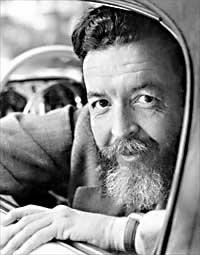 |
| Randall Jarrell |
WRITING (GRADES
11-12)
Text Types and
Purposes
W.11-12.1 Write arguments to support claims
in an analysis of substantive topics or texts, using valid reasoning and
relevant and sufficient evidence.
- W.11-12.1a Introduce precise, knowledgeable claim(s), establish the
significance of the claim(s), distinguish the claim(s) from alternate or
opposing claims, and create an organization that logically sequences
claim(s), counterclaims, reasons, and evidence.
- W.11-12.1b Develop claim(s) and
counterclaims fairly and thoroughly, supplying the most relevant evidence
for each while pointing out the strengths and limitations of both in a
manner that anticipates the audience’s knowledge level, concerns, values,
and possible biases.
- W.11-12.1c Use words, phrases, and clauses as well as varied syntax to
link the major sections of the text, create cohesion, and clarify the
relationships between claim(s) and reasons, between reasons and evidence,
and between claim(s) and counterclaims.
- W.11-12.1d Establish and maintain a formal style and objective tone while
attending to the norms and conventions of the discipline in which they
are writing.
- W.11-12.1e Provide a concluding statement or section that follows from
and supports the argument presented.
W.11-12.2 Write informative/explanatory texts
to examine and convey complex ideas, concepts, and information clearly and
accurately through the effective selection, organization, and analysis of
content.
- W.11-12.2a Introduce a topic; organize complex ideas, concepts, and
information so that each new element builds on that which precedes it to
create a unified whole; include formatting (e.g., headings), graphics
(e.g., figures, tables), and multimedia when useful to aiding
comprehension.
- W.11-12.2b Develop the topic thoroughly by selecting the most significant
and relevant facts, extended definitions, concrete details, quotations,
or other information and examples appropriate to the audience’s knowledge
of the topic.
- W.11-12.2c Use appropriate and varied transitions and syntax to link the
major sections of the text, create cohesion, and clarify the relationships
among complex ideas and concepts.
- W.11-12.2d Use precise language, domain-specific vocabulary, and
techniques such as metaphor, simile, and analogy to manage the complexity
of the topic.
- W.11-12.2e Establish and maintain a formal style and objective tone while
attending to the norms and conventions of the discipline in which they
are writing.
- W.11-12.2f Provide a concluding statement or section that follows from
and supports the information or explanation presented (e.g., articulating
implications or the significance of the topic).
W.11-12.3 Write narratives to develop real or imagined
experiences or events using effective technique, well-chosen details, and
well-structured event sequences.
- W.11-12.3a Engage and orient the reader by setting out a problem,
situation, or observation and its significance, establishing one or
multiple point(s) of view, and introducing a narrator and/or characters;
create a smooth progression of experiences or events.
- W.11-12.3b Use narrative techniques, such as dialogue, pacing,
description, reflection, and multiple plot lines, to develop experiences,
events, and/or characters.
- W.11-12.3c Use a variety of
techniques to sequence events so that they build on one another to create
a coherent whole and build toward a particular tone and outcome (e.g., a
sense of mystery, suspense, growth, or resolution).
- W.11-12.3d Use precise words and phrases, telling details, and sensory
language to convey a vivid picture of the experiences, events, setting,
and/or characters.
- W.11-12.3e Provide a conclusion that follows from and reflects on what is
experienced, observed, or resolved over the course of the narrative.
Production and
Distribution of Writing
W.11-12.4 Produce clear and coherent writing in which the
development, organization, and style are appropriate to task, purpose, and
audience. (Grade-specific expectations for writing types are defined in
standards 1–3 above.)
W.11-12.5 Develop and strengthen writing as needed by planning,
revising, editing, rewriting, or trying a new approach, focusing on addressing
what is most significant for a specific purpose and audience.
W.11-12.6 Use technology, including the
Internet, to produce, publish, and update individual or shared writing products
in response to ongoing feedback, including new arguments or information.
Research to Build
and Present Knowledge
W.11-12.7 Conduct short as well as more sustained research
projects to answer a question (including a self-generated question) or solve a
problem; narrow or broaden the inquiry when appropriate; synthesize multiple
sources on the subject, demonstrating understanding of the subject under
investigation.
W.11-12.8 Gather relevant information from multiple
authoritative print and digital sources, using advanced searches effectively;
assess the strengths and limitations of each source in terms of the task,
purpose, and audience; integrate information into the text selectively to
maintain the flow of ideas, avoiding plagiarism and overreliance on any one
source and following a standard format for citation.
W.11-12.9 Draw evidence from literary or informational texts to
support analysis, reflection, and research.
- W.11-12.9a Apply grades 11–12
- W.11-12.9b Apply grades
11–12 Reading standards to
literary nonfiction (e.g., “Delineate and evaluate the reasoning in
seminal U.S. texts, including the application of constitutional
principles and use of legal reasoning [e.g., in U.S. Supreme Court Case
majority opinions and dissents] and the premises, purposes, and arguments
in works of public advocacy [e.g., The Federalist, presidential
addresses]”).
Range of Writing
W.11-12.10 Write routinely over extended time frames (time for
research, reflection, and revision) and shorter time frames (a single sitting
or a day or two) for a range of tasks, purposes.
Friday, December 21, 2012
Thoughts Thursday--due March 28
 |
| Gwendolyn Brooks |
 |
| William Butler Yeats |
 |
| e e cummings |
RL.11-12.10 By the end of grade 11, read and comprehend
literature, including stories, dramas, and poems, in the grades 11–CCR text
complexity band proficiently, with scaffolding as needed at the high end of the
range.
By the end of grade 12, read and
comprehend literature, including stories, dramas, and poems, at the high end of
the grades 11–CCR text complexity band independently and proficiently.
Subscribe to:
Posts (Atom)