Also, rank five specific attributes of poems you loathe, explaining your rankings in 150+ words. Provide at least two titles of poems as examples.
 |
| Elizabeth Bishop |
 |
| Lee Ann Roripaugh |
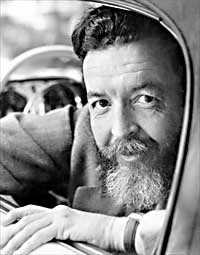 |
| Randall Jarrell |
WRITING (GRADES
11-12)
Text Types and
Purposes
W.11-12.1 Write arguments to support claims
in an analysis of substantive topics or texts, using valid reasoning and
relevant and sufficient evidence.
- W.11-12.1a Introduce precise, knowledgeable claim(s), establish the
significance of the claim(s), distinguish the claim(s) from alternate or
opposing claims, and create an organization that logically sequences
claim(s), counterclaims, reasons, and evidence.
- W.11-12.1b Develop claim(s) and
counterclaims fairly and thoroughly, supplying the most relevant evidence
for each while pointing out the strengths and limitations of both in a
manner that anticipates the audience’s knowledge level, concerns, values,
and possible biases.
- W.11-12.1c Use words, phrases, and clauses as well as varied syntax to
link the major sections of the text, create cohesion, and clarify the
relationships between claim(s) and reasons, between reasons and evidence,
and between claim(s) and counterclaims.
- W.11-12.1d Establish and maintain a formal style and objective tone while
attending to the norms and conventions of the discipline in which they
are writing.
- W.11-12.1e Provide a concluding statement or section that follows from
and supports the argument presented.
W.11-12.2 Write informative/explanatory texts
to examine and convey complex ideas, concepts, and information clearly and
accurately through the effective selection, organization, and analysis of
content.
- W.11-12.2a Introduce a topic; organize complex ideas, concepts, and
information so that each new element builds on that which precedes it to
create a unified whole; include formatting (e.g., headings), graphics
(e.g., figures, tables), and multimedia when useful to aiding
comprehension.
- W.11-12.2b Develop the topic thoroughly by selecting the most significant
and relevant facts, extended definitions, concrete details, quotations,
or other information and examples appropriate to the audience’s knowledge
of the topic.
- W.11-12.2c Use appropriate and varied transitions and syntax to link the
major sections of the text, create cohesion, and clarify the relationships
among complex ideas and concepts.
- W.11-12.2d Use precise language, domain-specific vocabulary, and
techniques such as metaphor, simile, and analogy to manage the complexity
of the topic.
- W.11-12.2e Establish and maintain a formal style and objective tone while
attending to the norms and conventions of the discipline in which they
are writing.
- W.11-12.2f Provide a concluding statement or section that follows from
and supports the information or explanation presented (e.g., articulating
implications or the significance of the topic).
W.11-12.3 Write narratives to develop real or imagined
experiences or events using effective technique, well-chosen details, and
well-structured event sequences.
- W.11-12.3a Engage and orient the reader by setting out a problem,
situation, or observation and its significance, establishing one or
multiple point(s) of view, and introducing a narrator and/or characters;
create a smooth progression of experiences or events.
- W.11-12.3b Use narrative techniques, such as dialogue, pacing,
description, reflection, and multiple plot lines, to develop experiences,
events, and/or characters.
- W.11-12.3c Use a variety of
techniques to sequence events so that they build on one another to create
a coherent whole and build toward a particular tone and outcome (e.g., a
sense of mystery, suspense, growth, or resolution).
- W.11-12.3d Use precise words and phrases, telling details, and sensory
language to convey a vivid picture of the experiences, events, setting,
and/or characters.
- W.11-12.3e Provide a conclusion that follows from and reflects on what is
experienced, observed, or resolved over the course of the narrative.
Production and
Distribution of Writing
W.11-12.4 Produce clear and coherent writing in which the
development, organization, and style are appropriate to task, purpose, and
audience. (Grade-specific expectations for writing types are defined in
standards 1–3 above.)
W.11-12.5 Develop and strengthen writing as needed by planning,
revising, editing, rewriting, or trying a new approach, focusing on addressing
what is most significant for a specific purpose and audience.
W.11-12.6 Use technology, including the
Internet, to produce, publish, and update individual or shared writing products
in response to ongoing feedback, including new arguments or information.
Research to Build
and Present Knowledge
W.11-12.7 Conduct short as well as more sustained research
projects to answer a question (including a self-generated question) or solve a
problem; narrow or broaden the inquiry when appropriate; synthesize multiple
sources on the subject, demonstrating understanding of the subject under
investigation.
W.11-12.8 Gather relevant information from multiple
authoritative print and digital sources, using advanced searches effectively;
assess the strengths and limitations of each source in terms of the task,
purpose, and audience; integrate information into the text selectively to
maintain the flow of ideas, avoiding plagiarism and overreliance on any one
source and following a standard format for citation.
W.11-12.9 Draw evidence from literary or informational texts to
support analysis, reflection, and research.
- W.11-12.9a Apply grades 11–12
- W.11-12.9b Apply grades
11–12 Reading standards to
literary nonfiction (e.g., “Delineate and evaluate the reasoning in
seminal U.S. texts, including the application of constitutional
principles and use of legal reasoning [e.g., in U.S. Supreme Court Case
majority opinions and dissents] and the premises, purposes, and arguments
in works of public advocacy [e.g., The Federalist, presidential
addresses]”).
Range of Writing
W.11-12.10 Write routinely over extended time frames (time for
research, reflection, and revision) and shorter time frames (a single sitting
or a day or two) for a range of tasks, purposes.

72 comments:
Marso 1
One of my favorite characteristics unique to poetry is the layout of words as well as the creative license poets use in not only punctuation, but the format of words themselves too. The attribute presents itself wonderfully in “Library of the Mind” by Patrick Hicks. In the poem, Hicks sets aside a word or stanza by placing it in its own line where he places the word “stops.” in isolation. Furthermore, the poet’s stanza reading “deep in the basement, down where the spiders grow.” is indented the format of the section resembles a basement or decent, demanding the reader to visualize this portion of the poem. A second preferable aspect of “Library of the Mind” is the figurative language—I heavily prefer a poem filled with similes, metaphors, personification, and allusions among others. This poem is bursting with examples like the library, wingback chairs, and “a candle tipping over in Alexandria.” Next, I desire to read poems that address abstract topics as I feel other resources can outperform poetry in stories and non-fiction, but poems possess a matchless power to question philosophies, ideas, and life and death. Hick’s poem fits this mold as he addresses the power of memories and even us after “the great pulse stops.” Additionally, I enjoy poetry with a rhyme scheme and a specific meter or rhythm. The Love Song of J. Alfred Prufrock contains rhyme in a specific pattern throughout its entirety, one reason I favor this poem over others. Finally, I prefer poems that challenge a reader, specifically by leaving reader with uncertainty or a question at its conclusion like in “The Second Coming” by Y. B. Yeats.
One attribute of some poems that I loathe is their length. I feel a poem should not be fewer than five lines, but at the same time not include several pages. If a poem is too short I do not feel it accomplishes its purpose as fully as it could regardless of motive and when a poem is too length, I wish for conciseness. If a poet truly needs so many lines, a short story or novel could—and in my opinion should—take its place. “What I Have Learned After 37 Years” borders the imaginary line of not containing enough information for the reader to draw from. This poem contains another attribute I abhor in poetry: the paragraph poem. I enjoy reading articles or papers that are written poetically like the time magazine article we read in class, but dislike reading paragraphs when I know poetry is the primary focus. A third characteristic that will steer me away from a poem is overdone imagery. An example of this can be seen early in “The Moos” when Elizabeth Bishop elaborates on the rural setting. Despite my inclination towards poems with strong figurative language, excess description takes away from the message or challenge the poem presents. Finally, contrasting my feelings above of like for rhythm of some kind, I somewhat loathe poetry without any pattern. I have found poetry with pattern more difficult to write as a larger vocabulary and extra time are required to fit specifications so I appreciate rhymed and rhythmic poetry. Overall, I look for many attributes when I am selecting a poem to read and similar to music, the poet plays a crucial role in this decision based on reputation and prior experience. Reading well-written poems can be a wonderful and challenging experience, however a poor poem can leave a reader with terrible aftertastes and force them away from literature.
Van Ede, 5
When it comes to poetry, I remain incredibly shallow in my scrutiny. It may be immature, but poetry has never moved me with the same power of novels, short stories, or physical art. Thus, my favored characteristics of poetry likely line up with those a third grader might choose. In a poem, I like the stereotypical rhyme pretty much all the time. No like sounds and the poem deserves one big frown. A strict meter is also a necessity for my preference of poetry. The flow it adds to a group of words astounds me and makes the poem significantly more enjoyable, especially when read aloud. I believe meter, along with rhyme, is the element that distinguishes poetry from a pile of empty, fragmented thoughts. Rhyme and meter, combining with my third desirable trait: comedy, produce my favorite form of poetry: a limerick. Its origin somewhat unknown, "There once was a man from Nantucket" exhibits these three traits:
There once was a man from Nantucket,
Who kept all of his cash in a bucket,
But his daughter, named Nan,
Ran away with a man,
And as for the bucket, Nantucket.
I smirk at it every time. If a poem cannot be as wistfully childlike and humorous as this one, I still demand of it two other traits. Firstly, I want a story, something with purpose—I want to envision movement not stagnation. I also appreciate adherence to grammar in the absence of comedy. I tell myself, "If you're going to be 'serious' about it, at least include some punctuation." A recent poem we have read in class exemplifies this well. "While Strolling Through Highgate Cemetery, I Consider the Morning of My Own Funeral" by Patrick Hicks not only is grammatically accurate but also it conveys a message: a thoughtful goodbye. I find this to be more tangible, thus more relatable, and thus more pleasurable.
(continued on next post)
Van Ede, 5 continued
Although many poems contain my favorable if immature traits, others, unfortunately, do not, and may contain far duller attributes. I dislike any poem with severe fragmentation in writing style, general flow, or topics and ideas. "Scratching My Eye" by Patrick Hicks particularly irks me. Although I admire the meaning behind the poem, the seemingly random chaotic layering of the words throws me off. I realize this may be meant to emphasize his point on his vision, but that does not mean I am not allowed to be irked at it still. I also detest particularly long segments of poetry thinking, "Why didn't you just write a short story, or journal, or something?" Need I mention more than "The Love Song of J. Alfred Prufrock" by T.S. Eliot? In poetry, more so than novels, themes and meanings are only detected through bitterly extensive examination of the text. The longer a poem stretches, the more difficult and exasperating this task becomes. Poems that make frequent references, through similes or metaphors, to flowers, birds, or the ocean bother me still more. I find them to be redundant and overused—almost cliché. I already know these nouns are things of beauty and enchantment; I want a poem to find new, creative connections—a task easier said than done. On this note, I must say I am not a big fan of poems with the following commonplace topics: depression, Armageddon, purpose of life, or afterlife. Truly, I am deeply sorry if this offends anyone; it is simply the way I feel. To me, too many poems exist on these topics, and all of them generally say the same thing and do not lead to any definite conclusion. There are numerous examples of fantastic poems on these topics, but one must remember the far more numerous and poorly worded, ignorant works. Unfortunately, the shortness of poetry makes it harder to broadcast one's skill at the art compared to composing a novel or short story. A final, fussy trait I despise in poetry is the use of onomatopoeia. Although my views on poetry can be considered somewhat childish, in my humble opinion, I believe if an author needs to resort to made-up, sounding words to describe a situation it is far more immature. Poetry, or any literary art, should not need sound effects to be considered admirable.
Again, my comments are honest but incredibly superficial in their judgment of poetry. However, I also believe a shallow voice (even if it represents the concrete, entertainment driven mind of a third grader) deserves a say in what is worthy poetry.
Gallo 2
W.11-12.6 Use technology, including the Internet, to produce, publish, and update individual or shared writing products in response to ongoing feedback, including new arguments or information.
W.11-12.1c Use words, phrases, and clauses as well as varied syntax to link the major sections of the text, create cohesion, and clarify the relationships between claim(s) and reasons, between reasons and evidence, and between claim(s) and counterclaims.
Considering this is an internet blog, I believe standard W.11-12.6 is particularly salient. Of course I am making supported claims about why poems are good and bad, so standard W.11-12.1c is also relevant.
I appreciate the sincerity of poems. While there are other aspects of T.S. Elliot’s “The Love Song of J. Alfred Prufrock” that I do not appreciate, the sincerity is truly excellent. The sad tone of an old, unloved man truly made me consider a perspective that is currently far from my reality.
Secondly, I appreciate the imagery contained. Patrick Hicks’s “New London, Minnesota” is a prime example. Although I do not know even in which part of Minnesota New London is, I felt like I had visited the town after reading Hicks’s work.
I also appreciate the manageable size of most short poems, including Hicks’s “At the Pub.” Shorter works allow the reader to re-read and analyze the work many times over, something our hectic schedules often do not allow is to execute with full length narratives.
Additionally, the way in which taboo topics can be discussed, such as in Hicks’s “Red Light District” is truly enlightening. Perhaps even more so than in long novels where the sheer disgust readers experience might prohibit them from reading on, poems can expose their readers to unimaginable horrors.
Finally, the lyrical quality of poems truly entrances me. “Stopping by Woods on a Snowy Evening” by all-time boss Robert Frost comes to mind. To read his poetry is to immerse yourself in a symphony of syllables as well as imagery, of course.
Like the esteemed Chase Marso, I too fail to appreciate lengthy poems such as “The Love Song of J. Alfred Prufrock” by T.S. Elliot. While I can appreciate other aspects of the work, the sheer length bored me.
I also despise the ambiguity of some poems such as Dylan Thomas’s “Do Not Go Gentle Into That Good Night.” I feel that this poem could be about a variety of topics, and I am neither equipped nor motivated to consider them.
Some poems are just too gross. This holds true for Patrick Hick’s “Riding the Tube,” which includes a line about breast implants and bull’s sperm.
Another thing that has a tendency to irk me is when poets write excessively about their own (albeit somewhat interesting) lives. Patrick Hicks’s “While Strolling Through Highgate Cemetery, I Consider the Morning of My Own Funeral” struck me as a bit narcissistic and pretentious at times.
Finally, I do not like poems that have no evident purpose. I believe all writing should have a goal, preferably a goal to influence and broaden people’s perspective. Poems that do not accomplish this are, in my humble opinion, worth less.
Story 5,
When it comes to poetry I prefer very specific types that portray into my mind easier and more “gently.” There are some poems where I cannot understand what the message or story that attempts to access my comprehension. In the poem “A Farewell” both styles collide into my mind. I admire an easy to see rhyming pattern that happens beyond frequently. When a poet does this my interest ignites with a tremendous spark that keeps me hooked on firmly. Lord Alfred Tennyson uses the “ee” and “ever” rhyme scheme the entire poem. That amount of hard work and dedication needed for this work is great . . . along with some admiring diligence, this would never hurt. I however dislike the short pattern of words and the word choices you do not hear when speaking from one person to another. “And here thine aspen shiver;” No one ever uses the word “thine” along with “thee” and many others. The combination of old time English words like these and the inversing of sentences enables my “uhh-what?” button in my mind to be pressed several times. I often ask myself what the heck I just read after poems like these. This poet is not alone on this different play of words, however. In “Madonna Mia” the word “hath” and similar old style English words are again used. Sometimes this leads to difficulty in understanding a poem when I do not acknowledge the references nearly as well as I could have if they were more present-timing poems. “A sepal, petal, and a thorn” displays a perfect short poem that proves its easiness in comprehension. You are told the main character immediately and the surroundings actions that arise throughout the day. The rhyme scheme is again revealed to the reader as an easy and vivid display. Sometimes simpler and shorter truly remain the best pieces of work with their point getting across the table rather quickly.
Wilde 7
W.11-12.1 Write arguments to support claims in an analysis of substantive topics or texts, using valid reasoning and relevant and sufficient evidence.
W.11-12.4 Produce clear and coherent writing in which the development, organization, and style are appropriate to task, purpose, and audience. (Grade-specific expectations for writing types are defined in standards 1–3 above.)
I truly appreciate poems that contain real meaning. I merely am not captivated to the same extent when reading senseless poetry. Much poetry in the packet we received fulfills this requirement. I enjoy T.S. Eliot’s The Love Song of J. Alfred Prufrock. The passion and care expressed in this poem enables me to thoroughly enjoy what Eliot has to say. Adding to this point, I believe that poetry should not sacrifice meaning for rhyme. Sure, rhyming can become an important element of the poem’s flow. That being said, meaning supersedes this flow. I would much prefer enjoying a meaningful poem that one whipped together with words utilized for their rhyme. Edith Cavell’s Burqa is effectively meaningful without a rhyme scheme. Next, I look for poetry that paints a picture in your head. This can be done through vivid imagery and verisimilitude. Sticking to T.S. Eliot’s The Love Song of J. Alfred Prufrock, I enjoy that imagery portrayed through significant usage of adjectives and adverbs. “The yellow fog that rubs its back upon the window-panes.” I feel like I am observing this scene myself! I also like variety in the poems I seek. There should be a plethora of rhythm, repetition, alliteration, etc. Simple can sometimes be good, but with poetry, I personally appreciate deeper work. Last, I prefer poetry with lots of symbolism. What is the point of poetry if it neglects to make me as a reader think for myself? I love conclusions that are left ambiguous, leaving me to decide the outcomes. This is merely a few of the characteristics I seek in poetry.
Of course, there is much I dislike about poetry. Enjoying poetry certainly comes down to the reader and his/her personal opinions, but the following are simply a few of the qualities I dislike. I believe that poetry should be universal. Even if a poem applies to me and my life, it needs to be applicable to all readers from various backgrounds. Therefore, everyone can appreciate the poem in his or her own way. At the Pub does not necessarily appease my taste since I cannot relate to its message. I also dislike poems that seem to drag on forever. Poems ought not to be 15 pages long. I am looking for a poem, not a novel. Of course, I seek poetry that agrees with my opinions. Obviously, I do not want to read senseless garbage thrown together that does not agree with my beliefs. All poets need to abide by Nick Wilde’s beliefs. I think that poetry needs to apply and reflect that author and his or her experiences. I find it hypocritical when authors write about things that have no experience dealing with. Lastly, I want to read poetry that makes sense. At the Globe with Shakespeare is not even worth reading. If “Shakespeare” is in the title, the poem is obviously going to make no sense. Yes, symbolism and variety is good, but the poem should still be coherent and a message should be present. These are a few of the characteristics I dislike in poetry.
Koehn pd.7
One of my favorite elements of poetry is the skill to rhyme lines either back to back or alternately and still conveying one main message. “Do Not Go Gentle Into That Good Night” by Dylan Thomas is a great example of rhyming the last word in alternate lines. I find the tempo in rhyming poems to be pleasant to read and also soothing to listen to. Alliteration is also another interesting literary tool that I like to read in poems. In the poem “Skunk Hour” by Robert Lowell I enjoy the stanza length. Poetry is easiest for me to understand if the stanzas are about 5-6 lines long or shorter. Chaos. Another element I find unique and intriguing in poetry is a chaotic arrangement of words, stanzas, fonts, and formats. Patrick Hicks displays this precise poetic chaos in his work “Library of the Mind.” Lastly, concrete poetry ranks as an extremely creative poetry element. The impressive structure of the poem combined with meaningful, carefully-chosen words makes concrete poetry a true art.
First of all, I loathe poems that are pages long—the author should write a story instead if he was so much to say about a particular topic. “The Love Song of J. Alfred Prufrock” by T.S. Eliot is a prime example of an endlessly long poem. Sonnets are fun to read because they flow smoothly; but writing one of them is something I avoid. I find requirements for certain syllables in a line to be slightly tedious. However, I commend poets who can do this so effortlessly. “Sonnet 130” by Patrick Hicks is one example of this. Haiku poems are most likely by far my least favorite genre of poetry. First of all, they MUST be about nature. I have never understood this rule because poetry is supposed to be all about authors’ free license to write and be creative. Secondly, Haikus also have to have certain stressed syllables (which I have mentioned that I find ridiculous). Another annoying characteristic of poetry is onomatopoeia. Poets should use imagery well enough to create an atmosphere the reader can imagine. A “whoosh” or “bang” simply insults my intelligence of the situation I am reading about. Lastly, I despise Shakespearean poetry in its entirety. I have not read one poem that I a) understand or b) can relate to. I long for the day when I will no longer be forced to read Shakespearean poetry—just my personal opinion.
W.11-12.1 Write arguments to support claims in an analysis of substantive topics or texts, using valid reasoning and relevant and sufficient evidence.
oW.11-12.1a Introduce precise, knowledgeable claim(s), establish the significance of the claim(s), distinguish the claim(s) from alternate or opposing claims, and create an organization that logically sequences claim(s), counterclaims, reasons, and evidence.
•W.11-12.4 Produce clear and coherent writing in which the development, organization, and style are appropriate to task, purpose, and audience. (Grade-specific expectations for writing types are defined in standards 1–3 above.)
Herrick 5
W.11-12.4 Produce clear and coherent writing in which the development, organization, and style are appropriate to task, purpose, and audience
W.11-12.6 Use technology, including the Internet, to produce, publish, and update individual or shared writing products in response to ongoing feedback, including new arguments or information
As a child, I loved going to the library and reading from the children poem books. I loved reading the poems that had rhyming in them. Especially if it was funny. When it rhymed, it was so much easier to read. It also caught my interest, so I would read many pages at a visit. I also liked these child poems, because they were short. They had short stanza lengths, and that made it easy to read as well. I didn't get draw away from all of the words. I really like poems that are easy to picture. I like when the author tells you what they are talking about, instead of just trying to describe it. When the poem is able to be taken in different ways is really cool. The poem “Hills like White Elephants” is a great example. At the end of the poem, you do not know if the woman decided to have the abortion or not. Another thing I like is when the author rhymes with their own made up words. It really makes it fun and enjoyable.
There are many things I dislike about poems as well. I like the length, but I also hate it. Some poems can be just so darn long, that I lose interest and I can’t concentrate on what the author is trying to say. Which is why if the author does not make the characters or objects easily identifiable, then it becomes hard to understand and I can’t pay attention. I feel like I am reading a bunch of words. Sometimes the poems do not flow. They bounce around sometimes and it becomes very hard to follow. I dislike the rules of some poems. I know how to rhyme, so why can’t I just rhyme? Why do I have to follow the ten syllable rule? It would be a really cool poem if that wasn't the case. I do not like poems I can’t relate too. “The Moose” is not relatable poem for me, as I have never seen a moose up close. Therefore, it became boring and I couldn't understand what It really wanted me to say.
Van Ede, 5
I recently noticed I forgot to add the two common core standards I was fulfilling in my blog task, my apologies.
W.11-12.1e Provide a concluding statement or section that follows from and supports the argument presented.
In my forgetfulness, I am now updating my statements, thus:
W.11-12.6 Use technology, including the Internet, to produce, publish, and update individual or shared writing products in response to ongoing feedback, including new arguments or information.
Backer 2
W.11-12.4 Produce clear and coherent writing in which the development, organization, and style are appropriate to task, purpose, and audience. (Grade-specific expectations for writing types are defined in standards 1–3 above.)
W.11-12.6 Use technology, including the Internet, to produce, publish, and update individual or shared writing products in response to ongoing feedback, including new arguments or information.
When it comes to poetry, I tend to draw myself towards the poems that have some sort of rhyme scheme. When there is rhyming involved, I am more likely to remember the poem and retain it more quickly. For example, it would most likely be easier for me to retain bits and pieces of the literary work, “Do Not Go Gentle Into That Good Night” by Dylan Thomas, than it would for me to retain “What I Have Learned After 37 Years.” Even though “What I Have Learned After 37 Years” is shorter, “Do Not Go Gentle Into That Good Night” contains a rhyming pattern that allows me to remember at least the last sound of each line. I also enjoy the consistent meter displayed in “Do Not Go Gentle Into That Good Night.” Each line containing 10 syllables makes the poem flow more smoothly. Another attribute I like is when poets incorporate imagery and figurative language into their poems. I feel that “Library of the Mind” displays both of these traits very well— “Dictionaries are swollen, vowelplump, ripe with energy.” Lastly, I feel that a poem should have some meaning behind it. Words are merely letters if they fail to tell a story or get a point across.
Although many poems contain the attributes that I love, there are also poems that tend to divert my interests. I, for one, am not a fan of lengthy poems. Unless the poem is very well written, I lose interest if each stanza exceeds 6 lines. Contrary to this, I also dislike poems that seem lacking in lines and stanzas. “What I Have Learned After 37 Years” is merely a paragraph! Another attribute I loathe is the use of onomatopoeia. Like others, I feel that the poet should be able to describe with words other than a simple “Kaboom” or “Bang.” I also dislike some of the criteria that certain types of poetry demand. For example, while writing “Sonnet 18,” Patrick Hicks had to follow certain requirements: 14 lines, 10 syllables per line, abab rhyme scheme, ending couplet. Poems with requirements such as these only make it more difficult for one to develop a purposeful poem—a task that I feel should come more naturally. Lastly, if it were up to me, I would stray away from anything having to do with Shakespeare. I appreciate all that he has done for literature, but like some of my other classmates, I find myself struggling to relate to and understand his poetry.
Lenz 7
W.11-12.9 Draw evidence from literary or informational texts to support analysis, reflection, and research.
W.11-12.6 Use technology, including the Internet, to produce, publish, and update individual or shared writing products in response to ongoing feedback, including new arguments or information.
Poetry has been taught to students since they were in elementary school. I tend to be a kid a heart, so I appreciate the more primitive aspects of poetry. I enjoy poetry that has rhyme imbedded within it such as “Do Not Go Gentle Into That Good Night.” This poem has an ABA rhyme scheme that can be easily picked up on and followed by most any reader. Imagery also stands out to me within a poem. A poem is such a short work of art that any imagery helps to understand and visualize the setting since the author does not have pages to describe it. Rhythm and specific meter are a general characteristic of a poem that intrigues me. Poems are definitely not my favorite piece of literature, so I tend to have the attention span of an elementary school student when reading them and a rhythm to the words will hook me and get me to finish reading the rest of the poem. Such as exhibited in the poem I chose for the previous blog task, “Messy Room,” by Shel Silverstein, humor within a poem strikes me as interesting. I am not a fan of solemn poems that will put me to sleep. Although I realize that poetry is a way for many people to release their feelings, I am not up for reading a poem that will make me hate the world. I like to laugh and enjoy what I am reading. Along with that, I would like a poem to have a story behind it. I realize that a poem is not very long, but through imagery as I have previously stated, an author can describe vivid items in only a few short stanzas.
As previously mentioned, poetry is not on the top of my list as far as types of art that I enjoy. That being said, there are many aspects of poetry that do not intrigue me and that make me want to put the poem down before I am even done reading. Long poems strike me as particularly unnecessary. I feel that if a poem gets too long, such as “The Moose” by Elizabeth Bishop, it would be better served as a short story. Short stories can still have poetic aspects such as the Time Magazine article we read in class last week, but do not try to disguise themselves as poems. Also, poems that have no rhythm or rhyme do not seem to be poems to me either. Free verse poetry does not attract me. I feel as if, just as long poems, it would be better fitted as a short story. However, too many requirements turn me away as well. I do not mind reading sonnets and Haikus but to write one seems to me to be torture. If and when I write poetry, I do not like to be suppressed with so many restrictions. I like my ideas to flow freely. I will add rhythm and rhyme, but where I feel it is necessary, not where I am forced to place it. A poem with a little bit of shape is not bad, but poems such as “Riding the Tube” by Patrick Hicks has too choppy of a layout distracts from the words. Another element of poetry that I feel distracts from the message is when an author leaves too much to infer. At the end of these types of poems, I am more worried about forming my own ending and how the author would have liked me to perceive the happenings than the message behind the poem. Poetry is by far not my favorite type of literature, so I tend to have more immature likes and dislikes than many of my classmates. I am glad I have received a chance to study poetry in class, but I would not choose to read it in my spare time.
Scholten 2
When I think of poetry, I think of rhyming. One of my favorite elements of a poem are the lines that rhyme either alternatively or subsequently while still conveying a message. It takes great skill to rhyme an entire poem. The poem “Do Not Go Gentle Into That Good Night” by Dylan Thomas is a prime example of a poem that uses my favorite element. Another element of poetry that I enjoy is a use of alliteration. Helping to create imagery and a certain mood, alliteration is a very useful tool in poetry. When reading poems, I find it very beneficial to recognize a tempo or beat. The beat soothes me and I can understand the poem better. If poems are choppy and hard to read, I automatically dislike them. Also, I like it when poems have short stanzas, roughly 4-6 lines long. I don’t like reading big chunks of material at one time. Lastly, I find it amusing when poems have some sort of disorder and chaos to them. For example, the poem “Scratching My Eye” has several lines that are indented in further. This sort of chaos intrigues me leaving me to wonder why the poet includes it in their poem. The disorder can be a different use of font for a certain word or a different arrangement for a stanza. Another great poem that displays some chaos is “Library of the Mind” by Patrick Hicks. These are just a few of the qualities I appreciate in poetry.
There are several attributes of poetry that I despise, the first being a ridiculously long poem. Poems, to me, are meant to be short. I don’t want to have to read a poem that goes on for pages. If the author has that much to say, he or she should just write a short story. I hated reading “The Love Song of J. Alfred Prufrock” by T.S. Eliot because it was seemingly endless. However, if a poem is too short, like a paragraph, then I feel that the message isn’t able to get through in that small amount of time. Another element of poetry I loathe is the rules for writing a certain poem. For example, a sonnet has to have ten syllables per line with 14 lines total; it has to follow a certain rhyming sequence, too. I find it very difficult trying to write a sonnet since you have to be so tedious and conscious of what you are saying. However, I don’t mind reading sonnets like Sonnet 130 in our packets because of the length and ease of reading it. I do not like reading poems that I cannot make a connection with. “At the Pub” doesn’t satisfy me because I cannot relate to its message. Poems should be universal in its message. Another characteristic that I abhor in poetry is the overdone use of imagery. “The Moose” by Elizabeth Bishop seems to elaborate on the rural setting for quite some time before getting to the actual plot. The excessive use of the imagery takes away from the message the poet is trying to express. Lastly, I hate poems that make no sense to me. Shakespearean poetry is a prime example. I have not read a poem by Shakespeare that I can either understand or relate to. These are a few examples of the attributes I loathe in poetry.
W.11-12.4 Produce clear and coherent writing in which the development, organization, and style are appropriate to task, purpose, and audience
W.11-12.6 Use technology, including the Internet, to produce, publish, and update individual or shared writing products in response to ongoing feedback, including new arguments or information
Tripp 7
Overall, reading poetry can be fun. Some things that I truly enjoy about reading poetry include rhyming, altered/unusual stanza length, alliteration, beat/rhythm, and humor. Rhyming is important for me because I feel like it helps me understand more clearly what the author is trying to say and it helps the reading go faster. If a poem does not rhyme, it is harder to read the poem in its entirety only once because many times you must stop and reread something to understand it better. One example of a poem that uses good rhythm, rhyming, and is very humorous is one of my favorite poems by Shel Silverstein called “Ickle Me, Pickle Me, Tickle Me Too”. I have found that most of Shel Silverstein’s work is quite humorous and has a good sense of rhythm. Some of his poems also use a thing called alliteration. Alliteration is again something that I find important because it helps keep the tempo going, like the beat/rhythm, while the ability to understand remains strong. Lastly, I enjoy poems that use altered/unusual stanza length. Another example of a poem that uses unusual stanza length is “Riding the Tube”. In this poem, I find that it is much more enjoyable to read because the layout is very interesting instead of the typical same length stanzas.
While there are many things that make reading poetry fun, there are many things that make it not so fun. Some of those things include excessively long poems, poorly written “funny” poems, the fact that there are so many types of poems, poems that leave too much unknown, and the overly lovey poems. To start, excessively long poems are not fun to read because you forget what happened at the beginning. An example of this would be T.S. Eliot’s “The Love Song of J. Alfred Prufrock”. This poem is very well written but making a poem of this duration causes the reader to lose interest towards the end and forget what happened at the beginning. Sometimes people try to write poetry that is “funny” but it turns out really awful. Those are the types of poems that end up rhyming while using words that are very childish. Something that does not have to do with one specific poem is the fact that there are so many types of poems. I do not like that there are so many types because I feel like writing poetry should come about when the writer just starts writing and it flows as opposed to the writer having to figure out what type of poem to write and then trying to write it. I do not enjoy reading overly lovey poems because I do not enjoy really mushy things. Whether the poem is sad or happy I would prefer it not be too lovey. There are many examples of lovey poems but one would be “Love Song” from our packet of poems. Lastly, poems that leave too much unknown are bothersome because, in general, I do not like having to come up with what I think the poem should mean while everyone else can have their own interpretation.
W.11-12.2b Develop the topic thoroughly by selecting the most significant and relevant facts, extended definitions, concrete details, quotations, or other information and examples appropriate to the audience’s knowledge of the topic
W.11-12.6 Use technology, including the Internet, to produce, publish, and update individual or shared writing products in response to ongoing feedback, including new arguments or information
Myrlie 2
The quality I most like about poetry is the ability to create a rhythm. The writer has more possibilities of how to layout their work of art. In poetry, it is also more widely accepted to break the "rules" of the English language. "Scratching My Eye" has been one of my favorite poems that we have read in class. It has short lines and for me, is easier to read and understand. My liking of the first two traits I stated relates to me not being the best writer. Most anyone can write something down and call it a poem. However making a good poem does take a lot of time and work. When I read a poem that has alliteration, a good rhyme, and that is humorous I seem to appreciate it more. Even though one of my favorite poems, "Where the Sidewalk Ends" by Shel Silverstein, is not necessarily funny, I still enjoy meaningful poems if they are short.
As many of my other classmates can agree, when a poem gets too lengthy, the desire to keep reading drops off a cliff. "The Love Song of J. Alfred Prufrock" by T.S. Eliot carries on for one hundred and thirty one lines. I do like some of the stanzas, however, I feel that there is much unneeded content. When writing a poem, I find that having a certain number of syllabi per line is very restricting on the poet. Also, the certain patterns of rhyming can be very annoying while writing a poem. The Shakespearian language is also one of my least favorite qualities in poetry. Therefore, anything written by Shakespeare is not my favorite piece of work. But for requirement sake; I will mention sonnet one hundred and thirty by Shakespeare.
W.11-12.1 Write arguments to support claims in an analysis of substantive topics or texts, using valid reasoning and relevant and sufficient evidence.
W.11-12.6 Use technology, including the Internet, to produce, publish, and update individual or shared writing products in response to ongoing feedback, including new arguments or information.
Rollag 5
The major attribute I like about poetry is how much power so few words can posses. I enjoy poems that are deep in meaning but not highly in depths or symbolism. I like poems to talk about something important not just talk around it like politicians. My favorite poems are shorter in length with at lest one line that hold the complete power of the poem like Alfred Tennyson's "Charge of the Light Brigade" and my favorite line "Into the valley of Death Rode the six hundred." My favorite poems talk of the power of man and the greatness with in like William Henley's "Invictus" favorite line "I am the master of my fate; I am the captain of my soul."
I do not like all facets of poetry and some I loath completely. My first complaint would be that many poems have deep symbolism that takes an English degree to understand and as children you are told they are the greats, but I never can understand why that is. Also I do not like poems that are free form because it says that anything can be a poem and is a contradiction to the English language which is known for having so many rules. Alone that same line I also do not like long broken rhyme-less poetry that drags on to a nonexistent climax of pointless symbolism. Yet another thing that can ruin a poem in excess verbiage like George Eliot's "The Choir Invisible" which consists of two pages of adjectives which give little actual description. Psychologically speaking I probably dislike poetry as a whole because growing up I was told by older siblings how terrible it is or the complaining of classmates when the poetry unit began. I hate having to count the syllables in poems like "Wolsey's Farewell to His Greatness" because have the words I don't know how to pronounce and the other I have to use my fingers like I am doing first grade math.
W.11-12.2b Develop the topic thoroughly by selecting the most significant and relevant facts, extended definitions, concrete details, quotations, or other information and examples appropriate to the audience’s knowledge of the topic.
W.11-12.1a Introduce precise, knowledgeable claim(s), establish the significance of the claim(s), distinguish the claim(s) from alternate or opposing claims, and create an organization that logically sequences claim(s), counterclaims, reasons, and evidence.
Clemenson 2
W.11-12.4 Produce clear and coherent writing in which the development, organization, and style are appropriate to task, purpose, and audience. (Grade-specific expectations for writing types are defined in standards 1–3 above.)
W.11-12.5 Develop and strengthen writing as needed by planning, revising, editing, rewriting, or trying a new approach, focusing on addressing what is most significant for a specific purpose and audience.
I believe that patterns are the most desirable attributes in poems. If a poem follows a certain pattern then the reader has an easier time following and understanding the story. Descriptive words are important in poems because they help paint a picture for the readers. The poem “To My Hands” by Patrick Hicks uses many different ways to describe the hands throughout the life time from punching the womb to arthritic fingers. I also enjoy poems that rhyme even though I find that writing them is extremely difficult. I like Shakespeare’s sonnet 130 because it has a pattern, description, and the word at the end of every other line rhymes. I also like the iambic pentameter of Shakespeare’s sonnets because when every line is ten symbols, the whole poem flows nicely together, even though it is written in Old English. I also enjoy reading poems that are like a shot and choppy story. I find them the easiest to follow because they focus on one topic and are usually more concise.
I loathe poems that seem excessively long in length. Once poems exceed more than a page in length, the author tends to lose readers in all of the details. For example, most of my class did not enjoy “The Love Song of J. Alfred Prufrock” by T.S. Elliot because the poem is four pages in length and most of the class stated that it was too long. I also despise overly symbolic poems because I get lost in the symbolism trying to figure out exactly what the author is attempting to describe. I also despise poems that bounce from topic to topic because they lose my focus. I also dislike poems that change that look of the words on the page because I find it extremely distracting. I did not like the poem “Riding the Tube” by Patrick Hick because I found the separation of the words confusing because I could not figure out how to read it. Lastly, I dislike overly graphic poems such as “Red Light District” by Patrick Hicks because it was unnecessarily graphic.
Arrowsmith 5
W.11-12.1a Introduce precise, knowledgeable claim(s), establish the significance of the claim(s), distinguish the claim(s) from alternate or opposing claims, and create an organization that logically sequences claim(s), counterclaims, reasons, and evidence.
W.11-12.6 Use technology, including the Internet, to produce, publish, and update individual or shared writing products in response to ongoing feedback, including new arguments or information.
When I first learned we would be studying poetry I immediately felt a sick feeling in my stomach produce from my past hate of poetry, but after the past couple weeks I now find myself enjoying poetry because of many of its aspects. The attribute that I enjoy the most about poetry is the freedom of it. I used to think that all poems had to be this many lines and that many syllables and have such and such rhyme scheme, but upon further knowledge I learned that poetry can really be anything you want it to be. There are no chains or iron bars holding it down. Secondly, I enjoy the humor that “Taste of India” has in its last line “tip not included.” The message of a poem is the key component of that poem. Alfred Tennyson’s “Charge of the Light Brigade” brilliantly portrays bravery. I also enjoy the word play that many poems have. Poets to me are somewhat like sculptors bending and molding words to convey the imagery they want. Lastly, I admire the sincerity of poetry. When reading sincere poems you cannot help but feel for the character—whether it be joy or sorrow.
In poetry, there is a fine line between brilliant and disastrous. The length of a poem is certainly a deal breaker. A few lines too short and the poem struggles to convey its message, a few lines too long and the reader becomes bored. Along with length, the descriptive language of a poem can also be a fine line. Some poems make me feel as if I am in the poem itself, while others force me to reread it several times just to get past the verbiage. I also loathe poems that lack a moving message. Patrick Hicks’ “The Great Stink of 1858” to me is simply about how a city used to smell terrible and now smells fine. This poem neither amuses me nor makes me wonder. The formality and rigidness of sonnets like Sonnet 73 – “That Time of Year Thou Mayst” puts a bad taste in my mouth and frankly I loathe writing them. Though I enjoy the freedom and informality of many poems, I still believe all poetry needs to have a certain flow to it. Without this flow it becomes impossible to read let alone enjoy.
Larson Pd 5
I am not a huge fan of poetry, but I will admit there are some aspects that I do admire. My favorite aspect of poetry is rhyming. I simply enjoy reading poems that consist of rhymes. In “A Bridge to the Moon” by Darren Sardelli, the rhymes positioned at the end of each line help give the poem flow. Flow is very important to me because it pushes me to keep reading. I also appreciate a similar sentence structure throughout the poem. I feel as if this aspect adds to the flow of the poem. I do not applaud choppy sentence structure. The next aspect that I admire is how much I can relate to the poem. In “Where the Sidewalk Ends” by Shel Silverstein, I can relate to this poem on two levels. This poem is about being a kid and a grownup, which I am currently making this shift as I move into college. Comedy and imagery also improve a poem in my opinion. If I can laugh and imagine myself in a position the poem is in—then I will appreciate that poem so much more.
There are also aspects I am not very fond with in poems. The first aspect is non-rhyme poems. Like I said before, rhyming gives the poem flow. I honestly cannot get into a poem that does not rhyme. I also do not like varied sentence structure. I feel as if this makes the poem feel choppy—and this may result in me not finishing the poem. As mentioned by my fellow classmates, I also do not appreciate the long and dull poems. “The Lovesong of J Alfred Prufrock” by T. S. Elliot became longer than I would prefer. Halfway through the poem I found myself imaging what I would be doing that night. My mind simply cannot stay focused on a poem with that length. I am also not a fan of poems with no purpose. If I cannot relate to a poem or if it seems to have no genuine purpose, I will end up pushing the poem aside. The last aspect of poetry I do not appreciate is onomatopoeia which occurs in “The Bells” by Edgar Allan Poe. When I reach onomatopoeia in a poem, I feel as if I come to a wall. I do not thing onomatopoeia belongs in a poem and it fits better with short stories and novels.
Although poetry is not my favorite by any means, I do appreciate many aspects of poetry and the style that they are written in. Poetry is a nice break from novels in my opinion.
Rogen5
I found that the best way for me to explain my thoughts on poetry would be to use the art form. I hope you somewhat enjoy.
First.
What is a poem without its meaning? Its sense of worth to the reader or society?
With no symbolism or metaphor poetry lacks power and reality.
Lost with nowhere to stay,
Left to decay.
The meaningless poem offers nothing; only to be thrown away.
Second.
Mood can be derived from the author’s tone
From “The Raven” to “The Cat in the Hat”
Their words can leave expressions like stone
Or leave a reader in a zone that,
Is decided by the quill at the writers will leaving the reader silent and
Still.
Third.
How the composer shapes his work
Can affect the reader’s view
As if to tell them where to
Look or maybe even
To close them
Or narrow
Them
Fourth.
Clowns.
They offer nothing but fear to the uneducated.
But to the people willing to listen and learn why they are clowns,
They can be seen as something funny.
Poetry .
Offers nothing but fear to the misinformed.
But the people willing to listen and expand their horizons,
will appreciate the virtues that make it art.
Those who do not fear clowns,
find nothing more enjoyable than the circus.
Fifth.
I fear failure.
Failure to understand the things that surround me.
For if something is supposedly “GREAT!”
But I don’t understand it. What does that make me?
If these great minds that sculpt poetic literature
Leave me in this fixture
Of not knowing.
Being left in this abysmal ignorance
I refuse to fail any longer.
Pham 7
W.11-12.2c Use appropriate and varied transitions and syntax to link the major sections of the text, create cohesion, and clarify the relationships among complex ideas and concepts.
W.11-12.1d Establish and maintain a formal style and objective tone while attending to the norms and conventions of the discipline in which they are writing.
Concerning the desirable attributes of poetry, the ability to express emotion is the most poignant. With poetry, one can truly express their feelings with their words. In relation to this, rhythm is also a prime attribute. With rhythm, mood, atmosphere, and tone may be created—essential parts of any literary work. Within the context of rhythm is rhyme. The use of rhyme can make certain words more distinguished or noticeable. Yet an enjoyable factor of poetry is only found in some poems: conciseness. In Steve Boint’s “One Are Two,” he speaks of his emotion and the nostalgia of his experiences from Canada. He goes on to explain how that time has gone and how he is left with only the cold. This theme, story and much more is revealed in those nine short lines. Line breaks are also a fascinating factor of poetry. These create natural pauses and stops in the music that really emphasize every single word that is written. Stopping after one or two words really allows the audience to evaluate the true meaning of the work. This is championed in another Boint poem, “Winter Driving.” Boint is expressing many different events at once. If they were all written in a single line, the poem would cease to be coherent. However, by creating lines between events and words, the syntax of the poem is brilliant and helps the audience visualize the happenings in a winter driving environment.
Yet, within the context of poetry, there are also many undesirable factors. In counterpoint to the favor shown for concise poems, long poems often exist as well. Another one of Steve Boint’s poems entitled “Goodnight Mr. Eliot” is split into nine parts. Each part possesses a different meaning yet pieces together at the end. Howbeit, this is often ignored because of the sheer length of the poem. In accordance, the varied meaning of poems distracts the reader from the overall theme of the poem. Perhaps this is caused by the complexity of the work. Not all poems are meant for novice and intermediate readers. This also brings up the grievance that poems can be everso esoteric. Boint’s “On the Passing of Life” is a magnificent poem of losing a loved one, but there are factors (if one did not know him personally) that would confuse the reader on a level that adds to the mystery of the work or dissolves the meaning with confusion. Another fallacy one sees in poetry is the mystery. The wording of many poems, although artistic, confuses the reader through a lack of confirmation and extrapolation. Another menial flaw found in poetry is the somber macabre of the meter. More often than not, the meter drives the work into a drift of sadness. Depending on the meter used by the reader, any poem may sound somber. Perhaps that is my biggest problem with poetry—the openness of interpretation.
Woodward 5
W.11-12.1c Use words, phrases, and clauses as well as varied syntax to link the major sections of the text, create cohesion, and clarify the relationships between claim(s) and reasons, between reasons and evidence, and between claim(s) and counterclaims.
W.11-12.2b Develop the topic thoroughly by selecting the most significant and relevant facts, extended definitions, concrete details, quotations, or other information and examples appropriate to the audience’s knowledge of the topic.
To have an enjoyable poem, I believe that there needs to be an obvious rhyme scheme. When lacking a rhyme scheme, poems seem to lose their flow. For example, “Where the Sidewalk Ends” by Shel Silverstein seems to flow effortlessly due to the consistent rhymes. The poem also has a simple structure that is easy to understand, yet not childish, which is another aspect of a good poem. At the same time, the meaning and resolution are unclear; this air of mystery is another aspect I enjoy in a poem. When I read a poem, I usually do not go looking for an entire story, but a lesson or just food for thought. Because of this I think that poems should be able to be read within a few minutes, not hours. “Be Glad Your Nose is On Your Face” by Jack Prelutsky is a good example of my fifth and final aspect of a great poem; poems that use humor or sarcasm tend to be more effective than those that use despair or shock, at least in my experience.
Of all of the things that annoy me in a poem, repetitiveness is the worst. I realize that to get your message across, you may need to repeat it once or twice but poems, or rather songs, such as “Like a G6” by Far East Movement take it to far. Over the course of the four minutes the song drags on, the phrase “like a g6” is repeated twenty eight times. Another aspect that instantly turns me away from any poetry is extreme length. As previously stated, I read poetry as food for thought not an entire story. A perfect example of a poem that is much to long is “Only if Life” by Nikhil Parekh, which is over seven thousand words. Another aspect of a bad poem is the use of half rhymes like “coming” and “roaming”. There should not be a need to use a special accent to read poetry; poets should either rhyme well or not at all. I also loathe poems that seem to be chalked full of redundancies, as it makes the poem drag on endlessly. Lastly, I dislike poems that are vague to the point of incomprehensible. I enjoy being challenged by the complexity of literature, but there needs to be concrete material mixed in with symbolism.
Hallstrom 1
One poem that caught my attention was “The Bells” written by Edgar Allan Poe. This poem contains a majority of the attributes I enjoy in a poem. It’s hard to rank each attribute but number 5 on the list would be that the poem rhymes. Although I know poems don’t necessarily have to rhyme in order to be poems, I admire anyone who is capable of rhyming their poetry because I’m not always talented enough to do so. The fourth desirable attribute would be the descriptiveness the author has given. When I’m reading this poem I am able to close my eyes and imagine the twinkle of the bells and the sight of the heavens above. My third ranked attribute comes from the poem “Touched by An Angel” by Maya Angelou. The trait I like most in this poem would be how relatable it is. Most people know what it’s like to be coiled up and feel as though they are alone, until maybe that one friend comes along and they never feel that way again. Ranked number two on the positive chart would be the trait of repetition. I like the idea of repetition because it gives the readers an idea of a certain theme the author was trying to get across to the reader. As I list my first ranked attribute I have no particular poem in mind. The main thing I usually look for in the poem would be the title. If a title is good enough to catch my attention, my expectation for that poem is probably pretty high. As referred to in the desirable attributes, the poem composed by Edgar Allan Poe “The Bells” also has one characteristic I am not fond of. In this poem, or any poem, I don’t enjoy length. I would prefer to read a poem that doesn’t include so many lines. Another poem I’m not fond of is “Before You Knew You Owned It” written by Alice Walker. This brings about attribute four of despising and the reason is because I don’t like this is because in just the first few lines I felt like it was choppy. The lines were too short and I couldn’t really tell what was being addressed. Although I’m not fond of too much length in a poem, a poem without depth is the reason for my third rank. When reading a poem, I want it to have some sort of meaning rather than just something someone threw together. Ranked second on my list would be when poems just don’t appear to make sense. Sometimes when I’m reading poems I have trouble understanding where the author came up with their ideas. The attribute I would rank number one is free verse poetry. Rhyming in poetry is probably one of the only reasons I read poetry, as silly as it sounds and I feel like I enjoy a poem more if it involves some sort of rhyme.
Olesen 1
One of my favorite attributes of poetry is when the poem is written in a way that the lines “move” with the motions of the story. To me, this makes it much more interesting and more visual in my mind of what the poem is about. An example of this would be in the poem “Library of the Mind” by Patrick Hicks. The placement of the word “stops.” For example, makes me actually pause while reading and hear the great pulse stop. Also, the placement of the line about the deep basement makes my eyes follow that pattern of as if actually stepping down into the basement. I also enjoy reading a poem containing some type of rhyme scheme. A rhyme scheme produces a better flow of the poem, and is more entertaining to read. I find it intriguing how a poem can make one simple thing seem so stunning and intricate. For example, the poem “To My Hands” is one of my favorites of the packet we received. I also enjoy reading sappy, cheesy love poems like Shakespeare’s “Sonnet 18.” The main attribute of a poem that I loathe is when the poem is much more complicated than it needs to be, and the meaning or message behind it becomes lost in the wordiness. One topic we have discussed in class before is how a poet will sometimes rhyme a word with that same word. This is a major pet peeve I have while reading poetry. To use the same word to rhyme does, in fact, not rhyme at all.
Lippert 7
Before I begin, I must inform whoever is reading this that I do not enjoy poetry. Do not enjoy it at all! Poetry, to me, is like the movie villain that causes every audience member to scream, “why won’t you just die?!” So I hope you appreciate just how difficult it is for me to pick FIVE attributes I find desirable. I do like how poems can be used to, how do you say, preach for change, evident in such works like “Man-moth” where a angered author is expressing her displeasure at a society that is more effective at hating than accepting. Poems are also quite efficient at being comical, I did enjoy, slightly, Shakespeare’s little love poem about his unpleasing mistress, “Sonnet 130.” Ya know what? I do enjoy the rhyme scheme we do encounter in our poems. The rhyming in a poem does make it quite entertaining when new are reading a sonnet or limerick, the way one line flows into the other allows the story to unfold in an enticing way. I do find it funny how a poet has more freedom when crafting their story than a novelist, able to change even the structure of their poem, arranging the stanzas and individual lines in different shapes that help to portray the meaning and message of their creation. Some poems incorporate my next trait and others shun it, length. Many poems find a way to extend their meaning using only a few carefully chosen and crafted lines, a small block of sentences on a piece of paper can hold so much meaning.
YES, now it is time for the fun part, the attributes of poems I find undesirable. The antithesis of a trait I described in the previous paragraph now finds its home in this paragraph. Some poems are just horribly long! I mean, look at “The Love Song of J. Alfred Prufrock.” This poem was like a marathon! I must admit when the video of it on YouTube popped up on the board and I say it was six minutes long I immediately groaned inside knowing I would be bored to death, AND I WAS. Some poems can prove to just be gross and unpleasing such as “Riding the Tube.” A jug of bull sperm? A vasectomy kit? 2 human heads? BREAST IMPLANTS! Ewww, man just keep it in your head. Poems can also be quite depressing like “The Second Coming” the day is almost over and I don’t want it to be ruined by some depressing poem about the end of the world but thanks anyway. Some poems just make no sense, spewing words and crafting lines so ambiguous that I walk away confused about a subject I had complete understanding of before. I know I said I like the rhyme scheme in poems but that’s when I am reading them, when writing them the rhyme scheme makes it so bloody difficult. Finally, poems are not novels that take us on a journey through the right the wrong, the clear the mundane, the battles the triumphs, the love and the loss. No, they preoccupy us for a few lines or a few pages and then they are done and abandoned for the next one, they don’t stay with us like novels and they certainly are not made into movies.
I used W.11-12.3a and
W.11-12.4 Produce clear and coherent writing in which the development, organization, and style are appropriate to task, purpose, and audience. (Grade-specific expectations for writing types are defined in standards 1–3 above.)
W.11-12.9 Draw evidence from literary or informational texts to support analysis, reflection, and research.
The most desirable attribute of poetry is clarity—the author must clearly portray what they want to say within the poem, leaving little room for confusion or misinterpretation. One of my favorite poems is “Riding the Tube” by Patrick Hicks not because of content, but because of the unique outline of the poem itself, keeping with Hicks’ theme of “minding the gap.” This creative license in poetry leads me to my third most desirable attribute of poetry is flow—if a poem has no flow, then it has got to go. I also love imagery, as exemplified in another of Patrick Hicks’ poems, “New London, Minnesota.” The line “Silence walks down the street on manure-tanged air” is relatable and real—his word choice is provocative and easily relayed to the olfactory bulbs. Relatable poetry such as this (I did grow up in South Dakota, after all) is another of my top five desirable attributes of poetry.
I loathe poems that require endless analyzing to gain some form of meaning from the poem. Since I thoroughly enjoy poetry that speaks for itself and is what it is without much explanation—poetry that can just be—poems such as “The Moose” by Elizabeth Bishop are obnoxious and tedious to me. I do not believe I would have come to the conclusion that the bus rider must be gay (or recognized other odd symbolism within the poem) without our discussion in class. “The Moose” is also too long for my liking, and this length practically begs the reader to disengage from the endless words that must be over-analyzed to be remotely understood. Poems that rhyme all the time are also not my favorite… as well as those that must follow a specific outline, such as haikus and sonnets. Poetry is about freedom without bounds, yet the strict structures of haikus and sonnets minimize the freedom of the poet to express their feelings and emotions. Writing poetry should be an escape, not a trap. Imitating (or attempting to imitate) Shakespeare’s “Sonnet 18” was an experience which left me feeling trapped and hindered on the creative level.
Rise pd 2
Poems are ranked on a different level from nonfiction literature. Poetry has more of a free spirit, no outline or requirements. Personality, beliefs, and hobbies will determine your thoughts and preferences for a poem. My preference for rank of poems would be” how relatable the poems are to people?”
“Hope is the thing” by Emily Dickinson
Someone who might be in a terrible situation and only has hope will find this poem very important to them.
“Love” by Czeslaw Milosz
Milosz thinks about love in a distant way, he imagines himself as small and far away. He thinks little of himself, like he can never be loved or will love. He ends the poem saying, “Who serves best doesn’t always understand.” I think he is saying, even though we may be certain that what we think is right, we are wrong sometimes. There is hope, he could love someone. We can do things we think we cannot.
The poem Namaste is first about complimenting someone about their, “light, peace, love, truth and beauty”, the poem concludes by saying the writer and reader contain the same qualities and become one. The poem creates a safe feeling in the complements and expressing companionship, “you are not alone.”
“Women of Strength” by Jan Brooks
The poem has the ability to make someone feel as strong and confident. Having hard trying times, yet still getting the daily chores done shows true strength; being able to care about people and give after a hard night shows true character. This poem makes you feel important.
“Happy as I am” Jan Brooks
Being alone, a loner, few friends—all have bad connotations, but this poem talks about how wonderful it can be to be alone, refreshing. Most people feel different or odd if they like being alone but this poem would help make you feel more, “normal.”
“What scares me the most” Anonymous
It was a very amazing poem comparing the meth addiction to an abusive girlfriend, what it would be like to meet their new life self, as sober, to re-learn what and who they like. I am ranking it as a poem I dislike because I would never want to know how hopeless and desperate that situation would really feel like. Though the poem did an amazing job making me feel the emptiness of the life they were living.
“Walking Dead” Anonymous
“We thrive on evil...My body temperature is regulated by drugs.” Those two lines are just a small taste of the gross description in this poem. The poem makes sense; I think of a ghetto, everything is dependent on money, gangs, drugs and reputation of being a thug. It is sad.
“Walk if you don’t have to Run” Anonymous
This poem was just a cliché about not rushing life. It was just slightly boring.
“20/20 hindsight” this poem talked about things always seeming more obvious than they appeared; a common saying in life—another cliché.
“Life” poem
Yes, the poem was about life and had a long span of time to cover but it was too long.
In conclusion, I like poems that are different and help you think of things differently or make interesting metaphors; I dislike poems that are: long and sad.
W.11-12.1c Use words, phrases, and clauses as well as varied syntax to link the major sections of the text, create cohesion, and clarify the relationships between claim(s) and reasons, between reasons and evidence, and between claim(s) and counterclaims.
W.11-12.2b Develop the topic thoroughly by selecting the most significant and relevant facts, extended definitions, concrete details, quotations, or other information and examples appropriate to the audience’s knowledge of the topic.
Beckman pd. 1
Poems have many attributes to them, some that I like and some that I do not. The fact that I have never really been a big fan of poetry may make it easier for me to list off the attributes that I dislike more easily than those that I enjoy. The fact that some poems have the internal rhyme scheme has never sat well with me, while they do sound good in certain occasions having to write them does not always sit well with me because they usually end up sounding more forced and out of tune with the overall content. Another thing I do not like about poetry is the classic approach that leaves me wondering what was even going on in the poem like “Now Sleeps the Crimson Petal” by Alfred Lord Tennyson. I also do not like the length of some poems; I feel poems should be shorter and more direct—maybe a page at the most. Anything beyond a page in poetry tends to lose my focus like “Hudson’s Last Voyage” bye Henry Van Dyke.
As I took the time to write about what I did not like in poetry, I realized there are many more items I can come up with that I do like much more easily. I love the short length poems because I feel like you can read so many more that way and understand them better. Short poems are by far my favorite, like “Fire and Ice” by Robert Frost. I also really like when poems have the rhyme at the end of a line, either consecutively or every other line how Langston Hughes writes in “Dreams”. That poem combines both elements very well. Free verse has always been another of my favorite poetic elements, it allows you to just write whatever you are thinking, and it’s a lot less stressful— for me anyways! Alliteration also fascinates me and has ever since I was young trying to talk about Sally selling sea shells. I also like the layout of poems, in typical writing you can’t just stop and sentence anywhere you want to begin a new line but poetry gives you the freedom to place line breaks anywhere you deem appropriate as the author without worrying about grammar as much.
W.11-12.10 Write routinely over extended time frames (time for research, reflection, and revision) and shorter time frames (a single sitting or a day or two) for a range of tasks, purposes.
W.11-12.4 Produce clear and coherent writing in which the development, organization, and style are appropriate to task, purpose, and audience. (Grade-specific expectations for writing types are defined in standards 1–3 above.)
Hanzel 7
W.11-12.4 Produce clear and coherent writing in which the development, organization, and style are appropriate to task, purpose, and audience. (Grade-specific expectations for writing types are defined in standards 1–3 above.)
W.11-12.6 Use technology, including the Internet, to produce, publish, and update individual or shared writing products in response to ongoing feedback, including new arguments or information.
Opposed to the majority of my classmates, I enjoy reading and writing poetry- it is purely creative writing. One of my favorite attributes of poetry is the freedom authors have in the writing process. Contractions are created and the number of syllables is adjusted to fit within a line. I also enjoy reading poetry because of the layouts that poets have developed. Patrick Hick’s poem, “Riding the Tube after the Bombings”, is a perfect example for this. The poem is written with stanzas separated by the different locations the tube stops at along its travels. The freedom poets have with their poem layout can add tremendous effects to interpretation by the reader. I am fully interested by the stressed and unstressed syllables used by Shakespeare in “Sonnet 18”. Other aspects of poetry that interest me are those of rhyme scheme and the ability for the poet to end the poem with ambiguity.
Although I favor poetry, it still contains attributes that I loathe. I loathe the length of poems that run on for multiple pages. I have always been more attracted to short stories and poems. A poem that I consider too lengthy is “The Love Song of J. Alfred Prufrock” by T.S. Eliot, but at the same time, I think poems can also be too short. Poems only a few lines long have a tough time grabbing my attention because of their short length. I loathe the complexity of poems. Many poems are so vague that they contain a million different interpretations. I loathe the extreme symbolism in “The Moose”. When reading complex poems, I get distracted from the content of the poem while trying to decipher the symbolism in the poem. Poetry can be a great break from long novels if you can find the poems that grasp your attention and fulfill your literary desires.
Breitzman 1
W.11-12.1a Introduce precise, knowledgeable claim(s), establish the significance of the claim(s), distinguish the claim(s) from alternate or opposing claims, and create an organization that logically sequences claim(s), counterclaims, reasons, and evidence.
W.11-12.1d Establish and maintain a formal style and objective tone while attending to the norms and conventions of the discipline in which they are writing.
Poetry is a form of literature as well as art. Many people consider a well-written poem to be poignant, moving, and inspiring. I am not sure where my opinion lies on this matter. There are attributes of poems that I highly enjoy and some that I greatly dislike. One item I typically do enjoy about poems is that they can be about a variety of topics. A short story or a novel can be written about just about any topic as well, but require more consistent and complete thoughts. Poems can be about any desired topic and be any desired length. In our current literature class we have read poems on topics ranging from a person scratching his eye (“Scratching My Eye”) to a Jack the Ripper-style murder (“Infamous”). A second trait I like about poems is, though it may sound juvenile, that they (sometimes) rhyme. Rhymes to me are catchy and intriguing, and I like it when two words sound similar when placed together consecutively. We witnessed these in the Shakespearean sonnets that we read, like “Sonnet 18.” A third attribute I like about poems is that many times authors are trying to convey an important and meaningful message. While this can also be done in short stories, it seems that poets are more passionate about their topics and are able to display their intentions without having to go as in-depth with details. Another characteristic I enjoy about poetry is the ability it is to make people think more deeply, such as in “Library of the Mind.” The poem discusses the journey after death to heaven and discusses it in a symbolic manner. Lastly, I also enjoy the fact that poetry can bring people together. While I am a person who can be motivated to analyze themes from a great novel as well, I feel like a simple poem about a tragedy, hope, whatever the topic can inspire people to evaluate their lives, ambitions, feelings, etc. and to maybe even change their lifestyles. Poetry really does possess some wonderful attributes.
Breitzman 1 CONTINUED
There are several attributes I dislike about poetry, however. One quality I particularly dislike about it is that sometimes I feel as though some poems are a bit disorganized. I am a person who likes order and sequence, and in poems such as “Riding the Tube” I feel like the randomness with which the author jumps from object/topic to object/topic appears a bit scatterbrained. Another quality I dislike about poems is their random lengths. Some poems are incredibly short, such as “We Real Cool” (one of my favorite poems, though) and others are very long, like “The Love Song of J. Alfred Prufrock.” As a person who, once again, likes order and sequence, I find multiple-page poems to be lengthy and tiresome. A third trait that sometimes irks me about poetry is the way some of it is composed. It seems to me that sometimes poets try to appear TOO wordy and lengthy so as to “show off” their intelligence. I sometimes believe that poets ramble (for lack of a better term) to demonstrate what they believe is brilliance, but it becomes a bother to the reader. I also dislike the fact that some poetry is so old-fashioned. While I respect Shakespeare and his literary greatness, his poems are often hard to relate to because of the archaic language with which they are written. I personally prefer more straightforward poems with contemporary language, like “We Real Cool.” Lastly, I dislike the fact that poetry can be, well, boring. Although I said earlier that poetry can inspire people, I feel that it has to be an incredibly poignant and well-thought-out poem for that to occur. If a poem is not created with this standard in mind, it can come off as boring and dry. I personally do not become excited with the idea of reading poetry as I often do with novels or even short stories. I feel that by combining these traits with those that I like, one is given an accurate assessment about my opinions on poetry.
Albertson 5
The most important trait and the difference between poetry I study at school and poetry I enjoy at home is the presence of a melody. I don’t normally get enthusiastic about poetry, but for some reason if poems have a tune they change completely and I will listen to them all day long. However, traditional poetry, like “Library of the Mind”, usually carries more magnitude, which I consider very important, than many songs broadcasted on the radio. In “The Road Not Taken” I appreciate the significance the title makes after you finish reading the lines of the poem. The tendency to illustrate images and ideas, even if they are not the focus of the work, in original metaphors is something that I believe poets do very well. Finally, poems like “At the Pub”, “Sonnet 130”, and Mr. Woodward’s Sonnet which are funny really stand out from other poems that are heavy and deep.
What I can appreciate the least about a poem is after you have finished reading the beautiful description and clever rhymes you ask, “What was it about?” Maybe I’m at fault for my lack of experience, but I find too many poems to be ambiguous and too abstract, such as “Do Not Go Gentle Into That Good Night”. I think part of the reason I prefer music is because even if I miss the meaning I can still enjoy the rhythm of the song. When a poem is long like “The Love Song of J. Alfred Prufrock” I feel like the potency of the words are diluted and my critical eye becomes exhausted from sorting extensive detail from the key lines. A long poem and especially one that doesn’t rhyme doesn’t give me any reason to call it poetry other than it is too strangely structured to be called a short story.
W.11-12.6 Use technology, including the Internet, to produce, publish, and update individual or shared writing products in response to ongoing feedback, including new arguments or information.
W.11-12.10 Write routinely over extended time frames (time for research, reflection, and revision) and shorter time frames (a single sitting or a day or two) for a range of tasks, purposes.
Svartoien 7
Good Attributes:
I love how free and flowing poems are. Some have rhythms, some don’t. But whether a poem has recognized a structure or not, it is still beautiful.Poetry has no rules, thank God. Society has enough of those. Poems are creative and artistic; they draw pictures and feelings with mere syllables. As we listened to “To this day” by Shane Koyczan in TEAM one day, I felt for the poet. I could feel what he was saying, even though his experiences weren’t my own. (W.11-12.1c)Who needs therapists when there is poetry? Writing down poetry is so personal, emotional, and most importantly, therapeutic. It is one of the few times it is acceptable to fully express your innermost thoughts and feelings and get a positive response for normally absurd, ludacris or “mentally unstable” ideas. (W.11-12.1b)The passion that goes into poems is intense. Rarely do you hear a poem about sticks. And even when you do, there is thought behind it. It’s not like Miss Brill by Katherine Mansfield where they drone on and on about a lady in a park. Instead, most poems reach out and suck their readers in, if only for a few minutes. I love slam poetry; it is a creative skill I greatly admire. Whoever can produce a web of words that somehow come back to connect to each other, is my hero. One of my favorite slam poets is Lemon Andersen. I first saw him on a TED talk where he performed “Please don’t take my Air Jordans.”
Not-So-Good Attributes
To be honest, most poems we have ever studied in school have either put me to sleep or lost my interest within the first few stanzas. In short, poetry on paper is, more often than not, boring. The only time I have gotten excited about poetry was in Oral Interp and YouTube/TED talks, when the words were given life. Also, I am not a fan of writing the poetry myself. I would much rather bask in the awesomeness of others creativity rather than become frustrated at the lack of my own. To add to my frustration, when teachers ask you to create a poem, they must be in certain formats and fit a formula—the exact opposite of the purpose of a poem. That is not being creative. That is following a formula, which we do in EVERY other aspect of our lives. It is one of the few places we can experience true freedom. But even here, those in authority feel the need to strip us of it in this art form. How disappointing!
Rist 2
Usually, I strongly dislike poetry, but I have learned to appreciate some forms of it. One trait I admire in some poems is the rhyme scheme. I have always found rhyming poems to be more interesting than others. Their flow makes them easier to read like in “Do Not Go Gentile Into That Good Night” by Dylan Thomas. Another attribute of poems is the humor they can possess. I enjoy laughter and I believe it brings joy to people and can make them truly happy. Humor in poetry makes me happy. Thirdly, I am interested by poems that take on an odd shape. If the lines are indented to random spots or spaced out strangely, I am immediately wondering why the author chose this. An example of this can be seen in the poem “Riding the Tube”. Lastly, shorter stanzas are preferred. Long passages can get wordy and lose my interest right away. In most cases, the shorter, the better.
Not all poetry can be desired. I strongly dislike when poems are lengthy. The poem “The Love Song of J. Alfred Prufrock” is extremely long. After the second page, I completely lost all interest in it. Secondly, I loathe when poems are vague. Having many interpretations of one little piece can be overwhelming. Some poems can be gross, which I also hate. In “Red Light District”, menstrual blood is mentioned. I find that line very disturbing and I will never read that poem again. I also dislike when poets rhyme at certain points in the poem and then at other times they do not. If the poem rhymes, then have it rhyme. If it does not rhyme, then have the entire poem not rhyme. The poem needs consistency throughout. The last thing I loathe in poetry is when there is no meaning. If I take the time to read a poem and there is no meaning, I have just wasted my time. I do not want to read anything if there is no meaning behind it!
W.11-12.1a Introduce precise, knowledgeable claim(s), establish the significance of the claim(s), distinguish the claim(s) from alternate or opposing claims, and create an organization that logically sequences claim(s), counterclaims, reasons, and evidence.
W.11-12.4 Produce clear and coherent writing in which the development, organization, and style are appropriate to task, purpose, and audience. (Grade-specific expectations for writing types are defined in standards 1–3 above.)
Grapevine 7
I greatly enjoy poetry, and there are specific things that draw me into a poem, such as rhythm, because I like the flow, though it is fun when things stop and surprise you right in the middle of the poem. The thing that always gets me in poems is emotion. I'm not much of a romantic, but I really enjoy poems with feeling, poems that make you tear up and just sit in a corner and think about life and everything. Poems that don't really fit together, broken jigsaw poems are ones I enjoy as well. I love poems that stop, make you think, and then take you in a completely new direction. Poems that make you feel free, and unburdened from your troubles. To be honest, I actually love all types of poems, from haikus to fun, witty poems. Even though most people are not fans of poetry, I certainly am, and enjoy reading and writing poetry, even if I am too shy to read it outloud.
Like many other classmates of mine, I despise extremely long poetry. Write a short story if you're going to use that many pages. Paragraph poems also annoy me, because it is hard to actually read them as poetry, because there is a clear difference between journalism and poetry, even if some people do not think so. I don't like poems that have too much meaning, or have absolutely no meaning at all. I am not a fan of poems that give too little detail and no visual imagery.
W.11-12.4 Produce clear and coherent writing in which the development, organization, and style are appropriate to task, purpose, and audience
W.11-12.6 Use technology, including the Internet, to produce, publish, and update individual or shared writing products in response to ongoing feedback, including new arguments or information
Voigt 7
Focusing on Common Core Standards:
W. 11-12.1b & W.11-12.1d
Poetry is wonderful. Poetry is a brilliant concoction of lyricism and story. There are so many things to enjoy about poetry, but I will discuss just a few. First of all, one the most common reasons given for a love of poetry is the beat or rhyme it can often possess (such as used in-- A Poem With The Perfect Rhyme by Sylvia Chidi). Because of this eternal rhythm held by a poem, one finds that poetry is easy and smooth to read both aloud and within the head. Secondly, poetry is versatile. Poetry can be written about nearly anything that comes to mind. It can be heartfelt and deep -like a poem about death- or simple and broad such as a poem about rainbows (A Rainbow by Gaines Fox). Another positive of poetry is that it can be accepted or embraced by all ages in any time period. Today, we enjoy the works of ancient poets such as Shakespeare, as well as the works of new poets. Other specific attributes of poems include their ability to be any length (from a few lines to many pages) and the various ways there are in which to organize a poem. Poems possess beauty and power in both situations with rhyme or without rhyme. Rhyme can be used with pattern or random, without pattern. Poetry is mold-able.
I do not necessarily find many flaws in poetry. In fact, it is difficult to find flaws in something so lose that lacks many strict rules or regulations. Perhaps though, this a flaw to poetry. Without specific rules defined to all poetry, the open-endlessness of writing poetry may seem difficult and far too broad for many. However, on the other hand, another flaw may be that for specific types of poetry or schemes of rhyming, there may seem to be too distinct of rules. This makes it difficult to create a piece that fits the specific rules and criteria. You can see strict rules through the ancient haiku poems of poets like Basho Matsuo. Another frustration with poetry is that it is often found to be filled with many different interpretations. While this may stir good discussions at times, it can be frustrating for a reader to not ever know exactly how a piece was written to be interpreted. For instance, “The Elegy in a Spider's Web” by Laura Riding Jackson is a confusing and difficult poem to interpret. Furthermore, there are poems that make little sense or seem to have little meaning. As a reader, I dislike poems that possess no purpose or sense. Finally, I dislike at times that poetry is considered poetry at all different levels of skill. Poetry remains such a broad subject making it difficult to determine what is true poetry and what is not. While this can often be considered a plus as well, poetry is ultimately left up to one's perception.
Volk 5
Poems have many attributes that make them unique and somewhat fun to read. The first attribute that I enjoy is the rhyming. Rhyming helps them to roll off of the tongue and make them easy and exciting to read. It also makes them original and forces the author of the poem to dig deep into his mind to come up with original verses. A poem that really gives life to rhyme is “Do Not Go Gentle Into That Good Night” in our packet. The second attribute that makes poems special is the rhythm. Rhythm is truly enjoyable to listen to as it gives the words more body and soul. Rhythm keeps the reader going through the story. An example of great rhythm is “Sonnet 130” in the packet. The third attribute that I find desirable is that they tell a story in a unique and non-traditional way. They engulf the reader and beckon him to keep going. Fourth, poetry makes the story being told more personal and deep. The way the verses and lines come together make it more sincere and heartfelt. Finally, poetry requires creativity on behalf of the reader and writer. The writer needs to creatively tell the story and the reader has to be creative in his interpretation.
There are also attribute included in poetry that I do not particularly enjoy. First, some poems are far too long. The reader may easily lose the focus that they need to properly decipher the true meaning. A poem that I believe is too long would be “The Love Song of J. Alfred Prufrock”. As I read it, I quickly became uninterested and bored. Second, I am not a fan of poems that are oddly written. An example would be “Library of the Mind”. Although it is a magnificent poem, I am not impressed with the format. I did get through it, but with some difficulty due to the indentation and layout. The third undesirable trait is a poem with an indecisive end. I prefer straight forward works of poetry so the ones that keep me guessing are not what I am looking for. Fourth, I despise Shakespearean poetry. It is difficult to understand and the words are rarely uses nowadays. Lastly, I loathe poems such as “Riding the Tube”. I have yet to understand or be able to properly read this poem and in all honesty it does not look like a poem at all.
Hensley 5
Poetry is a beautiful language of its own that is pleasant to the ear. One attribute I simply adore is how poetry can present itself a story that tells a lesson is so few of words like “To My Hands”. This is a true showcase of how talented a writer can be by displaying his skill in such a fashion. A second attribute that astounds me is how a writer can link his lines together through the use of rhyming like in the expertly crafted “Do Not Go Gentle Into That Good Night”. I also enjoy a poet who develops words and language specifically for a poem often creating new words to appease the senses. I also appreciate how it is not only the words on a page but also how they are presented and the shapes of the lines that can also speak to a reader. Finally the simplicity a poem can have with the words is simply bliss. The fact that a poet can turn common words into a beautiful composition is simply magical.
Like so many of my peers I also do, however, have attributes of poems I do not like. I, like so many others, like a poem to be clear and concise unlike “The Love Song of J. Alfred Prufrock”. It is more of a challenge for the writer to compose a shorter composition to motivate the reader than using a longer text. I however do not like a poem that is so short that a deeper message can not be extracted. An attribute I dislike are when writers get too liberal with the styling of their lines to the point where text becomes hard to understand like “Riding the Tube”. I also dislike poems that do not possess a deeper lesson buried within the poem; poems should be a learning device about human nature. It is my strongest dislike of poems, however, that originates from poems that fail to connect lines together by any other means besides finishing a sentence like in the poem “What I Have Learned After 37 Years”
N. Peterson 7
Like many of my classmates, I’m not a big fan of poetry. I have never been good at writing it and it’s not always easy for me to understand. However, there are some attributes I really enjoy about poetry. My favorite is the writer’s freedom. Poems can be anything you want them to be; they can be short or long, about one thing or many different things, and they can rhyme or have a certain pattern— whatever the writer desires. Another prime attribute is the ability to express emotion. I think that poems are one of the best ways for people to express their feelings with their words. I enjoy reading poems with different layouts much more than reading a poem that is written in paragraph form. A great example of this is “Riding the Tube after the Bombings” by Patrick Hicks. It poem is written with stanzas separated by the different locations the tube stops at along its travels. I also really like how poems flow, even if they don’t have a certain structure or set rhyme scheme. An example of this attribute is Shakespeare’s “Sonnet 18”. Lastly, I really enjoy the humor that many poems possess.
The number one attribute I loathe is lengthy poems. I lose interest and understanding in the poem if it is longer than a few stanzas. A poem that reaffirmed my feeling towards this is “The Love Song of J. Alfred Prufrock” by T.S. Elliot. This poem didn’t make sense to me, and frankly, I was bored. I also loathe poems that require an immense amount of analyzing to understand the meaning. The third attribute I loathe in poetry is sad/depressing poems. Even though I think poetry is a great way for writers to express emotions, reading these types of poems is not enjoyable and often times leaves me feeling unhappy, which occurs in “Alone” by Edgar Allen Poe. I also dislike poems without a purpose or that were written without passion. Lastly, I hate poems that are overly symbolic because I get lost and have a hard time figuring out what the writer is really trying to describe. This attribute goes along with my second, having to deeply analyze a poem to attain any meaning.
W.11-12.4 Produce clear and coherent writing in which the development, organization, and style are appropriate to task, purpose, and audience
W.11-12.6 Use technology, including the Internet, to produce, publish, and update individual or shared writing products in response to ongoing feedback, including new arguments or information
Johnke Pd. 5
When I think of poems I think of many different things. Certain attributes make poems a complete success or a total failure. The five attributes that I deem most important are rhythm, rhyme, realistic language (as opposed to excessive figurative language), creative layout of lines/stanzas, and flow. The reason I choose rhythm as a big attribute is because it is much easier to read when you can read with a sort of beat. Second, having rhyme is important because just like rhythm, rhyme keeps the pace of the poem going and makes it more light-hearted. An example of an author who does this is Dr. Seuss's Cat in the Hat children's books. Third, I prefer a poem with realistic language because I often get lost when reading poems when they don't give me something to visualize easily. Finally, having flow is important because if it does not I find it extremely hard to read.
When listing attributes I do not like about poems there are a few that particularly stand out. When poems are too lengthy I get bored and often lose interest. Second, when poems ramble on about seemingly nothing I get frustrated. I prefer a solid subject that is easily identified. Next, like Gallo, I don't particularly enjoy poems that talk about their own authors. For whatever reason most of these irk me. I also do not like poems that contain malicious material. It might sound stupid but, poems like Infamous by Patrick Hicks are not that much fun to read. Finally, poems that are excessively sad are too depressing for me. I personally like to read poems when they are happy and carefree.
Andersen
Period 2
I personally do not like poetry whatsoever. If I must, tolerable poems would be poems such as “Do Not Go Gentle Into That Good Night” by Dylan Thomas. This poem is very easy to follow and has a rhyme scheme of ABA. The imagery is wonderful. If I must read poems, I want them to rhyme and be catchy. I also appreciate “Messy Room,” by Shel Silverstein for it has humor in it. Poems that are funny are also easier to remember then poems that do not. I prefer shorter stanzas, no longer than 7 lines, preferably 6 as the longer they are my mind drifts, but short stanzas are easy to retain.
I loathe poems that are long such as “The Love Song of J. Alfred Prufrock” by T.S. Eliot, or poems such as “What I Have Learned After 37 Years” that is one long paragraph. Poetry should not be paragraphs or pages long. Poems like this lose my interest very quickly for I get lost or my attention span cuts out. I do not like when poems have crazy wording trying to make them sound fancy, they should be simple and fun. Depressing poems tend to ruin my mood as they bring your spirits down. I despise the rules to writing certain types of poetry and I cannot stand Haikus. What is the point of writing a two sentenced poem about nature? It is not cute, or funny, they are boring and lose my interest much to quick even though they are short in length.
Rusten 5
W.11-12.6 Use technology, including the Internet, to produce, publish, and update individual or shared writing products in response to ongoing feedback, including new arguments or information.
W.11-12.5 Develop and strengthen writing as needed by planning, revising, editing, rewriting, or trying a new approach, focusing on addressing what is most significant for a specific purpose and audience
Although I do not particularly enjoy poems, there are some particular attributes to make them…bearable. The first attribute that I enjoy is the simple rhyming schemes that poems sometimes have. The poem “Do not go gentle into the night” by Dylan Thomas has an ABA rhyming scheme that attracts me. I like the rhyming because it is simple and is easily comprehended for most people. The length of a poem is also an important aspect to me. I find I can concentrate better on a poem if I know it isn’t 3 pages long. I like poems that can have different meanings. The poem “Hills Like White Elephants” is a great example of this. At first, when you read it you wonder what those people are talking about, but once you sit and discuss and then read it again you see how clearly what the author was looking for but there are several different meanings that you can interpret from it. Chaos. Mixing up stanzas makes a reader more interested. Lastly, when a poem has a beat. Like Shakespeare even though it would be better with our English instead.
I loath when a poem is super long. I dread having to sit down and attempt to read and comprehend an excessively long poem. “The love song of J. Alfred Prufrock” by T.S Eliot is an example of this. Ugh. Not cool. Another thing I hate is when I cannot relate to the poem. It’s hard especially when it is in a different time period. I hate when authors try to get overly symbolic. Sometimes I don’t even catch what they were trying to do which is seriously annoying and frustrating for me. Have you ever thought about how poetry is supposed to be “free of rules” but there are so many still. I know it is acceptable to write whatever you please but that is only if you REALLY know what you are doing. Last but not least, I hate when we do exercises where you need to count the syllables with your fingers just like elementary.
Redford 7
W.11-12.1a Introduce precise, knowledgeable claim(s), establish the significance of the claim(s), distinguish the claim(s) from alternate or opposing claims, and create an organization that logically sequences claim(s), counterclaims, reasons, and evidence.
W.11-12.2b Develop the topic thoroughly by selecting the most significant and relevant facts, extended definitions, concrete details, quotations, or other information and examples appropriate to the audience’s knowledge of the topic.
One of the attributes of poetry that I like is how the author has free reign with the setup of the words. The author can choose to place one word on a line which really provides emphasis and focus on word and can almost completely the meaning of the poem or of that part of the poem. One poem that I think does a good job of this is “Library of the Mind” by Patrick Hicks. In this poem he has some words that are placed by themselves on lines which helps create interest. I also enjoy the rhythm of poems and how easily they flow. It shows a large amount of talent to be able to create a rhythm with words. Rhyming schemes are also pretty impressive at times and help add to the poem. Another attribute of poetry that is interesting and can have a lot of impact on the reader is the use of punctuation. In poetry, the author can pretty much disregard the usual rules of grammar and punctuation. The authors can use this to their advantage and cause the reader to focus on something that could’ve been over looked.
One of the things about poetry that I’m not so crazy about is the how difficult some poems can be to interpret. Depending on the wording the author uses to fit the format that they want, some poems meanings become muddled. Another aspect that I’m not so fond of is how long some poems are. To me, poems are meant to make a statement and I don’t think it should take pages upon pages to make a strong and powerful statement. One poem that seemed a little long to make a clear point was T.S. Elliot’s “The Love Song of J. Alfred Prufrock”. I also like to be entertained and so I think that a poem should have some sort of story line or some entertainment factor that will stick with you after you’re done reading it, and though quite a few poems have this, there are some that just don’t have much of a plot or anything like that. I also feel like a lot of poems include some clichés that could easily be done without. I am also not a fan of poems that are difficult to relate to. Those poems don’t hold my interest as much as I feel they should.
Poppenga 1
W.11-12.4 Produce clear and coherent writing in which the development, organization, and style are appropriate to task, purpose, and audience
W.11-12.6 Use technology, including the Internet, to produce, publish, and update individual or shared writing products in response to ongoing feedback, including new arguments or information
The reason I enjoy poetry the most is because not every poem is the same, just like human beings. You are encouraged to write poetry in a way that describes yourself—a way you can show yourself through your writings. Myself? I am more like a child than anyone else I know of. I like to be silly and I enjoy being yolo. YOLO! Being a child at heart, poems with rhythmic stanzas always catch my attention. I like the poems where you are able to think about them in your head and almost sing them as if it were a song. I enjoy poems that have a story behind them not some mismatched words that have no meaning. Poems don’t always have to be merry and joyous; I often find myself indulging into more of the grief-like/mystery/gruesome poems.
The reason I dislike poetry is because it takes so much pondering and time, whereas writing an essay or a story it just comes to you as you write it. When writing a poem, you have to think about if you want it to rhyme, if you want it to have the same syllables, or if you just want it to be a free verse. Also long poems tend to bore me, especially when there are just nonsense words placed just so so that the auther is able to achieve the desired syllable count. Who cares!
Coyle 2
W.11-12.5 Develop and strengthen writing as needed by planning, revising, editing, rewriting, or trying a new approach, focusing on addressing what is most significant for a specific purpose and audience.
W.11-12.1b Develop claim(s) and counterclaims fairly and thoroughly, supplying the most relevant evidence for each while pointing out the strengths and limitations of both in a manner that anticipates the audience’s knowledge level, concerns, values, and possible biases.
Well written poems are a dime a dozen, bringing true emotion and sincerity out for the audience to revel in. Most poems however, are forced to fit ludicrous rules that truly make no sense. In my opinion a good poem would possess the following. First of all, a well written poem will be able to lyrically present emotions through eloquent and carefully selected words. These words should make the reader feel intense emotion toward the author, if not putting the reader in the author’s shoes. This creates the ability of readers to experience various incidents that would otherwise be entirely foreign to them vicariously through the poem. Vivid imagery helps with this immensely. I personally love visualizing every aspect of a poem that I can, to try and transcend my own life and live that of another, if only for a moment. Poems are basically, or at least should be, a rules free method of expressing emotions. They should be able to express subject material that is otherwise frowned upon, mostly because there needs to be an outlet through which to express them. For me, I believe the most important quality of a poem would be whether or not the quality speaks to me. When I read a good poem, lines get stuck in my head and I find myself scribbling them across papers when I’m too bored to concentrate in class. One poem that particularly stands out to me is called “’from my head to my middle finger, i really think i like you’” It is written by a musician named Frank Iero. One of the lines that I constantly think of is “we all go fish for compliments.” This line is written in such a way that it’s relatable in the sense that everybody seems to be desperately searching for someone to see something good in them. It’s also relatable because it is subtly referring to the children’s card game go-fish (in the preceding lines he talks about a royal flush and spades).
(Cont. on next post)
Steffen 5
W.11-12.3d Use precise words and phrases, telling details, and sensory language to convey a vivid picture of the experiences, events, setting, and/or characters.
W.11-12.4 Produce clear and coherent writing in which the development, organization, and style are appropriate to task, purpose, and audience.
Although I am not very good at it, beauty is expressed, and art is emphasized through poetry. Finding and using words to fit exactly how you want them to takes time and thought. When people read poetry, they have a chance to really see the world with some of the bells and whistles stripped away; it lets them concentrate on the details which remain. Poems often describe life and illuminate aspects of it using flashes of imagery. In a sense, poetry uses words as doors to many possibilities. It carries our imaginations or stirs new dreams. Mainly, it extends the power of words to communicate. The first attribute that I enjoy is how well I can relate to the poem. If I can imagine myself “in the shoes” of the writer of the poem, then a poem is relatable. A poem that is relatable for me is “To My Hands” in our packet. This was the poem I mimicked in class and rewrote it to “To My Legs” because I enjoyed it so much. The second attribute I look for in a poem is distinctiveness. I have studied a plethora of poems during my education and after awhile they all start to look the same. “What I Have Learned After 37 Years” definitely has that attribute. The way it was structured and how it makes me wonder what I’ll have learned after 37 years, makes this poem unique. The third attribute I find desirable is the message a poem conveys. I enjoy the feeling after I read an inspirational piece of work, like I can conquer anything. The poem “Library of the Mind” undeniably achieves that attribute. “Our stories may not be written to last, but let us embrace the unknown, let us open our arms like a book”. The fourth attribute I like is a mystery. In the end of “Hills like White Elephants”, you had to go back through to pick up on subtle clues. I also like if a poem flows well. A poem that flows well for me is “Sonnet 18”. The rhyming makes the words just roll off the tongue effortlessly.
However, there are some attributes that I do not enjoy. I can usually follow longer poems so this is saying a lot. The next attribute I want to emphasize is length. I believe the poem “The Love Song of J. Alfred Prufrock” fails at this. At the end I had no idea what I just read and quickly lost interest. Second, I cannot stand poems that are random. If they do not make sense to me, then what’s the point? Again, “The Love Song of J. Alfred Prufrock” falls under this category. Thirdly, I do not enjoy unpleasant imagery. An example from “Infamous”: “…blade sawing-sawying-sawing through rubbery vocal cords…”. That is just disgusting. A fourth poem that I despise is “At the Globe with Shakespeare”. Frankly, he just confuses thou mind. Lastly, if poems do not look like poems and my eyes do not know where the next line is, I loathe them. “Riding the Tube” is that such poem. Structurally, I like straightforward, easy to read, two-liner poems.
Coyle 2
While the things listed prior are things that I love about poetry, then next are the many things that I can’t stand about the modern interpretation of poetry. What I hate most are when rules are thrown into poetry. The biggest offender would be iambic pentameter. It’s excruciating to try and follow a certain rhyme scheme, purvey the message you want, and to remember to only stress every other syllable. Haiku also bothers me because I personally don’t like forced poetry, especially if I’m limited to what I’m able to say. Imagery is hard to convey in five to seven lines. Aside from ridiculous rules, many poems contain overused clichés and I can’t stand clichés, so that aspect particularly irritates me. Vagueness is yet another pet peeve of mine. I like to grasp some sort of understanding about what I’m reading, however with some poets, such as in Shakespeare’s works, I could read an entire act and not be able to answer any questions other than who died without rereading the passage at least three times. I recall I had particular difficulty with some of the lines in Macbeth. I would miss one word and that would throw everything off. More modern poetry contains less vagueness, but instead it uses ridiculous repetitiveness, redundancies and rudimentary subject material. Songs are poems, but a lot of songs nowadays are rap songs. I, personally, am not a huge fan of rap/hip-hop music such as YG’s creation called “I’m a thug” (the likes of which I only found through researching negative aspects of poetry for inspiration.) This monstrosity is highly offensive and I honestly can’t imagine what would possess him to write this, let alone perform it. But aside from vagueness, and childish behavior in writing some poems, I do like poetry. It is an excellent outlet to express feelings and allow people to learn about experiences that they would never be able to experience otherwise.
Minihan 7
•W.11-12.2d Use precise language, domain-specific vocabulary, and techniques such as metaphor, simile, and analogy to manage the complexity of the topic.
•W.11-12.2f Provide a concluding statement or section that follows from and supports the information or explanation presented (e.g., articulating implications or the significance of the topic).
When I first started reading poetry way back in the day (grade school), it was fun and interesting. I enjoyed the silly made-up, creative words. Without even knowing it, when I was really young, I loved poetry. This poetry came in the form of the “One and Only”…Dr. Suess! “Cat In the Hat” was my all-time favorite. I love when poetry does not have some huge meaning behind it. Life already makes you think hard enough, so it is nice to have something, like poetry, to go to for relaxed thinking. Although this is not true with green starred-bellied Sneeches, I prefer poetry that I can relate to. If a poem is too replaced from my world, it is very difficult to understand and reflect on it. As much as I like learning about new places, too much change can confuse me.
One of the attributes of poetry that I dislike and even, at times, loathe is how some poems are really long. I am not good at watching movies. If I am not talking through the whole film, it is because I have fallen asleep. Now, take that fact and see what happens when I read a really long poem. I do not enjoy dull and depressing poems either. I like reading about happily-ever-after’s, Christmas time with family, and making long-lasting memories. I do not like it when really famous poets can “do whatever they want” just because it is “okay/acceptable” for them. By this, I mean disorganization. I do not enjoy poetry that lacks punctuation, rhyming words, and a sense of rhythm. A great example of this would be “Riding the Tube.” This poem has no sense of organization. In conclusion, I really admire poems with silly, rhyming words; ones with happiness radiating off the page. On the other hand, I really dislike poetry that is long and dull. Poetry should be something enjoyable, something that makes you want to continue reading.
Petersen 7
W.11-12.1 Write arguments to support claims in an analysis of substantive topics or texts, using valid reasoning and relevant and sufficient evidence.
W.11-12.1a Introduce precise, knowledgeable claim(s), establish the significance of the claim(s), distinguish the claim(s) from alternate or opposing claims, and create an organization that logically sequences claim(s), counterclaims, reasons, and evidence.
I found that I like the feelings that come from poetry. Such as in "Phenomenal Women" by Maya Angelou. You can feel the confidence in herself. I especially felt this way when I saw it performed when I was in Oral Interp. my sophomore year. I learned I really liked the emotions one can take from poetry. I also the rhythm that most poems contain. Rhythm also contributes to the flow of poems. "Limericks" by Edward Lear has great rhythm and rhyme. Most people do not understand that poems do not have to rhyme and I actually prefer those types of poems over others at times. I also enjoy poetry that comes in shapes that contributes to the poem. I remember writing poetry as such in middle school and poet Shel Silverstein uses this concept often. The shape draws the readers eyes and keeps them attentive and engaged. I find more positive in poetry than negative.
I dislike poems that confuse me. Even after studying the poem "The Love Song of J. Alfred Prufrock" by T.S. Eliot, I am still unsure the of motive behind the poem. Too much interpretation can also lose my focus. I do not like to argue, so if a poem is being argued over I tend to stay clear. Some poems are also so unclear and do not make any sense at all, which causes the poem to lose all meaning it may of had. I also dislike poems that are too long in length. Pages upon pages taken by one poem loses my attention quickly. I also dislike vulgar poems such as "Red Light District". The vulgar takes away from the poem for me. I feel no emotion towards it besides disgust. I also do not like the rules when writing certain poems. I feel constricted when I have to write.
Bakke 7
W.11-12.6 Use technology, including the Internet, to produce, publish, and update individual or shared writing products in response to ongoing feedback, including new arguments or information.
W.11-12.4 Produce clear and coherent writing in which the development, organization, and style are appropriate to task, purpose, and audience. (Grade-specific expectations for writing types are defined in standards 1–3 above.)
One of the elements of poetry that I most appreciate is the rhythm or flow of the piece. How a poem is written on a page is like a guideline for readers to follow as they read the poet’s words. In Robert Frost’s “A Late Walk” there is a perfect flow throughout the poem that I love. Also in Frost’s poem is a very subtle rhyme scheme that is so elegant as to be envied. The bit of rhyme that is in his poem is used in a way that strolls the reader through the passage. A final aspect that Robert Frost is an expert at accomplishing is I love Imagery in poems. I almost do not want to read a poem, but want to see that story being retold in my mind. I also enjoy poetry that has a meaning. I believe poetry is one of the most intelligent ways that an opinion can be expressed an I have great respect for those who are brave enough to do it like Demeter Edwards in her poem “Capitalist” were she speaks down about the capitalist system, but sounds intelligent doing it. Finally, I like poetry that is relatable. I like to read about things that I have done or could possible do: like EVERY SINGLE ONE OF SHEL SILVERSTEIN’S POEMS. Just saying.
Though poetry is fun to read, it is not perfect. I do not like long poems. I feel that so much content detracts from what the poem is actually saying. In a poem like “Magnification” author unknown, the reader gets lost in how much is said. There are too many points trying to be made at one time. I also do not like poorly placed metaphors or tactless metaphors. What I mean by this is sometime I feel that writers have to change the meaning of things just because they are writing poetry, but it could be okay to just say what is being talked about if there is not solid option to use. I also do not like false emotion in poetry. I think poetry should be some of the most emotional writing and it is an insult to trivialize the art form by an author not putting his/her whole heart into his/her work. One of the main reasons that I do not like writing poetry is the strict guidelines of some of the forms like haiku and sonnets where you are counting syllables and worrying about rhyme and still coming up with basic ideas. There are so many things. I do love poetry, but the steadfast rules take me a while to get over. My final comment in angst about poetry is Shakespeare. There are just so many words and meanings, like in Shakespeare’s “Sonnet 33” that it takes forever to study his work. I accept his importance to the literary world, but I do not know if I will every truly enjoy his work.
Forster 2
1) Concise
2) Personal
3) Readability
4) Relate-able
5) Profound
Though my love of poetry is quite new, it is prospering—however surprising that may be. My favorite attribute of poetry is that it can be so concise. An amazingly in-depth amount of emotion and meaning can be found in a few lines of poetry. An example of this can be found in E.E. Cumming’s poem entitled “Seeker of Truth” that has just four lines yet is insightful and brilliant at the same time. The second quality I have grown fond of is how personal poems can be as opposed to short stories or novels. The often seem like an offhand note meant for a close friend rather than a published work of art. Readability is another quality I find to be alluring in poems. “Where the Sidewalk Ends” by Shel Silverstein is a shining example of this attribute, along with much child-like rhythm and entertaining rhymes that can be found in his other works.
1) Vague
2) Cliché
3) Lengthy
4) Obscure
5) Stuffy
First, I will be brief and possibly a stereotypical teenager in my distaste for particular forms of poetry. I loathe poems that are cliché. These poems, however eloquently written or beautifully formed will not be found in my book of favorites, if you will. An example of this “negative” characteristic can be found in Shakespeare’s ever-famous or infamous Sonnet 18. In this poem, he dotes upon his perfect lover, complimenting her every feature. Though I believe in love, I also believe in being annoyed by such blatant complimenting of simply physical features and not at least mentioning that the beloved woman may have a brain. Maybe this is funny to some, but to each their own, right? Anyway, I find poems such as this one to be—for lack of better verbiage—a drag. Another quality I dislike is the ever-lasting vague-ness that can be some poetry. I can examine Edgar Allen Poe’s “A Dream” for its evident beauty, yet I don’t ever find out what his dream was. Though his descriptions and profound statements are enticing, I am left clueless as to what the writer actually wanted—a perturbing predicament indeed.
W.11-12.10 Write routinely over extended time frames (time for research, reflection, and revision) and shorter time frames (a single sitting or a day or two) for a range of tasks, purposes.
W.11-12.6 Use technology, including the Internet, to produce, publish, and update individual or shared writing products in response to ongoing feedback, including new arguments or information.
Etrheim 5
W.11-12.1e Provide a concluding statement or section that follows from and supports the argument presented.
W.11-12.4 Produce clear and coherent writing in which the development, organization, and style are appropriate to task, purpose, and audience. (Grade-specific expectations for writing types are defined in standards 1–3 above.)
Poetry has its own freedom that I do enjoy. When it comes to writing a poem, there are no boundaries. The topic can be about almost anything and its format the same. I really enjoy the format of the poem “Mind the Gap.” The poem is formatted to literally have a gap in it.
I also really enjoy the lengths of most poems. Most poems are only a few stanzas compiled into no more than a page. I am not much of a reader therefore I enjoy the little reading I have to do while reading some of the most famous poems.
Another attribute in poetry I enjoy is the rhyming. There are numerous rhyme schemes. ABABCDCD and AABBCCDD are both common rhyme schemes found in poetry. An example of another rhyme scheme is found in “There once was a man from Nantucket.” The poem is listed below. This poem has a rhyme scheme of AABBA which I really enjoy.
There once was a man from Nantucket,
Who kept all of his cash in a bucket,
But his daughter, named Nan,
Ran away with a man,
And as for the bucket, Nantucket.
In addition to these attributes, I admire literalness in poetry. The literal words written in many poems often make great stories. Poems do not always need to be taken “too” symbolically.
Finally, I admire the creativity poetry brings out in everyone. Writing poetry definitely requires a great deal of creativity—reading too. There are poems that when taken literally make no sense. Being creative is healthy for our brains and can also benefit society.
Poetry has many attributes that I completely loathe as well. I do not understand what makes a “great poem” a “great poem.” There are times when I cannot distinguish the difference between a high school student’s poem and a published author’s poem.
Another attribute of poetry I loathe is the mood of many poems. Like a lot of literature, poetry often is very sad and dreary. This is the case for the poem “Angel of Death.” By the title itself one can infer that it is not about rainbows and unicorns.
This attribute of poetry that I dislike is not specifically directed to poetry. I do not enjoy reading—at all. Poems need to be read to be understood and reading is not something that I would be doing in my free time.
I also do not like how some types of poems require a certain syllable pattern. For example, haikus require a 5, 7, 5 syllable count. I find it hard enough to incorporate a rhyme scheme in a poem and adding a syllable pattern seems near impossible. An example of a haiku with this syllable pattern is “Chicken or the egg?”
Finally, I loathe how some poets try to create humor within a poem. When this occurs, the poem sounds too elementary with the use of childish words. In my opinion, humor does not belong in poetry.
Overall, I enjoy poetry because of its freedom, length, rhyming, literal appreciation, and creativity required to understand some poems. However, I do loathe some aspects of poetry. I loath the fact that it’s hard to distinguish a “great poem”, the mood of poems, the reading aspect, syllable patterns, and humor in poetry.
Callahan 7
W.11-12.3d Use precise words and phrases, telling details, and sensory language to convey a vivid picture of the experiences, events, setting, and/or characters.
W.11-12.2b Develop the topic thoroughly by selecting the most significant and relevant facts, extended definitions, concrete details, quotations, or other information and examples appropriate to the audience’s knowledge of the topic.
What I enjoy most about poetry is the new meaning words are given. Though I without a doubt enjoy reading novels more than I enjoy poetry, I really appreciate how much weight is given to one word in a poem whereas books may have hundreds of sentences that really mean nothing when looked at by themselves. I absolutely love when five or so words make such a beautiful meaning and result in a lasting impact, whether those words are found in songs, books (The Bluest Eye had a lot of these), or poems. I have also found that I like poems that end abruptly, the bulk of the meaning held in the last line. For example, I love the poem The Mermaid by Yeats for reasons that I don't fully understand. The poem goes as follows:
A mermaid found a swimming lad,
Picked him for her own,
Pressed her body to his body,
Laughed; and plunging down
Forgot in cruel happiness
That even lovers drown.
The poem is saying that sometimes we can get so caught up in our own lives that sometimes we forget the effect we may have on another. But honestly, that's not the main reason that I like this poem. I love the last line, how something seemingly happy like the Little Mermaid turns to Pirates of the Caribbean mermaids/Harry Potter mermaids in four words. The words themselves lack individual color or characteristic, but together, I am left with an image of grey/green, black, and kind of blonde/straw color. The ability of words to have such a wide range of effects on people is actually really cool to think about. Like how many people cringe and become physically uncomfortable at the word "moist"? I am not one of those people, but I think that's the most commonly hated word, as far as I have heard. Besides the weighty meaning of words, the overall sound of them is also taken into effect. Poetry is a lot like art, in that it can really only be judged based on the individuals opinion. There is no score sheet or requirements, only the resounding effect on the reader. This unit has helped me better understand my personal taste in poetry, which is rhythmic, medium length poems with few words in one line—and to skip over long, paragraph style poems that completely lack "flow".
Waldera 5
There are many elements that go into a single poem. One of my favorite of those elements is the rhyming aspect of poetry. I have always enjoyed poems that rhyme more than poem that do not. “Do Not Go Gentle Into That Good Night” by Dylan Thomas does an excellent job of rhyming and creating a rhythmic flow, which goes into my next point of tempo and flow. Poems can be very easy to read and the words sometimes just flow out of your mouth with ease. In “Skunk Hour” by Robert Lowell the poem is simple and, at least for me, really flows. I also enjoy humor in poetry. Some poems can be extremely witty and funny. In “Messy Room” by Shel Silverstein there is humor throughout. I also like how you can be creative with punctuation and paragraph spacing in poems, it really adds to the artistry of the poem as a whole. The fifth element of poetry I really enjoy is the freedom of poetry. You can write about anything and everything and are not limited at all with what you can do, it’s truly fantastic.
Just as there are many things I enjoy about poetry there are also many things I dislike. First of all I do not Haiku poetry. There are too many guidelines in writing it and you almost have to compromise your poem to reach the requirements. I also do not enjoy extremely long poems like “The Love Song of J. Alfred Prufrock” by T.S. Eliot. I have always thought that poetry should be fairly short and neat. When poems become to long it is easy to lose interest. I also dislike excessive symbolism. I enjoy some but when there is too much to understand what is going on I feel it can ruin the poem when you really have to dig to find the meaning. I also am not a very big fan of poetry that gives the reader all the power to decide the ending. In “Hills like White Elephants” at the end of the story you are not really sure if she decides to take the abortion or not. I just see past the two choices and want one given to me. I suppose sometimes, however, it depends on the storyline and the mood I am in.
Callahan 7
W.11-12.3d Use precise words and phrases, telling details, and sensory language to convey a vivid picture of the experiences, events, setting, and/or characters.
W.11-12.2b Develop the topic thoroughly by selecting the most significant and relevant facts, extended definitions, concrete details, quotations, or other information and examples appropriate to the audience’s knowledge of the topic.
What I enjoy most about poetry is the new meaning words are given. Though I without a doubt enjoy reading novels more than I enjoy poetry, I really appreciate how much weight is given to one word in a poem whereas books may have hundreds of sentences that really mean nothing when looked at by themselves. I absolutely love when five or so words make such a beautiful meaning and result in a lasting impact, whether those words are found in songs, books (The Bluest Eye had a lot of these), or poems. I have also found that I like poems that end abruptly, the bulk of the meaning held in the last line. For example, I love the poem The Mermaid by Yeats for reasons that I don't fully understand. The poem goes as follows:
A mermaid found a swimming lad,
Picked him for her own,
Pressed her body to his body,
Laughed; and plunging down
Forgot in cruel happiness
That even lovers drown.
The poem is saying that sometimes we can get so caught up in our own lives that sometimes we forget the effect we may have on another. But honestly, that's not the main reason that I like this poem. I love the last line, how something seemingly happy like the Little Mermaid turns to Pirates of the Caribbean mermaids/Harry Potter mermaids in four words. The words themselves lack individual color or characteristic, but together, I am left with an image of grey/green, black, and kind of blonde/straw color. The ability of words to have such a wide range of effects on people is actually really cool to think about. Like how many people cringe and become physically uncomfortable at the word "moist"? I am not one of those people, but I think that's the most commonly hated word, as far as I have heard. Besides the weighty meaning of words, the overall sound of them is also taken into effect. Poetry is a lot like art, in that it can really only be judged based on the individuals opinion. There is no score sheet or requirements, only the resounding effect on the reader. This unit has helped me better understand my personal taste in poetry, which is rhythmic, medium length poems with few words in one line—and to skip over long, paragraph style poems that completely lack "flow".
Collin Livingston pd. 5
Poetry seems to provide the reader a very interesting message in an intricate manner. One of the things I enjoy about poetry is how the author can construct a poem with a symbolic message, but can keep it relatively brief. The more we have studied poetry over the years the more I find myself interested and captivated by the messages a poem can contain but only have four to six lines. Another aspect of poetry I enjoy is the unlimited imagination you can have. The endless amounts of poem structures and the rhyme and rhythm of each allow the author of a certain poem to truly make a piece that is most certainly going to be one of a kind. Poetry also seems to be able to convey an extreme amount of emotion more proficiently. I enjoy how people can use what I talked about above – structure and such – and really drive their true feelings into his/her audience, such as that in the poem “Infamous”. Brief declarations using words such as “bloodswollen” and “slooped” as well as descriptions like “…the wet oyster of her ribcage shimmers…” are considerably more powerful in a poem than that of a chronological story. I also commend poetry’s ability to only tell you what you want the author wants you to know. He/She does not need to tell an entire story, but only as much as they want and it still makes perfect sense because of the understood makeup of the poetic language. Finally, contrary to the previous statement, I am also fond of how such a brief work can tell an entire story, such as that in the poem “What I Have Learned After 37 Years”. The author need not to write stanzas upon stanzas to explain him or herself, only a slight amount of wording can do enough explaining.
Ultimately there are some gray spots in poetry. One of the key aspects of poetry I seemingly always have disagreed with, or more so just disliked, is the lengthiness of some poems. Poems like T.S. Eliot’s “The Love Song of J. Alfred Prufrock” are considerably lengthier than what I wish it to be. Another aspect of poetry I find mediocre is the verbiage that may come with some. Occasionally, you will come across a poem in which the author choose too many large words of creative phrases in hopes to enhanced the imagery of his product but instead drives my interest into the ground rather quickly. Another part of poetry that disgruntles me is how there can be many interpretations of a certain piece. Yes that is part of the creative side of poetry but I’m fine with something that has a concrete message. Something else that over time has rubbed me the wrong way is some of the “half-rhymes” authors make. I just don’t think that having to take on the word from an angle not commonly approached in everyday society isn’t too sought after in my book. Finally, I dislike how poems can kind of meander around in the description phase of a tale too long, like that of the poem “The Moose” by Elizabeth Bishop. Imagery is sought after, understand that, but too much kills the overall vibe of your presentation.
K. Peterson 7
Personally, I am a fan of poetry. I used to always groan when I heard the word poetry until last year in English. I learned that I enjoy poetry for many reasons.
First off, I love how poetry flows together. The words create a song in my head that I enjoy to read. Another attribute is their length. Most poems are short and to the point. Many poems can create shapes which not only make what you are reading beautiful but the appearance look more appealing also. An example of shape poetry is “Old Mazda Lamp” by John Hollander. His poem is in the shape of a light bulb and is about a lamp that lights up the room (life). Rhyming is also one of my favorite parts of poetry. I really respect poets because of all the work put into poems. They may have to change the words they want to use just so that it will rhyme and flow better. They have to consider rhyming, alliteration, number of syllables and many other challenging writing characteristics. Another type of poetry I enjoy is when a poet chooses personification. Giving nonliving things human like qualities is intriguing to me. “If Dogs Could Talk” by Denise Rodgers gives humans a humorous way of if our dogs could communicate with us what they would say. I think these types of poems give us new outlooks on life. Poems are usually about one single idea or theme. So once the reader figures out the theme, it is much easier to understand. You don’t have the troubles of figuring all the themes and how they counteract like in a novel.
Sometimes I come along and poem and it does not bring me joy; I actually get quite frustrated with the poem. Many poets are very artistic and I don’t always think the common person can truly understand their artistic means behind the poem. I like how poems are short but do not enjoy how some poets take out words to make it shorter. Some words are missing to follow the rhythm and makes the poem sound choppy. I do not encourage poets to be completely random in their poetry either. For example the description of a cat in “The Love Song of J. Alfred Prufrock” by T.S. Eliot makes no sense to me and seems to be random. When poets throw in random facts it makes me feel like they were running out of their theme ideas and needed to rhyme with a certain word. Long poems should just be novels instead of poems. A lot of choppiness just becomes way too much for my brain to handle. Poems have so much put into them that a long one is way too chaotic. Also, long poems just seem to drag on way too much about one idea like “The Love Song of J. Alfred Prufrock” by T.S. Eliot. I understand that you can’t ask the girl out but man up and just do it. Poems usually have rules and guidelines, well that is what you are taught early on in life. Until you get to high school, then you are told that poets can pretty much do whatever they want. Don’t want to write in full sentences? Sure, throw grammar out the door. Don’t want to write in straight lines? Of course write all the random words you need. Poems sometimes lack structure that I think most writings need.
K. Peterson 7 Part 2
Overall, poetry is way more than Shakespeare. Poetry is songs, love, stories, and so much more. While many attributes of poems I enjoy, there are those others that draw me away from reading ore of it. Poetry is all around and our world embraces it without even knowing. Your favorite song is probably a poem. My favorite inspirational quote turns out to be a poem, even though it doesn’t rhyme. All we can do in take in poems and open up our hearts and minds to them.
W.11-12.1b Develop claim(s) and counterclaims fairly and thoroughly, supplying the most relevant evidence for each while pointing out the strengths and limitations of both in a manner that anticipates the audience’s knowledge level, concerns, values, and possible biases.
W.11-12.1d Establish and maintain a formal style and objective tone while attending to the norms and conventions of the discipline in which they are writing.
W.11-12.3e Provide a conclusion that follows from and reflects on what is experienced, observed, or resolved over the course of the narrative.
Ullom 7
W.11-12.1 Write arguments to support claims in an analysis of substantive topics or texts, using valid reasoning and relevant and sufficient evidence.
W.11-12.2 Write informative/explanatory texts to examine and convey complex ideas, concepts, and information clearly and accurately through the effective selection, organization, and analysis of content.
I do not like poetry, and I do not know why. Perhaps it is because of all the years I was forced to try and understand some sort of “underlying message” or “deep emotional concept.” Poetry has never cliqued for me—especially when it comes to writing it. I specifically dislike how there are different rhythms to follow. An example is Shakespeare’s “Sonnet 18.” In this poem he uses iambic pentameter. Even though it adds a nice flow, when asked to write my own poem using the same rhythm, I just want to give up. I also find my thoughts wander when I am reading an exceptionally long poem. When reading “The Moose” by Elizabeth Bishop, my mind went elsewhere. I realized halfway through and had to start over. I eventually just read to finish, not to comprehend—which is another thing I dislike. Having to look deeper into the meaning of a poem really frustrates me. How am I supposed to understand exactly what the author is trying to say? This is something I would like to get better at. Some poems are deep, but some make no sense. I do not enjoy reading poems that skip around and make me feel more clueless than when I started reading. Poems without pattern: reading a poem that has absolutely no pattern to it distracts me.
Contrary to not liking to write with pentameter, I enjoy reading poems with it. I like the structure and the flow. To me, a poem with this style—such as Shakespeare’s “Sonnet 130”—has a sense of purpose. I also like when poems rhyme. Rhyming, to me, is poetry. Sometimes, a poem does not feel like a poem unless it is short or rhymes. Shortness is also an attribute that I admire. An example is “Plowmen” by Robert Frost. I find myself intrigued by how much power the format has. A poem can captivate a reader just by the way it looks. The length of a line or stanza, the number of lines in a stanza, and the words used are all factors. I am baffled by how much power a poem can have. Poems are powerful. Poems can be an escape; I like this quality. They are more of an emotional escape. When feelings are needed to be let out, poetry is a great option. By this statement I am reminded of our Friday, Be the Change Assembly. Many students’ poems were read. I specifically remember Malle Stephens reading a poem that she had written. Masterpiece. The work truly is an example of how powerful an emotional poem can be. As much as I dislike poetry, I can find attributes that I do find interesting.
Pederson 7
W.11-12.1 Write arguments to support claims in an analysis of substantive topics or texts, using valid reasoning and relevant and sufficient evidence.
W.11-12.4 Produce clear and coherent writing in which the development, organization, and style are appropriate to task, purpose, and audience. (Grade-specific expectations for writing types are defined in standards 1–3 above.)
My previous exposure to poetry has often been limited to a school setting. Getting to experience reading poetry again has reminded me of what I both like and dislike about the poems I read. Most poems I enjoy have a rhyming scheme. The poet can use this well to make their story easy and enjoyable for their readers. I also enjoy poems that evoke a certain feeling in their readers. An example of this is in Emily Dickinson’s “I felt a Funeral, in my Brain”. During this poem, you get a sense of inner conflict, a sense of crisis that seems universal to everyone. I also enjoy a poem that flows well. The poem does not necessarily have to rhyme, but skilled poets can utilize rhythm, alliteration, and other tools to make poetry fun to read. When a poet makes each word carry meaning, I enjoy reading the poem and understand the message they try to convey. In “Library of the Mind” by Patrick Hicks, placement of certain words like “Stop” gives the poem a greater meaning. Lastly, I enjoy that there are senses of style poets posses, much like different genres of novels. Edgar Allan Poe writes gothic and self-pitying poetry, while Robert Frost in “The Road Not Taken” gives great detail to nature that surrounds us. Every reader can find a poet they can enjoy.
While there are many things I like about reading poetry, some poems seem to fall flat. I also don’t enjoying writing certain types of poetry. While free verse and rhyming types are enjoyable, I dislike being constricted to ten syllables in sonnets. I also dislike reading poems that are much too long. In Walt Whitman’s “Leaves of Grass”, he spends so much time talking about the scenery that when you finish the poem, you have no idea what the poem was even about. Being so confused by the poem that you can’t derive meaning is something I loathe. Reading “Riding the Tube” created confusion through every jumbled line I read. Did the writer simply record everything he saw while getting ready to board a train (and maybe even make up a few items in his imagination?) and copy it all down to publish? Other poems I dislike are ones that I can’t relate to. In Samuel Coleridge’s “Kubla Khan,” the reader must possess knowledge of Mongol/Chinese history as well as understand the geography of Asia to grasp what is being said. Lastly, I dislike poems that have to be over-analyzed to be understood. The reader is forced to go way beyond borders of reason just to get an idea of what the poet has written.
Guthmiller, Pd. 2
W.11-12.1c Use words, phrases, and clauses as well as varied syntax to link the major sections of the text, create cohesion, and clarify the relationships between claim(s) and reasons, between reasons and evidence, and between claim(s) and counterclaims.
W.11-12.1e Provide a concluding statement or section that follows from and supports the argument presented.
Poetry is often times the literary equivalent to a puzzle. The brilliant thing about poems is that they speak differently to the different people that read them depending on their prior experiences in life. One thing I like about poems is the “Ah ha” moment that is given to you after you find the deeper, more hidden, agenda of the poem. This moment isn’t received in literature as much as it is in poems. Novels and short stories have this moment, but far more sparingly. Rhyme patterns are also pleasing to hear if they are done right like in the poem “The Road to Zion”. This Christian poem, about sheep being strong in Christ, has an AA BB rhyme scheme that makes it more enjoyable. I also enjoy poems that seem authentically written. There are sometimes when a poet will go far out of their writing abilities and the poem, although with great hope and goals, will not seem as real. Great poets will write what is actually true to them, without reaching too far for an idea that can’t pan out. I also like poems that are spaced or punctuated differently to add more effect. E.E. Cummings does this often and also adds seemingly random spurts of words in parentheses to disrupt the flow of the poem. These inserted parentheses add a new layer onto already difficult poetry.
Long poems or epics like “Beowulf” are impressive but not always enjoyable to read all the way through. Another related, but different, point is that poems that have long horizontal lines of text is hard to read and hard to comprehend for me. I would much rather prefer to split the lines more frequently. Like stated briefly above, I don’t find poets that reach too far with wording that doesn’t suit their vocabulary to be very good. They are ambitious, but fall short of seeming real. Poetry that is extremely depressing I find hard to read and hard to sympathize with. I also don’t like poetry that has no underlying message. Poetry that is superficial is a waste of a platform.
It is groaned about, and it is often avoided, but poetry is a wonderful platform for an expression of emotions more so than any other platform of literature.
Bauer 2
An attribute I truly love about poetry is the description of images. When a poet can paint a vivid picture inside your mind, the poem becomes much easier and more enjoyable to read. The description, whether it be of the characters or of the surroundings, transforms the poem into a story. In the poem "Smoke" by Henry Thoreau, he describes smoking in many metaphorical ways. "Melting the pinion in thy upward flight," when I read that line the images of smoke flying off of a cigarette or a fire. The imagery used by Thoreau makes the poem easier and more enjoyable to read, even if it is about a thing most people find unappealing or uninteresting, smoking. Another attribute of poetry that I enjoy is the rhythm of the lines together. When a poem flows from line to line the poem not only becomes easier to read, it also becomes higher in quality in general. The flow of a great poem is similar to the flow of a catchy song. In the poem "The Loudest Shadow", written by a young teen named Anthony, music and flow is described in a poem with magnificent rhythm and flow.
An attribute I loathe about works or poetry is length. Poems should be longer than five lines but simultaneously should not be pages upon pages. When poems are too short, the poet never makes the reader become truly engaged into the poem. On the contrary when a poem is too long, I cannot stay engaged throughout its entirety. If the poet really needs that many lines to get their point or story to the reader then perhaps a short story or a novel would be more efficient and effective. Another detail about poetry I loathe is a paradox to one of the attributes I enjoy: the over use of imagery. When a poet tries to hard to describe a setting or a particular character the poems seems to babble continuously and becomes extremely hard to read. When imagery is over done, too much information is taken in at once by the reader, often causing confusion, lack of interest, or quitting reading the poem. When poems are well written, reading them can be as simple as possible but when poetry is poorly written, reading them can be one of the most challenging thing in literature.
Stephens 1
The first most important thing to me in a poem is its fluidity. A poem must sound poetic with words that flow together nicely. I want a poem to easily slip off my tongue as I read it, such as, “Sonnet 18”. Another very important detail that must be included in poem is symbols and deeper meanings. I want to be able to dig and find motivation behind what was written. The third necessary quality for good poems is emotion. I want to feel something from the poem, whether that be happiness, regret, pity, despair, etc. I don’t want monotony. Fourthly, I enjoy poets who play with format of poems. Therefore they are mentally and visually appealing and incorporate specific meaning with how a poem is put on paper. An example would be, “Scratching My Eye”. And last, I find poems that rhyme much more impressive. I do not dislike poems that do not rhyme, for I have written plenty of those. But I find is much more difficult to rhyme my poems, therefore I appreciate those that do.
The thing I despise the most in a poem is if they don’t follow a specific rhyme scheme or not rhyme at all. A perfect example of this is: “The Love Song of J. Alfred Prufrock”. The rhyme scheme in this poem is so random and it infuriates me. The next issue I have with poems is if they are not poetic. An example would be: “What I Have Learned After 37 Years”. I want to be able to look at a piece of writing and be able to say that it is poetry without being told. Thirdly, I dislike shallow poems with not significant meaning. I also hate poems that are choppy and hard to read. Finally, I don’t like poems that are so abstract that I cannot discern the meaning. These frustrate me.
Andrews2
W.11-12.2b Develop the topic thoroughly by selecting the most significant and relevant facts, extended definitions, concrete details, quotations, or other information and examples appropriate to the audience’s knowledge of the topic.
W.11-12.2b Develop the topic thoroughly by selecting the most significant and relevant facts, extended definitions, concrete details, quotations, or other information and examples appropriate to the audience’s knowledge of the topic.
Every poem offers some type of attribute that someone will either love or detest. This is why poems aren’t really written to please. A poem needs to flow and this can be pleasing, because it seems that after all this time the right words are finally resting near each other. The topic of a poem on the other hand tells a very different story. A poem, frequently, has a topic that ranges from heartbreaking to eye opening and this may even all be done in the same stanza. That is what I love about poems. It’s all wrapped up with perfect pace and beautiful words and wonderfully destroyed by what the author is actually implying. It all seems rather morbid which is why a lot of readers will turn away from poems and choose to loathe them for their harshness. But if you really look at a poem you will see it for what it is even if it confuses you at first. When I really look at a poem my favorite things to notice are its callbacks. I love when a poet chooses to repeat a line, because everything comes together
Even though many poems can be beautiful, some can be downright horrible. Rhyming can end up being one of them. Sometimes it comes off so incredibly lazy it should be a crime. Rhyming a word with the same exact word or an extremely simple word just looks childish. Childish writing is something I rather loathe. When I mention childish writing, I am not talking about children poems that can be very imaginative and charming. I, however, am talking about rushed poems that distract the mind and force it to wander away from the poem with its simple words that were thrown together in seconds. I don't necessarily hate long poems, but sometimes they can go on quite too long. In the end, you have to get to your point and wrap it up. I will not disagree that some poems are pretentious, because without a doubt they are. Self-importance,ego, and an abundance of emotion can be the cause that leads to this outcome. But that isn't the worst since the poet could very well be inspired by these acts. The uninspired are the worst. To write a truly great poem, one must be inspired and anything lacking is not true poetry.
Rasmussen pd.5
One thing that I find very desirable in various poems is an ending that comes around to the beginning. “The Raven” is a very good example of this in the line “forever more”. I think that this concept allows the reader to go back to the beginning and think about the whole poem rather than just the parts he or she has just read. It takes important parts from the end of the poem and makes the reader think about the beginning and the end at the same time because often, readers lose track of where they have been just because they are so focused on where they will end up. They lose meaning in the beginning and as a result only take the last part to heart. I think at least in my personal experience, that I pick up more details the further I go in a poem rather than the beginning.
Another think I admire in poems is the idea that leaves much of the imagination to the reader rather than the author. The poem “The Play” is about the feeling an actor/actress gets when going out onto the big stage. The poem is only a mere five lines long but I gets it’s point across even though not much is said. I like these poems for the same reason I like reading a book instead of watching a movie. You believe that this thought is your own. You make another universe just to imagine this story. It is yours. Everything is perfect in it because you have perfect control. You don’t like something, you can change it. You don’t like a character, you can change it. With this kind of poetry, the possibilities are endless in terms of the reader’s enjoyment. This is why I enjoy as little words as possible. Little words leave room for more imagination.
Larson 1
One of the attributes of poetry that I thoroughly enjoy is the rhyming. I love to read a good rhyming poem. They have particular lightness to them and a flow I enjoy. An example of this is “Where the Sidewalk Ends” by Shel Silverstien. This was always one of my favorite poems as a child. Another aspect of poetry I love is the imagery. Poems force writers to find new ways to twist language to fit their ends. The images created by poems are often surprising and thought provoking. An example of this is the poem “Infamous” found in our packet of poems. In this case the imagery and word choice is shocking and lurid and gruesome. I appreciate a poem’s tone as well. The feeling of a poem is different that the feeling of a novel. Something about the strange arrangement of lines and words makes the reader feel what an author is setting before them. Finally I like the way the words are set up on a page. That is a very unique aspect of poetry, being able to create an image not with the meaning of your words, but with how you organize them on your paper.
W.11-12.3a
The first thing I dislike about poems is the digging. Sometimes I enjoy roaming on a path towards clarity, finding symbols and clues along the way to meaning. Sometimes, I want to get on with it. Often poems require deeper analyzing, and breaking through the face value crust. A poem that fits this description is “The Man-Moth” for instance. Elizabeth Bishop authors a beautiful, descriptive poem here, but the meaning is vague and fuzzy for me. Poems sometimes irritate me because they seem nothing like a poem. Classic poetry rhymes in my mind, or has some kind of cadence, or flow. Some poems jump weirdly, or are difficult to read. Occasionally I think I have grasped the meaning of a poem, appreciate it even. Then, someone comes along and makes every word into an overflowing closet of meaning. That is to say, overanalyzing poetry sucks the life out of it for me. Sometimes I think poetry can be cliché. A poem can just say what many people have said already, and better. Finally, I think some poems are just weird; weird in their titles, their images, or their setup. An example of this is the poem “While Strolling Through Highgate Cemetary, I Consider the Morning of My Own Funeral.” This is too much for me.
W.11-12.1a
VandeBerg 5
1. I enjoy rhythm in a poem. I like songs and all songs are simply a poem put to music.
2.I enjoy rhyme schemes in poems. If it doesn't rhyme I am already inclined to not like the poem. Rhyme means a lot to me and I just enjoy t.
3. I enjoy little poems. They leave more to the reader to decipher what exactly each word means. The words are, therefore, more specifically put there. Such as "We Cool"
4. I enjoy it when poems are relative to me. I'm not a fan when poems have something to do with that is not relative to my life.
5. I enjoy it when a poem is sweet and simple. As in, I can easily decipher what the poem is saying.
1. I do not like it when a poem is choppy and spuradic. I understand it can be more artistic that way, but I just am not a fan.
2. I do not like it when poems have no rhyme scheme. I feel like I'm reading a short story with no punctution or an essay without punctuation.
3. I do not like it when a poem is really long. I'm not a fan of trying to decipher a poem that is three pages long. I begin to lose interest because I'm too busy trying to figure out what the first three lines were about.
4. I do not like it when poems are about things that do not relate to me. This is just a preference, I would much rather read about some awesome sports poem than a gay man attempting to go to the moon.
5. I do not enjoy a poem where I have no idea what is going on. There are poems that I do not get any of what is being said, let alone what the main point of the poem.
Schwint 7
Like
Rhyme: I feel that rhyme schemes help a poem flow. It is a trait that is unique to poetry. When I think of poetry, I think of rhymes and poems that do not have rhymes seem less interesting.
Imagery: Imagery is another of my top attributes for poetry. Great imagery helps the reader feel immersed in the poem; like the reader is actually seeing, feeling, tasting, and hearing what the author is describing. Poems, like books, need to have imagery to help the reader vividly imagine the events in the poem.
Inspiration: Inspiration is a valuable resource that everyone seeks, but it is hard to find sometimes. I love poetry that inspires people to live a better life or deal with life’s struggles. Inspirational poetry can help people overcome addictions or abuses. It can also help people with insecurities and led them on a path to a better life. Another type of inspirational poems I like are spiritual and nature (or the combo of the two) poems. These authors help the reader respect the resilience and beauty of nature while providing a message of hope.
Positive Message of Selflessness: I always try to look on the bright side of everything, and enjoy poetry that has a positive message. Whether it is to protect the environment, or to help out a fellow human, I believe poetry should send a positive vibe. It brings good life lessons to people who may not always be the most caring. I believe everyone can be a little less greedy and a little better at sharing and caring for others.
Shape (Concrete Poems): I find poems that are written in the shape of objects to be fun and creative. It is a unique way to structure your poetry and make it look even more creative. I remember doing a poem about Thomas Edison’s invention of the light bulb. I structured it to look like a light bulb and I believe it helped me be more creative and unique (which are two traits that I like).
Schwint 7
Dislike
Iambic Pentameter: I personally do not like iambic pentameter at all. Honestly, I think it hurts creativity and the authors’ message. When I use iambic pentameter, I find myself changing numerous words to help the words “fit in” with the stressed, unstressed crap. It hurts the poem. The author has to change their writing, thus changing the poem. I think poetry is a way to be free and express you, not follow rules to make it look “clever”.
Vagueness: Since one of my favorite qualities is imagery, vagueness is one of my least. Poetry is an artistic expression of the author’s beliefs, creativity, and imagination. A vague poem does not express the author’s feelings best and definitely does not grab the reader’s attention.
Repetition: Repetition is one of those characteristics of poetry that can get old quickly. I feel like using the same words/lines multiple times looks kind of uncreative. It can work if it is used periodically, but using it too much looks boring.
Uneven Structure: Poems that have really long lines and really short lines mixed together looks sloppy in my opinion. I think poems should be broken up into generally similar line lengths. It looks more structured and easier to read. Largely uneven lines makes that poem difficult to read.
Dull Word Choice: Poems are best when they are vivid and descriptive. Dull word choice can bore the reader and does not aid in imagery. Everyone is creative and has a colorful imagination; so I belive that the poetry you write should express your creativity to the fullest, and dull word choice does not help.
•W.11-12.3a Engage and orient the reader by setting out a problem, situation, or observation and its significance, establishing one or multiple point(s) of view, and introducing a narrator and/or characters; create a smooth progression of experiences or events.
•W.11-12.3d Use precise words and phrases, telling details, and sensory language to convey a vivid picture of the experiences, events, setting, and/or characters.
•W.11-12.1d Establish and maintain a formal style and objective tone while attending to the norms and conventions of the discipline in which they are writing.
Tew 2
I was looking through all the poems that were given to us and I came to the conclusion that the majority of these poems are fantastic. Scanning them all looking for flaws or things I do not like is a very meticulous undertaking. Never-the-less, I found some. In the poem What I have Learned After 37 Years, I feel that the end comes to quickly. Short poems are nice occasionally, but if they are short than they should be mind blowing or end in some kind of bang. This one does neither.
In Burqa, the sentences are staggered in a way I do not like. It cuts a sentence off and enters down two lines only to continue the sentence that was interrupted. I found this confusing, but who knows maybe its there for a reason and I am too blind to see why. The same thing happens in Scratching My Eye. Words are tabbed over when they should not be. Also I have problems dealing with eyes. The language in this poem makes me not want to read it because I imagine that happening to my eye.
In New London, Minnesota, it sounds as if he wrote the poem while walking down the street. I do not like that. Poems should be well thought out and have time put into them to make them great. I feel its value is diminished when it sounds like it was written because the author was bored.
In Riding the Tube, there are words that are just randomly at the top and bottom of the page. The poem itself is just words written down in no particular manner. There is obviously a meaning to them, but it is never explained. The author wants us to figure it out ourselves. I bet there was a creative way that he could have explained.
Now I shall do the five likes I had.
In At the Globe with Shakespeare, It gives new perspective on what the past would do with the present and even got me wondering.
Lighting the Christmas Tree also got my interest peaked. It made me think about what was before us and how it all seem irrelevant to us. We do not care about the technology we had ten years ago. We have new cool stuff. We do not care about what came before the universe because none of us are smart enough to know what it was.
The Great Stink of 1858 is a poem that should be read on Thanksgiving. It makes us feel happy about what was granted to us.
To My Hands is a great poem that gives personification to a person’s accessory. The hands do a lot of work and we use them all the time, however we never think about it because they are apart of us and they hardly get tired. I found it quite appealing.
Red Light District was probably my favorite poem. While talking about a prostitute and saying disgusting things, it captures the reader. It makes us think, “Is he really writing this?” And the answer is yes. He is writing this and it is magnificent that someone can go outside the social norm when it comes to writing.
Robertson 2
I love poems that are honest, passionate, angry, personal, and dark. I feel that these attributes give a poem a human voice. "Alone" by Edgar Allan Poe and (I cannot for the life of me remember the one I mean. I'll email it to you later).
I abhor poems about nature, pleasant imagery, love, vague life events, and trivial situations. Poems like these, especially if they conform to a single poetry form, obscure the expressive essence of the writing. Examples of this are "Burqua" by Patrick Hicks and "We Real Cool" by Gwendolyn Brooks. While these works are indeed beautiful pieces of writing, they do not convey to me the voice of the writer and therefore lack any impact upon my own interpretation. Sometimes things are just the way they are and that's incredibly boring to me.
Peltier 5
One of my favorite things about poetry is that in most cases rhymes. Ever since elementary school when I just started learning about poetry, that is exactly what poetry was to me. Whenever I would write poetry, I would run lines through my head trying to depict what rhymed the best. Throughout my high school career whenever poetry came up, I continued to rhyme my poetry. A prime example of this type of poem would be “We Real Cool” by Gwendolyn Brooks. My second favorite thing about poetry is how the poet uses their own experiences and creative writing to create a story. While creating this story the poet still makes their poem short and to the point. I love this because it makes the poem more meaningful. A perfect example of this would be “What I Have Learned After 37 Years”, author unknown. I enjoyed this specific poem because with it being only seven lines long, it tells quite a story.
On the contrary, I loathe long poems. I get so lost in what point is trying to be made. With long, extensive poems, I often find my mind wandering and not remaining in the poem like it should. A perfect example of this would be “The Moose” by Elizabeth Bishop. Not only is this poem too long, but it is written and broken up into three separate columns. Without even starting this poem I lose interest. Another thing about certain poetry that I do not like is the old English wording and confusing usage. With these types of poems, I cannot even understand the first stanza usually let alone understand the entire poem. A prime example of this type of confusing poetry would be “The Love Song of J. Alfred Prufrock” by T.S. Eliot. This poem is three and a half pages long. I am sorry to say, but I lost interest in not only the length but also the wording. However if there was not variety within poetry, it probably would not be nearly as interesting.
W.11-12.1e Provide a concluding statement or section that follows from and supports the argument presented.
W.11-12.3e Provide a conclusion that follows from and reflects on what is experienced, observed, or resolved over the course of the narrative.
Post a Comment