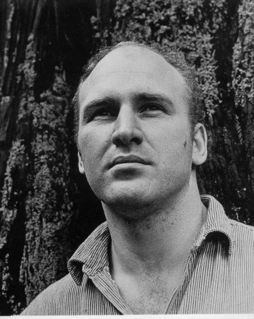
REMEMBER, YOU MAY USE PROF. BEDARD'S QUESTIONS FOR YOUR 800+ WORDS; YOU MAY USE 1, 2, OR ALL 3: (1) Does the individual life still matter? (2) Will I conform or not conform to the dictates of my society? (3) If I choose to conform, what price am I willing to pay to preserve my sense of individuality?
How does Kesey create certain effects in the reader? Why does he make certain decisions in the construction of his book? Post your initial thoughts here. Once you're done with your essay, you'll post it here, too. It is due on Tuesday, November 18, at 11:00 p.m. and must be 800+ words with 5-6 paragraphs and 3+ quoted excerpts.
Some interesting thoughts from this address (Darren N. pointed it out to me): http://www.lakelandschools.us/blogs/serichsen/?page_id=19
Themes
Kesey introduces a number of topics and themes in his novel. Review the list and discuss which topic/theme you think is worthy of discussion. How does Kesey introduce the topic/theme? How does Kesey develop the topic/theme? Which characters are important in that development? What is the significance of the topic/theme? Begin by posting a comment regarding a specific theme and how it pertains to the novel. Agree or disagree with a previous comment; add more information to another student’s perspective.
freedom vs. control
hope vs. despair
friendship vs. isolation
physical/moral courage
role of nature
sacrifice
self-reliance
sexuality
role of women
society & the individual
conformity
morality
power of humor/satire
use of recurring symbols
REMEMBER, YOU MAY USE PROF. BEDARD'S QUESTIONS FOR YOUR 800+ WORDS; YOU MAY USE 1, 2, OR ALL 3: (1) Does the individual life still matter? (2) Will I conform or not conform to the dictates of my society? (3) If I choose to conform, what price am I willing to pay to preserve my sense of individuality?

128 comments:
Kesey effects the reader by making us get emotionally close to the character. Constantly throughout the book Chief is reminiscing about life with his family and certain events that have changed his life. The more we read the more we learn about him and why he acts the way he does. As we read through these flashbacks we learn more about Chief making us feel closer to him because we understand more about his past. Another example of Kesey making us feel emotionally closer to the character is right before Cheswick dies Kesey talks about him more. By talking more about Cheswick we started to learn more about him as a person and feel more attached. Kesey did this so that when Cheswick died we would feel apalled that no one else cared that he had killed himself.
By giving the characters more relateable human-like qualities makes the reader get emotionally attached and feel like they can relate to the characters.
Jennifer--Good remarks. Do other authors make you feel emotionally closer to characters as well as/worse than/better than Ken Kesey? Cisneros? Shaw? Others?
This was just like the group thing we did in class! I thought the names that kesey gives provide a humorous effect. Just as you siad mr. c... about the hard on thing. hahaha
Exactly, Stephanie. I want you to share what you think, so that each can gain knowledge from everyone else. Elaborate, please, Stephanie--type here what you wrote in your notebook (you had a brilliant group indeed).
P. 3
Kesey sets the mood by making everything cold. The tile on the ground is cold, Big Nurse is cold, the whole mental institution is cold, and the patients feelings are cold. I like how he does this because he shows that this isn't a warm and inviting place, but more like a factory that builds and "fixes" machines. He doesn't make the readers feel uncomfortable; instead he makes them feel like they are in an unkown harsh place.
Kesey uses great imagery and describes things in great detail so it is easy to understand. He also uses a bunch of symbolism, such as Billy Bibbit having such a hard name for him to pronounce himself. Kesey makes it so the reader has to put themselves into the characters' shoes.
I also think that Jennifer made a great point. He gives us the effect of almost being a part of his family.
5
Kesey does a great job in explaining things in different ways. You feel how he describes the characters feel. You feel as if you are there. You can picture everything happening and he does a great job by being very descriptive to everything. Its interesting how all the characters work together and bounce off eachother.
pd 3
How- by his usage of imagery; no outside perspective.. only in the position of the Chief, may make the reader feel like at outcast just as chief is; and Chad's remark on uncertainty is interpretation.
Why- To keep readers interested in his book, mixing things up (ex. one of the chapters is only a paragraph long); making Chief the narrator the whole story might alter perspective for reader, like being a spy and cagey; naming the staff and men on the ward to illustrate their names (ex. Harding=hard on); the control panel is a symbol of keeping the patients in the ward; it makes the reader do some deeper thinking and wondering about things in the book, because there is alot of unknowingness... i dont think thats a word, but it makes sense; and RPM= Randall P. McMurphy and also Revolutions per Minute... may symbolize something???
If "unknowingness" makes sense, then it is a signifier of meaning and doesn't have to be a word--you're right. Great assertions, Steph. You, too, Ally and Carmen--we must be "there," mustn't we, to care? You got examples, Ally and Carmen? Excerpts that show remarkable skill with prose?
3
Why: If Kesey just flat out told the reader instead of describing it, the novel would then be boring and probably not be one of the Best Books in America. Being descriptive and mysterious makes the reader interesting and also makes the reader think and search for the deeper true meaning.
pd 7
The how and the why of Cuckoo's Nest is kind of the same I think. Kesey makes certain decisions in the construction of Cuckoo's Nest in order to create certain effects in the reader.
First of all Kesey chose to make one of the patients, Chief Bromden, to narrorate the story. If Kesey had chosen the perspective to be from an outsider looking in the mental institute instead of one of the patients it would not have been as effective. I think this is a main reason Cuckoos Nest is appealing to readers. Chief's view makes the book much more interesting and more real to the reader. But we don't always know whats real because of Chief telling the story. ("They're out there. Black boys in white suits up before me to commit sex acts in the hall and get it mopped up before I can catch them." pg 9) This keeps us on our feet and always thinking and analyzing what happens and what is real. Having Chief's view, we as readers are forced to consider the feelings of the oppressed. ( " I remember they took me out of the shaving room and locked me in Seclusion. I don't remember if I got breakfast or not." pg 14)
Kesey makes the setting of the story a mental institute. He really could have made the setting of Cuckoos Nest to have been anywhere but he chose a mental institute. We don't know where the institute is located. We also don't know the name of the institute. Not knowing where the mental institute is pretty significant. Kesey really wanted us to think and realize that these institutes are everywhere, these people are everywhere. Also it makes us think about a place and people there that we wouldn't normally think about. The setting shows a part of society often ignored.
The characters of One Flew Over the Cuckoos Nest are also pretty significant. I think its fair to say that Kesey made it so everyone could relate to at least on of the characters in some way. In class we talked about Cheswick being a lot like us: we want something to change, but aren't sure how to force that change. If Kesey had not done this, had not made the characters relateable the book would not be as great as it is.
Overall the book is effective because of all the literary devices and because readers can relate.
Period 1
I would have to agree with katie, the how and why of cuckoo's nest is basically the same thing.
The different things kesey does in the construction of his book is what creates the effect in the reader. The fact that kesey chose to have the setting of his book to be in a mental hospital creates its own effect. By having this setting kesey is trying to get us to understand these mental patients and try to relate to them. Kesey is trying to tell us that there are people in this world that are really like that and that this world isnt a perfect place. The main character in this book is the most quiet person on the ward and yet he tells us the whole story. I think kesey does this to show us that even people like chief, who don't ever say a word in real life, have their own world going on inside their head. By making chief the narrator, it creates an effect in the reader and if forces them to think about chief and how he sees the world. "She's swelling up, swells till her back's splitting out the white uniform and shes let her arms stretch out long enough to wrap around the 3 black boys five, six times"(5) This quote alone describes exactly what chief's world is like. This is how he sees Nurse Ratched when she is upset, but in reality, she is not like this at all. Chief sees in his head what normal people would imagine happening in their wildest imagination. Chief pretends to be deaf and dumb to sheild himself from the world, to protect himself from the black boys or nurse ratched. "I hide in the mop closet and listen, my heart beating in the dark, and i try to keep from getting scared, try to get my thoughts off someplace else"(6). I believe kesey makes chief this way to show his readers how the way people treat other people can really have an effect on someone. Sometimes the most quiet one is the most dangerous or troubled or sometimes, even brave. Chief hides himself from the real world by pretending to be deaf and dumb so no one will bother him. He uses his mental illness as a safety net. Kesey is trying to make known the part of society that is often ignored by introducing his readers to a new world and new people, different people. These patients are so afraid of the world that they keep themselves in the mental hospital just so they can be safe. Some of the patients aren't even required to stay at the hosptial, they just do because they dont know how to live in the real world, they aren't ready to be on their own. Kesey includes these patients to show us that people like this really are in this world and if we would just give them more credit and treat them like any other human being, then maybe they wouldn't feel so left out and so scared to go out into the world and live a normal life.
Nicole O. asked me for some suggestions. I typed her the following statements, which were her ideas, put into words that answer the "How/Why" question more directly. Hope these suggestions help you, too:
Kesey's knowledge and experience with drugs and mental institutions draw us in and convince us. We are captivated by his detail. We will not do drugs or go into mental institutions, but he grasps us by showing us these fascinating experiences.
The Christianity elements help us see more symbolism and make more connections. We like to think hard and connect to other things we know very well.
The dialogue between Nurse and Billy near the end makes us worried, concerned, and carefully hopeful. We cannot possibly see what is coming, but we sure do want to know.
Kesey gives us all kinds of thinking opportunities that stimulate us. We do not know everything there is to know about each man, though, so we have to think hard to fill in the spaces. The result is an unforgettable story indeed.
A Schizophrenic’s Reality = A Reader’s Delight
“One flew east, one flew west, one flew over the cuckoo’s nest” (285). What does this truly mean? Are readers supposed to make their own assumptions? Is this an allusion to something bigger? This one simple line in One Flew Over the Cuckoo’s Nest shows foreshadowing as what to expect throughout the book. Ken Kesey creates certain effects in the readers of his novel by the way he constructs his book.
Kesey makes his characters relatable to the average reader. All the characters in One Flew Over the Cuckoo’s Nest are people readers can become emotionally invested in. The readers may not know exactly what these characters are going through but they can still relate to them. Readers share the same emotions; everyone has anger, sadness and joy, just as the characters do. The readers and characters emotional journey throughout the book is like a heart-rate print out. Kesey does not give much information about the characters to his readers, other than a vague outline of what mental disability they have and their names. Throughout the novel we come to find the most information about the Chief. According to Claire Ware, a Professor at Middle Tennessee State University, “It is evident from Kesey’s treatment of Bromden that the weak self-concept is, in part, a result of Bromden’s growing up in a sub-culture that is in it’s final stage of sociocultural disintegration. Because Bromden is torn between the desire to maintain his Indian heritage and the necessity of developing behavior acceptable to the dominant white culture, he experiences an identity crisis” (95). Each and every name of the characters has been specifically chosen, an example would be Billy Bibbit, the name of someone who stutters. It is good for Kesey to give readers very little information about the characters in the beginning because they may become too emotionally attached to the characters and not pay attention to the storyline. As the book progresses we get less in detail about what’s going on and are more attached to the characters as we look deeper into the individual lives of the characters. The reader has to see through the eyes of a schizophrenic to see deeper into their lives.
Cuckoo’s Nest leaves the reader to make their own determinations as to what is reality and what is a schizophrenic’s reality. They get to access the world of a mental patient, people whom society ignores. Society rejects people like the characters in this novel. Kesey wants convey his point by setting up the book in a way that is not obvious in what he is trying to say. Kesey draws the reader in and makes them decipher the true meaning behind each allusion he makes. An allusion Kesey creates is Ellis, his placed against the wall each day and is nailed by the hands to the wall in a manner similar to that of when Jesus was crucified. Ellis is somewhat ignored and so is Christianity sometimes. McMurphy is also used as an allusion, he is given Electroshock Therapy and is strapped to a table in a cross-like position, this helps to further portray him as a savior. Kesey leaves readers wanting more details and they want to keep flipping pages to go deeper and deeper into the novel. Chief describes the events as he sees it, but it is not clear as to what is true and what is not; “It’s still hard for me to have clear mind thinking on it. But it’s the truth even if it didn’t happen” (8).
McMurphy comes into the story as a kind of savior. He comes in as just another patient, but as the story progresses the rest of the patients come to depend on him for strength and leadership to stand up to the nurse. Nurse Ratched at first takes McMurphy for granted but later learns that he is a force to be reckoned with; “There is generally one person in every situation you must never underestimate the power of” (215). McMurphy shows them the Combine and all of the mental hospital itself is truly corrupt. Chief has known about the corruption long before anyone even realized it; “The ward is a factory for the Combine. It’s for fixing up mistakes made in neighborhoods and in schools and in the churches, the hospital is” (40). By him defying the nurse, they all get the notion that they can overcome her and rebel against her. “It’s interesting to me that you bums didn’t tell me the risk I was running, twisting her tail that way. Just because I don’t like her ain’t a sign I’m gonna bug her into adding another year or so to my sentence” (193). Readers start to get the notion also that the patients are gaining more control and power and are starting to figure out that they could possibly overthrow the nurse. Kesey gives the underdog the power to overthrow the system and have a sense of control over what happens to them.
Kesey wants this book to resonate in the mind of the readers, so he makes it intriguing and draws you in. The characters and the barriers they have to overcome is what makes readers want to read more. The power struggle makes readers want to read deeper into the novel to see the outcome. Readers want to understand what they characters feel and they want to know more about the mind of a schizophrenic. Kesey is a brilliant writer and he uses mental hospitals as a way to convey the issue of conformity and how society looks at those who are different. Kesey is brilliant because he took an issue that we all ignore and made it matter to readers. He makes readers really think about how they treat other people and how society needs to re-evaluate what we do to those we believe do not fit in. Readers are emotionally connected to the story; it makes them want more and more information. Kesey knew how to reel readers in and make them really think and pass judgments about what is going on.
Oppression is the key issue in Cuckoo’s Nest. Kesey uses Chief’s point of view to force readers to consider the feelings of the oppressed. The setting is a mental institution, this shows us a part of society that is often ignored, and this also shows oppression. Society commonly oppresses what they do not know or understand. Kesey twists the usual oppression of whites to blacks in reality to in his novel it is blacks being the oppressors and whites being the oppressed. The main conflict is Nurse Ratched, the black boys, and the Combine oppressing the mental patients. Nurse Ratched wants to maintain control over the ward by selecting black boys who can control the patients through their hate;“She appraises them and their hate for a month or so, then lets them go because they don’t hate enough” (30). The Nurse makes sure to find black boys who hate the patients almost as much as she does; “She’s damn positive they hate enough to be capable” (30). Readers are forced to feel emotion towards the patients because they can relate to them. The construction of this novel is successful because all readers can relate to the issues and emotions of the characters. Readers can relate to the oppression the characters feel. Everyone has been oppressed or been an oppressor even if they do not realize it. All readers have been picked on or picked on someone else at some point in time. Kesey has constructed this novel to relate the characters and issues to issues society deals with all the time.
Ken Kesey really makes the reader think about how hilarious some of the issues are in the book, but in all reality they are not funny at all. Kesey wants to entertain us with hilarity and yet show us a side to our society that is not funny at all. He takes serious issues and makes them have humor, but readers know they are not funny at all in actuality. If this story was a real like account, the institution would be shut down because the patients are being treated in a cruel way. Kesey provides a subtle way of pointing out flaws in society that everyone normally overlooks. By using his characters in a particular way he keeps the book from getting stale and keeps issues fresh and not forgotten about. Each character has a problem that is individual to them. Kesey uses each one to symbolize someone or something all readers can relate themselves to. Readers find out most of the patients are voluntary, but they do not understand quite why. If the reader was given the chance to shelter themselves from the hatred and violence of society I am sure they would do so. The reader would then understand why these men use the mental institution as a shelter from society and the outside world. After a death or major event, issues resurface. After Billy Bibbit’s death Nurse Ratched brings up Cheswick’s death to make McMurphy feel responsible for the deaths; “First Charles Cheswick and now William Bibbit! I hope you’re finally satisfied. Playing with human lives--as if you thought yourself to be a God!” (318).Over and over again Cuckoo’s Nest shows how the Nurse displays her power over the men, but McMurphy keeps withdrawing power from her. This is altogether funny each time he does so, it is quite humorous, but if each time had a direct consequence; it would turn into a horror very quickly.
“One flew east, one flew west, one flew over the cuckoo’s nest.” This single ordinary line in Cuckoo’s Nest sets up the reader for an entire journey throughout the novel. It is repeated several times within the book so it must have importance. The reader experiences everything from oppression to a power struggle to an escape and much, much more. As readers all of these events create emotions and attachments to the novel’s characters. Through this Ken Kesey creates powerful effects in readers by the overall construction of his book.
pd 1
Period 5
Jennifer B.
When you get emotionally attached to someone, don't you tend to care more about what happens to them? Kesey uses this technique to make readers become more attached to the characters in One Flew Over the Cuckoo's Nest. The further you read into the book the more emotionally attached to each character you get. Kesey accomplishes this by using different personality types, point of view, and tragic situations.
Throughout the whole book, we see the ward through the eyes of Chief Bromden. Chief decided when he first entered the ward to act deaf and dumb. Because of this aspect, we get to see a different side to the ward that we otherwise wouldn't see. The nurses and the black boys say things around Chief that they wouldn't say around anyone else because they think that he can't hear what they are saying. Also, we get to see how he really feels about the ward and the people on it and we don't have to guess if he has repressed feelings that he isn't showing to us. Chief also has flashbacks about life on a reservation. We get to see what has happened to him in the past to make him act the way he does. He remembers “...standing there wondering if they ever even saw me.” (182) when people came to the reservation looking for his father. This was a big step in Chief's past and if we didn't see the book through his eyes we wouldn't know why Chief never speaks to anyone. When Chief does finally speak to McMurphy, the first person he has talked to in years, we learn his true feelings that he has repressed. We learn that Chief feels “...way too little.” (186) even though the book describes him as this tall physically strong man. Chief admits things to McMurphy that he won't even admit to himself, making the scene where he speaks crucial.
Even though we see the whole book through Chief's eyes, we still get to see all the varying identities in the minor characters. Kesey makes all the patients on the ward have such different personalities so it is easier to see ourselves in one of them. Readers tend to match their own personalities and thoughts to characters who have similar personalities and thoughts. Kesey makes all of the patients on the ward likable so it is easier for the reader to identify with a patient than it is to identify with a character with a cold, bitter personality such as Nurse Ratched. In this book, all the different personalities are shown in the patients almost ensuring that each person who reads this book will have a character to identify with. As they read on, readers pay more attention to the characters that they have more in common with. When a reader identifies with a character they get more emotionally attached because they see themselves in the character. When readers match their personalities to a characters, they tend to care more about that character and what happens to them.
Kesey uses key events in One Flew Over the Cuckoo's Nest to show readers a different side to certain characters, therefore making them get emotionally closer to the character. Kesey fills the end of the book with huge, important events to make the readers gain feelings such as sympathy and pride toward the characters involved in that event. Kesey puts these events at the end of the book because he wants readers to get to know the characters on a deeper level as they get further into the book. By the end of the book readers have already identified with certain characters that appeal to them, so now Kesey wants to add major events that will change how we see them. When the patients go on the fishing trip we watch every single one of them gain confidence in themselves. None of the patients, besides McMurphy, had confidence before they went on that fishing trip. As the reader goes through this scene they start feeling proud of the patients and how they've changed. Kesey evokes emotions from almost all readers when Cheswick drowns himself. Before Cheswick drowns himself he stands up to Nurse Ratched, but McMurphy doesn't back him up. Cheswick “...didn't hold anything against McMurphy for not going ahead and making a big fuss over the cigarettes.” (151), but Cheswick was afraid of what Nurse Ratched was going to do to him because of the fuss he caused. As the reader reads about Cheswick's death it is apparent that he intentionally drowned himself. Most readers feel sympathy for him, which was what Kesey hoped they would. He makes us feel proud of Cheswick when he stood up to Nurse Ratched, but then makes us feel sympathy for him because he felt like the situation was extreme enough to drown himself.
Using point of view, varying personalities, and major events, Kesey draws readers emotionally closer to characters in the book. He evokes multiple emotions from the readers through various situations. The more emotions a reader has towards a character, the more the reader cares about the character and what happens to them. When the reader starts getting emotionally attached to certain characters throughout the book, the more the reader tends to care about the book itself.
prd 5
One flew not under but over the cuckoo’s nest. We’ve all read One Flew Over the Cuckoo’s Nest, we know that we are given the perspective of what goes on in the ward by a Native American. Chief Bromden knows all the patients and their flaws; and there is one patient that goes through many conflicts in the story all because he met R.P. McMurphy, and his name is Charles Cheswick. Although the story does not focus on him, the reader should focus on Cheswick; mainly because his character reveals much about the plot, the tone, and the setting as well. Charlie Cheswick proves to be an important character in the books, some would argue that he’s McMurphy’s first real friend in the hospital ward.
The story starts off with Chief looking over to make sure he is safe from being harmed from the black boys or Miss Ratched, and we see this new patient arrive in the ward named Randal P. McMurphy introducing himself to many of the patients. One of those patients that he ends up meeting is Charlie Cheswick. Cheswick is shown playing cards with the other patients and is seen shaking hands with McMurphy; noticing that he has a deck of cards in his hand, one of the first thing he says to McMurphy: “Easy now, don’t smudge ’em; we got lots of time, lots of games ahead of us. I like to use my deck here because it takes at least a week for the other players to get to where they can even see the suit…”. Right away the two not necessarily become best friends but they develop a bond where Cheswick can come to McMurphy and ask for advice or help when needed. Cheswick’s background shows that he’s a voluntary acute where he tends to try and stand up for him or someone else where there’s some sort of controversy out and about, but in the end he will give up and move on until another argument rises up. Most of the time when there is an argument passing by him and trying to help whoever is in trouble, most of the time that person whomever it might be doesn’t even want the help. That won’t stop Cheswick though he just wants to help. Ken Kesey wrote this book from his experience from the hospital he was working for, so obviously this character must’ve been created from a previous patient that believed in hope that he can survive outside the ward.
When McMurphy arrives to the ward, he thinks to himself that he will only be here until his prison sentence is done; so to waste time, he for the most picks fights with Miss Ratched and believes he can get the best of her by the end of the week. So from trying to watch the World Series in the afternoon, to playing cards, or even flinging butter at the clock; Cheswick was on his side one hundred percent of the time. He even started to give him a nickname simply called Mac, essentially it was McMurphy and Cheswick versus the ward. McMurphy in my opinion gave Cheswick hope that he could survive outside the ward when he decides to leave when he is ready, of course that changes all because of the cigarette situation. Cheswick goes to Ratched saying to her to do something about this and while doing so he expects McMurphy to back him up. However he doesn’t after he learned that the lifeguard told him that he can’t leave the ward until Miss Ratched believes he is ready to leave. After Cheswick realizes he is alone he goes on a rampage simply saying: “I want something done!” repeatedly. When Miss Ratched refuses Cheswick’s proposal about the cigarettes, he dives into the pool the next day or so and his fingers got caught in the grate. By the time anyone noticed and pride his fingers out, it was too late and Cheswick had killed himself.
It’s obvious how and Kesey portrayed Cheswick’s fate was obvious in terms of the fact that he was alone and no one was on his side at the time. Lost a friend essentially so he simply gave up and might’ve accidentally got his fingers caught in the grate but he did let himself drown. What surprised me the most about this was that no one cared that the patients close friend died. McMurphy didn’t cry or even felt bad for the most part he basically ignored his death. Kesey did something in the book that I also didn’t expect and that was replace Cheswick with two different characters one is Chief when he starts talking, and the other is Big George. Big George is somewhat Cheswick’s replacement, he is an acute and becomes McMurphy’s sidekick for the most part. He is shown to be the captain of the boat and McMurphy stands up for him when the black boys are checking for crabs and says “ I said that’s enough, buddy” along with several inappropriate comments and eventually assaults them. In My opinion this would be Cheswick if he had not killed himself before all of this, Kesey I guess believed that McMurphy needed someone on his side when Cheswick was gone. To show that he is not alone, he has friends and eventually wins the fight so to speak.
Kesey believes that McMurphy does care about Cheswick but doesn’t show it until the end of the book. Perhaps if Cheswick never killed himself he would’ve reacted differently towards Billy Bibbit’s death, which would’ve not resulted his suffering with his lobotomy. Cheswick’s death could be an allegory to Jesus Christ, Cheswick dying gave everyone courage including Chief showing everyone that he can talk. Only Kesey knows the answer as to why he chose Cheswick to die or how George became his replacement, but this allows us to wonder of how and why he did this. I personally believe that Cheswick helped McMurphy stand up to Miss Ratched which helped everyone else stand up to Miss Ratched. So in a way this could’ve not had happened if Cheswick had not sacrificed himself and gave everyone courage. This was Cheswick's last gift to his friend McMurphy.
Period Five
This novel is an age old battle of man vs. machine. McMurphy is the typical man role, while the nurse in the eyes of the patients is a machine. The men follow the machines orders and obey her, that is until McMurphy enters her ward. McMurphy gave many of the men hope. The way he went about giving these men hope makes the whole book worth reading. When it comes down to it this book is intriguing because you want to know who will win and how do they achieve the victory.
Hope is one thing everyone has, McMurphy gives it to the patients. When he starts fighting with the machine the guys enjoy watching. Cheswick is under the control of the machine for a long time. When McMurphy arrives Cheswick is given the hope he was looking for. McMurphy gives Cheswick not only hope but courage to stand up against the machine. “McMurphy had things his way for a good long while.”(174) Although a person can only stand strong for so long until he needs to rest. While McMurphy is resting Cheswick cracks he couldn’t stand up to the machine alone. This tragic event leads to his death. Although Cheswick it was tragic it also shows a turning point in the book and in the patients. The patients are finally ready to stand up against the machine. The book only gets better from this point. The reader is now more interested in what is going to happen next. When the patients start standing up to the machine it makes the whole plot more interesting.
It would appear to most people that the machine is winning. “Whatever it was went haywire in the mechanism, they’ve just about got it fixed again.”(156) After McMurphy is rested he is ready to stand up strong against the machine. McMurphy shatters the machines proactive clear glass layer when he brakes the window to the nurses station. This is another milestone on a long road for McMurphy. The broken glass shows that he is back and ready to fight again. When he starts going at the machine strong again something brings him down. The guys who were supported to be supporting him let him down. McMurphy finds out form the machine that a majority of the men are voluntary to the ward and could go as they pleased. McMurphy is surprised because the men could leave but they stay because they want to. It makes him wonder why would they stay on the ward with the machine if they didn’t like the way the machine ran things.
Fishing is an American pat time. McMurphy had a triumph over the machine pulling this one off. McMurphy planned a fishing trip. This shows that he is slowly wining. McMurphy even asked the machine if she wanted to go. “Miss Rached, you’ve talked me into it. I’ll call and rent that boat this very night. Shall I sign you on?… Instead of answering she walked to the bulletin board and pinned up the clipping.”(177) By posting these clippings she is trying to gain control over her ward. The machine is trying to scare the patients into staying at the ward instead of going on the fishing trip. Will show the men that the outside world isn’t all that bad. “We were waiting for them to say something about the girl again, hoping for it, to the truth, but when one of them finally did say something it wasn’t about the girl but about our fish being the biggest halibut he’d ever seen brought in the Oregon coast.”(215)
As the book slowly comes to an end. Things are still slowly unwinding. After the party on the ward slowly everyone chooses to leave the ward because they are ready to leave. If McMurphy had not came into the ward they would not be checking out. Eventually McMurphy’s body comes back into the ward. The lobotomy forever changed him. He is now a vegitable and a trophy for the machine to show. She wants him on her ward to show future patients what happens if you try to stand up to the machine. Even though McMurphy is in the ward and cannot communicate with the other patients. He still has left his mark on the ward. The men still there are playing poker and going about things as if he was there. During his first night back at the ward. McMurphy’s best friend Chief decides that the nurse does not get to keep McMurphy as a trophy. Chief smothers McMurphy with his pillow. After he kills McMurphy’s corps he takes off and runs. His destination is Canada although he wants to stop by where his tribe used to be when he was just a child. McMurphy wins in my eyes. Even after he has passed his marks are still left on the ward.
Carmen Lenz
Pd. 5
Have you ever been forced to conform? Whether it is to society, or to your parents’ rules? Almost every person in this world is forced to conform in some way or another, and trying to be a nonconformist can often lead to drastic consequences. Just think about this: how many people are willing to conform, and how many people will fight conformity? Ken Kesey’s One Flew Over the Cuckoo’s Nest is a great example of people “testing the waters” of nonconformity. He causes us to think about the lie of an individual, and how that individual has the option to conform, or go against the norm and be a nonconformist.
After reading One Flew Over the Cuckoo’s Nest I was able to ask myself, “does the individual life still matter?” I think that in today’s society we are forced to conform more than ever before. I would say that the individual life does still matter, just not as much as it used to. For example: nobody used to care about what kind of clothes a person wore around the early 1900’s, but now if you don’t wear Hollister, Aeropostale, or Abercrombie and Fitch, you aren’t nearly as “cool” as those who do. You, as an individual, have the choice to wear these clothes or not, but if you don’t you are a nonconformist and are risking some of the consequences.
It is also possible to say that the individual life still matters, even more-so than conforming. I say this because in Kesey’s novel, McMurphy will not conform to what Nurse Ratched wants him to. He will not follow any of the ward rules, and remains extremely rebellious. He says things like, “I’m thinking about taking over this whole show myself.” (22) And “That’s the exact thing somebody always tells me about the rules…just when they figure I’m about to do the dead opposite.” (28) He remains rebellious throughout the novel, and toward the end, he actually gets some of the other patients, who are conformists, to start rebelling too. He shows the other patients the importance of individualism.
Another question I could ask my self after completing the novel is, “will I conform to the dictates of society?” And, “if I choose to conform, what price am I willing to pay to preserve my sense of individuality?” On a personal level, I do believe that I have already conformed. I try to keep up with the latest fashion trends, I have a Facebook account like most of my peers, and I will act the way that is considered normal for today’s standards. By that, I mean that I won’t always speak my mind because I worry about what other people think, or I won’t raise my hand in class if I know an answer, in fear of being called a “brown-noser.” And I’m obviously no the only one having these thoughts, because not too many people are courageous enough to speak their mind in front of their peers or to raise their hand when nobody else is. Also, I don’t really think there is much price to pay if you conform. I think this because if we are all conforming, we are all theoretically paying the same price, then we won’t be able to notice any change in society, or the way people are acting. Even thought most people are conforming, there are also those who choose not to conform, or those who physically can’t conform due to a disability. They unfortunately have to pay the price of being ignored, made fun of, or just shunned from society all together. Even though it is considered normal to conform to those around you, what about those who can’t?
Now if I were to answer the same two questions from the above paragraph, based on the book, the answers would vary greatly. For the first question, “will I conform to the dictates of society?” I would say that McMurphy is definitely not conforming. Throughout the entire novel, McMurphy is rebelling and not listening to rules, and definitely not doing what Nurse Ratched considers normal for the ward’s standards. He is constantly breaking the rules and trying to get a rise out of Nurse Ratched. He tries several times to change the schedule of the ward, which has been the same forever, along with taking patients on a fishing trip, and stealing a boat. Throughout the novel, he continues this nonconformity until the end of the book when the staff at the ward is sick of him breaking the rules and being a dangerous disturbance to the other patients on the ward. He ends up getting a lobotomy and comes back as a zombie vegetable. Chief cant stand to see him like this, and he knows that McMurphy wouldn’t want to live like that, so he smothered him with his pillow. Chief says, “I put the pillow on the face. I lay there on top of the body for what seemed days.” (270) He knew that killing him was the best thing for McMurphy. So in the end, McMurphy ended up paying the ultimate price for being a nonconformist. Death.
All throughout life we are constantly challenged with the option of being a conformist or a nonconformist. There are chances every day to go with the flow, or to go against it, and possibly deal with consequences. I think that individuality and nonconformity are good, but they are getting less and less popular as time progresses. I can safely say that I, for the most part, have already conformed. Have you?
Pd. 7
Why Kesey uses Death in Cuckoo’s Nest
Death is something that impacts everyone’s life. When the death of a a grandparent, parent, uncle, aunt, cousin, brother, sister, or friend fills our lives with tragedy. Even when we hear about death of people that we do not know, the death impacts us in some way. We relate it to our own experiences in order to help with the coping process. Ken Kesey uses death in One Flew Over the Cuckoo’s Nest to relate the deaths of the patients to deaths that the reader has experienced.
One of the first deaths that impacts the reader is the death of Old Rawler. Rawler is an old man up on the Disturbed ward. He committed suicide by “cut both nuts off and bled to death.”(pg 115) This means of death is ironic because genitals are used to create life and instead they are what cause his death. This death is significant because it shows the first signs of hopelessness of those in the hospital. Chief tells the reader he doesn’t understand “what makes people so impatient.” (pg 115) This Comment makes the reader think about what does, in fact, make people so impatient that they inflict death upon themselves. The realization that some feel death to be more tolerable than life leaves the reader with a feeling of hopelessness. Chief foreshadows the events yet to come by saying “all he had to do was wait.” What is he waiting for? McMurphy’s triumph over Nurse Ratched, in his own death.
The death of Charles Cheswick, the second on the ward, is caused by Cheswick’s loss of hope in McMurphy. Cheswick is the type of character who supports McMurphy until “the moment there is any real danger to him personally.” (pg 136) But, one day on the ward, the reader sees a change in Cheswick. He keeps on insisting that he “wants something done” (pg 149) about the rationing of cigarettes. He looks around at the other men with out getting looks back, each time he passes a man “the panic in his face doubles.” (pg 150) Cheswick continues yelling without any help until he is sent up to the Disturbed ward. Cheswick lost his hope when McMurphy stopped fighting Nurse Ratched. Again Cheswick, a more developed and intimate character with the reader, commits suicide because he believes all hope is lost. His death was yet another unnecessary death. Cheswick “clutched” (pg 151) the grate at the bottom of the pool so tight that “neither the big lifeguard nor McMurphy nor the two black boys could pry him loose.” (pg 151) This last act of defiance shows him fighting to die instead of fighting to survive. Cheswick purposely hangs on tightly to the grate because he believes dying is easier than living in a world with no hope of change.
The third major person to die on the ward is Billy Bibbit. Billy committed suicide because he was afraid that Nurse Ratched would tell his mother about his night spent with Candy, McMurphy’s female friend. Nurse Ratched calls Billy a “poor miserable, misunderstood boy.” (pg 266) Billy Bibbit is a miserable, misunderstood boy because of the way Big Nurse treats him. Ratched treats Billy as a young boy, threatening to tell his mother. Billy gives “the response she was after.” (pg 264) and he “flinches and put(s) his hand to his cheek like he’d been burned with acid.” (pg 264) Billy slits his own throat in response to his fear of Nurse Ratched. This death makes the reader angry because they see that Big Nurse could have prevented the death instead of blaming it on McMurphy. Nurse Ratched accuses McMurphy of “playing with human lives as if you thought yourself as to be a God!” (pg 266) Billy’s death is significant to the flow of the story because it plays a major roll on the emotions of the reader. As the reader gains personal interest with the characters it upsets him and causes him to react in the same was the characters do. Kesey uses Billy’s death to connect with the reader’s fear of the unknown.
McMurphy is the last person to die in this novel. McMurphy receives a lobotomy, cutting into the brain lobes in order to ‘correct his condition.’ McMurphy is now living as a vegetable in the ward under Nurse Ratched. If McMurphy lives as a vegetable he will always be under Big Nurse’s command and she will win the on-going battle between them. Chief “mashed the pillow into the [McMurphy’s] face” (pg 270) in order to win the final battle. In this case, Kesey uses death to triumph over the Nurse Ratched. This last act of defiance by Chief finally gives the reader a sense of hope in knowing that Big Nurse has finally lost, and the ward’s conditions will begin to improve.
Death impacts people in different ways. In One Flew over the Cuckoo’s Nest, Kesey uses the deaths of dynamic and static characters to affect the reader and give the book power and meaning. The deaths play with the reader’s emotions and help him relate to the characters’ problems. By adding death into the story, Kesey alludes to the reader’s everyday life and creates a connection with the lives of the characters in his book.
Brock B
5th Period
Kesey makes us feel the emotions wile reading his book, and he makes us feel then in a real life circumstance. He almost hits all the feelings like hate, sadness, anger, glad, scared... and so on. These feelings get you into the book, the even make the book feel like more then just a book or story, it even makes you feel like you need to go out and do something to help these people. Deep feelings that are given to the reader in great quotes such as "My pop was real big. He did like he pleased. That's why everybody worked on him. The last time I seen my father, he was blind and diseased from drinking. And every time he put the bottle to his mouth, he don't suck out of it, it sucks out of him until he shrunk so wrinkled and yellow even the dogs didn't know him." said by the chief, Kesey was a master at putting words together in ways that really make u feel and think helping u get in to the "people" of cuckoo's nest.
Elements of the story such as the fact that not every thing is told to us so that we fill in the gaps with either self feelings and experiences or just on what we want or think should be filled in, and in doing this it makes the novel more personal then some other books that u could read. Other elements like the fact that it is in a mental institution stimulates u in to reading it cuz its a experiences that I'm sure most people don't go through witch helps to read on. All the characters have a purpose in the ward adding to the story and locking u in making it seem like real life, like Harding is there to educate McHurphy on things such as how Nurse Ratched maintains her power and how electroshock therapy and lobotomy work and do to people. Chief Bromden a half American Indian that served in World War, the Chief was an electrician's assistant in training camp then shipped to Germany, this is probably why he has such a fear of electronics.Billy Bibbit a little kid still controlled by his mother has no scene of manhood, but at the age of thirty one. R. P. McMurphy comes in to the ward and becomes the rebel or hero, modeled after a modern cowboy comes and helps the patients in different ways depending on what there main problem was, such as Billy was helped out with his manhood. With characters such as these and intersected parts it helps to bring out the appeal of the book bringing it truly to your heart.
The book also has a lot of questions that it makes u think about witch probably hooks a lot of people into the story line. It makes the reader think about inanity, morality, importance of sexuality... and so on. Having concerns such as these seems to really help out the appeal of a book.
Kesey uses real life problems that are seen thought out the world in the book, connecting to just about every one, like racism. The workers in the ward are just about all black, called black boys, the are show as inferior to white people in society having a absence of schooling. The quote "Why, who you s'pose signed Chief Bromden up for this foolishness? Inniuns ain't able to write" but now that they have the power in the ward against the whites they use it to full advantage. There was also racism show twordes Native Americans, about drinking, the Chiefs dad was an alcoholic. The mistreatment of Chief himself for just being part Indian, resulting in him pretending he is deft and dumb.
In drawling people in to read and like your book is done by relating life emotions to the book is a great way of giving it feeling, peoples feelings in life are natural, so giving the book these feelings just makes scene in making them like it. Leaving gaps in the book, making the reader fill it in with your own thoughts and feelings makes the book come closer to home and stay with the reader. Adding problems of real life such as racism agents blacks and Indian. Its no wonder that One Flew Over the Cuckoo's Nest is one of the great books written and loved by a lot of people, Ken Kesey really made a winner with this one.
prd 5
first quote pg 25
second quote pg 149
third quote pg 229
sorry mr. c i forgot
Period 5
Some people are sleeping; some are walking around. There are some playing card games, while others watch from a distance. If you listen closely, beyond the “elevator music”, you can hear people whispering, talking, weeping, crying, yelling, screaming, and you can even hear the pounding of feet and fists on the linoleum floor. These are all sounds Chief Bromden hears while pushing a broom up and down the halls of a mental institution in Oregon.
Chief hears everything. He acts as if he is def and dumb. Over the years of being at the institution he has trained himself, personally and physically, not to react to comments or gestures made. He trained himself not to react when another patient, nurse, or doctor make a loud noise. Everyone, except McMurphy, falls for what Chief was trying to accomplish. If you have no friends inside, you have no emotional connection, and won’t feel any difference when someone leaves the institution, due to suicide, or the fact that a majority of the patients are voluntary. By being def and dumb, Chief hears everything, mainly because no one cars what they say around him because they don’t think he can hear them, making him the most informed person there.
Is the institute really helping the patients get better? Or is it just driving them deep down the tunnel of confusion and craziness? The patients are put into an everyday routine. After so long, the loose all reality of life outside of the walls they are stuck inside of. All they know is each other, the nurses in white and the black boys, watching their every move. The patients are forced to conform. If they don’t do what is told and choose to fight the conformity, they are considered “out-of-line” and get punished. In a way, the setting Ken Keesey uses in the novel One Flew Over the Cuckoo’s Nest relates very much to the setting of our high school.
In school think of the students as the patients. There are the class clowns, or the R. P. McMurphys, for example. There are teachers, who play the same role as the nurses and black boys. Their job is to watch over the students and make sure they are following the rules and doing what is expected. Big Nurse Ratched is portrayed by Mr. Thorson. If we don’t conform they way our teachers want us to, we are sent up the line of powerful staff until reaching the last step (Mr. Thorson’s office). After reaching Mr. Thorson, if we are still in need of help we are sent to Dr. Talcott; the highest of the high. Once we get to that top person, they break us all the way back down to start from scratch. We also have schedules, just the way the patients do. We have to be here at certain times, go to certain classes, and do exactly as we are told. For the most part we have no say in what we do. Just like the patients, many of us are voluntary here (the drop out age is still 16). So why are we still here? If you listen to the kids in our hallways you will hear cussing from one student to another, laughter between groups of friends near a water fountain, crying coming from the girl in the corner whose boyfriend just dumb her. You can almost feel the hatred of school coming off of the class bully after being confronted the class period before. That brings up the question again, why are we here? Why are the patients still in the institute, even if we are not forced to be? We stay because it’s right. Not everybody, but a big majority of people stay because if not, society looks at us differently.
It’s all about American conformity. University of South Dakota Professor of Literature, Brian Bedard, asked the question, “If I choose to not conform, what price am I willing to pay to preserve my sense of individuality?” Many people are afraid to be different these days. If we are different, people look at us differently. That’s the main reason most students don’t drop out of high school, and why the patients don’t leave the institution. Society labels us by our past. If you don’t graduate high school, no matter how much you succeed in what you pursued, or how happy you are with where you are, you’re still a drop-out who will never be good enough in some people’s eyes. If you walk out of a mental institution you are a nut and no one ever wants to be around you. You’re crazy who knows what you’ll do next.
I think Ken Keesey used a mental institution for the setting of this book because it’s something many readers can relate to. Not because they have experienced life in a mental hospital, but because it’s easy to relate to everyday situations and settings. Most people who can read have been in school at one point or another, and know what it’s like to be controlled by people who are higher up with more power than you. In our society today it’s almost impossible for someone to have total control over themselves. Forty year-old men are controlled by their bosses. Deadlines for certain projects have them on a schedule. Thirty year-old women are controlled by their children. “Mommy I want this!” and “Mommy make me that!” Our lives are never our own without the impact of at least a handful of people. Society is our control panel.
Britt Wickett
period 3
From Fantasy to Reality
Through fantasy we can see reality and relate it to real life, real thoughts, real feelings, real people, and the real world. This book is unlike any other book I have ever read, it matters to me. The book matters to me because the characters can be related to so many different people in so many people's lives. Throughout the novel Kesey does an incredible job of using symbolism to make the events that take place have more meaning to the reader than just words. Why are people who do not conform and who are "different" to the norms of society considered crazy? Why do people who are considered crazy need medical treatment instead of the help of other people who can impact their lives by actions instead of science?
In this book there are so many different characters that have so many different personalities that everyone who reads it can either relate to one of them or know someone who is like one of them. The narrator and main character of the novel is a tall Indian named Chief Bromden. At the beginning of the story Chief acts like he can't hear anyone or talk at all, but throughout the book he opens up to McMurphy and starts talking. Chief feels alone, like no one cares about him, and even invisible "in fact they're all looking off from me like they'd as soon I wasn't there at all"(181). He has visions of being trapped in fog and that he can't get out, he is lost. Randle McMurphy is another major character and gives the men in the ward hope that life will get better. McMurphy is a rebel, a jokester, and a leader even thought he doesn't know it at first and impacts the lives of all the men on the ward. Two of the men that he impacts the most are Billy Bibbit and Cheswick. Billy Bibbit's name is symbolic because he stutters a lot and like the two "B's" in his name he stutters the same consonant over and over when he talks. He is scarred for life by being denied when he asks a girl he loves to marry him and she denies him. McMurphy gives him hope and new life but Nurse Ratched brings him down again and he slits his throat, killing himself. Cheswick has needed someone to look up to his whole life and he wants to be just like McMurphy, he sees McMurphy as a big brother to him. Sadly, Cheswick takes his life after McMurphy stops standing up to Nurse Ratched for a short time. Nurse Ratched is a hard, mean, controlling woman who runs the ward the men are on. She is so controlling that Chief believes she can speed up time with the turn of a knob.
Just because someone is different from everyone else does not mean that they are crazy. Society wants and expects people to behave like everyone else, to act the same, dress the same, and talk the same. People who do not follow the norms of society are often considered weird, outcasts, or even crazy and that is not right. McMurphy feels the same way about this “But you, you’re not exactly the everyday man on the street, but you’re not nuts.” (168). Just like how the group meetings are like pecking parties, society is a pecking party against those who are different. Society doesn’t try to help them, they just try to tell them they are not right and they push them away, taking the easy way out. Science is not the best medicine for people or the best way to help people, talking to people and showing them that you care is the best way to help them.
This book has symbolism all over it, some of which I’m sure Kesey tried to do and some of it I’m sure just happened by coincidence. One form of symbolism in the novel is that three people die, just like the standard symbol of three crosses on a hill. The three crosses symbolize human sacrifice from the Bible. When Chief is hallucinating about a combine in the ward it is a symbol of how Nurse Ratched wants everything to be the same in the ward and how society wants everyone to be the same in order to be “accepted”. Another form of symbolism is McMurphy’s name, Randle Patrick McMurphy. His initials are RPM just like on your car engine or any engine it has RPM’s, it symbolizes that McMurphy has a motor that runs at a fast rate and will never quit. In my opinion one of the major forms of symbolism is Ellis being crucified on the wall like Jesus was crucified on the cross “Now he’s nailed against the wall in the same condition they lifted him off the table for the last time, in the same shape, arms out, palms cupped, with the same horror on his face. He’s nailed like that on the wall, like a stuffed trophy.” (20).
While I was reading One Flew Over the Cuckoo’s Nest Kesey did an outstanding job of pulling me into the story and making me a part of the action. He made me feel like I was in the ward with the patients and made the fiction into reality. Kesey made the book matter to me, he made the characters easy to relate to and made it real by expressing their feelings and having some of them die. Most young men my age do not enjoy reading but this book kept my friends along with myself anxious to read more and to find out what was going to happen next. One Flew Over the Cuckoo’s Nest is the best book I have ever read.
Conformity. Everybody does it. That is why we are all in school, typing up this blog for our English class. Whether individuals wish to admit it or not, we all do it. Conformtity can be based off of your peer, your family, your friends, and even your religion. Some people try and avoid conformity but by doing that you are only conforming with the others who wish to avoid it. It is almost virtually impossible for us as human beings to avoid it. There is an extravagent amount of people who are willing to conform as is there a great amount who will fight against it. It all comes down to the individual and their beliefs and ideas. In "One Flew Over the Cuckoos Nest" Ken Kesey is challenging conformity. He bring in a character(Randle P. McMurphy) who is one to go against conformity and the ways of the ward. Professor Bedard of the University of South Dakota brings up some great questions about conformity in our society.
One of these questions is: "Does the individual life still matter?" Well of course it does, it always will and always should in my mind. In the novel McMurphy is a great example of the individual life still mattering. Right off the bat when McMurphy arrives he is already making each patient feel special and important in their own ways. "McMurphy comes down the line of Chronics, shakes hands with Colonel Matterson and with Ruckly and with Old Pete. He shakes the hands of Wheelers and Walkers and Vegetables, shakes hands that he has to pick up out of laps like picking up dead bird, mechanical birds, wonders of tiny bones and wires that have run down and fallen. Shakes hands with everybody he comes to except Big George the water freak who grins and shies back from that unsanitary hand, so McMurphy just salutes him and says to his own right hand as he walks away, Hand, how do you suppose that old fellow knew all the evil you been into?"" (pg 25). This is a prime example of McMurphy's openness to all individuals. He doesn't care if your a Chronic, an Acute, a Vegetable, a Wheeler, or a Walker because you are an individual person with feelings. If everyone in society went by McMurphy's philosphy of excepting people this would be a great place. Their lives mattered to him. He would not let them back down. He gave each patient inspiration, motivation, and taught them to challenge and stand up against the institution and Nurse Ratched. I think that everybody has the right to be an individual, to be worth while, even if they are different they still have dignity and emotions just like the rest of us. The instiution in this novel was the extension of society, the rejection of nonconformity. Chief breaking free can symbolize others in their attempts to break out and regain their personal rights. They are breaking chains just like Chief broke through the window. You are now being honest with yourself even if it means dealing wih society's stereotypes and prejudices. McMurphy is beneficial to the patients and readers both by showing them the light they have in their own lives.
Another good quetion that Benard asked is: "Will I conform or not conform to the dictates of society?" To me this question has two permanent answers. Yes! we all conform. It's almost a must in life in order to succeed. But yet at the same time No! we try and find balance to become your own person. The way I see it is that everybody is taught to conform since you were a little baby. When you're born.. girls into pink blankets; boys into blue. Thats the way it is. As you grow older you are taught more and more to conform. Girls are supposed to be feminent, quiet, and polite. While boys on the other hand are taught to be tough, aggressive, and loud. Women are slowly overturning societies expectations whether it be in careers, athletics, or just roles in every day life. We conform to a certain extent but change what society expects by our actions over time. We conform because we are almost like "brainwashed" but can hopefully see past that and make your own rules and decisions. The leadership of previous women(like Hilary Clinton, nearly President of the United States) have forged our paths, making you want to continue expansion of their journies. McMurphy doesn't conform to the ward for the majority of his stay. Although he did for a short period of time after finding out from the lifeguard that he is commited and Nurse Ratches runs his clock. One situation in which McMurphy is a nonconformist is at the group meeting when he proposes that they watch the College World Series. Nurse Ratched is angered with his idea but yet McMurphy goes against her and demands for a vote. When he doesn't get the majority vote that he needed he is not satisfied with the other patients not having the courage to stand out and do what they really want. "Well I'll be a sonofabitch, You mean to tell me that's how you're gonna pull it? Count the votes of those ol birds over there too?" (pg 125) This is after not getting his way, McMurphy referes to the Acutes this way. When we are young we are more suseptable to conform. We think that that is what makes you "cool", "popular", in the "in crowd" whatever.. but as you age you start to gain more wisdom and begin to seek for your own individuality.
Conformity is unpreventable.
i am period 5
pd1
Cuckoo’s Nest
Does the individual life still matter? From what I see in what everyone does and why people do what they do, individual living still matters to me. Even though I don’t like some people that are just being themselves, I still see the importance of that person. If everyone did the same sports, wore the same clothes, ect, everything would be extremely boring. For example, you go to school and everyone is acting the same, wearing the same clothes, and all the teachers teach the exact same way, wouldn't that just suck? That point brings up what Chief Bromden thinks at the beginning of the book, when everything is controlled by a machine or as he called it “a combine”, and everything is the same. But when R.P. McMurphy comes in to the ward the “combine” starts to hum more intensely, as Chief Bromden explained it. Ken Kesey shows us that analogy to let us know that McMurphy is much different then the rest of the people on the ward. But even though it is different, that doesn’t mean he is bad, in fact as the story goes on he ends up helping the people in the ward, even though Nurse Ratched doesn’t think so. I think Ken Kesey wants people to realize that different isn’t always bad. Our country is not controlled by a “combine”,as chief Bromden would explain it, that’s why it is called “the land of the free”. In fact our country is made so we can have individual life which I think makes the U.S. the best country there is.
Will I conform or not conform to the dictators of my society? It depends on what the dictators are doing but I like the things I’m doing now and I don’t plan on changing anytime soon. If the dictators of my society don’t like what I’m doing, I really don’t care. They should mind their own business. For example, I have a loud truck and some older people don’t like the noise very much. Just because they don’t like it doesn’t mean I’m going to change it. However, I’m not the type of person to go out of my way just to be different then the dictators of society. If people go by what others say and think, no one would have personality or do things that they think are fun or listen to the kind of music they like. But there is a bad side to being different, because being different sometimes means stealing money from a bank or doing drugs, so I stay away from being that kind of different. Even though some people don’t realize it, people are conforming to the dictators of society daily whether it is wearing a certain type of clothing or choosing a car or truck to drive, there is always something. A good example of a dictator in society is Mike McCoy. If you don’t do what he thinks is normal, you are going to hear about it. He will most likely make fun of you or give you a nice shove in the hallway, ha-ha. That is just the way it is sometimes and that is what I’ve concluded. If people do conform it’s most likely because they can’t take being made fun of and don’t want the negative attention. The people that don’t conform can take it and will act the way they want to.
If I choose to conform, what price am I willing to pay to preserve my sense of individuality? From how I see myself, I already have conformed. I wear mostly jeans and a T-shirt, nothing too fancy but normal. I drive a pick-up truck, run track, and play football just like most of my friends. I don’t always conform to how people would normally act like. For example, in gym class I’ll yell and be really obnoxious. People make fun of me but that’s just what happens when you don’t conform, and it doesn’t really bother me. Since people are made fun of for not conforming, most people conform and then they have nothing to worry about. Some people don’t have a choice of conforming or not. I could say that I’m one of them since I have scars on my face and most people don’t. At times people will give me weird stares and whisper, but it is something I’ve learned to deal with. The one thing that I try hard not to do is pick on people that don’t have a choice of being different or not. Even though I have an idea of how they feel, sometimes I’ll catch myself doing it. In conclusion, I have learned a lot about why people act the way they do from this assignment and the novel “One Flew Over the Cuckoo’s Nest”.
period 7
As with many books and movies, a few of the reasons that this book was written are: to entertain, to stimulate, and to change our views of the world. Kesey wrote Cuckoo's Nest with these in mind. While he fufills all of these objectives, he manages to turn all stereotypes of his time on their head. And also, through out this book is the common theme of hope. Hope that someone can make a differnce. Hope that the indiviual life does matter. And hope that things can change for the better.
One Flew Over the Cuckoo's Nest has a way of getting people's attention. It has characters with whom we can empathize with. We understand them, and grow to like them. We read about them and they become not just some crazy patients in a psycho ward, but people with problems and feelings as real as are own. This book becomes a dramatic clash of man vs. woman, freedom vs. oppresion, nature vs. machine, and ends with a climax that grips the heart of its readers. In other words, this book is very entertaing!
To stimulate and change are views of the world Kesey has his characters go through struggles that test them. For instance; McMurphy finds that his time on the ward isn't definate. That it is up to the nurse. And that the other men on the ward don't have to be there because they aren't committed. If life is so hard for them, then why do they stay? Is life for them really so hard outside...Then McMurphy is given a choice. Even tho as he says, (pg167)" I got as much too lose..." does he continue to fight against the establishment when it may cost him his freedom? It makes people think that life isn't as simple as they might have once thought.
I believe that Kesey loved to create a novel that turned everything around. Because in his book there are an endless amount of ironic roles. From the machinery and ward that are meant to make life better but don't. To the huge Chief who is scared of his own shadow. Also things like the compassionate Japanese nurse. During this time period there was allot of racism towards the Japanese from WWII. It is as if this book was an odd remake of Alice in Wonderland, because everything is upside down and crazy.
A very big theme in this book is hope. The men on this ward are out casted from normal society, (pg61)"...you're not any crazier than the average asshole on the street-", as McMurphy puts it. It seems that he becomes a Christ figure in this book. He spends his days on the ward trying to in his own way cure these men. Trying to give back to them their long lost masculinity. He tries and tries, and gives up the most important thing to him, his freedom, to inspire these men. And in my mind I think he did. He became their legend. It helps support the belief that the individual really does matter. This book has so many things to offer readers, even though it isn't real. "Its the truth, even if it didn't happen." (pg13)
period 3
In the counterculture of the 1960’s Ken was paid to experiment with drugs. Because of this experimentation Ken is able to explain the feeling of using these drugs with great detail. Ken also worked at the ward, where he used experimental drugs; therefore his knowledge of what a ward looks like and how it is run is very accurate. To write Cuckoo’s Nest, Ken used his observation of how people react while on drugs and of his workplace. With observations, knowledge, and experience Ken Kesey writes Cuckoo’s Nest, a very accurate underdog story. Ken Kesey creates meaning in the book, “One Flew Over the Cuckoo’s Nest,” by using his knowledge and experience with drugs and mental institutions catch our attention and really convince us that Kesey knows what he is talking about
Why Ken Kesey uses personal experience to give you facts vs. estimate guesses is to get you to relate. Ken uses his detail of the characters so you are able to relate on a physical level with the characters of the novel. Ken also uses background of the character to also help you connect with the characters. If you cannot relate, or connect, with on or more characters in a novel, it is likely that you will lose interest in the novel quickly. By giving characters more than just a name Ken Kesey gives purpose making those characters that are often forgotten well remembered. Connecting and relating with characters keeps your interest and makes you wonder, “What’s next?” “What would I do?” and especially “What do I think could happen next?”
“One flew east, one flew west, one flew over the cuckoo’s nest… goose swoops down and plucks you out.” (Pg. 239) This children’s song that chief’s grandmother would chant sums up the entire novel and gives meaning to it. This chant also gives definition and relation to the characters “… on flew over the cuckoo’s nest…” symbolizes McMurphy as a goose who is flying over the psychiatric ward. “… goose swoops down and plucks you out.” McMurphy enters the ward and plucks the patients out of the ward. McMurphy is almost like a mother goose trying to teach her children who have become helpless. The patients, or baby geese, seem eager to learn and will basically do anything to keep their mother, McMurphy, happy. This chant also gives the novel it’s title. By giving the title and the general overview of the novel’s plot.
“Anointest my head with conductant. Do I get a crown with thorns?” (Pg. 237) As McMurphy gets ready to receive his electro shock therapy the Japanese nurse puts a gel on McMurphy’s temples and they strap McMurphy’s arms and legs down. The table that McMurphy is strapped to is shaped like a cross. When McMurphy puts all the facts together he feels like god and asks for a crown with thorns. Throughout the book McMurphy is related to god quite a bit. McMurphy helps the other patients by showing them the way. He also guides them to stand up for themselves and show everyone that what they believe in and think matters. All the patients look up to McMurphy, and believe that everything he believes in is correct. The elements of Christianity within the novel help us to make connections and see more symbolism.
Nurse Ratched: Aren’t you ashamed?
Billy: No, I’m not.
Nurse Ratched: You know Billy, what worries me is how your mother is going to take this.
Billy: Um, um, well, y-y-y-you d-d-d-don’t have to t-t-t-tell her, Miss Ratched.
Nurse Ratched: I don’t have to tell her? Your mother and I are old friends. You know that.
Billy: P-p-p-please d-d-don’t tell my m-m-m-mothers.
Nurse Ratched is always trying to put the guys in their place. Nurse Ratched makes the guys feel like they are worthless. In this conversation Billy is trying to stand up for himself. Billy liked Candy and was not ashamed of what the two did in the seclusion room. But, when Nurse Ratched tells Billy that she is going to tell his mother Billy loses all confidence and begins to beg Nurse Ratched not to tell his mother. As Billy begs Nurse Ratched not to tell his mother he blames everything on McMurphy and says they forced him to go into the room with Candy. Now, Nurse Ratched feels bad for Billy and says they will explain everything to his mother together. Nurse Ratched puts Billy in an office, by himself, and begins to accuse McMurphy of everything. At this point we do not know what is going to happen next which concerns us but we do want to know.
Then they find Billy dead in the office, he slit his own throat. If Nurse Ratched knew Billy was not a stable person why did she leave him alone in an office where they are plenty of things Billy could use to harm himself. I believe Nurse Ratched knew that Billy would kill himself but she was willing to let that happen in order to prove her point that McMurphy is a harm to all the patients. The battle between Nurse Ratched and McMurphy reaches its height. Billy’s death a terrible thing, but is the blame of Billy’s death McMurphy’s or is it the blame of Nurse Ratched? If the blame is McMurphy’s could Billy’s death be considered as McMurphy saved Billy by releasing him from the evil of the ward? This scene leaves us lost; most would not have guessed that Billy would commit suicide. It creates a lot of emotions in us and most likely changes what we thought the ending would be.
In the novel “One Flew Over the Cuckoo’s Nest” Kesey gives us numerous opportunities to think and predict. Ken also left certain aspects out of the novel leaving us without certain details if obtained would give us a for sure reason for why some things happened. Because of the lack of information we as readers are forced to think hard to fill in the spaces of why we think something happened or not. This lack of information also makes each readers experience an individual experience because one person’s definition of the book may be completely different from another persons.
Period 3
Inside the Walls
Hearing a story from a person that actually lived in the moment makes the story much more believable, exciting and gives it a deeper meaning. Ken Kessey used first person narrative in “One Flew Over the Cuckoo’s Nest” to show not only the concrete perspective of the book, but to more importantly give the book emotional depth. He chose Chief Bromden to narrate the story so the reader can gain a fuller understanding of the prejudices of society and complexity of mental illness. While reading from Chief’s perspective the reader becomes a part of the mental ward and acquires the feeling of the oppressed. Ken Kessey carefully chose Chief Bromden as his main character so the reader could have an inside view of a mental ward, deeper care for people that have mental illnesses, and a broader understanding of oppression and what it means to be liberated.
Chief Bromden has been a patient on the mental ward for several years and is considered a Chronic who has faked not being able to hear which gives the reader a real picture of what happens in the hospital. Staff do not have to hide any of their actions towards other patients when Chief is around because they think he is deaf and dumb. Nurse Ratched does not have any respect for the patients and treats them as though they have lost their minds. She wants to be in control of the entire ward and will stop at nothing to have that happen. She has the staff members do whatever she tells them to do, and they respond like robots and follow directions whether it is ethically right or wrong. The patients live by so many strict rules and are rewarded if they tattletale on something negative that they see someone else do. McMurphy sees how this is a negative for all of them when he states “Is this the usual pro-cedure for these Group Ther’py shindigs? Bunch of chickens at a peckin’ party?” (55). This does not create an environment of trust and friendship which one would think should be present due to the length of time that they have lived together.
By seeing what happens first hand allows the reader to have empathy for what mentally ill patients are experiencing during hospitalization. During the time of the writing of this book, society would want one to believe that mental wards are helping to get people better so they can be productive members of society, but after reading this book one is left with an opposite belief.Nurse Ratched would be happy if she had complete control over all the patients and none of them got better. There does not seem to be any outside stimulation for the patients and any “normal” activities such as something simple like watching a baseball game is forbidden. No one sits down to see what the patients want. When McMurphy asked Nurse Ratched to turn down the music she stated that other people like the music, but that is really never found to be true. No one else was asked if they wanted music on or not. People are treated like animals rather than people. They are shuffled through the system and are forced to receive treatments such as electric shock therapy. Fear and threats are used towards the patients. For example, when Nurse Ratched tells Billy she’s going to tell his mother what he did she puts fear into him by saying “Mrs. Bibbit’s always been so proud of your discretion. This is going to disturb her terribly.” (264). By having Chief narrate the book the reader is left with uneasiness about how people are treated that need emotional care.
Chief has lived his life as an oppressed Native American, and his oppression becomes more evident while living on the mental ward. While growing up Elaine Ware has stated that Bromden’s failure to reveal his first name seems to be an indication of his problems because other Indians, including his father, emphasize their first name. (96). Chief had to take his mother’s last name which led to an even deeper feeling of shame. He found out early that people assume he is a “dumb Indian” and so he has fulfilled that belief by acting as though he can’t hear or speak. According to Elaine Ware, “Chief views his mother and whites in general as physically dominate while he perceives himself as small and submissive.” (97). No one around him in the mental ward ever questioned whether he had other forms of communication, and they treated him as though he is not capable of understanding what is going on around him. Nurse Ratched does not make any attempt to help Chief understand, and she treats him as a number rather than a patient. When McMurphy realizes Chief isn’t deaf he says to Chief, “Not to hurry, that he had until six thirty in the morning to listen if I wanted to practice.” (185). This shows that McMurphy is interested in listening to Chief and is willing to help him get out of the fog. This proved that all Chief needed was for someone to care for him and how ironic that it was McMurphy who gave that affirmation to him. Chief found the courage to be liberated from the ward and also to end the suffering of his good friend McMurphy. If Chief had not met McMurphy this would have never happened.
“One Flew Over the Cuckoo’s Nest” is a book that has many powerful messages. By having Chief narrate the book, it draws the reader to have a greater understanding and empathy for the treatment of mental illness. Chief allows the reader to have an unforgettable experience by walking the halls of a the mental ward, living the life as a patient, and seeing liberation occur that in the beginning would have seemed like an impossible thing to happen. This is the book that will leave an imprint in your mind for years to come. To see the power that people have over each other and witness the cruelty of staff and the kindness of the patients is something that Ken Kessey leaves with the reader.
3rd
Kesey vs Conformity
Can crazy be normal? What do you think of Ken Kesey’s One Flew Over the Cuckoo’s Nest? Is it just some book that some guy on acid wrote, or is it a great book with deep meaning and thought put into it? This book is more than funny imagery from the crazy, tripped out mind of Ken Kesey. I’m going to tell you why One Flew Over the Cuckoo’s Nest is more than just some book and why Ken Kesey wrote it.
Kesey uses Chief as the narrator to make it easier to understand his point of view. Chief has always had it hard, being a Native American, and it’s easy to sympathize for him because of his mental illness. We see Chief as a schizophrenic mental patient and he see things in his mind that nobody else does. Kesey is telling us through Chief about the threat that conformity holds against those less fortunate than others. Kesey uses Chief’s schizophrenia to create very intriguing and meaningful imagery in the readers mind. Chief imagines about fog in many of his episodes during the book. This figurative fog is really conformity trying to attack Chief and the other patients and scare them from the real world. “Before noontime they’re at the fog machine again but they haven’t got it turned up full.”(42) Kesey is telling us through Chief how the ward keeps these men in place by controlling there lives with their ill methods.
The Combine that Chief often refers to is a big mechanical device that runs the world, the ward, and the patients inside. “Powerful magnets in the floor maneuver personnel through the ward like arcade puppets…” (33) Kesey is again telling us that people do things that people above them do or want them to do. If you don’t you aren’t considered normal or cool. This kind of conformity still lingers around today. If kids don’t were Hollister or Aeropostale than there not as cool as the kid that does were those cool name brands. Those people who don’t are considered non-conformist weirdoes and suffer consequences like becoming an outcast.
Randle P. McMurphy is an extremely significant character. At first he seems like an average Joe but as his initials tell you that he is much, much more than that. His initials are RPM: Revolutions Per Minute. This symbolizes the motor and energy he has. It could also symbolize that his personality and things he does disrupts the Combine’s motor. McMurphy causes the Combine’s machinery to malfunction and to disengage with the patients. McMurphy is considered anti-establishment or non-conformist because he does things that other people don’t agree with. This doesn’t necessarily make Mac a bad guy, besides; everyone on the ward loves him. McMurphy tries to help these patients by bringing some fun to their lives. Since Nurse Ratched supports the Combine’s work she does everything in her power to stop McMurphy. He takes conformity by the horns and tosses it out the window and rejuvenates the patients by getting Ms. Ratched’s goat. Chief and all the patients are grateful for this because it’s what they’ve always needed to “wake up” from their sad reality; but if they were ever put back in the real world, they couldn’t survive because they just don’t fit in. “That’s what McMurphy can’t understand, us wanting to be safe. He keeps trying to drag us out of the fog, out in the open where we’d be easy to get at.”(114) McMurphy doesn’t know why the patients don’t just get up and leave because he isn’t like them. McMurphy can survive in the real world; the patients are voluntary because they know they couldn’t survive in the real world.
Nurse Ratched is the definition of evil in Kesey’s mind. She is extremely easy to dislike because of her personality but hard to ignore with her large breasts. She is the most conformist a person can be and her last name sounds like wretched or ratchet. (a tool for the combine possibly?) Chief describes her as a huge scary machine, which is Kesey’s way of telling us that she will do anything in her power to scare the patients from the real world because they don’t fit in. The doctors think this is good because they know that the patients couldn’t make it outside the ward. Nurse Ratched gives patients shock treatment to basically keep the patients scared stupid. She even orders lobotomies to be performed to keep the freaks out of society by killing there emotional being. Big Nurse, as they call her, steams up when McMurphy and the patients don’t conform and follow the rules, because it is her duty to demean them and show them how pathetic they really are.
Ken Kesey wrote this book to raise awareness of how conformity and unawareness can hurt people, even when unintended. This is more than an average book. This is the best book I’ve ever read and probably ever will read. Kesey wasn’t just hallucinating on drugs. He had thought and intention pouring out of the pages in this great novel. Kesey also showed that crazy can be normal, if we let it. It’s our fault that people don’t fit in because we, as a society, are to judgmental. Kesey believes that everyone should be judged on there character, not on the problems they may or may not have. Kesey wrote a good one for all of us to read and enjoy.
p.3
Not in the Cards
Ken Kesey displays a situation in which most people are unfamiliar with in One Flew Over the Cuckoo’s Nest. Kesey make the narrator someone who is considered low on the American totem pole. One great thing Cuckoo’s Nest presents is the gradual unveiling of the characters feelings. Kesey creates emotions that are uncommon to the average reader. Kesey uses Cuckoo’s Nest to show people that patients in mental wards are human like you and me; and he does this by putting the patients, and essentially the reader, through the toughest of events. Ken Kesey is the Einstein of creating emotions in his readers.
In Cuckoo’s Nest Kesey makes you think deeper than you normally are willing to think. Kesey did not write this novel so you could just fly through it and be done and over with it. He challenges you to relate yourself to the patients and what they go through. Kesey nonchalantly uncovers the characters as you read. By doing this you get more and more emotionally involved. There are times when you with you could step into the novel and right some of the situations the patients are put in. This is an effect Kesey uses extremely well. Kesey uses the obscene, over the top stuff to create an effect in the reader. He uses Ellis in this sort of way by making Ellis a vegetable that everyday stands against a wall as if he were being crucified upon a cross.
Cheswick, for example, is a character most people can relate too. Before McMurphy’s arrival and before McMurphy wins over his fellow patients, Cheswick is afraid to stick up for himself. When ever Cheswick would get mad at Nurse Ratched and try to challenge her, she would tare him down and Cheswick would start to cower like a dog being furiously yelled at. Nurse Ratched “…grinds our noses in our mistakes” (59). Like Cheswick everyone has someone who is always trying to damage their self-esteem. It may be a bully at school, or a brother or sister; but most of the time there is “…a ball-cutter” (57). When McMurphy starts revolting against Nurse, Cheswick and the other patients gain confidence. The confidence they gain allows them to be normal. Cheswick can now be bold with Nurse and have the fearlessness not to back down from her challenges.
Cheswick also shows how invested some people become in a cause. Cheswick relied so heavily on McMurphy to be a rebel, that when McMurphy stops causing problems Cheswick loses all hope and commits suicide. Similar to Cheswick people become too invested in certain things. One cause I can think of football. You invest all these hours practicing and playing games to win a championship, but when your season comes to an end and a championship is no longer a possibility, it sucks! You emotionally and physically invest all this time and then it is all over, just like that, but in reality you should not be disappointed that your season is over. In the grand scheme of things you should be thankful that you had the opportunity to play the game and think of those who do not have the chance to play for whatever reason.
McMurphy brings life to the novel and to the ward. He gives the other patients a reason not to spend the rest of their lives in the ward and show them that they are human. There is no reason that they could not make it in the outside world. All the patients ever knew in advance of McMurphy’s arrival was the mechanical ward and Nurse Ratched. The patients had conformed to Nurse Ratched and her evil ways, but McMurphy intervened and showed the patients that nonconformity is not always heartless. In fact by changing and becoming nonconformists the patients gained the heart and desire to become someone they never thought they could be or become.
Kesey had a goal to show that just because you are in a mental ward does not make you less of a person. He used Cuckoo’s Nest to educate the readers about mental ward patients. Kesey creates emotions so you can relate to the characters and make you think about what you say or think of other people. He makes you question yourself. Are you any better than those living in mental wards? Those people also have rights and as Kesey shows, with a little help, those patients can be surprisingly similar to you. You may even be able to relate to a character or two. Kesey uses McMurphy brilliantly. When McMurphy enters the ward he brings a blaze of hope. McMurphy brings so much optimism to his fellow patients that, by the end of the novel, “They all Laughed…” (220). This was the first time some of the patients had probably ever smiled or laughed. The question in this novel is “…what’s in it for ol’ Mack” (221). I am sure McMurphy go an effect out of helping the patients improve similar to a person doing missionary work. The reality of Cuckoo’s Nest is that people, in some cases, can help people more advantageously than science can.
pd. 5
In the novel, One Flew Over the Cuckoo’s Nest, does the individual really still matter? Does having you own life and having individuality actually still exist? The are questions I asked myself while reading this novel. This book gives you a complete different perspective on the human nature and conformity. Many characters, such as, Chief, Nurse Ratched, McMurphy and some of the acutes, are portrayed very differently in this novel but are they really that different when it comes to individuality? Everything from names to setting in this novel have great significance to what goes on and what message Kesey is trying to send to his audience.
The significance of the Chief being the narrator in this novel is to give people perspective. Chief lets people inside his head and lets us find out what it’s like to live on the ward. At the beginning of the novel the black boys say, “Here’s the Chief. The soo-pah Chief, fellas. Ol’ Chief Broom. Here you go Chief Broom…” (9) This lets us know right away who our narrator and gives us our first taste of seeing how Chief is treated on the ward. The black boys think he is deaf and dumb but we know he is not. Therefore, we know he hears these insults, which adds effect to the novel. We also get a better visual having Chief be the narrator because we find out about thoughts that only he has and we hear about what he see’s on the ward.
When McMurphy arrives on the ward, the mood of the novel changes. It goes from boring and depressing on the ward to more exciting but also becomes somewhat chaotic later in the novel. When Nurse Ratched and McMurphy meet for the first time you can already feel the tension between the two even though nothing has happened yet. McMurphy is good to have on the ward because he brings all the patients together by talking with them, playing cards with them, and taking them fishing. All the patients become closer friends and have learned a lot from McMurphy. “McMurphy’s speech is outrageous; he fights the profane with super profane and moves beyond profanity to help the men create a new respect for themselves.” (Janet R. Sutherland 28) McMurphy teaches them about reality and I think the fishing trip signifies that. He wants to show them there is an outside world.
Chief and McMurphy’s relationship is very unpredictable. They are two complete opposites but become very good friends. I think they really can relate to each other because they both are in a way, lying to the ward about themselves. “Why, you sure did give a jump when I told you that coon was coming, Chief, I thought someone told me you were deef.” (McMurphy 77) This shows their security around each other. Chief feels safe enough around McMurphy to even speak to him for the first time. Chief and McMurphy bond more than any of the other characters in the novel.
Kesey used many great devices in his novel. Each name Kesey used for the characters were very significant to themselves and their personalities. This was a way Kesey got the readers attention and how his book is different from any others. The class had talked about how the names were a paddle that kept the story moving along smoothly. Without the names Kesey gave them I would be completely lost and confused by all the characters and patients. This ties into the individuality of them. They are all individuals with their name but they are not treated individually. They are all treated the same and they have all conformed to be like each other because it is all they’ve even known. They don’t know how to be an individual or have their own thoughts. Kesey also makes little things that don’t usually matter in the book matter. He gives a great perspective of a mental hospital. I think he does this so in real life we will care more about those people in those hospitals and maybe find way go help or just understand them better.
“Like all literature, the book attempts to give an accurate picture of some part of the human condition, which is less then perfect.” (Janet R. Sutherland 28) This quote stood out to me because it was exactly what I was thinking about the novel also. This novel is a perfect example of showing how everyone really has their own faults. Nobody is perfect and this book shows us that even though you aren’t perfect you can still have a life and be happy. Everyone’s “human condition” is different and each had his or her own flaws. For example, Nurse Ratched may look perfect on the outside but she is cold and heartless on the inside. I believe Ken Kesey’s novel succeeded because he knew how to relate to us and he chose a story line that he knew would get people thinking and they would realize that being less than perfect IS normal. Lastly, he made people wonder if individuality really was important in their lives today.
5
Fill in the Blank
Kesey does a wonderful job of including all types of different people in his novel. All of the characters ahve different problems, and handle situations differently. Kesey made it so you could feel and understand the characters. He helps you see how they look at things and put up with the differents situations that are put in from of them. Ed McClanahan agrees with Ken Kesey when he says,"He began to consider whether madness really meant the common practice conforming to a mindless system or the attempt to escape from such a system altogether." We dont all nkow how it would be at this ward. We dont know what is going through the patients minds. But we can tell how they feel about situations with their actions.
"Nuh!Nuh","You d-dont n-n-need!" Billy Bibbit says after nurse Ratched threatens to tell his mom that hes been in a closet with a girl. Kesey shows that Billy has never wanted to disappoint anyone expecially his mom. For all we know his mom could be the only one who supports him and who is there for him. The one time he "rebels" against what is right he gets in trouble. You feel bad for Billy and sympathetic for him. He is disappointed in himself and doesnt want his mom thinking the same as what he tinks of himself. Nurse knows she has billy`s attention and knows that hes upset. Billy doesnt care if he gets the other guys in trouble, he just doesnt want to get himself in trouble. This shows that maybe Billy has never been responsible for anything, and doesnt know how to take the blame for his own actions.
Kesey shows that the men at this ward are controlled in not only what they do but what they think. As Sefelt say "What a Life","Give some of us pills to stop a fit, give the rest shock to start one." He is saying basically that these men are never going to leave. You would think that the people that work there would want the men to get better and leave. But the situation never ends up chaning in the long run. It is almost as if the patients are some type of expiriment, and not being treated as normal human beings. Maybe the peopl at the ward dont know what else to do to the patients besides give them pills and shock them. This confuses the men that attend this ward because it seems to them ther is no right answer. Is anything ever good enough? The men basically feel helpless and that ther lives are boring and pointless. For all the workers know they could be making the patients conditions worse by not giving them hope and pushing them farther away from ever being able to leave the hospital.
McMurphy coming into the ward helped many of the men in all different ways. The biggest change I saw was in Chief. From way back to his childhood he had been quiet and kept to himself. He pretended to be deaf to not draw attentions to himself and avoid situations that he would normally have to deal with. McMurphy gave Chief hope. He showed him to stand up for himself and for whats right and whats wrong. Chief would just watch as things happen, and you could tell some times that he just wanted to speak and say what he was thinking. Maybe he is afraid of what people will say and maybe he is just afraid of getting in trouble and being treated different. The other patients may have just looked at him as someone who is unimportant and thoughtless since he couldnt speak his mind. And maybe they would respect him more and be able to relate to him. Chief finally became somebody and started to show his personality and the real him.
As Sutherland states,"Like all great literature, the book attempts to give an accurate picture of some part of the human condition, which i less than perfect." This book deosnt give an exact told history for each man. Maybe the lack of knowledge, context, and background is good for us cause it can let us use our imagination and guess waht kind of life they had before the ward. Making readers fill in the blands empowers readers to make sense of the characters and fill in the blanks. All the men have differents personalities and are there own person. From Billy Bibbit, to Sefelt, to Chief, you get a sense of there personalities and what they all go through. One Flew over a Cuckoos Nest give you good information but also leaves you with questions, which to me can chang e a book from good to great. Kesey helps you feel what the men feel, and he helps you try and understand and use your imagination to decide why they are the way they are, and how they handle situations the way they do. By predicting on how these mens background are, and seeing how they handle differents situations, helps you fill in the puzzle to their feelings and outlook on life.
5
Fill in the Blank
Kesey does a wonderful job of including all types of different people in his novel. All of the characters ahve different problems, and handle situations differently. Kesey made it so you could feel and understand the characters. He helps you see how they look at things and put up with the differents situations that are put in from of them. Ed McClanahan agrees with Ken Kesey when he says,"He began to consider whether madness really meant the common practice conforming to a mindless system or the attempt to escape from such a system altogether." We dont all nkow how it would be at this ward. We dont know what is going through the patients minds. But we can tell how they feel about situations with their actions.
"Nuh!Nuh","You d-dont n-n-need!" Billy Bibbit says after nurse Ratched threatens to tell his mom that hes been in a closet with a girl. Kesey shows that Billy has never wanted to disappoint anyone expecially his mom. For all we know his mom could be the only one who supports him and who is there for him. The one time he "rebels" against what is right he gets in trouble. You feel bad for Billy and sympathetic for him. He is disappointed in himself and doesnt want his mom thinking the same as what he tinks of himself. Nurse knows she has billy`s attention and knows that hes upset. Billy doesnt care if he gets the other guys in trouble, he just doesnt want to get himself in trouble. This shows that maybe Billy has never been responsible for anything, and doesnt know how to take the blame for his own actions.
Kesey shows that the men at this ward are controlled in not only what they do but what they think. As Sefelt say "What a Life","Give some of us pills to stop a fit, give the rest shock to start one." He is saying basically that these men are never going to leave. You would think that the people that work there would want the men to get better and leave. But the situation never ends up chaning in the long run. It is almost as if the patients are some type of expiriment, and not being treated as normal human beings. Maybe the peopl at the ward dont know what else to do to the patients besides give them pills and shock them. This confuses the men that attend this ward because it seems to them ther is no right answer. Is anything ever good enough? The men basically feel helpless and that ther lives are boring and pointless. For all the workers know they could be making the patients conditions worse by not giving them hope and pushing them farther away from ever being able to leave the hospital.
McMurphy coming into the ward helped many of the men in all different ways. The biggest change I saw was in Chief. From way back to his childhood he had been quiet and kept to himself. He pretended to be deaf to not draw attentions to himself and avoid situations that he would normally have to deal with. McMurphy gave Chief hope. He showed him to stand up for himself and for whats right and whats wrong. Chief would just watch as things happen, and you could tell some times that he just wanted to speak and say what he was thinking. Maybe he is afraid of what people will say and maybe he is just afraid of getting in trouble and being treated different. The other patients may have just looked at him as someone who is unimportant and thoughtless since he couldnt speak his mind. And maybe they would respect him more and be able to relate to him. Chief finally became somebody and started to show his personality and the real him.
As Sutherland states,"Like all great literature, the book attempts to give an accurate picture of some part of the human condition, which i less than perfect." This book deosnt give an exact told history for each man. Maybe the lack of knowledge, context, and background is good for us cause it can let us use our imagination and guess waht kind of life they had before the ward. Making readers fill in the blands empowers readers to make sense of the characters and fill in the blanks. All the men have differents personalities and are there own person. From Billy Bibbit, to Sefelt, to Chief, you get a sense of there personalities and what they all go through. One Flew over a Cuckoos Nest give you good information but also leaves you with questions, which to me can chang e a book from good to great. Kesey helps you feel what the men feel, and he helps you try and understand and use your imagination to decide why they are the way they are, and how they handle situations the way they do. By predicting on how these mens background are, and seeing how they handle differents situations, helps you fill in the puzzle to their feelings and outlook on life.
Period 1
"One flew east, one flew west, one flew over the cuckoo's nest" (285). What I think Kesey was trying to accomplish by having Chief say this was that the "geese" flying east and west are the normal ones, but the "geese" flying over the cuckoo's nest are the crazy ones. The Chief is clearly going off the deep end when he said this and the EST he was undergoing didn't help. In this novel the readers see and hear it first hand through a presumably deaf and dumb indian. The Chief is a perfect narrator because everyone speaks their minds around him, thinking he can't hear them. Kesey's use of the Chief is ingenius because he is even allowed in the staff meetings.
"My name is McMurphy buddies, R.P. McMurphy and I'm a gambling fool" (12). This self introduction from one of the most masculine men I have ever heard of sets forth a series of events that will surely strap you in for a rollercoaster ride of emotions. He is described as rough and tough, scar ridden, red hair, tattooed, and ready to bring a change, even if it means his life. Before this man arrived at the ward he was at a prison work farm. He is transfered because he is thought to have a mental illness; Kesey leaves his insanity for the reader to decide. He never really states if he is or isn't insane. At first the patients think he is just another nut job, but what they don't know is this single man possesses the power to change all their lives forever. McMurphy loves betting, this becomes apparent later in the book when Miss Ratched states his bank account is multiplying while everyone elses is withering. This aspect of McMurphy makes you question his character and if he really is a glorified martyr for the patients. He does so much for the men, for example getting Chief's size and bulk back and making a man out of William Bibbit. with Billy it seems like Mcmurphy is a double-edged sword because Billy takes his own life by cutting his throat after McMurphy made him into a "man". McMurphy also got Chief talking again and he gave him self-confidence. Unfortunately he paid for it with his life.
Kesey's novel truly opens the readers eyes in a way that lets them care for well-being of the patients. Also the readers grow attached to the patients like Chesweick for instance; it seems like no one really cares for him and his mood swings, but once he kills himself the book atmosphere forces you to miss him. Also Cheswick's death sparks McMurphy's rebellous ways again, making his comeback more meaningful than ever. Cheswick was so enthralled with McMurphy and his originality that he took his own life once McMurphy gave up.
Throughout this novel the men are being oppressed by a mechanical ice demon named Murse Ratched and she is methodical in her ways of controlling the men. She is the conflict in the story because the men feel she has taken their manhood from them and they feel that they can't do anything about it. "Our Dear Miss Ratched? Our sweet smiling, tender angel of Mercy, Mother Ratched, a ball-cutter? Why friend thats most unlikely". (60) This quote reaks of sarcasm of the men's dislike of her and her manipulative ways. The Chief thinks she is a robot and that she is a high ranking officer of the combine; which is a mechanical world that fixes the mistakes made in society. Nurse Ratched's lackeys are the black boys. Mostly in American literature the blacks are the ones being oppressed by the whites; the role has clearly changed in this novel. Further adding originality to this already great book. Miss Ratched hates the idea of masculinity in her ward so she constantly checks the men for confidence and self-esteem which she is pleased to see they have none left. Her icey glares are met by cowardly faces which look away and hide in the fog like rabbits. But once McMurphy arrives the men gain confidence and start to slowly gain a foothold on her in the battle for their balls.
"One flew east, one flew west, one flew over the cuckoo's nest." (285) If the geese flying east and west are the normal conforming ones and the geese flying over the cuckoo's nest are the crazy nonconforming ones, which ones are we? That is the million dollar question Kesey has bestowed upon the readers and thinkers of his and out time. To answer this question on must look into one's self and decide what is normal and what is truly crazy?
Pd. 5
What Is Sanity?
Cuckoo: a man who is a stupid incompetent fool or any of numerous European and North American birds having pointed wings and a long tail. What is Ken Kesey referring to in the book One Flew Over the Cuckoo’s Nest? No one may ever understand the book in its entirety, maybe for the most part because Kesey had been experimenting with drugs while he wrote the book. That may be one of the reasons why it is considered to be one of the best American novels ever.
It is about a man, Randle Patrick McMurphy who is a rough-and-tough, fun-loving guy who comes into the mental ward in Oregon and challenges the controlling nurse, Ms. Ratched. As the struggle between them goes on, McMurphy starts to show the other men of the ward how to loosen up and that they do not have to always listen to the nurse. Eventually, McMurphy is defeated when Ms. Ratched makes him get a lobotomy, but is still victorious by showing the men how to be strong.
When you first pick up the book, you will first notice that the story is told by one of the men who lives on the ward. Chief Bromden; a half-Indian who is one of the long time committed men. The chief has led everyone in the hospital, both staff and patients to believe he is deaf and dumb. As a young child he was always ignored, by fellow students and adults. He felt rejected by his peers throughout life and so as an adult decided that as people acted like he was invisible he might as well disappear, "It wasn't me that started acting deaf, it was people that first started acting like I was too dumb to hear or see or say anything at all.". So pretending to be deaf and dumb was probably a defense mechanism to block out reality. For him, his silence is also extremely potent. As he is able to hear everything that went on in the meetings where the doctors and nurses discuss the future of the patients. The doctors and nurses don't hesitate to say anything in front of him because they think he can't hear. In my eyes, the Bromden is a key character in the whole book. The Chief, in reality, is 6 foot 7 inches tall, but in his mind he sees himself as a man only two or three feet tall. The chief sees things in literal metaphors, he sees McMurphy as being really big in size because he is so brave and big in spirit. The chief compares McMurphy to his father, because they were both such strong people. His father fought for a long time to save his land from the government, but eventually was made to give it up, this reduced him to wasting the rest of his life drinking and becoming a shadow of the man he once was. “Bromden no longer sees a strong father figure but a changed man, one who has been beaten by white government.” (96) as stated by Elaine Ware.
The chief believes the size of a person is the most valuable thing about them. He measures the size of someone by the strength of the character and their courageousness. By picking up they extremely heavy control panel and hurling it through the window, he is breaking free of the past 15 years of his life in the mental institution and in fact breaking free of every part of his former self. Gary Wiener claims that "Bromden has grown up to the realization that one cannot keep running away and hiding forever." (26) as stated by Elaine Ware. He is a new, stronger, braver and better man. Someone just like McMurphy or his father. He has escaped the institution and is finally able to stand on his own.
Using the Chief as the narrator of the novel, as opposed to McMurphy, allows the reader to examine McMurphy's actions as being heroic. There were no heroes on the psychiatric ward until McMurphy's arrival. McMurphy gave the patients courage to stand against the “castration” of the mens masculinity that Nurse Ratched had for the most part taken away. McMurphy did not only understand his friends/patients, but understood the enemy who portrayed evil, spite, and hatred. McMurphy is the only one who can stand against the Big Nurse's oppressive supreme power. Randle McMurphy lost his life courageously. He had several chances to save himself, but chose instead to stay and help his fellow patients. McMurphy is the hero of this novel because he stood firmly against oppressive powers, showing bravery defending the other patients and ultimately paying with his life.
In this novel, I think Kesey shows that every thing we as a society think is sane, is also at the same time a little bit crazy too. That is why he chose one of the most troubled patients on the ward to be the narrator. He wanted society to see things through his eyes, and understand that as much as every person conforms to some extent that no two people are ever alike. Also that even mentally ill people have feelings and emotions too. So he is trying to show no matter how different we are as human beings, we are still all human!
period Proffesor Brian bedard said it best, " Does the individual's life still matter"? Well yes it matters whether it be Cheswick's, Billy's, or McMurphy's. The way Kesey put the book together was flawless because he forced you to attach yourself to these men and their struggles. When Cheswick dies it almost acts as a flare to start McMurphy's rebellous fire back up. Also when Billy dies takes his own life it triggers McMurphy to try to strangle Nurse Ratched as a last gasp of vengence. McMurphy's death is seen as releasing his spirit from his tomb of motionless flesh by the Chief.
period 1
i meant
period 3.
One Flew Over the Cuckoo’s Nest
The Shackles of Society
“You get the visions through whichever gate you’re granted” (Sketches 1). Author Ken Kesey made this statement in relation to the characters in his first novel, One Flew Over the Cuckoo’s Nest. His statement describes that whichever gate you have been granted to see through, whether it is the gate of confidence or the gate of fear, it is the only gate you will forever see your life through. Most of the characters in the novel, such as Chief, Bibbit, Cheswick, Harding, and many others seem to have drawn the short straw when it comes to the gates they are forced to struggle behind each day. Their gates are barred with fear, oppression, low self-esteem, safety locks, and disrespect. Even though most of the men on the ward are not committed, the gates they struggle behind each day shackle their hopes and aspirations of ever living without fear. In contrast, the novel also explores gates of confidence, hatred, strength, and power. Characters such as McMurphy, Nurse Ratched, and the black boys have been granted the gifts of these weightless walls. These walls allow the characters the diversity to conflict with each other and the strength to rise up against one another. An important concept of this novel is what keeps the uncommitted men in the ward, and how the committed men are able to overcome their struggles and be released. The gates of each person cause the largest obstacles for themselves, and are what shackles them to the safety of the ward. For McMurphy, his over-confident, high self-esteem gates lock him into the ward; while Chief and the other ‘small’ men are voluntarily shackled in the ward’s walls by their weaknesses. The men are not only barred by the metal gates of the ward away from the outside world, but also by their internal problems and fears.
Society is the upmost cause of the internal issues the characters of the novel suffer from. Many of the men have been mentally beaten down and destroyed to the point where they now fear society entirely. They voluntarily lock themselves into the safety of the ward, in order to shield themselves from the hatred of the outside world. In comparison, McMurphy is also contained in the ward, but for different reasons due to the different gates he attains. He is in the ward because of society, similar to the other men; but not because he could not handle society, but because it could not handle him. Just because he enjoyed wrong doings, such as fighting, more than other men, he was considered a threat and committed to the ward. Most of the blame for the sadness of these men’s lives should be placed on society and its hatred toward people who are different than themselves.
“A six-foot-eight sweeping machine, scared of his own shadow” (Sketches 1), is how Kesey described the narrator of his novel. Chief, the giant, Indian narrator is just one of the men in the novel who have been torn up and shrunken down by society and its cruelty. His father was mentally beaten down by his mother, which affected Chief as a young, Indian boy living along the Columbia River. He views women and white people, both of whom his mother was, as superior to him and his culture. The white population near the Columbia River tore his tribe and land apart. Due to society’s inhumanity, Chief feels as if he were as small as an ant on the floor or a fly on the wall. His confidence has been stripped away from him to the point where he feels inferior and powerless to everyone, even though he is physically stronger and larger than most of his oppressors. Throughout the novel McMurphy teaches Chief to be ‘bigger’. Chief begins to talk again, looses the need for the safety of his artificial fog, and finally got his life back due to McMurphy and his gates of confidence. “And before I realized what I was doing, I told him thank you” (185) Chief says referring to McMurphy. Society has had the same affect on many of the other men on the ward. Harding has continually hid behind the safety of the ward, to protect himself from the cruel judgments the outside world presents towards gay men. Similarly, Bibbit cannot accept being turned down by a girl when he was younger, and now lives with a stutter which shows how insecure he is. Most of the men living in the ward are hiding, due to past experiences in which society has torn them apart. They can find safety, security, and structure in the walls of the Nurse Ratched’s ward.
“McMurphy stopped splashing around like he had been. He swam slowly to the edge of the pool and held there, looking up at the lifeguard. “And if you’re committed?” he asked after a pause” (147). McMurphy has no choice like the other men of the ward. He is committed. Through the conversation he has with the lifeguard at the pool, McMurphy discovers that Nurse Ratched and the other workers of the ward are in charge of when he is released. McMurphy must then battle against Nurse Ratched, the doctors, the black boys, and the rest of society in order to ever be let out again. Unlike the other men, McMurphy wants to leave. The gates that surround him are not seeking the safety of the ward, but are seeking the excitement of the outside world. Throughout the novel McMurphy battles with society and Nurse Ratched in order to be released from the ward. By the end of the novel McMurphy has won and lost to society. He has torn apart the conformity and structure of Nurse Ratched and her ward, but has also been beaten at the same time. Nurse Ratched forever oppresses him into the ward, through the use of a lobotomy. She could not oppress McMurphy in her own ways, but was unwilling to give up. After McMurphy had totally defeated and feminized Nurse Ratched, she tore down his gates of power and confidence, and provided him with new gates of helplessness and conformity. Helplessness and conformity were all too familiar to Chief before meeting McMurphy; therefore he suffocated these unwanted gates.
“Sometimes I looked at them and sometimes they looked at me, but we rarely looked at one another. It was too naked and painful. More was revealed in a human face than a human being can bear face-to-face” (Sketches 1). This was a statement Kesey made referring to his years of working in a mental institution in Oregon. It helps describe the feelings Kesey sensed between society and the citizens of the ward. Kesey saw that there was a wall that divided the two groups. He saw the oppression the citizens of the ward struggled beneath, and how society did all they could to avoid the problems that arose involving these men. The men within the ward continually struggle to overcome their gates of fear, while McMurphy’s gate of freedom slowly breaks down. As McMurphy helps the men build up themselves, he slowly realizes he will forever be stuck behind the gates of Nurse Ratched. “I asked him how he was going to get me big again he shushed me with a finger to his lips” (189) said Chief. In a way, McMurphy sacrificed himself so that the men of the ward could live once again. Society oppressed the citizens throughout the novel, while McMurphy battled against society for the men’s freedom. Eventually, the men were given their lives back, no longer suffering against society, due to McMurphy; while McMurphy is now oppressed forever due to society and its enforcers.
Pd.1
Does everyone have to conform to society in the real world? I think not, Ken Kesey uses alot of imagery descriptions throughout the book One Flew Over The Cuckoo's Nest and goes beyond the regular author's views and beliefs. Kesey uses way more adjectives and imagery to emphasize the characters more to better view the book through the readers eyes. This book is famous for all details, adjectives, imagery, characters; thats what makes this book so great!
The Cuckoo's Nest puts a huge effect on me throughout this book. By telling me how much goes on in some mental hospitals. For example, Kesey is describing a character as he is walking and Kesey says,"Here he comes as big as a house!" This kind of simile and other metaphors is what puts an effect on me and other readers throughout this book and helps me better understand the book compared to other books. I think a different point of view puts an effect on some readers also.
I also think Kesey puts certain effects on the reader by using Chief Bromden's point of view to force us to consider the feeling of the oppressed. Because Chief is overwhelmed by other people because he thinks he is small and people could crush him. But McMurphy shows and makes him realize that he is on top of the Rocky Mountains. Kesey describes Chief as this, "As his father's size decreases in the boy's eyes, so, too, does the child's size decrease." "He views his mother and whites in general as physically dominant while he perceives himself as small and submissive." I also believe that Kesey uses the mental institution for the setting to force us to consider the feelings of the oppressed. Because almost in this whole book the characters are almost all having different feelings. Beside when they get drunk there all having a good time and feeling the same except one of the black guards who was mad for one second and got over it quickly. Kesey also uses the mental institution for the setting to show us a part of society that is often ignored. People often forget about people that are in hospitals like these because people in the real world don't cross people like Billy and Cheswick frequently like other people. And I believe that when people read this book, that they are reading a book that they didn't know about in real world! The setting is a major aspect of this novel because it shows who is top dog of the ward and who are the little rabbits running around and just fitting in with what is regular in the ward. The setting affect's the readers emotions, psyche, and the heart at times of depressing episodes in the movie and the book. The sympathy, concern, and people want to intervene with characters.
The bars, cages, doors, restraints, shackles, EST, and lobotomie all keep these patients from leaving the ward. It's weird how they have all these criminal things around them when the characters in this book are voluntary people. Makes you think why would someone want to stay in there when they probably feel like they're in the chute at the state penn. It's because they're scared of the real world. Things like these details makes readers want to keep reading and get farther into the book.
Maybe some of Kesey's life was explained throughout the book and Kesey put characters in the book to better visualize and put the visualize part in somebody elses eyes. I think possibly he put Vera in the book because he could of had a similar relationship. He puts little hints throughout the book to maybe foreshadow the ending and keep the reader thinking and pondering about what's going to happen later! I think the theme could possibly be rulers vs. rebels because usually the rebels like McMurphy never win, and the rulers like Nurse Ratched win because she is the ruler and rulers always win! It seems to me in this book that the rebels start something they shouldn't do like drink or watch tv, or gamble and the rulers take it away. Or for more examples, like when they the rebels go fishing or watch the World Series, the get in trouble. This theme is a struggle for power, whos going to win, the Nurse usually it seems like. I think Kesey does certain things in the construction of this book because it was his very first book and he took some time to think about what had happened in his past years and what he could think of to make this book more interesting. And by doing such that he wrote and made one of the best novels in all history.
I think overall the how/why of the cuckoo's nest can explain alot of the book to someone. If you really reach down and dig into the book you can uncover some things you didn't know by just reading and not thinking hard enough. This book is popular because of all the uses of imagery description, different backgrounds and overall creativity. I encourage everybody to atleast attempt to read this book becuase I guarantee you will get stuck to this magnificient book!
P.3
The Greatest Lesson
Is conforming to society mean losing individuality? Does being a nonconformist mean you are mentally unstable? Ken Kesey covers the how’s and why’s of Conformity in the novel One Flew Over the Cuckoo’s Nest. He makes his readers see the worst of humanity by exposing the unwelcomed people in society. He wants everyone to see that the unembraced humans in society still have souls, hearts, minds, and dreams. He forces us to accept them with open arms and know that they could have a greater affect on society then we thought possible. He shows us how we can connect with someone that we would never thought we could. To understand the true meaning behind this amazing story, you must understand how conforming or not conforming affects the characters in this novel.
As a cheerleader I force conformity at athletic games. I try to get a crowd of extreme fans to be enthused and passionate about a game. Even when the team is at their lowest, I try to enforce hope in their minds. When doing this, you get a crowd connected to the players and the games, so in the end they feel the pride or pain just as the team does. Kesey tries to do exactly the same in his novel by forcing a reader to connect to every aspect of his powerful story. He in every way possible shows the reader how we can connect with the worst aspects of society. We may not be “insane” like the characters in the books are portrayed as, but we connect because we know what struggles and not fitting in feels like. We as a society all do great and terrible things and Ken tries to show that some citizens are punished for those exact same things. I have personally not conformed to a mainstream high school student’s life, by choosing not to drink, party, or swear. It is tough not to conform to that normal way of life, but is that a reason to exclude me? He tries to show us that sometimes those eliminated are punished for actions that everyone has done in life. Ken exposes us to one of the greatest problems in American society, the elimination of the “weakest” or the “nonconformists”, that in the end makes a compelling story.
“And I am glad it gets thick enough you’re lost in it and can let go, and be safe again (101).” This excerpt is about how Chief, the narrator in the story, gets lost in “fog” where he can lose his fear and feel safe. Fear is one emotion we as a society have in common; we all have been in a situation where we are completely lost and scared. Kesey uses Chief’s fog to make the reader relate to the book. If you can connect with an aspect of a character you can put yourself in their shoes and be thrown into their world. Every character in the novel has a trait that you can relate to. Whether it is Cheswick who is indecisive, Bibbit who is immature, McMurphy who is courageous, or Chief who has a low self esteem. These traits make you feel for the characters and everything they go through because in each event you can relate it to something that has happened in your life. I can relate to Chief, because in my early years of high school I hadn’t discovered the true me and was a person with low self esteem. I felt just as small as Chief, but as I grew as a person, I used that experience to help me through the tough times. Everyone just needs a little help to get past what is keeping them from achieving their dreams. “If we had the g-guts! I could go outside to-today, if I had the guts (168)!” This came from Billy who is telling McMurphy why some of the patients are voluntary. It shows us that some patients stay at the hospital because they don’t have the courage to stand in a world that they don’t fit into. Kesey makes this point because he wants us to feel for them because we can connect to the feeling of not having the “guts” to stand up when the world is pushing you down. This novel matters because the reader can connect to how the characters feel, we all have points of weakness that cause us pain. Kesey reveals to us that eliminating the “weakest” would be like putting yourself in an asylum when you have hit a bump in the road. Some humans don’t have the strength to stand on their own but is that a reason to lock them away. If we do that, shouldn’t we put our self away at our lowest moments?
This novel has social connections to society as well as emotional connections. When you think of a normal person you could say that they have loved, hated, achieved, and believed in one way or another. Kesey connects the characters in the books to these normal aspects of a human. The characters all have loved, hated, believed, and achieved, like every mainstream human in society, it makes us question if they are really different than any one of us. At the beginning of the book, the characters have no opinion, social skills, or feelings. It is like they are robots who just live day to day with no hope of a happy ending. Toward the end, of the book Kesey uses McMurphy to open them up and show us the happiness, pain, and achievement in the characters lives. They start to fit into society’s mainstream, because we find out that they all have lived lives like ours.
“They could sense the change that most of us were only suspecting: these weren’t the same bunch of weak-knees from a nuthouse that they’d watched take their insults on the dock this morning (215).” This excerpt shows that the characters could change if they just broke free from the pain which others put on them and become who they always wanted to be. The ending of the book shows us that even those that don’t fit into the mainstream go through all the highs and lows that any human does. Kesey makes us believe that whether you are a conformist or nonconformist, we all are connected and should not be punished if we have a quality that isn’t the “norm”.
In conclusion, this novel shows us how conformity affects the characters. He makes us want to embrace the unaccepted and change what society believes is norm. The book shows us into the lives of the unwelcomed and makes us want to go out and change societies greatest problem. Kesey doesn’t want us to go through life conforming to everything and not being an individual. He wants us to embrace our strengths and weaknesses and show the world that everyone has lows and highs which should be accepted. This novel is forced into my mind forever because it taught me the greatest lessons in life. It made me believe that my weaknesses can be erased and my strengths empowered. Everyone in this world has an impact on society and everyone can change this world. Kesey shows that the weakest can be the strongest because of what they overcame.
“I been silent so long now it's gonna roar out of me like floodwaters and you think the guy telling this is ranting and raving my God; you think this is too horrible to have really happened, this is too awful to be the truth! But, please. It's still hard for me to have a clear mind thinking on it. But it's the truth even if it didn't happen” (p.8). Now if this doesn’t ready you up for the story that is about to be told, I have no idea what will. In my mind this sticks out as a warning of how much detail this story will go into, which in turn made this book so good. I strongly believe that this was placed in the book as an underlying warning to let people know that Kesey is not messing around with this book and that the reader is in it for the long haul.
“She was fifteen years old, going on thirty-five, Doc, and she told me she was eighteen, she was very willing, I practically had to take to sewing my pants shut. Between you and me, uh, she might have been fifteen, but when you get that little red beaver right up there in front of you, I don't think it's crazy at all and I don't think you do either. No man alive could resist that, and that's why I got into jail to begin with. And now they're telling me I'm crazy over here because I don't sit there like a goddamn vegetable. Don't make a bit of sense to me. If that's what being crazy is, then I'm senseless, out of it, gone-down-the-road, wacko. But no more, no less, that's it.” In this passage Kesey associates McMurphy with any one out there that does not think they are doing anything wrong and then later gets smacked in the butt by it. It enables the average reader to relate to the book; it enables the reader the think that if they were Kesey would they feel the same way or would they actually feel as if they had done something wrong.
“My pop was real big. He did like he pleased. That's why everybody worked on him. The last time I seen my father, he was blind and diseased from drinking. And every time he put the bottle to his mouth, he don't suck out of it, it sucks out of him until he shrunk so wrinkled and yellow even the dogs didn't know him.” I believe that Kesey meant this to relate to Native American relations in the real world. The only thing anyone hears about Native Americans is about them drinking a lot and committing crimes. Are we the reason for that? I believe we are. We kicked them off of their land; we ridiculed them by not letting them live in their native ways. It is like taking a shark out of the ocean and putting it in a pool and giving it dead fish to eat instead of letting it hunt. How do you think a shark likes that?
In a response to Professor Bedard’s question: Will I conform or not conform to the dictates of my society? I believe that McMurphy is a great example of not conforming to the dictates of his society. He walked into the mental institution and shook it up. He did everything different. He laughed. He sang in the shower. He brushed his teeth at a different time. He was all around the quintessential B.A. He did everything that everyone else was afraid to do. I believe that is why this book was such a success, because who does not want to be like McMurphy? Who does not want to do what they like, when they like, and how they like?
period 7
Period 5
To Conform or Non-conform
According to www.dictionary.com conformity is defined as acting according to certain accepted standards. In Ken Kesey's, One Flew Over the Cuckoo's Nest, one of the main themes is the struggle between conformity (as represented by Nurse Ratched) and nonconformity (as represented by R. P. McMurphy). This paper will explore this conflict in detail by citing examples from the book and finding parallels in real life.
In the book, Nurse Ratched is one of the lead characters and also the character that most represents conformity. She is responsible for running one of the wards in the mental institution. Nurse Ratched really wants the routine in her ward to remain the same. When confronted by the other main character, R. P. McMurphy, Nurse Ratched actively opposes every attempt, by McMurphy, to change the routine. There are several examples of this throughout the book. First, McMurphy and some of the other patients on the ward were playing a poker game. McMurphy then went and complained to Nurse Ratched because he said that he couldn't concentrate with the music playing so loud. He then asked if she would turn the music down. Ratched refused, claiming that some of the other patients needed to be able to hear the music because they couldn't play poker or do anything else. IN reality, there is nothing in the book to indicate that any of the patients cared. The fact is Nurse Ratched didn't want any disruption or change in her routine. the next example occurs at one of the group therapy sessions. McMurphy asks if they could get the television time changed from at night to in the afternoon in order to watch the world series. First, Nurse Ratched requires him to get a majority vote from all the patients. McMurphy gets to where he only needs one more vote (to get the majority), but when he finally gets the last vote Nurse Ratched declared that the meeting was over before the last vote occurred. Again, Ratched fought any change in her routine. (McMurpy's response for this, by the way, was for him and some other patients to watch a blank television screen pretending that it was a baseball game.) The final example involves a fishing trip that McMurphy wanted to put together. McMurphy wanted to take a group of his fellow patients on a deep-sea fishing trip. He followed the correct procedure to set up the trip. However Nurse Ratched told some of the patients, in attempt to prevent the trip, stories that took place at sea that would scare them out of going. Even though they ended up going on the trip, this was an example of Ratched trying to prevent any change to what goes on in the daily activities of her ward.
In the book, R. P. McMurphy is one of the lead characters and also the character that most represents nonconformity. He is the newest patient on the ward and tries to convince the patients to both, stand up for themselves and to actively defy Nurse Ratched's status quo. We can see the conflict between Nurse Ratched and McMurphy coming early on. McMurphy actually makes a bet with his fellow patients that he can get on Nurse Ratched's nerves in a week. This shows that he really never intended to conform to her rules. (He succeeded.) The next occurrence of McMurphy nonconforming takes place at a group therapy session. Prior to this Nurse Ratched had taken away some of the patients cigarettes so they couldn't gamble anymore. Ratched also told McMurphy and the patients that their privileges to the tub room were being taken away. McMurpy's response to this was walking up to the nurses window, punching out the glass, taking their cigarettes, lighting one, and sitting back down. It's hard to imagine a greater example of open defiance than this. Perhaps the greatest example of McMurphy being a nonconformist in Nurse Ratched's ward involves McMurphy organizing a party for Billy Bibbit (a fellow patient) to see Candy (a whore he wanted to have sex with,) and for McMurphy to escape. In order for this to happen McMurphy and the night guard, Mr. Turkle, snuck two of McMurphy's whore friends in. They brought alcohol in with them. In order to get drunk, they mixed the alcohol with some cough syrup, that they had found in the ward. McMurphy's plan was to leave with his "guests" when the party was over. Unfortunately, McMurphy and one of the girls fell asleep and nobody woke them up before Nurse Ratched came in in the morning. While his ultimate plan failed to escape, he succeeded in throwing a party which Nurse Ratched never would have approved.
In society, both conformity and nonconformity have advantages and disadvantages. Conformity is a necessity for certain activities and vocations. this can apply to everything from a cheerleading routine to military operations. In such activities nonconformity would likely result in failure. However, nonconformity can result in success in both business entrepreneurs and research fields. Most people would have advised Bill Gates to stay in school and complete his degree. Because he didn't, he grew Microsoft into one of the most successful companies, and made himself one of the riches men in the world. Medical breakthroughs would be less frequent if all researchers accepted the status quo.
In One Flew Over the Cuckoo's Nest, the battle between conformity and nonconformity is often violent and sometimes fatal. Several characters died including Charlie Cheswick (suicide- he thought he had nothing to live for because he thought that McMurphy was becoming a conformist), Billy Bibbit (suicide- because he was afraid of what his mother would think of him sleeping with a whore), and R. P. McMurphy (lobotomized by his arch enemy, Ratched, then killed by Chief who acted through courage he got from knowing McMurphy). From this book we see that either total conformity or nonconformity is not the best for society.
Period 3
Randle Patrick McMurphy is as essential to One Flew Over the Cuckoo’s Nest’s success as a novel as he is to Chief Bromden’s success as a man. Not only did McMurphy create Chief to be successful with his mind being as big as his body, but also he formed relationships with every patient in the ward, and attracted many male readers to his decision-makings throughout the novel. McMurphy is essential. Men are attracted to everything McMurphy did throughout the novel – fishing trip, physical fight, partied, wore a biker’s hat, gambled, and womanized (having sex at the age of nine, having sex through out the novel, statutory rape, and Harding’s wife likes him). If a book is trying to attract men, the book needs to have masculine qualities such as these.
“McMurphy strides into the ward as a compelling pastoral giant coming to ridicule the urban world’s sophistication and radiating the air of a Democrat and even a populist, though he turns out to be strictly neither”(Sketches, xix). When McMurphy first came to the ward, he made the men feel uncomfortable and not sure of what to do. “At first I see that he’s making everybody over there feel uneasy, with all his kidding and joking and with the brassy way he hollers at the black boy who’s still after him with a thermometer, and especially with that big wide-open laugh of his”(22). McMurphy seems to feel already comfortable with his surroundings and does not care what others think. “McMurphy has had a difficult past and has an ongoing internal struggle. He went to jail for rape and sexual assault. At times, McMurphy takes advantage of the other patients for personal gain, making bets for money. Like when he knows Bromden can lift the control panel and wins all the money from other patients”(student10). McMurphy won lots of money off of bets such as those. “I think you all have some idea what your personal losses were, but do you know what his total winnings came to, according to deposits he has made at funds? Almost three hundred dollars”(222). Kesey gave Randy Patrick McMurphy’s name significance also. Randy is an adjective meaning sexually aroused. This describes the character he plays perfectly because he was having sex at the age of nine. Also his initials are R.P.M., this stands for revolutions per minute. R.P.M. is usually used to find the rate of a motor, but in this case what is the rate of McMurphy?
Chief and McMurphy have a lot of significance together. McMurphy knows Chief is not deaf or dumb right when they meet. “But then is when I remember thinking that he was laughing because he wasn’t fooled for one minute by my deaf-and-dumb act; it didn’t make any difference how cagey the act was, he was onto me and was laughing and winking to let me know it”(26). Chief started talking to McMurphy the night the black boy was scraping gum from under his bed. When McMurphy fought; Chief joined. They received shock therapy together. McMurphy and Chief became good friend and this made chief feel mentally bigger and better. “Only through the support of McMurphy, another inmate of the hospital, does Bromden regain his strength and size and develop some self-confidence”(ware, 99). Chief looks up to McMurphy as being a father figure, hope provider, motivator, and a savior. McMurphy is everything to Chief and to the novels structure.
Men enjoy reading this novel; do to its masculine scenes. For example, there are certain scenes in the novel such as: the ward went fishing, they get in a fight, there is a party on the ward, McMurphy wears a biker’s hat, he gambles, and is very womanizing, which is what attracts men. It is proven that women do better and enjoy reading and writing more then men. “Most boys only want to do well in subjects they like. If they don’t like it, they don’t try. They put enough effort into these subjects so they scrape a pass. Subjects boys enjoy are ones they’re generally better at anyways, so in these subjects the marks are higher. Girls seem to put equal effort into everything whether they enjoy it or not”(newsround). Boys will concentrate on the subjects they want and enjoy where as girls can remain focused in all subjects. Boys love this novel because it contains a lot of masculine events.
McMurphy comes off as a jokingly mean character, but this really is not him. Throughout the book he becomes significant to each and every character especially Chief. McMurphy was always there for Chief, creating him to be as mentally big as he is physically and at the end of the novel Chief was there for McMurphy, by not wanting him to suffer or lose the battle to Nurse Ratched. Every scene creates masculinity, attracting male readers. McMurphy is as essential to Chief Bromden’s success as a man as he is to One Flew Over the Cuckoo’s Nest’s success as a novel.
Nick P.
Per. 5
Does Individual life still matter? Well, of course. If everyone gave up their individual lives, the world would be like
The Ward with the Big Nurse running everyone and everything. I pride myself on my individuality so I could never imagine giving it up. Individual life still and always will matter, it's individuality that creates artists like Ken Kesey who make in depth novels such as One Flew Over a Cuckoo's Nest.
Will I conform or not conform to the dictates of my society? This is a tough question to answer, because it's not just a yes or no answer. It's not a black and white question, there are shades of gray. I'd like to say that I won't conform to society's standards, but I know I will in some ways. As I get older, i'm sure that these dictates of society will come almost naturally to me, as I plan to get married and start a family, I will undoubtedly have to succumb to the standards society has set for me. I will however maintain my beliefs and values and will teach my children to do the same.
If I choose to conform, what price am I willing to pay to preserve my sense of individuality? I touched on this issue a bit in my last paragraph, but I can always discuss it a bit further. As I stated earlier, I will never let society effect my beliefs or values, they are mine and mine alone. I am a very stubborn person when it comes to my values and beliefs, and although I will gladly listen and digest anothers' point of view on a subject, I will stand by my views 99.9 percent of the time, unless they have a significant argument that defeats my own.
Self-Reliance. I once read one of the greatest essays if not THE greatest by the philosopher Ralph Waldo Emerson. The essay was simply titled "Self-Reliance" and although the essay's title seems simple enough the essay itself most certainly isn't. I believe that anyone could read "Self-Reliance", just as anyone could read One Flew Over a Cockoo's Nest, but to truly comprehend both of these literary masterpieces one would have to dig much deeper than simply "reading". Kesey uses McMurphy as a symbol of self-reliance, throughout the novel McMurhpy depends on no one but himself. He takes it upon himself to make The Ward a place where the patients don't have to live in terror of the Big Nurse and society. He also endures the consequences of these actions. I refer to "Self-Reliance" because Emerson speaks of the individualism McMurphy portays so much throughout this novel.
pd. 7
Randle Patric McMurphy is a person that comes to mind when you think of "One Flew Over the Cukoos Nest". What is he though? A man chellenging the currupt system or just braking the rules?
McMurphy came to the mental institution from a work farm. He was convicted of statitory rape. He didnt like the work farm so he said he was insane and ended up in the ward. Would he had done that if he knew what he would be getting himself into.
MuMurphy is the form of masculenity. Hes strong, scared, fights the rules, and gets the women. All the other pole at the ward where stript of there masculenity they had and fallowed the rules. Nurse Ratchet is the head nurse at the ward responsible of taking away there masculenity, or is she. She hold meetings everday at which the men discuss about each others lives. But the men tend to just hammer on each other like a pecking party as so described by McMurphy. This is just the beginning of what he finds out about the ward. When he finds out most of the men can leave whenever they so choose he calls them crazy.
McMurphy mixes things up in the ward. He gets the mens moral up. They start to stand up for themselves some. But that means they are standing against Nurse Ratchet. McMurphy makes a deal with the men that he will get her goat within a week. He was able to get it but there conflicts didnt just end there. MucMurphy stands up against the system much like people do today. Though most dont succeed, some do. Call them a hero or a rebel all comes from your own perspective.
For the majority of us will just go along with the flow. We will fallow the rules to make life easier. Wether that is the best rout who knows. We tend to turn our shoulders and let other people make decisions on how our life should be lived. We elect people to positions of power. People we have never meet, wont even have a conversation with. People that we have blind trust in. That is what the men of the ward had in Nurse Ratched. They beleived that she was doing what was best for them.
The perspective of the book is from a commited patient. Cheif Bromden portrays Nurse Ratched as a machanical being part of a combine. Much like our Government. Though he believes is scary and currupt. Nurse Ratched could just be helping the patients. McMurphy comes in a steals her power away from the her and becomes a hero in our eyes. But not witchout sacrafices. Our government hold elections every few years to prevent curruptness, but does it really? People could just elect a person they hered of and not know a thing about there stands.
Could McMurphy be a rebel or a hero. I believe hes a hero. Fought and sacraficed his life and the men gained back the masculinity.
Patrick Randle McMurphy the name that come up in "One Flew Over the Cuckoos Nest".
pd 7
America’s Dream Man
Americans like to hear about people who go against the normal system because it distracts them from their boring lives and they know it can lead to change. Change is always needed but there are a majority of people who are just too afraid to stand up to what is known and try to make a change. Ken Kesey uses this American interest and desire in his book One Flew over the Cuckoos Nest by having McMurphy be a strong symbolic meaning of rebellion and fighting to make a change. People are drawn into reading this book because it gives them the perspective of being able to see how strong McMurphy can be and they can only wish that maybe they themselves could be like him. It may give them inspiration for their own lives to stand up and make change happen. Kesey made McMurphy such a great character by having him be the one who puts up the first fight against the big authority figure, Nurse Ratched, which has never been done before, he is also so important in the clearing of the narrator’s fog which he has lived in for so long, also throughout the whole book Kesey finds different ways to make him symbolic all the time.
Before Randall Patrick McMurphy came to the hospital the men’s lives had been lived the same way for years. They knew one way of life basically, and that was the Big Nurse’s way. No one wanted or even had the courage to stand up against her just like many people in America today. It takes a lot of self confidence and persistency to be that person that goes for change and that’s who Mc Murphy is in this book. Writer, Janet R. Sutherland, states in her writing, A Defense of Ken Kesey’s One Flew Over the Cuckoos Nest, “When McMurphy comes upon the scene, it is as if his outrageous speech and action are the only possible answer to the vicious way in which the men’s privacy and smallest efforts of will are being pried into and exploited and diminished.” Sutherland is saying just how small everyone on the floor truly is and how much McMurphy is needed by them. None of the men are even getting better like they should be, being in a hospital, but they haven’t come the realization of that yet. The first time they all really see that McMurphy is the big, nonstop, strong headed man that he is is in the tub room when he takes the bets about trying to lift the nearly impossible control panel. “Then who’s willing to pay five bucks? Nobody’s gonna convince me I can’t do something till I try it. Five bucks…” (109). This is very symbolic in it shows that McMurphy isn’t going to back down and let whoever have their way like all the other men. “But I tried though, God dammit, I sure as hell did that much, now, didn’t I” (111). Just the notion of trying, even impossible tasks, is very important and more Americans should be like that and that’s what makes them drawn into it because it may give them the hope and power to try.
Though McMurphy helps everyone on the floor realize something in the book Kesey’s main purpose was the clearing of the narrator’s fog. The narrator, Chief Bromdon, has been thought to be deaf and dumb for years and he has just accepted that no one will ever befriend him and will be in the hospital for the rest of his life. But McMurphy changes all that and gets him to finally speak after so long, being his friend, and helping him realize his potential again and aids in his escape from the hospital. This is an odd friendship that develops but I think Kesey wanted to show just how important being a friend is even in the weirdest situations you get it. McMurphys and Chiefs’ friendship isn’t a normal friendship but it is a very strong one. They both admire each other for their different qualities. McMurphy is in love with the fact of how huge Chief really is and doesn’t treat him like he is small and dumb like so many others have in the past. Chief loves the way McMurphy is so courageous and strong willed and knows he can be the one who can help him and clear the fog he talks about. “For the first time in years I was seeing people with none of that black outline they used to have, and one night I was even able to see out the window” (141). Realizing you have potential to be more than what you are right now can be an empowering feeling and Chief really needed it. Kesey made him really be the lowest of low in his life and McMurphy truly was his inspiration to rise back up. “There’s no more fog any place” (130).
Like many great authors Kesey is able to portray so many meanings and life lessons without having to come right out and say them, by using symbolism. I think McMurphy is used so well in this book as a symbol to things like courage, determination, friendship, greediness, and many other American qualities being both good and bad. Everything McMurphy did may not have been good, but overall it was great for the hospital and all the men. Everyone commits sin and always has times when all they think about is themselves, but McMurphy was still able to put the others in front of him in the end I think and was the best medicine in the world for them all. I think this is how Kesey always dreamed of being or maybe thought that he was the definition of the true Mr. America. Either way, everything McMurphy did was for a reason and went towards the powerful ending of Chief having to kill him. The meaning and strength behind that scene was the best ending to this book I feel. Chief knew he could not let his new friend and hero be taken down like this and knew he would not accept it. It was almost like a trade off after all the help McMurphy gave him he had to help him then, and that was the only way he could. Kesey’s choice of having Chief escape after the suffocation was showing that new beginnings can always happen but nothing can be done alone.
This book accurately portrays different aspects of a persons life and that can always interest people, because getting out of your life and into someone else’s is always fun. Kesey shows that the norm always can and needs to be checked on and changed every once in awhile. His use of symbolism with McMurphy putting up the fight, clearing up Chief’s fog, and portraying American qualities is perfect and inspirational from beginning to end. McMurphy undoubtedly stood out to me and illustrated a good and well rounded man and more men should be willing to make such a sacrifice and stand up and make a change in this country.
pd. 1
Conflict. Emotion. Confusion. Shock. These are what readers and analyzers would call "side effects" of the novel One Flew Over the Cuckoo's Nest. Some say it grabs your attention in a familiar way, while others may be bored or disinterested. The novel has numerous twishts and turns that force you to wonder and seek for answers you aren't sure about. So why doesn't Ken Kesey, the author of this conflicting book, just come out with the answers? How does he accoplish all of this? Was ken Kesey high while he wrote this novel? There are so many unanswered questions. Did Kesey want us to ask these questions? Yes. It's what a good author does. Kesey develops a confusing novel to teach us important lessons about life in general and to ask questions about conflict, emotion, confusion, and shock.
"What do you think you are, for Chrissake, crazy or somethin? Well you've not! You're not! You're no crazier than the average asshole out walkin' around on the streets and that's it" (130). This is the voice of the outspoken McMurphy. Conflict. The way he makes a name for himself on the ward is conflict. The plot involves Big Nurse Rathed versus the strong independent McMurphy in a power struggle to coax readers into picking sides. Without McMurphy's devilish ways to try and overcome Nurse Rathed's unfair policies the story would result in a dull environment without any type of excitement. Kesey created McMurphy to sustain this role to keep readers interested. Kesey also creates McMurphy to be a mischievous yet uplifting influence on the disabled men of the ward. He teaches them to stand up for themselves instead of being timid vegetables weak in power against Big Nurse Ratched. The men watch in amusement as McMurphy rallies to watch the World Series and obtain more cigarette packs in a day during group therapy sessions where normally Nurse Ratched picks out the men's personal problems to belittle them. The men admire McMurphy for these bold actions and eventually learn from him. McMurphy points out that the men aren't any crazier the average men outside the ward. He believes the only way they're crazy is when they worship Nurse Ratched like she is a god. As the plot thickens, we see the men rebel more to add even more conflict.
"No I'm not." This was Billy Bibbit's reaction to Big Nurse asking him if he was ashamed of sleeping with Candy the night of the party in the ward. For once Billy was able to have a memorable experience with a girl and was proud of it. Kesey portrays Billy as a stuttering, shy boy with an array of emotions and words capable of coming out but instead he keeps them bundled up inside. Billy had't broke out of his shell until McMurphy sparked something in him. So when Nurse confronted Billy about his wrongdoing, Billy said he was not ashamed of what he had done. He liked Candy a great deal. But Billy has so many mixed emotions and that thought in his mind that his mother would be ashamed of him causes him to end his life. That is a question Kesey forces us to think about. Others may think of various reasons Billy kills himself. Kesey never comes out with the answer, but instead generates out thinking to analyze the many signs and decipher for ourselves. Despite all the possibilities, Kesey's ultimate plan for us is to seek answers by ourselves.
"Rules? Piss on your fucking rules, Miss Ratched! I want you to know something right here and now Miss Ratched! I'm no little kid! I ain't no little kid! Where are you going to have cigarettes kept from me, like cookies and I want something done?!" Emotion had been building up in Charles Cheswick's mind to trigger such a burst of excitement such as this. McMurphy was the ultimate influence to spur up this tension in him. As the book progresses the men witness McMurphy's unfailing dauntless episodes that sparked something in them. Cheswick was a dynamic character who expressed this "change" McMurphy brought out in all of them the most. He belted this quote in a group therapy session and in response performed an unexpected thing surprising readers when he droned himself, the resulting feelings from it left dark cold, and icy emotions from readers. Kesey described Cheswick's death in only a few short paragraphs. He made it very blunt and summarized it at the end of a chapter where reader's mouths dropped before the flip of the page to the next chapter. This was meant to be another one of Kesey's thoughtful tactics. Shock. Readers are forced to think and analyze reasons for his quick suicide in the pool. We as readers can sympathize or disagree with Cheswick's abrupt self-destruction and learn from it. After months being inhibited as another one of Nurse Ratched's "rabbits", Cheswick grew in toughness and unspokenedness. So what are us readers to think? He'd finally broken out of his shell then ended his shell crawling back into it. Kesey doesn't come out with the answers. Confusion. He only gives us clues and expects us to do something with them. Cheswick was a character created to show us how a character can change and maybe how change in someone isn't always a good thing.
"The answer is never the answer. What's really interesting is the mystery. If you seek the mystery instead of the answer, you'll always be seeking. I've never seen anybody really find the answer-they think they have, so they stop thinking but the job is to seek mystery, evoke mystery, plant a garden in which strange plants grow and mysteries bloom. The need for mystery is greater than the need for an answer." this was Kesey's ultimate objective for his audience of his novels. His decisions evoke do raise attention and reaction. He created dynamic characters that change. The actions they perform give us possible ideas to the understanding of the novel but there are no sureties, certainties, or truths. He wants us to trust ourselves to understand them. He also inclines us to connect and care about the cruelty and abuse this book provides and to use our own judgement. There are no correct answers yet the mystery of finding answers is what makes this book so memorable and famous around the world.
Period 7
One Flew Over the Cuckoos Nest is a classic that many people have read. It is an extremely popular novel for several reasons including its ability to not withhold anything that might be considered objectionable. This novel would probably be rated R if it was rated. There are many things in this book that people have objected to ever since Ken Kesey wrote the book in 1962. This novel doesn’t withhold any profanity or sex. Also there are people getting mocked and made fun of just like the real world. Finally this book doesn’t withhold any of the wickedness that the mind can create. There is no filter or lens in this novel to filter out the obscenities and wickedness. Through the way the book doesn’t withhold profanity, sex, mocking, and the mind’s created wickedness, this book is extremely real.
Our world has profanity and sex. No matter how it is disguised our world is still full of obscenity. Many people have objected to having this book in schools because of its language and sexual scenes. Although there is objectionable material in this book, the real obscenity is what Nurse Ratched does to the inmates. “William Bibbit! She tried so hard to sound cold and stern” (263) this is what Nurse Ratched says when she finds Billy Bibbit with Candy sleeping together. What they are doing is obscene but what Nurse Ratched is going to do is even more obscene. She prompts Billy into taking his own life by threatening to tell his mother about the incident. McMurphy’s language is strong, and he participates in sexual activity so he seems to be a very obscene character. Nurse Ratched seems to be a pure woman. She doesn’t swear, joke about sex, or blatantly pick on inmates. Her intentions and what she does to the inmates is obscene however. Nurse Ratched doesn’t promote healing, but rather she wants to tighten her grip on them and ratchet their brains tighter instead of letting their minds go free. She doesn’t want them to be free. She treats them like animals, like a herd of beasts. She wants to rule over them and keep them from understanding and improving their condition. This is the real obscenity. Nurse Ratched’s actions and intentions are what are wrong in this book, they are obscene. McMurphy’s words and actions are obscene if you take a superficial glance at this book but in reality the Nurse is the obscene one in what she does to the patients. I also believe that the patient’s obscenities including McMurphys are necessary to create a realistic picture. Our world is not censored, but rather full of both coarse language and sex. This book doesn’t try to hide this fact and pretend like our world is perfect. By including profanity and sex it adds a sort of realism and authenticity to the novel. We can believe that maybe this place does exist because it seems like the real world.
Our society can be very cruel. Humans always find somebody to pick on for some reason. Whether their appearance or their habits there are people that get mocked. This is a very sad thing both in our world and in the novel. This book gives a vivid description of these “pecking parties”. “The flock gets sight of a spot of blood on some chicken and they all go to peckin’ at it, see, till they rip the chicken to shreds, blood and bones and feathers.” (55) This is how McMurphy describes the therapy sessions where they pick out an inmate and mock him. Harding, an inmate who might seem to be a little homosexual is at the Group Therapy Session. The name therapy is ironic because the Nurse uses these sessions to hurt the inmates, not promote healing. Nurse Ratched, always wanting to degrade and belittle the patients, insinuates to the other patients to start picking on Harding for seeming a little gay. This is similar to the real world like when someone gets made fun of for being fat or ugly. People also get picked on for absurd things like the color of their skin or what type of entertainment they enjoy. This is very sad that sometimes humans lower themselves to the level of a chicken to pick on somebody. We have the ability to act like beasts and sometimes we do. Everybody is born with a sinful nature, with a nature to degrade others. The book demonstrates this idea and it is very sad but honest. Our world can be mean and for the novel to leave this part out, it would take out authenticity. This book doesn’t withhold things that happen in real life that shouldn’t happen but rather it addresses them, keeping the novel authentic.
The mind can create wickedness in many ways. Although this subject could be considered too graphic to be included in a novel, it is an integral part of Kesey’s book. Most of the minds in this book are troubled to a certain degree as they are all patients in a mental hospital. One particular man, Chief Bromden, has a mind that can create vivid descriptions of machinery, wires, and electronic equipment. The Chief calls this the combine. He says it is used to fix people up. “Hum of black machinery, humming hate and death and other hospital secrets.” (10) The fact that the human mind can create this is very scary. This mans thoughts are demented and the wickedness he has created in his mind is very dark.
Through the way Kesey integrates profanity, sex, mocking, and the wickedness that mind can create into his novel he adds an authenticity that could only be achieved by adding these obscenities. He uses these items to show that although the patients are obscene, what is being done to them is even more obscene. This novel has been a classic for many years and will continue to be read and enjoyed largely due to the fact that there is no filter to keep out the authenticity that Kesey has created.
My title is Answers are Mysteries
Period 7
Enter the Loony Bin
The nuthouse, insane asylum, and the loony bin have all been titles used to describe mental hospitals. It is the curiousity and fear of the unknown that attracts sane people to mental institutions. With the very first sentences of the book, "They're out there. Black boys in white suits up before me to commit sex acts in the hall and get it mopped up before I can catch them." (9), Kesey is able to effectively employ both of these wanted qualities in One Flew Over the Cuckoo's Nest. With the added effect of seeing the world, inside the book, through the eyes of a paranoid schizophrenic; the hospital can become quite an overwhelming and hostile location.
Through the first chapters of One Flew Over the Cuckoo's Nest there is a pervading feeling of misery that the patients have been brought to conform around; because if they didn't conform they would receive EST or worse, "I recall some years back we had a man, a Mr. Taber, on the ward, and he was an intolerable Ward Manipulator. For a while." (29). Until the day McMurphy entered the door, the Big Nurse had all of the power and knowledge that she needed to force her distressed patients into conforming to her perfect picture of a mental hospital.
Right from the start Chief knows that McMurphy is different, "I don't hear him slide scared along the wall, and when they tell him about the shower he don't just submit with a weak little yes, he tells them right back in a loud, brassy voice that he's already plenty damn clean, thank you." (15). One of the first things that McMurphy does, to show that he is not going to let the depressing atmosphere of the ward destroy his personality, is laugh. With that first laugh he is able to establish that he is not like just any other patient ready to conform to someone's wants.
Through his showings of individualism and his ability to stand up for what he thinks is the right, McMurphy is able to earn the trust, friendship, and money off of his fellow hospital occupants; he is also able to earn the hatred and dislike of Nurse Ratched. The fishing trip that McMurphy organizes is one of the first healing experiences that the ward patients have undergone during all of their stays under Nurse Ratched's care, up to twenty years in Chief's case. McMurphy is able to show that standing up for something can make a difference, "We were waiting for them to say something about the girl again, hoping for it to tell the truth, but when one of them finally did say something it wasn't about the girl but about our fish being the biggest halibut he'd ever seen brought in on the Oregon coast." (215).
Although Randle P. McMurphy is the hero character, showing that nonconformity can bring out the best in people, Nurse Ratched shows that conformity will win if a non-conformist steps too far out of line. McMurphy steps too far out of line when he attempts to kill Nurse Ratched; which wasn't acceptable under the circumstances. McMurphy was still able to acomplish his ultimate goal, to free the non-committed men (and Chief Bromden) from the prison of their minds, and give them a second chance at life, one that they may not have discovered if he hadn't shown them how to look. He was able to show them that they are human and that humans make mistakes. He demonstrated, through his actions, that they shouldn't live their entire lives in a box because they are scared of what situations await them on the outside.
Dan Priola p.3
Noble Sacrifices
One of Kesey's many themes in his book "One Flew Over The Cuckoo's Nest", is the role of sacrifice. First, what does sacrifice mean? By definition, it means "to surrender or give up, or permit injury or disadvantage to, for the sake of something else." This is probably on of the most perfect definitions because it not only describes the word but it also describes every sacrifice in this book.
Sometime in the middle of the book, McMurphy sacrifices his trust and money, and unknowing to him at the time, his freedom, for a bet to get "Nurse Ratched's goat" and to give the patients hope and confidence. He succeeds, but only to be told that he will remain on the ward until they-the doctors-see fit to release him. McMurphy and Chief later sacrifice more of thier freedom to help out a fellow patient in the showers. "He took a deep breath and stepped across to the black boy, shoving him away from George." (230) After that they are sent to Disturbed and receive shock treatments, another sacrifice McMurphy is making for these patients. Here, he is showing that no matter what they do to him, they can't conform him. At the end of the novel, McMurphy makes his ultimate sacrifice, he gives up his life to protect the patients. The way Kesey sets up McMurphy's sacrifices, makes him seem like a Christ-like figure.
The other patients make there own sacrifices for McMurphy in return. When McMurphy loses the will to fight Nurse Ratched, Cheswick makes his sacrifice an ultimate one. He drowns himself. I think Kesey had in mind that this would help McMurphy back on track to fighting Nurse Ratched. McMurphy finally saw what he was doing and when he stopped, the patients lost hope and they despaired. "But just as soon as we got to the pool he said he did wish something mighta been done, though, and dove into the water." (151)
Billy Bibbit's sacrifice is with his "date" with Candy and causes him to lose his stutter, but also his life. Billy kills the kid in him and revives the adult William. When Nurse Ratched sees them, she reminds Billy of his mother. "'What worries me, Billy.' she said-I could hear the change in her voice-'is how your poor mother is going to take this.'" (264) That one comment instinaniously kills William and resurrects Billy who kills himself in shame.
The sacrifices in this book helps McMurphy reach his final showdown with Nurse Ratched and also teaches him the value of life and that he can no longer worry about just his own life.
Big Nurse Versus RPM – An Inside Look
Inside Ken Kesey’s One Flew Over the Cuckoo’s Nest, a battle rages on. This war is waged between Nurse Ratched and Randal P. McMurphy, the two giants as seen by the narrator, Chief Bromden. First, the arrival of McMurphy to the mental ward of the hospital marks the commencement of the struggle against Nurse Ratched. Additionally, McMurphy’s bright, attractive personality allows him to bond and befriend the residents of the ward. The patients look to McMurphy at a heroic level to rival the position of Jesus. Lastly, Nurse Ratched’s domineering, belittling mannerisms lead to a direct conflict with the hero of the novel. Analyzing the specific traits of Big Nurse and McMurphy allow a closer look into the power struggle that progresses the plot of the story.
First, without McMurphy’s arrival from the work farm in which he is incarcerated, the ward will perpetuate as it had: undisturbed. McMurphy is sent to the ward under instigations of an unstable, insane mind. Initially, the residents witness his strong Irish body, fiery red hair, and abundant tattoos. He teems with masculinity, cursing freely and boasting that he was imprisoned because he “fought and fucked too much.” Under close inspection, the foul language McMurphy uses “is a verbal manifestation of the indecencies they [the patients] suffer” Sutherland 29. McMurphy’s blunt, crude personality is in directly conflicts with the manner in which the Big Nurse wants her ward to be run. Randal makes a goal to break Nurse Ratched’s will and even places a bet that he will cause her to stumble by week’s end. McMurphy uses various ploys to achieve his goal using his witty mind. The residents are willing to join McMurphy’s brave cause to perpetuate change in the ward. A fishing trip which the Big Nurse strongly opposes causes instability and dishevels the every day monotony that the Nurse so vigorously instigates. Although McMurphy has several unsuccessful attempts, his goal is achieved when he and the patients join in staring at a blank screen as if they are viewing the World Series of Baseball. The Nurse is determined to see that McMurphy can not and will not succeed in causing uproar in her ward. Randal’s personality and actions on the ward allow for undeniable, unadulterated change.
Secondly, Randal is viewed as heroic by a majority of the residents. Acutes and Chronics alike are drawn to McMurphy’s character. Chief as the narrator is the first to display dependency on the protagonist, McMurphy. Chief is often shrowded in fog which is dispensed from the ever controlling Nurse Ratched. He is unable to see outside the ward and lacks any source of self-confidence from his childhood. The massive Chief is physically dominant over the Nurse, but without McMurphy, is nothing more than five feet tall. As Chief becomes acquainted with McMurphy, the fog begins to dispense, allowing him to grow leaps and bounds. Through this new found confidence, the Chief faces Nurse Ratched and battles for his hero as he fights against the Black Boys. Chief “has been molded by McMurphy, who is an influence just as strong as that of his [Chief’s] tribe, his mother, the army, and the hospital, albeit a positive influence this time” Ware 100. Also, McMurphy is forced to come to the realization of his power over the residents. Randal is informed by the Lifeguard that he is in the hands of the Nurse and must behave if he is ever to escape the ward. McMurphy’s belligerent actions dwindle as he catches himself conforming to the Nurse’s will. Cheswick, a very impressionable man on the ward, can not live without his faith in McMurphy and drowns himself at the bottom of the swimming pool. At this point, McMurphy comes to grips with his influence as a deliverer of the patients. He is viewed as a Christ figure and must lead by example in order to dissemble Nurse Ratched’s tyranny. The fight between the Nurse and Randal must be seen as pertinent, inevitable, and necessary.
Finally, the mechanical repetition of Nurse Ratched is in direct contradiction with the ideology that McMurphy attempts to instill in the minds of the patients. The Nurse views McMurphy as a threat to the everyday lifestyle she tries to force onto the ward. In a perfect world, the Nurse would be a carnivorous wolf feasting on the innocent and vulnerable rabbits that are the patients. McMurphy is a foil to this plot and serves as a protector over those who cannot or will not think and act for themselves. “It is a battle of wills and the patients watch to see who will win” Sutherland 31. Also, the Nurse wears a starched, unblemished uniform that symbolizes her need for conformity and obedience. With her wardrobe, she conceals her unusually large breasts which are her only noticeable womanly trait. By novel’s end, McMurphy strips away this masque and displays that the Nurse is not an impenetrable force, but a common, misguided woman. Symbolically, McMurphy does not uncover her supple breasts, but demonstrates his superiority through the Nurse’s downfall. McMurphy can now claim victory regardless of the Nurse’s retaliations. The Nurse’s dominance is broken and the ideology of McMurphy prevails.
In Conclusion, the heated discrepancies between the Big Nurse and McMurphy allow for the advancement of the plot in One Flew Over the Cuckoo’s Nest. First, the arrival of the boisterous McMurphy provides a conflict in the novel. Second, the personality and witticisms presented by the main character appeal to the formerly misguided patients. Lastly, the overbearing, controlling Nurse is broken by the heroic McMurphy. Students everywhere can apprehend the true meanings within the book through the gruesome, unforgiving battle that wages between the Big Nurse and McMurphy.
Pd. 3
The How/Whys of the Cuckoo’s Nest
Kaleb Paulsen
Period 7
“And you, Mr. McMurphy,” she says smiling, sweet as sugar, if you are finished showing of you manly physique and you gaudy under pants, I think you had better go back in the dorm and put on your greens.”(91) Nurse Ratched even admits McMurphy is the perfect man due to his bodily figure. He is ripped and has scars all over his body. He is what every guy wants to be with perfect physique, rock hard abs, and chicks dig scars. On top of that McMurphy is hardcore and rebellious, like hippies back in the day. He is the only hope inside the ward, and has to go into a twelve round fight being the underdog to over come the power of the “ball cutter”(58)
Nurse Ratched tries to take all the guys power away and make them like machines who listen to her command. McMurphy doesn’t listen and can’t be programmed to her. He is always sticking up for himself and the other guys on the ward. Nurse Ratched leads the pecking parties that are suppose to be therapeutic but are not and McMurphy knows it. “The hell with that; she’s a bitch and a buzzard and a ball cutter, and don’t kid me, you know what I'm talking about.”(91) I can relate to this because right now my mom and step-dad are planning a wedding and my mom has become a ball-cutter. She has all the say and nobody argues with her. I give him crap and say he is like a patient at the ward and listens to everything she says. I also tell him he has lost his manhood and should be embarrassed. He claims it just due to her being stressed with the wedding.
McMurphy comes to the ward because he doesn't want to be on a work farm. He acts like a psychopath. “Is it my fightin’ tendencies, or my fuckin’ tendencies? Must be the fuckin’, mustn’t it?”(62) What more does any guy want than to go fight and then go and hang out with women. Especially at a young age if you get into a fight and win you are tough you are tough and cool. This plays a key part in the book because with out fights against the nurse and black boys it loses interesting parts. Also if Kesey would have leave it out it would not attract as wide of an audience, and less interesting . When ever McMurphy gets into a fight I feel like I’m rooting him on ad I want to keep reading to see what happens to him.
Also McMurphy is like a pimp. When the men leave the ward to go fishing he goes with Candy. On the boat McMurphy goes and does his thing with Candy, and then she is being hit on by Billy Bibbit. Billy starts falling for her so McMurphy hooks them up for a Saturday night. In return Billy pays for Mack’s alcohol so he can get wasted. This is like a pimp collecting money from his hoe, and the girl doesn’t have much say. One thing every man wants is to feel powerful and in control. McMurphy is in control with Candy, and she will do pretty much anything he says. Even in the movie it shows this.
McMurphy also is the perfect man because he likes to gamble. Most men like taking risks and the thrill of knowing you could lose. In fact some people are so addicted to it like McMurphy they gambles away everything they own including their house. I think McMurphy gambles to much but Kesey needs it because that is what sets up Chief Bromdens great escape at the end of the book. Also gambling brings in issues like Nurse Ratched cutting down the cigarettes and McMurphy trying to get Nurse Ratcheds goat. Another key part with gambling is when McMurphy makes the bet that he can lift the control panel and fails. This is what McMurphy uses to make Chief big and strong and wins more money back.
All in all McMurphy is key to this book. Without him it loses its meaning because there is no force to be reckoned with. He makes the men on the ward better and more self-confident. They feel he is leading them to making them better. They all leave the ward at the end because McMurphy was the cure. Nurse Ratched was powerless and good over came evil. McMurphy was strong and muscular, women loved him, and people looked up to him. He does what is right and is not selfish like he was in the begging of the book. Randle Patrick McMurphy a.k.a RPM was like a semi-truck going full speed all the time no matter what was in his way.
The How/Whys of the Cuckoo’s Nest
Kaleb Paulsen
Period 7
“And you, Mr. McMurphy,” she says smiling, sweet as sugar, if you are finished showing of you manly physique and you gaudy under pants, I think you had better go back in the dorm and put on your greens.”(91) Nurse Ratched even admits McMurphy is the perfect man due to his bodily figure. He is ripped and has scars all over his body. He is what every guy wants to be with perfect physique, rock hard abs, and chicks dig scars. On top of that McMurphy is hardcore and rebellious, like hippies back in the day. He is the only hope inside the ward, and has to go into a twelve round fight being the underdog to over come the power of the “ball cutter”(58)
Nurse Ratched tries to take all the guys power away and make them like machines who listen to her command. McMurphy doesn’t listen and can’t be programmed to her. He is always sticking up for himself and the other guys on the ward. Nurse Ratched leads the pecking parties that are suppose to be therapeutic but are not and McMurphy knows it. “The hell with that; she’s a bitch and a buzzard and a ball cutter, and don’t kid me, you know what I'm talking about.”(91) I can relate to this because right now my mom and step-dad are planning a wedding and my mom has become a ball-cutter. She has all the say and nobody argues with her. I give him crap and say he is like a patient at the ward and listens to everything she says. I also tell him he has lost his manhood and should be embarrassed. He claims it just due to her being stressed with the wedding.
McMurphy comes to the ward because he doesn't want to be on a work farm. He acts like a psychopath. “Is it my fightin’ tendencies, or my fuckin’ tendencies? Must be the fuckin’, mustn’t it?”(62) What more does any guy want than to go fight and then go and hang out with women. Especially at a young age if you get into a fight and win you are tough you are tough and cool. This plays a key part in the book because with out fights against the nurse and black boys it loses interesting parts. Also if Kesey would have leave it out it would not attract as wide of an audience, and less interesting . When ever McMurphy gets into a fight I feel like I’m rooting him on ad I want to keep reading to see what happens to him.
Also McMurphy is like a pimp. When the men leave the ward to go fishing he goes with Candy. On the boat McMurphy goes and does his thing with Candy, and then she is being hit on by Billy Bibbit. Billy starts falling for her so McMurphy hooks them up for a Saturday night. In return Billy pays for Mack’s alcohol so he can get wasted. This is like a pimp collecting money from his hoe, and the girl doesn’t have much say. One thing every man wants is to feel powerful and in control. McMurphy is in control with Candy, and she will do pretty much anything he says. Even in the movie it shows this.
McMurphy also is the perfect man because he likes to gamble. Most men like taking risks and the thrill of knowing you could lose. In fact some people are so addicted to it like McMurphy they gambles away everything they own including their house. I think McMurphy gambles to much but Kesey needs it because that is what sets up Chief Bromdens great escape at the end of the book. Also gambling brings in issues like Nurse Ratched cutting down the cigarettes and McMurphy trying to get Nurse Ratcheds goat. Another key part with gambling is when McMurphy makes the bet that he can lift the control panel and fails. This is what McMurphy uses to make Chief big and strong and wins more money back.
All in all McMurphy is key to this book. Without him it loses its meaning because there is no force to be reckoned with. He makes the men on the ward better and more self-confident. They feel he is leading them to making them better. They all leave the ward at the end because McMurphy was the cure. Nurse Ratched was powerless and good over came evil. McMurphy was strong and muscular, women loved him, and people looked up to him. He does what is right and is not selfish like he was in the begging of the book. Randle Patrick McMurphy a.k.a RPM was like a semi-truck going full speed all the time no matter what was in his way.
A Novel's Novel
pd 3
One Flew Over the Cuckoo's Nest is one of the most controversial books tought in America today. It is this way entirely because of the characters and what they do. Ken Kesey wanted the characters to strike up thoughts and emotions into the readers minds and to make it believable. He had to make them do the things that they do because it is necessary to make the novel stick in the readers mind. The most interesting things about the characters is that they are based on real people that Kesey interacted with while working at a mental ward in Oregon.
The most important character in the book was Randle Patrick McMurphy. As soon as McMurphy arrives at the institution he began greeting everyone on the ward and introduced himself as a gambling man. Little did he know that he would end up gambling his life away, and the House always wins. McMurphy is the most important because he is unlike any other character, he is the only character that displays any sort of confidence, which in turn brings out confidence in some of the other characters and you begin to see what they are really like. Without McMurphy this novel would be stale and uninteresting.
Chief Bromden, the Narrarator of the novel is so unique because you the reader get a chance to see the world from behind the eyes of a mentally unstable indidvidual. During the novel Chief is afraid of the "Combine" a machine that is run by Big Nurse to fix the mistakes of society, therefore he believes everyone that he doesnt't like to be a machine that is associated with the combine such as the Black Boys and Big Nurse. You as a reader never truly understand why Chiefl is afraid of machinery because everyone thinks he is deaf and dumb so they dont know what is wrong with him because apparently he doesnt want them to know and this is why he has been faking it all these years. As soon as McMurphy arrives Chief can smell change in the air, he is unlike any patient he has ever seen, he goes and greets all the patients and immediately wants to be the leader of the ward and knows that a power struggle is imminent. Chief is also the most dynamic character of all, he starts out pretending to be deaf and dumb, but by the end of the novel he is talking and has a new found confidence which ultimatley leads him to his freedom.
Nurse Ratched is the ultimate oppressor in the novel. She is incredibly power hungry, when she senses that McMurphy is gaining control of the ward she tries to put the men back on her side by exposing his gambling profits. The men are upset with McMurphy momentarily but soon forgive him because he is their hero. Big Nurse couldnt handle the rebel of her facility to be loved as much as he was so she decided to push him to his breaking point. The morning after the party Nurse Ratched intentionally left Billy Bibbit alone because she knew he would try to kill himself because he had tried many times befor and this time he was exceptionally down on himself. Nurse knew that after the inevitable happened that McMurphy was sure to lose his cool, and when he did she would be able to quiet him once and for all and show the men what would happend to them if they dared to try and rebel against the main authority because they wouldnt win, therefore showing her lust for power.
Ken Kesey created powerful characters to put in his novel. Without McMurphy there wouldnt be a conflict and therefore the book would be impecably stale. Chief had to be in the book to show that even the most mentally unstable of individuals are "fixable" and that sometimes people can heal people. Nurse had to be in this novel because she had to hold down the men and not allow them to change in order for you to see the greatness that McMurphy could do to the ward. This novel most definitely has the most intriguing characters of all classic novels.
Kelli H:
Chief’s Eyes: A Window into Tougher (but Better) Thinking
Was Kesey aware when writing One Flew Over the Cuckoo’s Nest that he was going to develop the characters by the various types of interactions that went on in Chief’s mind? Did he think of all the tiniest details he wanted to reveal and for the reader to uncover, or did it take a different path than intended to come out with a book like this one? Kesey seems to reveal his knowledge when the reader gets farther in the book and continually finds details that go back to foreshadow something else than what the reader is thinking. To connect the reader to the story, he uses a mental institution to show how that part of society is often ignored and looked upon by the outside world as being all crazy people. Kesey has the book told by one of the patients so it makes the reader think that it could be them at some time in their own life.
Kesey has the story told by the first person perspective narration of Chief Bromden. He is a big Indian, with long black hair; is strong and is intended to look like he could hurt somebody but would not in reality because he is a kind man at heart just like some men in society today. Kesey uses Chief to describe big factors in the book like when he is talking about Nurse Ratched and says, “Working alongside others like her who I call the ‘Combine’, which is a organization that aims to adjust the Outside as well as she has the Inside, has made her a real veteran at adjusting things” (30). He says this line to foreshadow toward the events that will happen later in the book. At this point in the book, Kesey has the reader wondering about what the “Combine” really is and how that could possibly pertain to Nurse Ratched who works on the ward where Chief is living.
While having Chief as the narrator he includes McMurphy to remind Chief of his pastimes with his mother and father. When McMurphy meets Chief, he is told that Chief is “deaf and dumb”. The night before a fishing trip Chief recalls one thing: “it wasn’t him that started acting deaf; it was people that first started acting like he was to dumb to hear or see or say anything at all” (178). Later in the book Chief says, “My papa was a full Chief and his name was Tee Ah Milatoona…He was real big when I was a kid. My mother got twice his size” (186), which is not to be taken literally but what it means is that his mother is in control of his dad even though he is larger and stronger than she is. He shares his past with McMurphy to make a point that it is not his fault he has to be walled in, shut down, clammed up or hidden from society.
Next, Kesey uses the presence of McMurphy onto the ward to be Chief’s motivating factor through the entire book, even after he dies. As soon as McMurphy arrives on the ward, Chief begins to think about various aspects of his life from being a young child to being in the ward. He says to McMurphy, “I’m way too little. I used to be big, but not no more. You’re twice the size of me” (186), which tells him how much self-esteem Chief has. Chief is constantly hearing conversations and comprehending acts that go on by fooling everyone except McMurphy of becoming deaf and dumb like they have all thought this time while in the ward. Toward the end of the book, Chief gets enough courage from McMurphy to finally start speaking and at last goes through the ultimate rebellion of picking up and throwing the control panel through the window in order to escape the ward to return to his homeland.
Finally, by the end of the book the reader can still have lots of questions yet unanswered but that is the significance of the novel because the whole book is about perception and the questioning of reality that Kesey is trying to make happen over and over throughout the book. Kesey makes the reader think that things possibly could have concluded one way but in reality it could have come out a totally different way with a whole different twist to the stories ending. That is why it is necessary and essential to have Chief narrate the story unlike the movie that was good but not the same as the story because if the story is not in Chiefs view it changes the whole story plot between the book and movie. When writing Kesey put a tremendous amount of time into thoroughly thinking about the traits of every character he created and how they would help the plot of the story become better at showing the numerous human conflicts at its very worst. Kesey willingness to get deeply involved and developed through the making of the book made it become TIME magazines reader’s choice #1 All-Time 100 novels.
Period 5
"One Flew Over the Cuckoos Nest." Are we really suppose to understand this statement? Does he want us to analyze ourselves? One Flew Over the Cuckoos Nest is suppose to make readers think. Ken Kesey wants us to really think. His book continues to relate to life today and his characters are very easy to realate to as well.
Kesey makes us care about the characters. We learn about their pasts and wrong doings. There personalitys are very different. I agree with what Elaine Ware says, "Most literary scholars who examine the personality of chief bromden in Ken Keseys 'One flew over the cuckoos nest' quickly point out that the Indian suffers from a debilitating psycosis that prevents his normal participation in society."
The combine is something chief believes runs the hospital. He has lapses of thinking he is in his own machine world. "I am mopping near the ward door when a key hits, it from the other side and I know its the big nurse by the way the lockworks cleave to the key, soft and swift and familiar she been around locks so long. she slides through the door with fingers trail across the polished steel-tip of each finger the same color as her lips. Funny orange. Like the tip of a soldering iron. Color so hot or cold if she touches you with it you cant tell which." pg. 10 This expains the feeling everyone has for nurse ratched. It is a very uneasy feeling. Reading the book myself, I got a very uneasy feeling for Nurse Ratched. She trys to be nice but you know behind that sweet smile is evil. Cheif doesnt talk anymore because of his childhood. The ward has made cheif be even more less involved. Until McMurphy tells him the black boys are coming does McMurphy even know he can speak.
McMurphy came to the ward to get away from work. He fakes being mentaly unstable. nurse ratched doesnt like McMurphy from the beginning. "Aide Williams tells me, Mr. Mcmurry, that youve been somewhat difficult about your admission shower. is this true? Please understand, i apperciate the way youve taken it upon yourself to orient with the other patients on the ward, but everything in its own good time, Mr Mcmurry i am sorry to interupt you and Mr. Bromden, but you do understand everyone.... must follow the rules." pg. 27-28 McMurphy want to get the best of Nurse Ratched so he makes a bet with everyone that he can get her to crack by the end of the week. McMurphy has the power to convince the doctor, He convinces him to let them go on the boat trip.
But the ward isnt a very happy place for either men. McMurphy always wants to do things that are against the rules, and chief just doesnt want to be their. McMurphy convinces chief to lift the 'control panel' and he says no but mcmurphy convinces him to. "and that arm! Thats the arm of an ex-football-playing indian if i ever saw one. you know what i think? i think you oughta give this here panel a leetle heft, just to text how youre coming." pg.
I was surprised to find that chief finally got his strength back. the control panel is the reason chief gets out. McMurphy becomes a vegatable in the end, and chief doesnt want him to suffer . Chief kills him wiht a pillow.
The setting helps the reader understand the situations that the men have to go through. the setting brings the characters to their fates. the pool and cheswick , the glass and billy bibbit, and mcmurphy and the pillow. chief "broom" pushes a broom and mop around as a sheid. It makes us feel sorry for the patients because we could never go through what they went through. Ken Kesey makes us feel sorry for the characters becasue he shows us a little piece of them each.
Period 1
The how and why of cuckoo's nest is basically the same thing.
The different things kesey does in the construction of his book is what creates the effect in the reader. The fact that kesey chose to have the setting of his book to be in a mental hospital creates its own effect. By having this setting kesey is trying to get us to understand these mental patients and try to relate to them. Kesey is trying to tell us that there are people in this world that are really like that and that this world isnt a perfect place. The main character in this book is the most quiet person on the ward and yet he tells us the whole story. I think kesey does this to show us that even people like chief, who don't ever say a word in real life, have their own world going on inside their head. By making chief the narrator, it creates an effect in the reader and if forces them to think about chief and how he sees the world. "She's swelling up, swells till her back's splitting out the white uniform and shes let her arms stretch out long enough to wrap around the 3 black boys five, six times"(5) This quote alone describes exactly what chief's world is like. This is how he sees Nurse Ratched when she is upset, but in reality, she is not like this at all. Chief sees in his head what normal people would imagine happening in their wildest imagination. Chief pretends to be deaf and dumb to shield himself from the world, to protect himself from the black boys or nurse ratched. "I hide in the mop closet and listen, my heart beating in the dark, and i try to keep from getting scared, try to get my thoughts off someplace else"(6). I believe kesey makes chief this way to show his readers how the way people treat other people can really have an effect on someone. Sometimes the most quiet one is the most dangerous or troubled or sometimes, even brave. Chief hides himself from the real world by pretending to be deaf and dumb so no one will bother him. He uses his mental illness as a safety net. Kesey is trying to make known the part of society that is often ignored by introducing his readers to a new world and new people, different people. These patients are so afraid of the world that they keep themselves in the mental hospital just so they can be safe. Some of the patients aren't even required to stay at the hospital, they just do because they don’t know how to live in the real world, and they aren't ready to be on their own. Kesey includes these patients to show us that people like this really are in this world and if we would just give them more credit and treat them like any other human being, then maybe they wouldn't feel so left out and so scared to go out into the world and live a normal life.
Kesey develops many themes throughout his book. One of which is freedom vs. control. Do these patients really have freedom? No. They are trapped in a world where they are lead to believe that the world they are in is the good world. They are not exposed to the real world therefore they have no clue how to behave in it or how it works. Nurse Ratched is controlling their lives. She tries to pretend like she cares about them by holding the group sessions and talking about their problems but really its just another way of controlling them and telling them how to live their lives and deal with their problems. This is exactly the reason she gets so upset with McMurphy all the time. McMurphy comes into the ward thinking he can do whatever he wants and he does. He doesn’t care what Nurse Ratched has to say or how she runs things. Throughout the novel, McMurphy starts to realize that Ratched has more control over him than he thought, so he tries to out do her, but fails. He took it to far and she turned him into a vegetable, she won. McMurphy no longer has his freedom due to her control.
Another theme Kesey develops is Sacrifice. People have to make so many sacrifices in their lifetime. McMurphy made many sacrifices for the patients just so they could live a little. He wanted them to experience the world, to have some fun instead of being trapped in that prison and controlled by Nurse Ratched all their lives. He sacrificed his freedom basically to give them theirs. These people had the time if their lives with him, unfortunately, his life had to end because of it. McMurphy symbolized faith and curiosity for these patients. He made them wonder what else was out there. He brought the world to them, he showed them that there is more to life than what they are living. He taught them to have fun with life, not to fear it.
P.5
Conformity is a very strong thing, whether you think you do or not everyone one conforms to something, it could be conforming to your friends, for example: wearing the same clothes as all of your friends so you fit in better with them, or doing the same things as your friends even if you do not like to but you want to be like them. Another is conforming to the rules of the school, not many students like the rules that our school provides but we have to conform to the rules to stay out of trouble and to get the most out of our high school career, that is an example of how conforming could be a good thing.
In Ken Kesey’s One Flew Over The Cuckoo’s Nest, many of the patients conform. They do not conform because they have to but because they believe that Mr. McMurphy is leading them in the right direction. McMurphy dares to think for himself, he does not conform to anyone and he questions the authority of others. Mr. McMurphy wears clothes of his choice in the ward while all of the other patients are in white scrubs. At first all of the patients are not quite sure of Mr. McMurphy, they think that he seems kind of sneaky, and rude, and after a while they question why he is even in the mental institution because he seems to be totally sane to them. Mr. McMurphy really takes the patients in under his wing and kind of shows them what life is meant to be and that they should not be in the mental institution if it is not necessary. Mr. McMurphy is a life saver in this novel he almost breathes life into the patients while they are living in the ward, McMurphy teaches them to express their feelings. At almost any time in this novel Mr. McMurphy could have escaped. He most certainly had the wits but I believe he felt responsible for his new found friends.
Would you conform or not conform to society? I believe I am already conformed to society, by the way I act, dress, talk and a lot of things I do. It is hard not to conform these days, if you do not wear the hip clothes you will get teased and if you do not do things other people do you will be called a nerd. But I believe it is necessary to conform to some stuff, like the laws the government gives us to follow, our parents rules, and our schools rules, if you do not conform to those there can be very harsh consequences. Like McMurphy, he did not follow the rules of the ward and no matter how hard Nurse Ratched tried she could not make McMurphy conform. He was constantly rebelling against her and the ward’s rules. McMurphy was constantly trying to change some rule in the ward whether it was when they were to watch TV or when he wanted another pack of cigarettes but could only have one pack. As punishment for not obeying the rules and for not conforming to the rest of the patients McMurphy received the ultimate death penalty, a lobotomy.
Brittany F.
Pd. 3
Batty, berserk, bonkers, cuckoo, delirious and daft are all words used to describe someone who is mentally unstable or “crazy”. In One Flew Over the Cuckoo’s Nest, Kesey gives the reader an inside look at the life of the mentally disturbed. There is one voice in particular that is louder than the others, "What do you think you are, for Chris sake, crazy or somethin? Well you're not! You're not! You're no crazier than the average asshole out walkin' around on the streets and that's it" (130). The voice of McMurphy speaks volumes above the rest. McMurphy and the men on the ward could be as sane you and I. Kesey makes us question who defines “crazy” and who definition of “sanity” shall we follow. This book has been questionable since it was first published. One Flew Over the Cuckoo’s Nest shows us the coldness of the world and the reality in which some people live in. As Chief gradually pulls out of his insanity he realizes that his strength is within himself, not within the confines of the walls he is placed behind. “But it’s the truth even if it didn't happen", Kesey makes this brilliant statement to show the reader how the reality of others is different from our own. As the book progresses the men become bigger, metaphorically speaking. McMurphy shows the men that just because they are in an institution that doesn’t make them any less of people.
I think that the individual life still matters. Sometimes in a world where we are constantly bombarded by messages of negativity it’s hard to believe that any one person can make a difference. I think that everyone has their own definition of what “matters”. Imagine if we didn’t have an angel tree to help less fortunate families. Could you imagine not getting anything for Christmas? Because several individuals chose to buy presents for children, those children were able to have a happy Christmas. Although I’m sure the children were grateful to the individuals, the parents were probably more appreciative because they wanted to be able to buy things for their family. Everyone matters to somebody. I think that’s one of the big problems in today’s world…not enough individual work. It’s easy for us to sit around and say that somebody else will figure out how to shelter the homeless, feed the hungry, and make the world a better place, but when do we as individuals take that responsibility on ourselves and say I am going to shelter the homeless, I am going to feed the hungry, and I am going to make the world a better place. Everything got its start from someone, maybe that’s all we need is one person to start making a difference, however small it may be its still a difference and it still matters to someone, somewhere.
It is virtually impossible to not conform to society’s standards. Sitting here writing this paper is conforming, even wearing clothes is conforming. What if conforming to society’s standards is a good thing? For example in the 1950s you would be hard pressed to find high school students who slept around, did drugs, and stayed out all hours of the night. In the 1950s this just wasn’t acceptable; people were often alienated from society by simply getting a divorce. Even by saying “simply getting a divorce” is an example of me conforming to society. Marriage isn’t a real commitment anymore I refer to divorce as simple, like adding up two and two. And why wouldn’t I want to conform to those who preach of a cleaner earth? Is there anything wrong with keeping the planet that we and our future generations will live on clean? In relation to One Flew Over the Cuckoo’s Nest, I cannot say that all of the things Nurse Ratched did were right or even humane, but aren’t these people in a mental institution for a reason? They are unable to determine boundaries within society and within themselves. Ken Kesey’s writing was revolutionary but we have to remember this was a man who was addicted to drugs and would have probably thought that a fly on the wall was “trying to bring him down”. It is easy for us to relate to those in a mental institution because we are constantly being herded from one place to another but, as much as I may dislike school it is probably best for me to be there rather than getting into trouble somewhere else. At what point do we differentiate between conforming and following simple rules for our own good.
"So you see my friend, it is somewhat as you stated: man has but one truly effective weapon against the juggernaut of modern matriarchy, but it certainly is not laughter. One weapon, and with every passing year in this hip, motivationally researched society, more and more people are discovering how to render that weapon useless and conquer those who have hitherto been conquerors”. Overall the novel One Flew Over the Cuckoo’s Nest, has taught me that the problem in not simply conforming but conforming blindly to what others believe you should do or be. This book will stick with me because it makes simple sense out of society in a completely chaotic way.
Pd 1
One Flew over the Cuckoo’s Nest by Ken Kesey was his first novel. The book is listed on The Hungry Mind Reviews 100 Best 20th Century Books. It is one of his more popular stories. This leads the reader to the questions how does Kesey create certain effects in the reader and why does he do certain things in the construction of his book? Some factors which lead to how the book is so interesting is the point of view, the characters and their setting, and its counter culture allusions. Also, why does he include all these things in his novel?
First, Kesey introduces the book to us through the eyes of its Native American narrator, Chief Bromden. “If my being half Indian ever helped me in any way in this dirty life, it helped me being cagey, helped me all these years” (3). Chief pretends to be deaf and dumb and has fooled the hospital for many years. He’s been there since the end of World War II. He is also a raging schizophrenic, who has flash backs to his Native American ways and World War II; “Air Raid” (284). This first person perspective forces us to consider Chiefs feelings, which is most likely intentional of Kesey. The perspective is also an unusual one. Its uniqueness makes the book more interesting and appealing to the reader. It seems that most readers are attracted to Kesey’s book because it is like nothing they have ever read. As they begin the book they want to read more because they become interested in it.
When Chief experiences one of his schizophrenic out-bursts, the reader also experiences it. We see through the eyes of Chief; “You think this is too horrible to have really happened, this is too awful to be the truth! But, please. It’s still hard for me to have a clear mind thinking on it. But it’s the truth even if it didn’t happen” (8). Kesey also never has Chief reveal his first name. Chief does, however, reveal his dads name “Tee Ah Millatoon, the Pine-That-Stands-Tallest-on-the-Mountain” (285). The name assumes a personality. The way Chief views his size is connected to how he views his father’s size. When his father was a strong leader, before his land was taken from him, he was seen as being big, but after he shrunk, and so did Chief. Chief is noted to have identity issues and McMurphy helps him discover himself. As for the rest of the characters, their names seem to be very colorful and abnormal. Kesey gave the patients names such as: Martini, Blastic, Taber, Cheswick, and other uncommon names. Their names are different from names of regular people because the patients are not like everyone else.
Eventually, Kesey introduces more characters throughout the book. He makes them relatable and lovable. He gives them qualities normal, everyday people have. The reader can understand the patients of the institute because they can relate to them. The emotions of the characters are all relatable to the average person. Everyone at some time has experienced a similar emotion to most of the characters. They even begin to create feelings for the characters. The patients are even based on actual mentally ill patients Kesey has met, except McMurphy. McMurphy becomes a very important character in the novel. He empowers the patients by giving them lives they were too afraid to live. He gives them hope. Cheswicks death also empowers McMurphy when he seemed to of given up in the book. Kesey made Cheswick want something to change, but was not sure how to force that change. There are many people who want change, which is how the reader can relate to him.
Also, the setting is another important aspect to the story. Kesey gives the story the setting of a mental institute in Oregon. The story takes place during the late 1950s to the early 1960s. This is another unique quality Kesey gives the book. He makes the book more interesting by giving the story this setting. There are not many books that have a mental institute as their background. It also makes the reader curious to read on.
Then, whether it was intentional of Kesey or not, the book offers a counter culture world. The hospital is run by Big Nurse Ratched. “Her face is smooth, calculated, and precision-made, like an expensive baby doll, skin like flesh-colored enamel, blend of white and cream and baby-blue eyes, small nose, pink little nostrils, everything working together” (5). The male, white patients of the institute all fear Miss Ratched, for the most part, and follow her strict rules. The Nurse also hires the Black Boys to run her hospital and keep it in order. Having women and African Americans rule white, male patients is the direct opposite of what was relevant during the time Kesey published the book. Did Kesey plan this? It is never directly stated which makes the reader wonder. Most people are drawn in to the unusual and the unknown. I, however, think that Kesey intended on doing this. It is too obvious to not be intentional. By him not coming out and directly stating this makes it not so easy. It makes the reader think more into it.
So, why does Kesey give the book an unusual point of view, relatable characters, a strange setting, and a counter culture world? It all adds up to make the book more appealing and interesting. Every little bit of information entertains the reader and avoids staleness. The characters Kesey “creates” add to the overall emotional effect of his book. He never directly states that the book is a counter culture icon. By Kesey never stating exactly what the book stands for allows the reader to view the book in many different ways. Ken Kesey has made this book interesting as well as enjoyable to very many readers all over.
Ken Kesey was a genius when writing this book. There are twists that make you question what you are reading, and why he wrote the book this way. At times during the book Kesey makes it seem like the individual life does not matter, but then he turns it right back around with what happens to certain patients. Such as McMurphy finding out that he is technically committed, as well as Cheswick and Billy committing suicide. Kesey shows the McMurphy aspect by the nurse not caring about him as much as caring about him not angering her, and taking over her routines. It is almost as if Nurse Ratched cares more about herself then the work she is supposed to be doing. As far as the suicides go, neither man is looked at as an importance to the staff until both have attempts on their own lives. Cheswick was not payed much attention to, as far as the staff goes, unless he is throwing a fit during a “group therapy” session, or until he is trying to drown himself. With Billy, Nurse Ratched always tells him that she is going to tell his mother what he does wrong, like he is still a child. This proves that she does not care enough to help him with his mental instabilities. This is also shown when the staff uses chief to do all kinds of things for them because he is supposedly deaf and dumb. They act as if he is not around, because they never took the time to try to figure out if he was a fake or not.
As far as conforming to dictates of society goes, it is almost impossible not to do so. Kesey tried to give readers a different outlook on the way “normal” lives are lived. By doing so his non-conformism has conformed his characters to something else. That something else is shown primarily in the way that McMurphy is trying to get out of his prison sentence. By getting himself transferred to a mental institution, he slowly gets conformed to the lives of the “insane.” During his stay in the hospital, he either has to conform to the rules and schedules, or he will never become a free man again. The patients that are in the hospital voluntarily are also trying to conform. They have institutionalized themselves in an attempt to become more “normal” and fit into societies less frowned upon aspects. These men are afraid that just being themselves is not good enough. They do not like the way that everyone else in society looks at them, so they go to the hospital to try to be just like everyone else.
Then there is the price you are willing to pay for non-conformity. McMurphy is willing to pay a price to “get the nurse’s goat.” That is until he is told that she is control of his release. Then he does not want to play the game anymore. He was willing to be a non-conformist to the nurse’s rules when he thought that nothing mattered, because in six months he would be a free man. As soon as he finds out that he is not in control, he does not want to pay the price of being institutionalized for the rest of his life. With the voluntary characters, they are trying to pay the price to conform. They want to be “normal,” so they are willing to be looked at as “crazy” until they figure themselves out enough to fit in to society. With Chief, he was never willing to pay the price of non-conformity. That is until McMurphy puts a little bit of life into all of them. Prior to McMurphy’s arrival upon the ward, Chief never would have acted out, or even talked to anyone for that matter. When Chief finally realizes that he has nothing to lose, he is willing to pay the price of shock treatment to get out and live life as a free man. Chief realizes that freedom is more important to him than conforming to living a life of lies. McMurphy is truly an inspiration to all of the characters. Without McMurphy’s lead, Chief could possibly have never figured out that he was big, strong, and mentally capable of living with the rest of society. McMurphy’s impact on the other patients also became evident when Cheswick’s suicide takes place. Cheswick lost all forms of hope when McMurphy decided to give up his fight. As McMurphy started to conform, he payed the price of losing Cheswick as a friend.
So any way you look at these aspects, they are all a double-edged sword in this novel. The individual life does matter, if you want it to. Non-conformity is virtually impossible due to the fact that trying to get away from conforming to one thing is just conforming to another. So in reality non-conformity does not exist. As far as paying a price to conform or to not conform goes, that is life. There are consequences for everything, some good and some bad.
To walk in someone else’s shoes means to see from someone else’s point of view. This is technique Kesey chose when writing his first and most popular novel, One Flew Over the Cuckoo’s Nest. Kesey puts us inside the body of a giant Native American man who pretends not to speak or hear. This man is named Chief Bromden who we come to know and love throughout the book. Kesey puts us in this situation so we can experience something that otherwise is impossible. He puts us in the setting of a mental hospital with a bunch of other crazy men and robot-like head nurse named Nurse Ratched. While Chief is at the ward things are often foggy. This is a strategy of Kesey’s that shows us when Chief is getting nervous However, Chief believes the fog is real, he believes Nurse Ratched got a fog machine from the army and he also believes she is a robot. . Chief likes the fog, we know this because he says, “And I’m glad when it gets thick enough you’re lost in it and can let go, and be safe again.”(101) As “sane” people we wouldn’t get to experience this except through the ones of someone else which I thank Kesey for because it opened my eyes to what someone might see everyday of their life.
When we first me Chief we don’t know much about him other than he is huge, Native American, and he must be insane. We find out Chief feels very small, but we know he is over six and a half feet tall. This gives us an awkward feeling as a reader, it has us thinking, “how can he be so big, yet feel so small?” It is preposterous that a man of his proportion doesn’t boss everyone at the ward around. At one point Chief thinks, “I was a whole lot bigger in those days”(40) while recalling his youth. We know he hasn’t shrunk at all, but his self-esteem has fallen dramatically in size. Sure we have all felt small at some point in life, but most of us haven’t to the severity that Chief has.
Kesey does an amazing job of grasping the reader’s emotions. The most effective way he does this is by introducing characters to us. He knew that people could become easily attached to other people. It is even more effective when you meet people when you are part of the book. This is where having the book written from Chief’s point of view becomes very useful. We know the other characters, we share intimate thoughts and feelings with them, we don’t just hear about these, we are a part of them. When the men are talking Harding says, “… not a man among s that doesn’t think it, that doesn’t feel just as you do about her and the whole business- feel it somewhere down deep in his scared little soul.” This quote tells us that no one is brave enough to step outside of their comfort zone and say something to Nurse Ratched about their feelings.
This is where Kesey begins introducing one of his many themes; this theme is conformity. He has shown us that these men are all scared and no one is willing to step outside of their comfort zone because they don’t want to get in trouble or they don’t want the other men to pick on them. The fear of Nurse Ratched is a huge factor in conformity on the ward; this is until Randal P. McMurphy arrives. When McMurphy arrives he tries to take over the ward from the minute he walks through the door. Nurse Ratched isn’t sure how to react to McMurphy’s rebellion. His attitude towards the nurse triggers the other men to test the waters outside of their comfort zone. McMurphy was the non-conforming factor that the ward needed to actually begin to cure the patients there. Nurse Ratched doesn’t agree with this method and does everything in her power to resist it, which is where the conflict is. When the lesser force, McMurphy and the men, and the greater force, Nurse Ratched collide there is an enormous disagreement. I think Kesey used this conflict of non-conformity versus the law because he experienced it first hand.
Kesey didn’t want to “go with the flow”, he wanted to tread his own path and do something different for a change. I assume Kesey was sick of everyone looking the same, acting the same, and doing the same things. I believe Kesey wanted people to show their individuality, and by showing his individuality he was a pioneer in non-conformity. Kesey experimented with LSD and other drugs with a group of people who called themselves the Merry Pranksters. The Merry Pranksters were a group of friends who wanted to experience new things and weren’t scared to try things that had never been tried before. Kesey wrote this book during the Counter Culture movement when people were beginning to experiment with drugs and different kinds of protests.
I believe the life Kesey was living greatly influenced how he wrote his first novel. I believe he wanted it to be something new that no one had ever read before, not just the same old book that everyone had read some time or another. I believe he wanted to change peoples’ mindset about different things and I think he achieved this and so much more with this novel. He changed entire lives; he showed people that they could do so much more than just what everyone is doing. He teaches you to be an individual, to think for yourself and spread your ideas to as many people as you can.
Chad Albertson p2
Matt Christensen
College Bound English 12
November 18, 2008
Uncertainty
Do you know of anyone who willingly admits they don’t know? Everybody guesses. We are frustrated by not knowing, and if we don’t have the answer then a guess is frequently our conclusions of the correct answer. Nobody is perfect, including Kesey. Therefore, he cannot write a book that explains everything, nor would he want to. When Kesey wrote parts of Cuckoo’s Nest to be uncertain he then forced us to make our own assumptions. Imagine reading a book that tells so much about the characters and background that the plot moves at a snails pace and there is nothing left for you to interpret in you own way. Such a slow paced book would become boring and I would quickly lose interest. In contrast, when books don’t tell you everything you tend to fill in the blanks. Your tendencies to fill in the story with you own choices give the tale a feel that reflects your interests. Less can actually be more if the reader digs deep in what is not said. As a result the book pertains more to you and you care about the struggles of the story. Thus you are more affected.
Everybody guesses. Whether the assumer is a gossiping student or a theorizing scientist both are drawing conclusions without knowing all the facts. The reason behind a guess is that our minds are constantly searching for the meaning of the simplest question to the most complex. A short time ago in the history of our species we believed we where the center of everything in existence. Such an assumption today seems absurd but previous eras it was simply accepted as fact. If the answer is given to you then less thinking is required because you can just accept the answer. When no clear solution is present we tend to find it, what ever it is, even when it isn’t there. Humanity causes us to assume.
Assuming makes you like the characters in this novel. Paranoid individuals are very susceptible to guessing, they must make assumptions in order to make their false reality fit together and they deny the truth when it is obvious in order to hang on to their ill founded beliefs. By making you like the characters in the novel you become a part of the story. When you are part of something you suddenly care a lot more. If you don’t care about something you are apart of you are crazy, also making you like the characters. You become a very small part of this books legacy. Anything you remember from a novel, conscious or not, changes your outlook a tiny amount.
No book is perfect. Ken Kesey wasn’t not even able to make this book as he originally intended due to lawsuits. His book has been reprinted over 100 times in the US alone. Some people assumed certain characters where based off them and where offended. When forced to make changes to a plan, it can never be as good as intended. It is obviously not perfect if someone wants it changed?
Fog, is a common theme throughout Cuckoo’s Nest. It is in Chiefs head. One Flew Over the Cuckoo’s Nest is not meant to be clear cut. If it was, it wouldn’t be narrated by a schizophrenic man. Due to this confusion in his mind the story is clouded. As Ken wanted, you must guess at what is presented with out a clean cut answer. Kesey envisioned the widespread practice of “Therapeutic Community” as a way of forcing the internal soul to fit someone else’s idea of the ideal external environment. Why would he tell you how to think, then you would just be fitting his ideas not your own.
Some things I found to be clouded. Is Harding gay? Does he like men and women? “While Harding’s telling the story he gets enthusiastic and forgets about his hands, and they weave the air in front of him into a picture clear enough to see, dancing the story to the tune of his voice like two beautiful ballet women in white. His hands can be anything. But as soon as the story’s finished he notices McMurphy and his wife are watching the hands, and he traps them between his knees.”(158) Do the black boys violate the patients? The men have no control and no idea what could be happening to them after they take the little red pill. “When you take one of those red pills you don’t just go to sleep; you’re paralyzed with sleep, and all night long you can’t wake, no matter what goes on around you. That’s why the staff gives me the pills; at the old place I took to waking up at night and catching them performing all kinds of horrible crimes on the patients sleeping around me.”(78) Why is Big Nurse so cold? Did she have her heart broken? She is clearly not a normal individual. Maybe war was especially traumatic for her. “Army nurses, trying to run an Army hospital. They are a little sick themselves. I sometimes think all single nurses should be fired after they reach thirty five.”(234) How many times has Billy tried to kill himself? How many times has Chief actually received EST? Was McMurphy crazy all along? Do we all have a little crazy in us? Under the constant scrutiny of this environment would it amplify the crazy? There are plenty of other foggy areas of this novel, but you may have already answered the uncertainty without realizing. You should take some time to think. Imagine these characters as people and develop the story to your own preferences.
One Flew Over Cuckoo’s Nest isn’t meant to be easily interpreted. Readers need to take the time to think about the possibilities of what could be really going on. Take into account other peoples views because there are so many possibilities, but also tell them your thoughts. Assumptions will be made, but they should be evaluated to see if something could have been overlooked. Push through the fog and imperfection of Kesey’s novel to discover individual truth within this great American Novel.
The why of One Flew Over the Cuckoo’s Nest. Why did we need R.P. McMurphy to be exact. I’m going to tell you why we needed to have McMurphy in this story; to help move the story along and help stimulate the readers mind and imagination. I believe that McMurphy was a very vital part in this story. Not only was he there to help the patients in the story, but to help entertain the reader and their thoughts. There are many points in this story that I would have been totally bored or lost if it were not for him.
Randal Patrick McMurphy has come to the hospital from a work farm. He believes that he’s there because they tell him “a psychopath’s a guy that fights too much and fucks too much.” (14) McMurphy believes that the ward is just like a prison or the work farm, where he is committed for a certain number of days. But he finds out that he is there until Big Nurse Ratchet and the rest of the staff at the ward deems him suitable for the rest of society. McMurphy came in thinking that being in the ward would be a cake walk and that he would try to stir some things up as long as he’s in the ward. That he might as well have some fun his every one as long as he is getting out in 60 days. But the rest of the staff has other plans for him, at least for awhile.
I think in the story, McMurphy helps the patients became “healthier” better than some of the nurses or medicine do. He gives them something to live for and almost makes them have fun with their lives. When McMurphy first arrives at the hospital, he acts as if he had been there for years; with joking around with the patients and letting himself in on card games. I think the person that McMurphy helps the most is Chief. As time goes by McMurphy helps chief out of the “fog”. I also think that chief accepts McMurphy as someone that he can trust, because he will actually talk to McMurphy and gets along with him. McMurphy was the to first find out that chief wasn’t really deaf when McMurphy said, “Why, you sure did gave a jump when I told you that coon was coming, Chief. I thought somebody told me you was deef.” (84) That shows that Chief has warmed up to McMurphy enough to let his guard down and slip up like that.
While McMurphy is there he builds the patients moral by challenging the Big Nurse whenever he can. McMurphy claims that he can “get her goat, before the end of the week.” ( When he makes this bet it boost the moral of the patients and they all become more active and more aware. He goes at it for most of the book until he finds out that he is a committed patient, and that he can leave when ever the staff thinks he is ready to go back out in to the world. Once he realizes this he begins to shape up. But unfortunately, him eating at Big Nurse is all that Cheswick has to lives for and drowns himself in the bottom of the pool. McMurphy spends most of his time trying to get a rise out of the boys and have fun, but that usually goes against what Nurse Ratchet likes. So for most of the book those two are butting heads. From McMurphy walking around in a towel to punching through her glass window on the nurses station. Those two go at it up until the end. At the end Nurse has finally had enough of McMurphy and sends him to have a Lobotomy to “make McMurphy a calmer person“.
Overall I believe that it was Randal Patrick McMurphy that made this book for me. Throughout the whole story he added a little twist, a little spunk, and a little mischief to everything he is involved in. He is a guy that does what he want to do whether the “Big Nurse Ratchet” will approve of what he is doing or not. All throughout the book McMurphy helps the patients become more confident in themselves and how they act, at least that is what I believe. He is a wonderfully strong character that really progresses the plot of the whole story. And that is, what I believe, the why of the need of The Randal Patrick McMurphy.
prd 7
The question asked is does the individual life still matter? Will I conform or not conform to the dictates of my society? If I choose to conform, what price am I willing to pay to preserve my sense of individuality? Well, Nurse Ratched made all the patients conform to the rules in the ward and if they didnt she made them feel worse about themselves when they already have low self-esteem.
Nurse Ratched is all about conforming, never bending the rules even a little. When the patients try to nonconform, Nurse tells them its wrong and they need to stick to the rules and schedule. "Mr.Harding! You return to your scheduled duties." Nurse Ratched tells Harding to get back to his "scheduled" duties when he nonconforms to them. In life when people nonconform there are consequences just like in the book. For example in school when the rules are no hats and you wear one you will have to take it off, if you are late you will get a tardy, and if you feel like you don't want to do homework anymore you will fail.
McMurphy had a big price to pay in the end of the book when he broke the rules in the ward. I think that McMurphy was one of the best things that happened to the patients. Eventhough he started alot of trouble and arguments with nurse it all happened for a reason. He brought a change to the scheduled days and rules in the ward. He showed the men how to become individuals and not nurses little pets she can demand orders too. For doing this he recieved a labotomy because nurse didnt like him doing this and that he was "crazy". Eventually McMurphy died because he was made into a vegtable.
Another great example of someone not conforming to societys ways is Martin Luther King Jr. He fought for African American rights and he made a huge impact on society but in the end payed a price for it. He was shot for not doing what the whites wanted him to do by not being a nobody in society.
Individuality is crucial for people. If everyone did the same things and acted the same life would be very boring. There needs to be variety and rebels in the world to change things. Thats why McMurphy was good for the ward because he came and changed everything he was the rebel.
"Some men on the ward take a long, time to get used to the schedule. Change it now and they might find it very disturbing." Schedules! Schedules! Schedules! Nurse needs to lay off the schedules and let the men live their life even if they are stuck in the ward. I can see why the men are getting worse in the ward because if I always had a set schedule, never being able to let the rules bend a little I would go "cuckoo."
Do you think nurse has always been a goody good her whole life? Has she ever broken the rules? I think she has and she is very hypocritical to be judging the men all the time for not always obeying. "Aren't you ashamed?" she says to Billy after sleeping with Candy. She acts like she has never done anything wrong in life and look what it led to for Billy. It's ok to have rules but it's not ok to not ever bend them a little.
Life is all about taking risks and if there is noone to take them would there be a perfect world? If everyone followed the rules that society wants us too would there be no wars, no murders, no random sex? Nonconforming can be good but also very bad. But, if life was perfect and everyone was the same I think people would get sick of it and thats why people break the rules because they get sick of the same routine in life.
pd 5
The book One Flew Over the Cuckoo's Nest was written by Ken Kesey. In the beginning of the book, Nurse Ratched walked past Chief and became furious when she saw the black boys huddle together. Chief described Nurse Ratched when she became furious, “ So she really lets herself go and her painted smile twists, stretches to an open snarl, and she blows up bigger and bigger, big as a tractor, so big I can smell the machinery inside the way you smell a motor pulling too big a load” (11). Ken Kesey wrote this to help readers imagine the story and to understand life in a mental hospital. From the quote Chief just imagined, all it meant was Nurse Ratched was angry. Chief was confused and believe the machine actually existed.
Ken Kesey used literary devices to help the readers image the story better. One of Kesey's literary device was “I creep along the wall quiet as dust in my canvas shoes” (9)... That metaphor helped me to image Chief trying to walk as quiet as dust. However dust doesn't make any sound. Chief doesn't want the black boys to see him. The black boys picked on him. So Chief walked as quiet as dust. Another literary device was the peckin' parties, page 55. McMurphy called the patients and Nurse Ratched “the peckin' parties”. He meant that the patients are weak and allowed Nurse Ratched to control them. Just like chickens pecking other chickens because they are weak and sick. The chickens tried to kill or destroy these chickens. The reason McMurphy said that was because Nurse Ratched tried to make the patients feel small. Harding disagreed with what McMurphy said. He said that the patients and Nurse Ratched are like rabbits and a wolf. The rabbits were the patients and the doctors. The wolf was Nurse Ratched. The rabbits were weak and obeyed the wolf. Harding said, “The rabbits accept their role in the ritual and recognize the wolf as the strong” (60). Just as Nurse Ratched could do anything with the patients like she forced the patients to do nothing. Ken Kesey used literary devices to help the reader understand the story better.
Ken Kesey used Chief's perspective to tell the story. He tried to make the reader become a part of Chief's world. To feel and think as Chief does. Kesey had a reason for us to jump into Chief's mind. The reason this was important was because Chief was a patient of the mental hospital. In the beginning of the novel, Chief talked about trying to be quiet and small. Kesey used Chief as a “spy” for the reader to be able hear the conversations from other groups even though Chief was pretending to be deaf and dumb. Kesey wanted the reader to be part of the conversations in the different groups. No one listened or talked to him so that was the reason he became called the deaf and the dumb patient. Chief told us when he was young, his home was a village. One flashback Chief described was when some white people came into the village and tried to ask Chief where his father was, then talked about his father in front of Chief. They made Chief to feel small. Chief kept showing us, through flashbacks, that he was small. Even though when McMurphy met Chief and he said, “What's your story, Big Chief? You look like Sittin' Bull on a sitdown strike”(26). McMurphy told Chief he was the biggest man he had ever seen but Chief thought he was smaller than McMurphy. Later in the book, a black boy tried to clean up Chief's gum from under of his bed. McMurphy told the black boy to leave and gave a piece of gum to Chief. Chief told McMurphy, “Thank you” (185). McMurphy was surprised that Chief spoke. That was the first time Chief spoke for many years. Chief and McMurphy had a chats. Chief told McMurphy that McMurphy was tougher than Chief. McMurphy was shocked and said, “The first thing I saw when I came in this place was you sitting over in that chair, big as a damn mountain” (186). Chief said that he was small and McMurphy was bigger. Chief meant that he felt small and weak but McMurphy was big and not afraid to do anything. McMurphy made a deal with Chief. He would help Chief feel bigger again. At the end of the story, Chief felt he was bigger and that helped him lift the control panel up. He threw the control panel through the window. During the whole the book, Kesey effected the reader by showing how small a person as big as Chief could really feel. He was successful using the character's point of view to help us understand the story and characters.
Ken Kesey used Cheswick to show that he wanted some change for the mental hospitals. He does that on purpose because many people were not aware of what happened in the mental hospitals. Kesey knew changes needed to happen. Just as Barak Obama won the election because he used the quote “change” over and over. That's what the people wanted to hear. Cheswick really wanted to change but McMurphy does not help him because he realized that Nurse Ratched can keep him in the ward. Cheswick saw that there was no other hope so he drowned himself. Kesey's purpose for writing this was to keep the book more exciting and advance the plot. After Cheswick died, it helped McMurphy to “wake up”. Kesey showed us that we sometime have hope but it is lost, just as Cheswick did. Cheswick was an important man in the book because he died help McMurphy to wake up and help the other patients. When he awoke, he broke Nurse Ratched's window. If Cheswick hadn't died, then McMurphy would have give up forever. Chief would still be quiet and small for the rest of his life. But Cheswick died to change the other patient's life.
Some the patients were not ready to leave the mental hospital. They are afraid to leave. Harding was a gay. He acted feminine he hid in the mental hospital to avoid society making fun of him. He was afraid to leave the mental hospital. McMurphy changed Harding's feelings about society. After McMurphy went to Disturbed, Harding signed out of the mental hospital. When people are afraid or used to doing something a certain way, sometime they have to change or leave. Just as teenagers leave high school to enter the world. They are afraid but they have to learn how to be live in the world. The younger kids are not ready to live on their own just as patients were not ready to live without help. This was another way Kesey affects the readers.
There were the wires and machines behind the wall, Chief believed. Chief thought people, time, and everything was control by the combine. Nurse Ratched ruled everything. Chief sometime felt time slowed down or speed up or even froze. He thought Nurse Ratched did this. When he felt it freeze, he think he couldn't move when he needed to go to bathroom but he couldn't move so he decided to pee his pants. He believed that when Nurse Ratched was behind the window in the nurse's office, she created the machines and control what the Combines does. Chief thought when the patients go to EST, electroshock therapy, they had to charge the battery in their mind. He didn't eat the pills either because he believed there were wires and machines in the pills making the machines grow in Chief's body. Ken Kesey had a purposed to wrote this because people are afraid the machines to control them. Although they like to use the machines but they are afraid of it.
Ken Kesey wrote this book to effect many readers. It effected mental hospitals to change their ways to help patients. Therapy became more successful. Also patients stayed at the mental hospital shorter lengths of time. Kesey understood how the patients felt to be stuck at the mental hospital just as prisoners feel in prison. This book can be the symbol for patients at the mental hospital. This book helped them to do that. Also the book helped the readers to understand the world, full of fear and hatred. The fear and hatred caused the war or silence. Quote by Ken Kesey “A sound of cornered-animal fear and hate and surrender and defiance . . . like the last sound the treed and shot and falling animal makes as the dogs get him, when he finally doesn't care about anything but himself and his dying.” Kesey meant that animals give up hope. Many people gave up hope and do not care what they happened to them. People tried drugs because they do not care. Teenagers think drugs were cool so they don't care what can happen to them. Kesey tried to help patients not give up hope. That was the reason he wrote this book.
In beginning of the book, Nurse Ratched walk past Chief and became furious when she saw the black boys huddle together. Chief described Nurse Ratched when she became furious, “ So she really lets herself go and her painted smile twists, stretches to an open snarl, and she blows up bigger and bigger, big as a tractor, so big I can smell the machinery inside the way you smell a motor pulling too big a load” (11). Ken Kesey wrote this to help readers imagines the story and to understand life in a mental hospital. From the quote Chief just imagined, all it meant was Nurse Ratched was angry. Chief was confused and believe the machine, called the Combine, actually excited. The book called One Flew Over the Cuckoo's Nest written by Ken Kesey.
Work Cited:
“Quotes by Ken Kesey.” GAIA Community. November 16, 2008. http://library.duke.edu/research/citing/workscited/webpage.html
Tanner Thie pd 1
Mr Christensen
November 18th, 2008
Jerk or Healer or Both?
Why is this book so notorious you ask? Ken Kesey is among the best authors that helps us see more than before and creates penetrating imagery that sticks in a reader's mind. He uses an abundance of literary devices such as similes, metaphors, and figures of speech that spices up the book making it more enjoyable. Another key element in Kesey's "cuckoo" story includes the usage of profanity and vulgarity. Another reason this book could be so notorious is that Kesey writes about an unknown society of people who are often ignored. Along with his imaginative imagery, literary devices, and profanity this cast of influential characters mold this book into the acclaimed story it is today.
One way Kesey gives us an image is by the how the mental institution is run by Nurse Ratched. "Yes. This what I know. The ward is a factory for the combine. It's far from fixing up mistakes made in the neihborhoods and in the schools and in the churches, the hospital is. When a completed product goes back out into society, all fixed up as new, better than new, sometimes, it brings joy to the Big Nurse's heart. (Cheif, page 40.) Does it really bring joy to the Big Nurse? I see Big Nurse and her ward to almost be corrupt. In oral discussions she talks about a patient's personal, almost private life. She discusses it with almost all of the ward. Nurse Ratched as Chief describes is that she is "machine-like." The instituion is full of white "cuckoos" and these patients are bossed around by blacks and women. I think thats absurd and really out of place for when this book takes place. Because back in the day in American society blacks and women were run by white men generally. Especially for blacks because this book was published in 1962 and at that time blacks were still paying the poll tax at voting booths and even before that for them to take the test they had to pass a test. Blacks being the oppressors at this time was very uncommon, even women. Blacks and a woman running the institution is ironic. Another reason this book was probably so popular because that was uncommon and it just sounds interesting. Nurse didn't treat the patients well as for example, bringing up personal problems and expressing them at group oral sessions and not truly helping them overcome their illness. My opinion is that the ward is corrupt and isn't Nurse supposed to help the patients help them with their problems and heal them so they can go out into the outside world. The patients turned to someone else.
"While McMurphy laughs. Rocking farther and farther backward against the cabin top, spreading his laugh out across the water-laughing at the girl, the guys, at George, at me sucking my bleeding thumb, at the captain back at the pier and at the bicycle rider and the service-station guy sand the five thousand houses and the Big Nurse and all of it. Because he knows you have to laugh at the things that hurt you just to keep yourself in balance, just to keep the world from running you plumb crazy." (Chief, page 237.) McMurphy brings tons of drama and chaos to the table. I know for a fact the ward has never encountered someone who brought such trouble to the ward and Nurse didn't know what to do. Probably because McMurphy was not mental or had a disability and he realized that the ward was corrupt so, he did something about it, raised hell. He called the ward a "feed farm." That is so true because Nurse was not doing anything about the patients problems and their illnesses were not getting fixed so patients ended up staying there because they are afraid of going out into the world. That explains why McMurphy calls it a "feed farm." McMurphy gets the patients to open up and points out this place is corrupt. When the patients stand up against corruption it's funny how they act even though its how they are and they cant change that, that's there illness. It's hilarious even though its how they are. Another reason this book is so great its got all emotions. A lot of the patients problems were that they were to "small" and couldn't feel superior. McMurphy takes them on a fishing trip and shows them how to feel "bigger" by telling the patients to give orders to the guys at the gas station and the boat dock. It's the first time the patients have felt big since being at the ward or catching their illness. They even steal a boat and then talk themselves out of trouble. That's showing a lot of confidence.
"In one week, I can put a bug so far up her ass, she don't know whether to shit or wind her wristwatch." McMurphy is not a loony or does he belong in a mental institute. McMurphy brings hell to the ward for Nurse and shows the patients a great time. The patients look up to McMurphy because he is so "big" mentally not physically even though he actually is pretty tough. Chief's problem is that he is so "small" mentally and even pretends he is deaf because he is so "small" even though he is the biggest guy on the ward, by far. " He talks a little way Papa used to, voice loud and full of hell." (Chief, page 11) McMurphy was such a role model to the patients that even one of them took his life away. The patients found out they wanted a change and one of the best instances to show that is Charlie Cheswick. Cheswick who started yelling at Nurse Ratched because she took away their cigarettes once she found out they were using them for gambling. Cheswick did not approve of this and wanted a change to the whole ward. It was almost as it just clicked in Cheswick's mind that it was corrupt, the whole place. Once he found out McMurphy was going to behave, Cheswick sensed that the ward wasn't going to change with out him. He took things into drastic measures and drowned himself in the pool. Another way Nurse gets the best of the patients is when Billy "The Club" Bibbit slept with a prostitute and Nurse threatens to tell his mom. She was the cause of Billy's death. Billy took his own life away too. How can she go through with what has happened with two lives being lost to keep doing it?
In conclusion Ken Kesey uses numerous tactics and lasting imagery to leave affects with all the readers in some way. Kesey gives us a lasting picture of the mental institution including how the characters act and their feelings right down to the bone. The things the patients see or do and how they interact with others is their real self and can be hilarious and serious at the same time. McMurphy portrays himself as a profane jerk and the other side to him is that he is the savior to most of the patients, except the ones who died. He got them to feel "bigger" and stick up for what is right and what they believe in. He cured them and let them go into the outside world. How can someone like McMurphy be a jerk and yet be a savior to the patients?
5
Bull Goose Loonies
Is there a specific reason Ken Kesey uses Chief Bromden as the narrator? Why not McMurphy or Nurse Ratched? Why does he use a man, who has been silent for decades, to tell a complex story to readers? Chief is a key to many doors. He has been on the ward long before many of the other patients. Ken Kesey has a purpose using Chief as the narrator of his symbolic novel.
In the Defense of One Flew Over the Cuckoo’s Nest, Janet R. Sutherland defends the book’s profane language by saying, “Kesey is telling us, beyond giving us a realistic idea of the actual language of the asylum, is that what is being done to these people is an obscenity”(29). She is saying that what is being done to these patients is wrong. The world is an indecent place; therefore, why should great works of literature be? Didn’t Edger Allen Poe use his surroundings and what was happening around him in his books, and isn’t he one of the most prestigious writers in all of American literature? Kesey uses words of everyday conversation. Janet R. Sutherland states, “Like all great literature, the book attempts to give an accurate picture of some part of the human condition, which is less than perfect,” (28). Chief narrates the book the way he sees it. “It’s still hard for me to have a clear mind thinking on it. But it’s the truth even if it didn’t happen,” (Cuckoo’s Nest 8). He says this because it is the truth to him. Even though others didn’t see it, he believes it really happens. Some things we can be sure that they really do happen; such as Nurse Ratched’s indecent treatment of the patients of the ward, and others not; such as chief’s nightmare when he did not take his red capsule on page 78 to 82 in One Flew Over the Cuckoo’s Nest. It gives us a perspective on what it is like to be a schizophrenic patient. Chief helps us understand the patients on the ward because he is like them.
Chief shows us what it is like to be figuratively small. Even though Chief is a giant, he feels like he is as small as an ant. Because Chief feels so small, he becomes silent to survive. When McMurphy arrives, he makes chief feel like he is big again. He gives Chief hope and friendship. After decades of silence, chief finally speaks to McMurphy up on the Disturbed floor. Chief thinks to himself,”….wonder how McMurphy made me big again,”(241). McMurphy made Chief big again and then Chief felt like he could do anything. All Chief needed was a friend, someone to help him.
I have felt small many times in my life time. My sophomore year in high school, I tried out for football cheerleading and boy’s basketball. I gave the tryout all I could possibly give. I even practiced everyday after school till the tryout date. I stepped into the room and performed for the judges. Later that week the results were posted and I eagerly ran to the list. To my astonishment, I didn’t make what I had hoped for. I was devastated. I made girl’s basketball. To me, that was the worst thing I could possibly receive; I felt worthless, unsuccessful, and inferior. Even though I became meek and inferior, I had a friend who made me feel big and strong again. Alyssa made me feel better about myself everyday at cheer practice. She would compliment me and give me words of encouragement. She made me feel as big as Chief Bromben. Kesey is able to make this story relatable. That is why Kesey uses Chief as the narrator of the story.
Kesey makes the McMurphy joke about being crazy even though he is not. McMurphy and Harding argue about being the Bull Goose Loony. McMurphy says, “Then you tell Bull Goose Loony Harding that R. P. McMurphy is waiting to see him and that this hospital ain’t big enough for the two of us. I’m accustomed to being top man. I been a bull goose catskinner for every gyppo logging operation in the Northwest and bull goose gambler all the way from Korea…..so I figure if I’m bound to be a loony,”(24). Harding replies, “You might also warn him, just to be fair, that I have been bull goose loony on this ward for nigh onto two years, and that I’m crazier than any man alive,”(24). They are arguing about who is crazier! Kesey uses this because he wants to teach the readers that they are not much different than the patients and he wants to entertain them. He teaches readers to break away from their own fog. He wants readers to care about the patients so that you will do something about the treatment of mental patients in the real world. He uses the jokes to show that we are all a little crazy, just some are a little more than others. Kesey uses Chief Bromden as the narrator to make us care about him and the other patients. He wants us to take a stand on mistreatment and conformity. I believe he feels that we need to be a little rebellious to make the world a better place. We are all bull goose loonies .
Period 5
2) Will I conform or not conform to the dictates of my society?
People who feel that they do not wnat to conform to me is a false statement. Not wanting to be something is what should be said. Not wanting to be something like a jock or a prep. is a steriotype but is correct. I feel that someone who does not want to conform to something is non the less conforming into a nonconformist. So really there is no way to not confrom. Mainly for the fact that not being conformed to what "society wants" or the stats quo you are conforming to being a non conformist. Basically my main arguement is that people who say they are nonconformist are wrong in a sense and feel that that makes them diffirent but really makes them just like all the other people who feel that way. So to answer the question that is being asked, it really does not matter because there will be a group either way who is like or wants to be like you in alot of ways if not all the ways.
(1) Does the individual life still matter?
Without the indvidual life there are no other types of life. Individuality is one of the most important neccesities of life. If you dont treat someone like they still matter you may make them really think that. For example poor cheswick killed himself because he wanted to be and indiviual but once Mac found out that he had to CONFORM like all of the other patients cheswick felt that there was no point in living his life in that metaphorical cage that he has being living in for so many years. Once he felt what it was like to be and indiviual when mac taught him how to be or showed him how to be one. He didnt want to go back to they way of being a vegetable. But not a vegetable where you can control your self physical but they way were you are afraid to be different or yourself. There are so many ways to express yourself all you need is someone who show you the way. Another example is Cheif. He hasn't said a word to anyone for 20 years, he has taught himself to be what other people want him to be a "deaf and dumb indian". When Mac showed him that it was ok to be yourself to be an indiviual and just like that he spoke the words "thank you" and 20 years of being what everyone else wanted him to be was out the window. which of subject is why i think Kesey is also one of literature greastest mind cause with that statement i just made before that he also made Cheif leave out a window just like Mac made his reputation of being the deaf and dumb indian go out the window. So to answer the question, without the indiviual life there are no other lives to be, that is why people need to understand that the indiviual life is very important.
Ken Kesey is one of literature's greastest if not the greatest mind of all. Everything he writes has a meaning there are no wasted words. Like great boxers you are great when you win and most of the time the winner is the one who has the best stamina becasue at that level they are all almost equal in skill like writting books. A great boxer has no wasted movements or motions and great writers have no wasted words. He is brilliant in naming the characters for the fact that everyone name correspondes with what they do or who they are. Like Billy Bibbit and Sefelt and Nurse Pilboo i could go on on wiht names but that would take forever. Every name there had meaning of what they do Sefelt,"seizures" Nurse Pilboo,"gives out the pills". In a sense he is a nonconformist mainly because he went against what alot of writers did, he put the book in a perspective that no other writers has ever done. That is why I feel that so many people want to read this book and when they do they enjoy it. Majority of the people have never seen life in this point of view. People like what they have never tried before and they have never tried to think of life in that point of view. Then he switched the role of black people at this time instead of being the slaves they were the ones who controlled the patients. who were in a sense slaves because they had to do what they were told when they were told or they would be punished it was a modern slavery ship in a building that is not seen by alot of people becasue they look past it. Another example is the Japenesse nurse who at the time America did not like Japan but he mad her the nice nurse who everyone liked instead of the american or white nurse. I feel that this book is also a very inspiring book because it shows that mental patience can change and many people probably feel that if those kind of people can get over something that they can to. In many ways this compares freindship to isolation. In the beginng of the book all the patients would write things about the other patients that would get them into trouble. Then towards the end of the book they start standing up for themslevs and helping eatchother get out of trouble when one of them would screw up or something then that. They used to be isolated and know no one but once they started helping each other they gained a bond and became freinds in a certain way.
P 7
The Beatles once said “Nothing is Real.” In Ken Kesey’s One Flew Over the Cuckoo’s Nest, Chief Bromden never heard these words, and not because he pretends to be deaf and mute. Kesey creates a dark hero in Randall Patrick McMurphy, but only because of the point of view. If it were told in third person omniscient or through another character, the story would have been vastly different. “Cuckoo’s Nest” is a literary masterpiece because of the point of view.
To begin with, Kesey brings you into the story with the first sentence: “They’re out there” (9). This brings the reader into the story, unaware of who the unknown narrator is, it makes the reader fearful. It also attaches the reader to Bromden because he brings us into the story. Kesey is genius the way he makes Bromden seem so personal in the beginning. It makes us see the characters the same way Bromden does, even if we don’t realize it. Bromden shows his dislike and fear of Nurse Ratched, who’s the antagonist in this novel, along with The Combine. The Combine is a superficial machine that Chief imagines at the mental hospital. As Bromden introduces the characters in “Cuckoo’s Nest,” he doesn’t tell much about them, other than the fact that they are on Chief’s “side.” This makes the reader have sympathy and be attached to them, also. Next, we are introduced to McMurphy, who is also new to Bromden so we get his first impression of him. Even just by hearing him, “[Chief] know[s] he’s no ordinary admission” (15). R.P. McMurphy is what every woman wants, and every man wants to be, stereotypically. He describes himself as “a gambling fool” (17). Already, just within pages of being introduced, he is well liked around the hospital. Throughout the novel, the reader is coaxed into thinking Nurse Ratchet is evil and that The Combine is real, taking over Chief’s life, although things start to get better as McMurphy shows them life inside the hospital.
Also, if it were told through Nurse Ratched’s point of view, many readers would of different opinions of McMurphy, and also all the patients. One example is that being a nurse is her job, so everything she does at the hospital is through a professional way. The way she treats her patients and mainly McMurphy may make the reader be on her side of the whole situation. Additionally, Big Nurse is not insane, which gives a credible narrator. Chief is a patient in a mental hospital, which isn’t a trustworthy source for a 270 page novel at all. Nonetheless, readers are forced to throw their trust at Chief, just as he throws the console through the window. Ratched may be misunderstood just because of the point of view. If it were told through her point of view, readers may have sympathy for her, because she is just doing her job and the patients rebel once McMurphy comes around. There seems to be no solution for her. She also may have a deep sympathy for the patients, it just is masked by her professional nature. Some places require to show no emotion, one of those places include hospitals where they are around people all the time.
Lastly, if it were told through third person, I think it would be a very boring book. In 1975, Jack Nicholson starred in the movie of “One Flew Over the Cuckoo’s Nest,” which is considered number 8 on “IMDB’s Top 250” (IMDB.com). It is considered the one of the best movies ever made my most people; except for Ken Kesey. Kesey believes the movie does not give the book justice simply because it is told through 3rd person. It totally alters the story, although Chief and McMurphy are still very lovable characters. The movie also shows nothing about “The Combine” which takes a lot of flak from Kesey enthusiasts. Through third person, the reader would not have any sympathy for the characters because it doesn’t have a biased view. Biased views make everything more interesting, from stories told by your best friend or from Ken Kesey himself. Readers are very much like children in the fact they are very impressionable. Children learn and are taught by their parents, and see things like their parents much of the time. Just like this, readers see things like the narrator does when reading a novel.
In conclusion, I believe the main reason why Ken Kesey’s One Flew over the Cuckoo’s Nest is a masterpiece is for its point of view. Being told through Chief, it can make the reader become sympathetic towards him, and characters that he gets along with. If the novel was told through Nurse Ratched, we may have had totally different opinions on the novel, if we would even be good enough to read in class. Finally, the story could not be told through third person, because a story needs a bias. The watcher or reader needs to feel emotion for the characters in the book or movie. Kesey does this with flying colors.
Kjerstin
Period 7
The initial question of what students were asked to write about was, “How does Kesey create certain effects in the reader”. I read an excerpt of writing from Ed Mclanahan that has paralleled my way of thinking while reading this novel. He says that One Flew Over the Cuckoo’s Nest “has a way of forcing the internal soul to fit someone else’s idea of the ideal external environment.” Kesey undoubtedly shows reality while using the mental institution for the basis of his novel, but also creates effects in the mind and heart of his readers conveying the thoughts of good vs. evil.
Kesey shows reality to his readers by using every single character in the novel as some sort of metaphor. For example, McMurphy shows the rebellion factor so commonly recognized in the sixties and seventies. He rebels against authority and incites hope in others who do as well. Nurse Ratched represents establishment, while Harding represents a sort of cushion in that provides the kind of rational explanations and direct honesty that citizens rebelling against society are seeking. In this way, Kesey makes his characters relatable.
The novel created a gigantic controversy in the minds of all who read it. It made some realize how trapped those in a mental institution really where. Also bringing about questions like, Should we honestly be allowing things like this to go on? Should we monitor them closer? Or just outcast them from society more? To some extent, all of these questions were answered. The novel made it quite obvious that some who where institutionalized were people who were sane, but just not what society what call “normal.” But who decides what is sane or insane? During the time period of the the novel’s publishing, being outspoken and basic imperfection, was highly intolerable. No wonder why Harding, others who could leave whenever they wanted, just “weren’t ready”.
“One Flew over the Cuckoo’s Nest” can also clearly convey the concept of good vs. evil. I think Kesey wanted readers to realize was that in order to see good, you must see evil. The patients were portrayed with warm, human like qualities, while the staff was shown as cold, and machine like. Therefore the battle between these two groups is representative of not only of the good and evil that exists between human beings, but within them.
To sum up every point in detail of why and how Kesey creates such feelings and views in the reader would honestly take days or even years. There are mountains of possibilities on what each symbol could mean, or whether even it is a symbol at all! Reading the book is highly suggestible, and broadens the outlook on not only mental hospitals, but of life.
pd. 7
Is conforming to society always for the better? Or do you need someone there to challange the system? The novel One Flew over the Cuckoo's Nest by Ken Kesey shows how conforming in a society changes everything around you as McMurphy did. The novel brings up quite a few issues with conforming including the issue of how to not conform. A third point brought to attention is how not all schools feel that the morals shown in the book should be taught in public schools.
Randle P. McMurphy does not appriciate being pusshed around. Which is why he is sent to a work farm in the first place. When McMurphy comes to the mental hospital he tries to get all of the patients to come out of their shells, instead of conforrming to the lifestyle that is already established. Doing so makes an upset Nurse Ratched, or an upset in the system. McMurphy chose not to conform to how the hospital was run and therefore suffered some consequences. Gambling is not allowed on the ward, but McMurphy does it anyway going against the set rules. His punishment by Nurse Ratched is that the ciggarettes are now rationed. Another time he refuses to conform is when the nurse warns "I said, Mr. McMurphy, that you are supposed to be working during these hours." McMurphy doesn't move, just stares at the blank television set with hopes that he may watch the World Series. Through the entire novel McMurphy shows how he will not back down to the her power, until he speaks with the lifegaurd. The lifegaurd make McMurphy realize who holds the key to his freedom, this being Nurse Ratched. Knowing this new information McMurphy conforms to the rules of the ward. Once again though, McMurphy goes back to his reckless self with his nonconforming ways. He creates havoc on the ward which causes him punishment in the degree of a lobotomy. This lobotomy makes him into a vegetable, making the best thing for him to be death. Did McMurphy's actions in not conforming lead to his death? I believe so. His attitude made society (Nurse Ratched) turn against him. Making such an enemy will affect your life, just not always in the form of death.
To conform means to act in accordance with current customs or modes. "Chief, you're are last bet" states McMurphy in hopes that Chief will raise his hand to vote yes in watching the World Series. In this case Cheif does not have the abilty to not conform. By sitting blankly pretending as if he never heard the question he is conforming to Nurse Ratched's side of not watching the World Series, but by raising his hand he is than conforming to what McMurphy wants. This brings up the question, is there a way not to conform? Does having crazy colored hair make you a non-conformist? No. By doing things abnormal, or things not looked brightly upon by the majority of society is still conforming. When you try and say that you will not conform, you are just saying that you are not conforming to the well known thought, but by doing so you have just conformed to everyone else who also have the same outlook of nonconformity.
"Fffffffuck da wife! Fffffffuck da wife!" (20) Would you want your child reading a book with such grammar and lauguage? Probably not, but if the novel was in the TIME 100 Best English-language Novels from 1923 to 2005 would you? This book should be taught in classrooms all over the world because of the deep analytical thinking that can be involved. A few language flaws give R.P.McMurphy his character. With proper grammar used all the time the characters would all sound the same in your mind and it would be difficult to decifer the differences between them. Picture everyone speaking as Harding did, doing so would remove any irony created by naming Billy Bibbit his name. In other words, all grammar and language creates a novel and an atmosphere for a student to get lost in a picture as if they were there.
Ken Kesey made One Flew Over the Cuckoo's Nest a lasting novel with the issues of common society in it. He made the issue of how conforming to what everyone views as right, prominant in our lives. He shows how society can mow you down, how the combine can make you so that you conform. Therefore the novel is made for us to challenge authority, to look at everyday life in a different perspective. Schools should be teaching this novel to the students so the can understand how to think out of the box, giving them a whole new veiw on the world around them.
To conform or not to conform?
Conformity is the process by which an individual's attitudes, beliefs, and behaviors are influenced by other people.(wikipedia) In today's society, people are so blind to the fact of conformity. People will do something they have learned by seeing another person do it with out even realizing it. Not a single person is REALLY a nonconformist. Society makes people conform by advertisements or just walking down the street. Many people conform because they want to look good or catch someones eye. Even the people who think they are nonconformists really are not. For example the “present day hippies” are conforming to be how the hippies were in the '60's.
Ken Kesey criticizes society in One Flew Over the Cuckoo's Nest by taking a mental institution and comparing it to the “Outside” society. The characters in this book feel that Randal Patrick McMurphy is their only way of getting into Nurse Ratched's head and they want him to save them in a way. They believe that he will lead them in the right direction for what ever they want to do. Will R.P. McMurphy eventually conform to being like how the “Big Nurse” wants him to be: exactly like the other patients? Or will he help his fellow patient friends out by pushing nurse's buttons every step of the way throughout the book (aka conform to how the other patients want him to be).
“...because of your proven inabilities to adjust to society...” (167). If the men in the hospital ward have proven that they are not capable to conform, why not force them to go out and give them a better chance to do more adjusting to society? Nurse Ratched has conformed the patients into believing that the “Outside” is such a horrible and scary place that the patients want to stay in the ward, or that they are voluntary. “...there are only a few men on the ward that are committed.” (194). I think that Nurse Ratched has corrupted their minds just so she can keep them there in the ward.
“The ward is a factory for the Combine. Its for fixing up mistakes made in the neighbor hoods and in the schools and in the churches, the hospital is.” (40) Chief is basically defining the conformist's plans that they don't know that they have: to change every one around them to be exactly like every one else. Chief explains that when something that is not-so-perfect to the world goes in, it then comes out being perfect. Although it takes much work to get it to be perfect, its well worth it to Nurse Ratched. What if this person did not want to be conformed into what Big Nurse conformed them to be. Then they will not be happy until they are forced to go back to the ward and start all over again. Then again, people usually like being conformed into what those people are conforming them to be because its usually what society accepts. In this case Society, or Nurse Ratched, scared the patients out of conformity in a way. She scared them out of social conformity yet they still conform every day in the ward.
Situations like the World Series baseball game scene is another good example of conformity. McMurphy wants to watch the World Series on television but can't unless everyone wants to. So he is trying to conform every one into wanting to watch the games in the afternoons instead. Nurse does not like this idea very well because “the schedule has been set up for a delicately balanced reason that would be thrown into turmoil by the switch of routines.” The patients in the ward are conformed to Nurse Ratched with this issue because they know that the games wont be there forever and they will have to go through the trouble of switching routines again after it is over. McMurphy does not like to not be able to do what he wants in the ward. He is definitely a conformER.
Although One Flew Over the Cuckoo's Nest is a book that has much conformity there is an example of one person that comes new to the ward singing and dancing around. Chief says that the “Combine missed getting to him soon enough with the controls” (92). But either way conformity is not escapable. It happens to every one in every day life from birth until death. Babies conform right away by learning to eat and talk and walk and do every day things, and as you grow older you just learn more and more things. So to answer the question “will I conform or not conform to the dictates of my society?” Yes. And if I were to say no, it would be a lie.
oops sorry.
period 1
Period 7
Hell and Heaven of the Mind
The mind is a powerful tool that any species could not live without. This powerful mass of cells can remember the past and forget it at the same time. It can also solve problems or actually be the reason for the problems. It can withstand so many different powerful emotions whether that be pain, sadness, guilt, anger, or happiness. The mind is amazing tool that can hold someone back in life or propel them forward. Kesey makes the readers see the depths the mind can go in One Flew over the Cuckoos Nest.
The mind is used to remember the past. Remember the good times but also the terrible. But sometimes when those memories hurt too much to remember the mind blocks them out, lets us forget. In One Flew over the Cuckoos Nest the reader reads about eh character of Chief. Chief is a lost soul suffering from somewhat of an “identity crisis,” (Ware, 95) because he wants to be himself but he is confused. He “desires to maintain his Indian heritage and the necessity of developing behavior acceptable to the dominant white culture,” (Ware, 95). Chief tried to fit in with the new world away from his family but when he tried people viewed him as “deaf and dumb” (10). After awhile he just let people view him as they wanted and slowly he turned himself into what they saw him as. Kesey uses Chief as the narrator of the novel for a reason. By using Chief to narrate the reader is able to see the changes that not only develop on the ward but also the changes that Chief is going through. Chief once blocked out memories form his past so he wouldn’t have to remember them but eventually he is able to draw those memories back and become who he should and wants to be.
The mind withstands so much emotions everyday it is truly amazing how it can withstand anger, guilt, disappointment, happiness and so much more. Throughout the novel Kesey shows different emotions through different characters tying to show how the patients are real and shouldn’t be treated in a cruel manor by any of the hospital staff because they are humans. They are not just “wheelers and vegetables” (19) that are suppose to not have feelings; these people are real and should be treated that way. Before McMurphy arrives at the hospital the patients have no one to stand up for them because they are “ineffectual little rabbits, totally incapable of running the ward without Miss Ratched’s help and she knows it” (59). The patients pretty much don’t have emotions or are not allowed to show them not even a laugh. As soon as Mc Murphy steps onto the ward all of that changes, McMurphy’s laughter fills the entire room ‘working to push and bend” (203) at the men till they have a slight grin on there face that quickly fades because it is not acceptable to show emotions on Miss Ratched’s ward. After McMurphy has been on the ward for some time the men start to show more and more emotion causing Miss Ratched to become more and more uptight about the way things are run. Eventually the men break free from her hold and show emotions no matter what emotion it is.
The mind can also be a useful tool to move forward in life or the tool that holds you back. In One Flew over the Cuckoos Nest the patients have a problem with their minds; they are holding the patients back so they can not fit in with the flow of society. If the patients were able to move past or fix the problem within themselves there would be no need for the ward or Miss Ratched, but unfortunately the men don’t find it as easy as just a small fix. The men are scared of what is to come on the outside, the read world, they don’t want to be fixed because then they will actually have to do everything for themselves. Kesey shows the weakness of the human mind throughout the novel by making each patient have their own separate issue with the world on the outside. By having each man have different issues they need to deal with Kesey is connecting with each of the readers in one way or another. The reader might be able to connect with Billy Bibbit and his girl problem or even Chief Bromden with trying to find his true identity. As a result of Kesey using so many diverse people he reaches a broader group of readers.
The mind might be this powerful tool needed to live life but with it being so powerful it is so very fragile. From the characters of the novel the reader is able to see that no one should try and play god and try to shape everyone into the same type of person. Without the diversity of the nation many great inventions might not have been invented or thought of or even written. This book for example might not have even been written if the world was able to shape the mind of everyone that is exactly what Miss Ratched is trying to do. She has tried so hard throughout the book to limit the men from dreaming, dreaming of what they could become. She is so focused on staying in charge that she misses the point of truly helping the men on the ward to get better. By the end of the novel the men realize that they have always been sane and don’t need her. Kesey lets the ending be emotional because it effects the reader more then if it was a to much of a happy ending. Kesey lets McMurphy die because without the hero dying the readers wouldn’t be able to realize the true sacrifice McMurphy did for the patients in the end. McMurphy put his life on the line so that the rest of the patients on the ward were able to get out. The patients were able to grasp the fact that there was no need to be scared of the outside world. Everyone is scared of the outside world at one point or another in their lives its natural. This powerful ending has wrapped the entire novel together and left a big foot prints the readers’ mind, a footprint so large that they shall never be able to fully forget this inspiring and empowering novel for a very long time.
Josh Mulder pd 1
Characters
There was one person who thought that he could not be deaf and dumb. Though McMurphy was not for sure the whole time, he just thought to himself that there was no way in "hell" that this could be true. He would later find out that this was true. That chief was hiding his ability to talk and hear for years. Ken Kessey was a genius for how he used chief Bromden in the story because he could stay to himself more throughout his years at the mental institute instead of having people always on his case about different things. He could listen in on things that nobody else thought he could hear.
As Kesey wrote this novel he had many ideas. The most important I believe was how he used Chief Bromden throughout the story. As McMurphy states in the book “which one of you Nuts has any Guts,” this was also very symbolic of how Kesey had the guts to write about the mental institution and its ways of life. He took a chance by using the chief and the mental institution he could have had many people extremely upset about the way he wrote this book. How many other people would think to use a very Large Indian who is deaf and dumb? Not to mention all of the hard times Indians have been put through with the white people trying to take all of there rights from them. But not even their rights but trying to take away there cultural ways making them change there ways of life to be what the white people think is “right.” To use Chief as kind of a background undercover spy throughout the story to find out the “juicy” details of the different conversations that are going on. Especially the very large important ones he got to attend with all the staff members and the ones with all the doctors. Until McMurphy came to the mental institute Kesey made you believe that Chief Bromden just kind of kept to himself didn’t really to try to interact with others in conversation. Although he was deaf and dumb he could have also spoke through his body language. Which this is one way that R.P. McMurphy could understand Chief. McMurphy was very good for chief he taught him how to play basketball and most importantly made the chief realize how large he really was both physically and mentally.
As the story progressed it seemed as if the chief and McMurphy were getting more comfortable with each other. Not only did they sleep next to each other (in different beds) but, they were near each other all the time. Whether it just seemed like this because they were in a small area together or if they were really around each other a lot that is up to the individual reader to decide. I think that’s how Ken Kesey wanted it to be. As he wrote this book he left a lot open for your own mind to think about and understand it in your own personal way. As the story went on characters were being talked about more and more until a major climax came when Cheswick (another patient of the hospital) committed suicide by binding himself to the bottom of the pool (holding onto the drain and refusing to let go).
After this all happened McMurphy became a pain in Miss Nurse Ratched’s a** again and tried to drive her crazy. This caused every patient to kind of bond together as one big group or gang if you may call it. When Chief and McMurphy received EST together for the first time was a huge part of the book for the both of them. As Chief Bromden received more and more “shock therapy” Kesey makes the reader believe that McMurphy slowly helps pull Chief out of the fog he is normally in for about two weeks after his shock therapy. Right before the shock therapy that they both go in for together (for the fight) there is a moment when McMurphy offers Chief some gum and chief takes it and says thank you. That is the first time McMurphy actually hears Chief speak. There are also many more great events that brought there friendship closer. Although the most important event of is the party that they throw in the hospital ward with all the patients, two girls, and the night guard. As the party progresses Chief, the two girls, and McMurphy are supposed to all escape and go to Canada until it all goes wrong. When the head nurse comes back and finds the huge mess. She orders McMurphy to have a lobotomy. When he returns Chief finds him and realizes that is not the “real” McMurphy and doesn’t think he would want to live like that. So he suffocates McMurphy and realizes how big he has grown. “….I feel big as a Damn Mountain.” Chief told this to McMurphy as he was about to kill him. Chief also said that McMurphy helped him grow because “he knew you can’t really be strong until you can see a funny side to things” (pg 227)
This is how McMurphy helped Chief grow to his normal size and realize he should not be in a mental institution and the genius work of Ken Kesey while writing this book One Flew Over the Cuckoo’s Nest.
pd. 1
Rebellious Art
Will I conform or not conform? That is the question. In Ken Kesey’s novel, One Flew Over the Cuckoo’s Nest, Kesey imprints his own nonconformist personality in his historic past and artistic style within his first novel. Kesey also expresses conformity, nonconformity, and individualism within a society or in this case, a mental institution, which is strictly dictated by a character named Nurse Ratched. The patients within the institution rebel against the dictatorship of the ward in individual ways, each character expressing rebellious act in style and original charm. The reader, subconsciously, is brought into the choice of the conformist or nonconformist opinion on the novel. The most common choices are to agree with rules set by the Nurse and the society or to rebellion with the novel’s hero McMurphy, in fighting for the freedom we all need as humans.
One way Kesey expresses nonconformity and individualism is in himself. Kesey’s eventful and adventurous past has set footprints for the following generations of writers and open minded thinkers. Kesey was a brilliant and talented thinker throughout his life. He had his future in his hands with many opportunities in his reach. It seemed in the 1960’s; Kesey would have had it made if he had followed the norm: get an education, work for his family, and follow the rules of society. Kesey had a different dream. He dropped out of college and started his rebellious footprints. He often experimented with drugs, and became a volunteer at a veteran’s hospital for testing governmental drugs and reporting the affects. Kesey, with many friends, bought a broken down school bus, named it “Further,” and painted the exterior with exotic colors. The group of friends traveled around the country calling themselves “The Merry Pranksters”, often severing LSD in the Kool-Aid at their parties. When driving around in a hippie bus, Kesey gained experience and inspiration to write his first novel. The novel ended up being a classic, to be read throughout the ages. It also became highly conversed novel that had people in the 1960’s shaking their heads. Kesey can be also seen as a conformist. He married his high school sweetheart in 1956 and raised a family that he cares and provides for. He gained popularity and wealth from his novel. He supports the college he attended and pays his taxes, contrasting to his nonconformist beliefs. The only way a person can be a nonconformist is if there is a conformity that one can differ from. In order to function in the society that we live in, we have to conform to some extent. We buy food from food chains and grocery stores; our clothing comes from stores and factories where half of the companies have third world countries doing cheap labor. Conformity and nonconformity are both good in small ways. When we lose ourselves to others and materialistic thoughts, we lose our since of individuality. In reality, no one can be a true nonconformist, even someone as great as Kesey.
The characters in Kesey’s novel also show their rebellion and individualism in their own characteristic charm. The novel’s hero, McMurphy, a rough and rowdy character who takes the “bull by the horns” and brings out the hope in the novel by showing rebellion. The patients that surround McMurphy on the ward are shy and emotionally beaten down by society and the dictator of the ward, Nurse Ratched. McMurphy is a dominance seeking individual that wants to become the “bull goose loony.” In order to secure his dominance, he sets forth a goal to corrupt the demanding Nurse Ratched. He puts up a bet with the other patients saying he can “get her [Ratched’s] goat.” He lets the other men put down five dollars in hopes of McMurphy loses. Along with the goal of corruption of the institution, McMurphy subconsciously teaches the men how to be human and gives them hope of having a better life. He teaches the men to laugh at themselves, showing them that they are only hurting themselves by not showing any emotion. He goes by his rule of thumb, “if you can laugh at yourself, then you are sane.” The men grow to look up to McMurphy and become inspired by him, just like Kesey did for the generations to come. The patients absorb McMurphy’s spirit and start acting out with him, even when McMurphy is unable to fulfill his goals.
The novel’s other great inspiration is the narrator, Chief Bromden, who plays a “deaf and dumb” schizophrenic Native American patient that sweeps the ward and listens to the crimes and thoughts throughout the patients and staff. In the beginning, Chief views himself as being invisible, ignored, and as small as an ant; while in reality he is six foot five. He soon befriends McMurphy and learns self esteem. He looks back on the corruption within the staff and begins to realize the corruption and hatred within the ward. Like the other patients, Chief starts rebelling little by little. The reader starts to see the character of Chief growing figuratively within his new outlook on life. With Chief being the narrator, the book follows the growth of the patients, the light at the end of the tunnel, which is becoming sane. The readers learn to attach themselves to a great hero and a great cause. The characters are odd and, for the most part, internally insane, but as you follow Chief in his great story, you start to wonder, if they are really insane? Or are we only saying they are insane because someone “smarter” than us thinks they are? Chief shows the reader how someone with such great potential can be shot down by society for race, sex, or religion. Society can break someone down so far that they can be classified as being “insane”.
The last conformity or nonconformity question on the novel is the over all opinion of the reader. The reader can almost sum up the book in two choices: agree with McMurphy in the rebellion or with Nurse Rathched on the power struggle over the ward and society. The common theme of the young reader is to agree with McMurphy. When we are young we seek out a fight, a reason, and a constant dream of becoming someone different. We start out with having little experience of responsibility for others. We see what we want to become with examples set out by society. When we are young, it is one of the hardest times to become a nonconformist. Society shows us what we should be and what we should want to be. Kesey also does this. He gives the novel an obvious hero that all readers can look up to. Kesey also gives a relation for the older readers. The power struggle that Nurse Ratched is having is something we can all relate to. When we mature, we gain responsibility and reason. We seek out to be strong and stable, like Ratched. A person can relate to the persistent annoyance of a fellow sibling, child, or co-worker like McMurphy. She constantly has the annoyance of a patient that wants to stop all she knows and change it for himself. Ratched only wants to carry on her work, to be a stable and strong worker for her patients and her co-workers. To them, she is someone to look up to.
Ken Kesey expresses conformity and nonconformity within his life and history along with his exotic novel. Kesey’s past has been eventful and inspiring with experimenting with drugs and traveling across the country in a hippie van. He has also expressed conformity in his past with the American dream on his door step: marrying his high school sweetheart, raising a family, paying taxes, and becoming a millionaire like all Americans wish to be. Kesey’s novel has a brilliant list of characters that express Kesey’s theme of being yourself and not letting society show you what’s normal and sane. The novel’s hero, McMurphy, gives the young readers an individual to look up to and admire his courage and heart. While the novel’s narrator, Chief Bromden, elaborates the growth and character that is being built throughout the patients on the ward. The novel also allows any two readers to have two totally different objectives on the end result and relation to the novel. Some agree with the heroism version of McMurphy’s goals to rebel against society and the dictatorship of Nurse Ratched. While others can relate the struggle Nurse Ratched has on her ward: the constant annoyance of a patient whose one true goal is to annoy you and watch you fall apart. In the end, conformity and nonconformity go hand in had with society, media, and art. Without conformity, we have nothing to not conform to. You decide, “will I conform my thinking or will I go against the norm?”
prd.3
Chief
In One Flew over the Cuckoo’s Nest, Ken Kesy made the book come from the point of view of Chief. Kesey needed a character that was severely mentally traumatized from his past. He decided go with a 6 foot 7 Native American who thought the world was controlled mechanically. Chiefs prospective in the novel helps to see things in a different way than you would with other characters. The reasons why the main character is the way he is was perfectly constructed by Ken Kesey to give the reader a new view on how crazy people are perceived.
Kesey found it necessary to have the book told from a person who had been previously oppressed to the point that he was so paranoid that he thought everything was controlled mechanically. He came up with the giant Chief Bromden. “Kesey sets Bromden’s childhood in the 1920s and 30s, a time when the U.S. government was struggling to decide whether Indians should maintain tribal customs or should adopt white culture” (Ware). Just by the time period Chief grew up in he was already facing major decisions based on race. Instead of confronting the problems, Bromden slips away into his fog and becomes a deaf mute out of necessity not to be in confrontation with the social issues of the time. His solution to be crazy would permanently suspend his need to be involved with the oppression Native Americans felt as a result of the actions towards them by the U.S. Instead he faces a new challenge and new oppressor at the mental ward. Nurse Ratched. It would be a long time before felt human again.
Throughout the book Chief constantly has flashbacks to his childhood to give reader a further understanding into his personality. The reasons why Chief acts the way he does was partially given to us through his recollections of his past. Bromden is undoubtedly still connected, although not strongly in the beginning, to nature based on the way he was raised as an American Indian. A good example of this is when he is mopping the floor at the ward and peers into a picture on the wall. He finds himself walking into the nature scene describing the sights, sounds, and smells proving that he passionately longs for the traditional life of his ancestors. In the book he has been hiding in the fog so long that he forgets there is a world outside the mental ward. That’s until he is brought bake to reality by Randal McMurphy. With time, his mechanical world seizes to exist and begins to see things for what they really are.
Another issue with Chief is his own self perception of himself. He believes he is not only small but tiny. The irony is that he is a 6 foot 7 man who is “big as a mountain”. In his pseudo-world he believes he is small because of how easy the “Combine” manipulates him. If he was much bigger he would not be as easily controlled has he is. That’s why he thinks McMurphy is bigger than him because he seems to be unaffected by the ways of the combine. He must believe that the combine can only control the weak, such as the patients at the ward, but leave the stronger alone like McMurphy. The truth is Chief is much bigger than anyone at the ward including McMurphy. This shows the extent of how much Bromden’s mind has been warped. It takes a charismatic patient in Mac to allow Chief to realize his true size and stature. Eventually he gets big enough to reveal his secret to McMurphy. That is he has fooled everyone for countless years into believing he deaf and dumb. He forms such a strong bond with McMurphy that he even helps him when he gets into a scuffle with the black boys. He becomes indifferent to how the machines will react to his actions because he has become independent of that world. Chief gets involved in all McMurphy’s schemes. From going on the fishing trip to playing basketball against the black boys and even getting drunk on the ward with some girls. In the end though, he ends up mercifully killing the man that saved him from his false world out of necessity. After killing McMurphy he decides the best thing for him is to break out of the mental hospital and leave his synthetic old life behind.
Chief’s progression from a scared crazed patient of a mental ward back to a conventional human being was portrayed masterfully by the author Ken Kesey. Kesey makes this book what it is by the symbols he uses in it, such as a Native American main character. This formula typically wouldn’t be thought of as a good choice, but ended up being the perfect solution for how Kesey wanted his book to be viewed. A giant crazed Indian was the focal point of this story for a reason. The reader gets to speculate on their own reasons why things are the way they are. Giving the reader the power to decide why, in my opinion, was what Kesey was trying to accomplish and did so with tremendous success.
P.3
The Jesus in Kesey
Church isn't the only place where on can hear and learn about God and Christianity. Christianity and allusions to Christianity can be heard and seen in many places throughout a country where there's a separation of church and state. In a country where public schools cannot express their beliefs, Christianity slips us when a science teacher teaches evolution, or when a student wears clothing that defines what he or she believes in. It's something everybody thinks about, whether or not they believe in it. In "One Flew Over the Cuckoo's Nest", a book read in public high schools, Ken Kesey makes many allusions to Christianity; some more noticeable than others. He uses two characters, Ellis and McMurphy, along with the Electro Shock Treatment to portray little things as important and life changing issues.
The Electro Shock Treatment is a clever way that Kesey uses to connect Christianity with an everyday treatment the mental hospital uses. When a patient receives the treatment, their arms are stretched out and clamped onto the table so they can't move. This resembles Jesus when he was nailed to the cross with his arms stretched out before he was crucified. I love how Kesey does this because becaue his meaning is to connect the ideas of why this is happening to the patients and why it happened to Jesus. Nurse Ratched sends a patient up to the Disturbed to receive the treatment if they aren't acting the way she wants them to act. Honestly if they aren't a vegetable or if they think for themselves or if they aren't scared of her, she will send them up there to be "cured". If they don't follow the norm or they are "different", Big Nurse knows that that patient will somehow ruin her plan and mess up the ward. Same thing happend to Jesus. He was different and he didn't conform to all the sin that was going on around him. And because he was a nonconformist, the people were scared of him and the only way they knew how to fix the problem was to cucify him. Kesey shows that taking one's individuality does no good to society because everyone, even Christians, need somebody to look up to and lead the pack.
Another way that Kesey makes an allusion to Christianity is by using the character Ellis as a symbol. Ellis is a patient who has had way too much Electro Shock Treatment. "Now he's nailed against the wall in the same condition they lifted him off the table for the last time in the same shape; arms out, palms cupped, with the same horror on his face. He's nailed like that on the wall, like a stuffed trophy"(20). And all the patients and all the Black Boys just ignore him and don't give him any respect like they should. Kesey is saying that Ellis is an individual and should be given a chance to acomplish so mouch in life. He does't deserve being treated horribly by the Black Boys. Same thing with Jesus. Even before he was nailed to the cross, he was treated horribly by everyone. He was tortured and had to carry his own cross even when he was too weak to even walk. And while he was hanging on the cross, people came up to him and spat on him and cursed him, and Jesus just took it. Ellis just takes the criticism that everyone gives him because he knows that he doesn't have a chance anymore. Kesey wants people to understand that people like Ellis deserve a chance; just like everyone else on this earth. He is an individual that could do amazing things if given a chance to accomplish them. Sutherland says, "The idea is that each human soul is worthy, and it is the genius of heroism to work transforming deeds which discover the worthiness both in themselves and in other humble men" ("A Defense...pg. 30). Never doubt in somebody because you never know who they may become later on in life. Unfortunately too many people doubted in Jesus instead of just listening to him and giving him a chance.
The third way that Kesey makes a connection to Christianity in "One Flew Over the Cuckoo's Nest" is the whole scene where twelve patients and McMurphy go on a fishing trip. Obviously the patients are scared to go out on this excursion because they are so used to the confinement that Nurse Ratched put them in. They are even scared to think about the outside world, let alone go out in it and adventure. The twelve desciples that followed Jesus were also scared to go out with him because of the storm that was occuring out on the water. But Jesus and McMurphy both had to win the trust of the twelve men they cared about the most. McMurphy wans't going to let any of the men chicken out and go back to the unjust ways of Nurse Ratched. He wanted them to start being individuals with minds that fended for themselves. And the only way he knew to get them out of their comfort zones was to bring them "outside". The patients had to trust in McMurphy that everything was going to be OK and that they weren't going to die. The disciples had to trust in Jesus that they were going to survive through this storm and that everything was going to be OK. And when the disciples started to get scared and had some doubts, the only way Jesus knew how to win their trust and give them faith was by walking on water. Once the disciples saw Jesus walking on water, they knew instantly that everything was going to all right. Chief explains, "He keeps trying to drag us out of the fog, out in the open where we'd be easy to get at"(114). McMurphy pulled the patients out of the fog and into the light by bringing them on this trip and showing them how to relax and have fun. Kesey makes this allusion because he wants people to "live". He doesn't want people to just sit on the back burner and live life the easy and cautious way. His messages is to step out of the comfort zone and just trust that everyting is going to be all right and just have fun with life. All people need is someone like McMurphy who's from the outside and can help pull people out of the inside and into the light.
The most important allusion that Kesey makes in this book is making McMurphy symbolize Jesus. McMurphy sacrifices himself to save the patients in the mental hospital, just like Jesus sacrificed himself to save people from their sins. McMurphy understood that he could just leave the mental hospital and get on with his life. But it bothered him to know that most of the patients were voluntary because they were too scared to dare. He wanted to show them that nothing stands in their way to achieve, not even Big Nurse. So he sacrificed himself and had Big Nurse turn him into a vegetable just to show the patients that they are human and have a voice. Jesus saw too many people dieing from sin and just suffering. So he sacrificed himself to save them of their sins so that they could live sin free and for eternity. Kesey shows how far love can go. Just a little act like standing up for somebody can save that person forever. McMurphy understood that, and he used his love and power for the best, and he saved the patients from being nobodys to being somebodys just by giving them confidence in themselves. Chief says, "I ran across the grounds in the direction I remembered seeing the dog go, toward the highway. I remember I was taking huge strides as I ran, seeming to stop and float a long ways before my next foot struck the earth. I felt like I was flying. Free"(272). Because of McMurphy's actions, Chief became alive again and decided to live the way he was supposed to: FREE.
Ken Kesey snuck Christianity into one of the best books ever written, and he did it in a way that can be read in a public high school where the country is separate from church and state. In just one sentence he sent a huge message to the reader by using an allusion to Christianity. One doesn't need to be a movie star to get the respect one deserves. One doesn't need to be the president to change another person's life. All one needs is love to help a person transform from a vegetable to an individual. And the way Ken Kesey accomplished this was by writing "One Flew Over the Cuckoo's Nest" and showing how far love can go.
Society and its measures of the norm are all arguable. Who is to say what is normal and what is not. Is it a common shared ideal; one which we all subconsciously agree with or are we twisted in our judgment by a the society from which we are all trying to impress. Conformity and individualism, right and wrong, black and white, do any of these things exist or are we just imagining these fictitious ideal and beliefs. Do we chose to conform or is conformity a necessary part of life? Do we lose our connection with our inner self by building a connection with the world around us? At what price are these connections gained and lost?
The individual makes choices, but are those choices of his own will. Does he choose to do what he does or does he do what society expects him to do. If you do what is expected you meet with little resistance, but choose the defer from the norm and the world is against you in a bitter struggle for balance. In this sense, if we are to live comfortable lives we must do what everyone else does. So what if an individual chooses different from what is expected? Society will label him an outcast; one to alienate and be left untouched, vagabonds. We see these people as strange, odd, and a possible threat to our safe little existence. So which do you choose to do to live your life? Life is full of choices, which must be met with decisions. Conformity allows us to do what is seen is right, but our souls allow us to do what is right; and when those two influences conflict is when we see our true selves. Conformity is not necessary, but it is a choice. Do what the world wants you to and live normally, or do what you want and be given a double take at any chance the world sees you as a threat.
What if you decide to do what the world wants all the time? Do you lose that inner conscience which knows right from wrong? In an extreme case, yes. By choosing what everyone else does, we forget how to decide for ourselves. We skew our views to the expectations of others and lose our own thoughts and ideal. Cutting ourselves off from the inner being each individual is. This is not entirely a negative aspect. By sharing ideals, we have a common connection with those around us. And this connection can strengthen relationships, build bonds, and move us towards a harmonious existence. The only down side, what if they are all the wrong connections? If all we know is wrong, then we will not consider it a wrong. This is where the conscience is important. Our conscience provides a safety net to our decisions, but once it no longer exists we must rely on the connections we develop with others. But who are they to rely on, if no one knows what is right and what is wrong?
Individuality is what makes us as people interesting. It adds a special aspect to our lives. When everyone is interesting in a certain way then the world is full of flavor and exciting ideas. But if we are to lose the individualism potential in every single person and conform to a single norm, we would lose so much. Art would be lifeless and lack the luster found in todays world of so many different styles and tastes. Literature would all follow a singularity; nothing would stand out and resonate with us. Life would be vague and uneventful. All the cookie-cutter people going through a daily routine, one which will never change, cause there is no potential to. There would be no style, no life, no passion, just conformity, many shades of gray. Too much Individualism is also a potential problem. Human connections are also important. By trying to be too much of an individual we seclude ourselves. If every one was one in a million, we would have a lot of ones.
Conformity is not a threat, nor is individualism. We must find the balance betwixt the two to understand the importance of either. They are two ideals that must be concurrent in a harmony. Too much of one will teeter the scale of life to a dark and strange place; a place where life is possible, but will not have the variety we know and love. We live in a world where, thankfully, we have balance. Our world is full of color and vitality. Yes, we do have the extremes, but they are only balanced by the numerous people in the means. This range of people, ideals, morals and independent thought gives us new convictions and motivation everyday. The individualism provides excitement and the conformity gives us a limitation; A harmonious balance of laughter, tears, love, hate, excitement, tranquility, and every and any possible human emotion.
Period 5
There's your Vanishing American" [65]. I think this excerpt is the one of the main things Kesey is trying to tell us. He wants us to be strong, confident individuals unlike weak, easily influenced individuals like Chief. Chief is "vanishing" because he is almost to the point where he isn't even a human being anymore. He doesn't make any of his own decisions and he doesn't speak his mind or let out any of his thoughts. If we act like Chief does throughout the novel our world would be ruled by dictators and eventually they would be too strong to overrun just as Nurse Ratched is too strong to be overrun by the men.
I think that Kesey is showing us what it is like to be a true individual by the picture on the cover of the novel. The man standing on top of the building could be many different characters but I believe it is the Chief after he escapes. A man who is now free, no longer being held captive under Nurse Ratched's combine. He is standing on the hospital looking out over the horizon thinking about all he has longed for during his days there. Not only is his body free but his mind is also free, open to all the new things that he will encounter in the upcoming years. Chief is thinking about his family and how his father was once so big. He hopes that one day he too will be that big but he isn't going to be broken down as his father was to be small again. I think Chief is remembering McMurphy and all the things that he has done for him. I think Chief will go out and try to be more like McMurphy by being the one who stands out in the middle of room not because of his size, but because of his attitude and personality.
Kesey emphasizes his point on how the men on the ward have conformed to Nurse Ratched's system. One person should not be allowed to have full control over something so big such as the mental hospital. Not only has she conformed the patients but she also has conformed the other nurses and the doctor to help run her system. In society we know that as soon as something gets too strong there will be one or many people who will limit it so it doesn’t get too controlling. In the hospital there wasn’t really a chance for this to happen. These men were brought in and immediately forced to do things under her power. They weren’t mentally strong enough to stand up for themselves and eventually they became satisfied with it. They were hearing all the things Nurse Ratched said about the outside world and then they thought they had it pretty good. We should not let one person be our only influence on what is going on in the world and how we should lead our lives.
Kesey is constantly giving us advice and showing us the extremities of what could happen if we don’t keep our individuality. Throughout the book Chief is battling the fog; a dense, blinding fog that hinders Chief from seeing or thinking clearly. I think that Kesey wrote about Chief battling the fog just like Kesey and his hippy crew was battling the traditional society. Kesey and his hippies were seemingly surrounded by people who weren’t ready for a dramatic change and they tried slowing and blocking out the new hippy ways. The hippies were rebellious and challenged authorities and they convinced others to do the same. “He took a deep breath and stepped across to the black boy, shoving him away from George” [230]. In this passage he tells how McMurphy stood up for what he believed in just as the hippies did. In the end of the novel McMurphy receives the lobotomy which is Nurse Ratched’s way of quieting the protests just as some harmful actions were taken against the hippies to try to quiet their protests. I think that Kesey wrote this book comparing the lives of the men on the ward and their authorities to the hippies and their opposers.
This novel is so famous and recognized because of Kesey’s remarkable ability to relate characters to metaphors and to provide humor with them. His use of imagery is also very appealing to readers and helps with visualizing exactly how the characters act. “And we’re all sitting there lined up in front of that blanked-out TV set, watching the gray screen just like we could see the baseball game clear as day, and she’s ranting and screaming behind us [128]. This excerpt gives me a clear picture of what the patients are doing and how angry the nurse is with them. I find it hilarious that these men view this man so highly and idolize him so much that they are willing to sit in front of a blank TV knowing that they will probably have to face some sort of consequence. As long as they are with their leader the men don’t really care what the consequence is. McMurphy is one of my favorite characters from any novel I have ever read and I find his actions throughout the novel to be necessary and absolutely hilarious.
Josh Baade
Period 1
“…one flew east, one flew west, One flew over the cuckoo’s nest.” This simple quote from a children’s rhyme describes a novel so impressive that it has been recognized as one of the top one-hundred novels of all time. Why? Ken Kesey leaves the reader wondering and keeps them interested by adding subtlety and foreshadowing into his book. His use of twists and turns throughout the book cause the reader to think and leaves them wondering what will happen next. He uses one of the most unique points of view to keep the reader interested and to give the book more of a visual appeal to people.
Kesey starts using foreshadowing before the reader opens the book. The title in itself is foreshadowing the entire book. McMurphy and Nurse Ratched represent the “one flew east, one flew west…” while Chief represents the “One flew over the cuckoo’s nest.” McMurphy is a rebel, he likes to gamble and go against all rules that are set against him, while Nurse Ratched is the epitome of, “The Man” she reinforces her rules with harsh punishments and likes to inflict fear and hatred into her patients. Kesey intended for them to be exact opposites in every way because he knew it would appeal to the reader’s own sense of being right and wrong, and who the protagonist and antagonist in the story really are. Chief represents the second half of the rhyme, in the book he conquers his illness and grows to be “as big as a mountain” as McMurphy says; and he escapes the ward. So was the title meant to symbolize him escaping his illness or literally leaving the ward? I think that’s exactly the reaction that Kesey was looking for when he wrote this novel.
Kesey also uses insinuation and foreshadowing in Cuckoo’s Nest. For example, he mentions there was a hell-raising patient that had a lobotomy and was only kept in the ward as a reminder of what happens to patients who disobey. This is foreshadowing the events in the climax of the book, when McMurphy gets his lobotomy and is also put on “display” in front of the other patients as a sign of what’s to come if they misbehave.
This is an obvious reference but it doesn’t ever give away the ending, but just hints at a possible conclusion. Another reference to the ending is when Nurse Ratched and Billy Bibbitt are talking and she makes a reference to the first time he attempted suicide; the climax of the story begins when Billy actually succeeds in killing himself. Additionally, there’s a section in the book where McMurphy bets the other patients that he can lift a control panel, but doesn’t succeed. At the very end of the novel, Chief Bromden lifts the panel and throws it through the window and escapes. His use of foreshadowing all builds up to the end of the book, in which all these clues come together and make an amazing conclusion to the novel.
In writing Cuckoo’s Nest, Kesey created emotional ties to the characters. Whether it was a primary character or not, he relates to everyone’s feelings and sucks us into believing the characters were real people. When he created McMurphy he wanted a strong protagonist that everyone can admit wanting to be like. He is strong, clever, and funny and is against everything that’s wrong in the world; but when he dies in the final chapter of the book it was like a real person was dying, not an imaginary person created for your entertainment. When Chief Bromden first appears in the book he is presented as a Native American giant who has very serious mental issues. I think he included him because he is the definition of an outcast. He has been beaten down by society and has to live in his own “fog”. Anyone can say they are like Chief because everyone has been discriminated against because of race, mental capability or incapability, and actions. Each character in the book had their own way of touching the reader whether it was their illness or their behavior. Some were funny and some were kind of depressing but no matter how they were portrayed in the book, they made the book much more interesting and easier to get sucked into.
Cuckoo’s Nest could easily be one of my favorite books of all time because of the story. It’s told from an interesting point of view so it makes it easier and more fun to read. Even though the ending is somber and the main character dies, good prevails over evil at almost every turn in the book. Kesey makes this book interesting with all the twists and turns, it keeps the reader interested and reading the book isn’t a “chore” as some books can be. He makes the characters easy to relate to, and very easy to believe in. They act and think as normal people would but with a slight twist. I think reading this book wasn’t so much of an assignment but as something fun that can pass the time. I can understand why this book was in the top one-hundred books of all time.
period 1
Women as “Ball-cutters”
How do you respond to oppression? If your being oppressed yourself or if your watching someone being oppressed? How could you overcome, people in your life, constantly bringing you down and hitting you where it hurts the most? The role of the women in One Flew over the Cuckoo’s Nest is divided into two extremes: “ball cutters” and whores. Nurse Ratched, Vera Harding, Mrs. Bibbit, and Chief Bromden’s mother are threatening and terrifying characters. Each of these women dominates men by stripping away their masculinity, where as Candy and Sandy are submissive towards men and give them pleasure. Kesey makes this novel important in my eyes, he let’s people in to mental hospital, a place which is commonly ignored; it is a classic tale of good vs. evil.
The men in the ward have been emotionally damaged throughout their lives by overpowering women. The fear of women is one of the novels most central features. Kesey has switched the gender roles. Women are more often victims of oppression and also arguably blacks are oppressed by whites. The women and the “black boys” of this novel are oppressing the men within the ward. The men are mentally being broken down. Because of this I personally have made an emotional connection to this novel. Kesey takes you on an emotional rollercoaster through out this book. We have all been oppressed or have been the oppressor so we can relate to the characters and situations. This makes the book intriguing and extremely powerful.
Nurse Ratched controls the ward. She is cold. Kesey has her running the ward precisely how she wants it to be run. Nurse Ratched has the upper hand on Dr. Sprivey, someone who she should be superior too. “.. Exactly like the rest of us... Completely conscious of his inadequacy.. He’s a frightened, desperate, in effectual, little rabbit, totally incapable of running this ward with out Miss Ratched’s help and he knows it.”
Mrs. Bibbit prevents her son from becoming an adult. She treats him like an infant. She does not believe Billy is able to survive outside of the ward. Billy reminds his mother that he is a grown man, out she replies, “Sweet heard, do I look like the mother of a middle aged man” (247) Nurse Ratched continues to make Billy feel mentally young and small, like his mother. Nurse Ratched catches Billy having sex with Candy and threatens to tell his other. Candy builds Billy’s self-esteem up but his struggle is to maintain this new found power. Billy is overwhelmed with guilt and is afraid of his mothers disappointment. Billy commits suicide. Kesey leads us to believe that through Billy’s oppression he has become a self- destructive person. Kesey once again gets the reader emotionally involved. He makes you dig deeper, you feel sympathetic. How could someone deal with being put down constantly, and just when his self- esteem gets higher, it is taken away.
Another dominating role that Kesey creates is Vera Harding, she use’s Harding’s insecurities about his effeminacy to make him feel small. Dale looses all confidence with her remarks and the way she flaunts her voluptuous figure. Kesey at times entertains us with humor but shows us the seriousness of the issues in this novel. How could a wife, continue to manipulate a man, making him feel insecure to the point of him submitting himself into a mental hospital voluntarily?
The narrator is a schizophrenic Indian chief. Kesey never gives us a lot of information on the characters and their background, lets us draw our own conclusions. We learn most about Nurse Ratched and Chief’s mother. Mrs. Bromden is a dominate character. She is Caucasian. The white people chose to speak to her instead of Chief’s father. Chief’s mother convinces her husband to sell land. Chief and his father begin to “shrink” in size after taking his wife’s last name as his own: “you’re the biggest by god fool if you thinkt hat a good Christian woman takes on a name like Tee Ah Millatoona. You were born into a name, so okay; I’m born into a name. Bromden. Mary Louise Bromden.” Kesey shows us that she is stripping away his pride and self- sufficiency. Chief’s father becomes an alcoholic and dies and Chief is put in a mental hospital.
Kesey has no median in between these extreme categories for the women in this novel. Kesey’s goal in this novel was to take stereotypical feminine qualities and undermine those qualities that are considered masculine. We all can relate to the issues of this novel. The conflict within this book is not of the sexes but it is of the men trying to overcome oppression. The women have more negative feminine qualities vs. the men’s positive masculine qualities. Good vs. Evil.
Sorry for the paragraph formating, and I also forgot to put Per. 3
Pd. 3
The combination of hallucination and truth from Chief Bromden's perspective is a notable accomplishment for One Flew Over the Cuckoos Nest. Was it essential for Kesey to assign the narrative role to Chief Bromden in this novel? The point of view is symbolic because it is coming from a deaf and dumb Indian. Chief Bromden is a reliable source because we find that he tells us the truthful story about McMurphy; but yet an unreliable one because Chief is still stuck in his "fog" and the Combine.
Kesey chose Chief Bromden to be the narrator of htis novel because he manipulates the point of view. From his point of view, Kesey can make the characters of this novel big or small enough to be equal to their job. An example of this would be McMurphy, who is viewed from a lower perspective to make him seem like a god or a giant. Chief Bromden tells McMurphy's story from this lower perspective. McMurphy, being a god-like figure, is the cause of Chief's progression toward "normalcy", not the hospital. Although McMurphy helps Chief come out of his "fog", it shows that Chief cannot do or think anything on his own. "I might go to Canada eventually..." (272). This is just as McMurphy is going to do once he breaks out. Other examples of this are the black boys making Chief sweep as well as when Scanlon orders Chief to leave after killing McMurphy. "I watched the dog and the car making for the same spot of pavement." (143). This statement is ironic because it could be true, meaning that Chief is the dog and when he escapes his destination is unknown and if he can survive; whereas it could also be false, meaning that Chief is telling you exactly what he sees. Chief also suffers from identity conflicts. Throughout this novel, the reader is never given the Chief's name. This may be because his mother was a white woman; or maybe that his father took his mother's last name, which is not normal to white culture. Kesey may have intentinally caused identity conflicts to help the reader relate to this novel.
Relating to this novel was hard for me when I first started reading it. Why is it that I could relate better to other fiction books right away than to Cuckoos Nest? I recently started reading Twilight, by Stephenie Meyers, and was instantly interested. I thought maybe the reason it was to appealing to me, was because I had heard great things about it. But, before I read Cuckoos Nest, I heard good things from Mr. C and both my paretns; so I concluded that wasn't my reason for liking Twilight rather than Cuckooos Nest. Later on in Cuckoos Nest, I found myself relating more and more. Reader's may relate to Cuckoos Nest because Chief Bromden, the narrator, is cagey and spy-like. There are some situations in life that everyone lacks courage and feels they should hide in a corner so no one will notice them. Chief draws out this emotion with his pusillaminous behavior. Readers may trust what Chief is seeing and hearing. But the real question is what is factual and what is fantasy? Chief's thoughts of the "Combine" being controlled by Nurse Ratched and everyone being robots seems unbelievable. This tests Chief's reliability versus unreliability to the reader.
The present day pperspective of Indians is poor, drunk, and uneducated. This stereotype could be because many Indians grew up in a sub-culture. Chief Bromden wants to maintain his Indian heritage, but also wants to be accepted in the dominant white culture. I've had experiences with Indians in this stereotype. Some of the Indian customers I have at Hy-Vee tend to grocery shop drunk and use food stamps. Others, though, try to break this stereotype and act like civilized humans. I think one reason that Chief may be pressured to fit into the white culture is because his mother was white.
The combination of hallucination and truth from Chief Bromden's perspective is a notable accomplishment for One Flew Over the Cuckoos Nest. Personally, I enjoyed reading and analyzing this novel. Because of this novel, I find myself analyzing everything. "I been away a long time." (272).
pd.5
Why do we even care? In the novel One Flew over the Cuckoo’s Nest Kesey, the author of the novel, makes you feel for all the characters in the novel, especially the men on the ward. Why does Kesey make you care, what does that have to do with the novel? The way Kesey describes the patients is one way he makes you feel very caring for them. Also the way Kesey has the men behaving in the One Flew over the Cuckoo’s Nest makes you have no choice but to feel sympathy for them. One other way is the way men interact with one other, and how they are treated on the ward.
What is the point of Kesey having you feel for men? The main reason for Kesey to do this is because it makes you more interested in the novel. When you care for something or feel sympathy for it you are more interested in it because then you can relate it to your own life. If people can relate things to their own lives then they have a better chance of liking the novel and are more likely to actually read the novel.
When ever you meet a new character in One Flew over the Cuckoo’s Nest Kesey describes them very well. While being described you feel as if you are getting to know the character personally, almost as if you were friends. For example the first time you are introduced to Chief you hear the black boys making fun of him, which makes you feel sorry for him because you know that he cannot stand up for himself. Also right before something major happens to a character you really get to know them. Such as Cheswick, right before Cheswick dies you really to start to get to know him and start to like him. When Cheswick commits suicide you feel terrible for him because you started to get to know him like he was your friend and you know that things were going to get better for him, but he did not. Also after Cheswick dies you feel for McMurphy because you know McMurphy believes he is responsible because he stopped harassing the nurse and Cheswick believed that to be their only hope of ever getting was if McMurphy kept pushing Big Nurse until the day she let them all go. Kesey basically describes them as helpless and loving in the novel and people sympathize for them and wish that they could help free them from the ward.
On the ward there are group therapy sessions that are held daily. The first group therapy session that we get to hear is one where all the men are basically accusing Harding of being gay, because he has problems with his wife. This is also the first session with McMurphy there; the way the men are all ganging up on Harding is so bad that McMurphy calls it a “Pecking Party” as if all the men were chickens ganging up on the weak one. At this point you are feeling sorry for Harding and have no choice, you can that he wants to stand up for himself but is almost too scared too because there are so many other men and just one of him. Another example of all the men attacking just one person is again on Harding when in his wife comes to visit him. All of the men start making fun of Harding when his wife comes because they are all saying that she is basically just a cover up and that she is sleeping around while he is in on the ward and that it really would not matter to him because he is gay. Once again Harding is being attacked by all the men at one time and there is not much that he can do about it. Not only do the men treat each other like that but the staff does not help much, in fact they may even make it worse.
The staff treats the men as if they were animals in a zoo. They treat them as if the patients had no feelings at all. They let people come in and stare at them and observe as you would let someone come to the zoo to see all the animals and how they act. They treat the men with no compassion at all which makes the reader feel more compassion for them because you know they are under the staff and does not matter what the staff does to the men they cannot do anything about. The men cannot do anything about it because if they do they will just be punished, which makes the reader want to go help because they know most of the patients do not deserve it, it almost like pleasure for the Big Nurse. Most readers would feel compassion for them men when they are being shown like animals at zoo because they have no control over it they cannot leave.
These are just a few examples of how Kesey really makes you a deep sense of sympathy and compassion for the patients in One Flew over the Cuckoo’s Nest. Most readers begin to care for the men so much that you almost feel as if they were a friend or a family member even. Kesey does not make you feel for no reason, he does to make people like the novel more and make them relate it to real life more also.
Pd.7
Would the book “One Flew over the Cuckoo’s Nest” have a different meaning without the symbolism to Christ? Knowing how the patients are portrayed, does it affect the way we portray Christ? Do allusions help enhance the deep thinking of how the book is to be portrayed to the reader? Is the reader supposed to be affected by the symbolism to Christ? Is Kesey trying to have people reject the allusions to Christ, like the patients are rejected from society? How Ken Kesey ties symbolism to Christ in “One Flew over the Cuckoo’s Nest.”
The debate over whether or not Christ, the man who called himself the Messiah, was actually the Messiah. I find it interesting that Ken Kesey would throw in the controversy into a book filled with so many emotions already. The symbolism to Christ can either be accepted or rejected. To answer these questions would be different for many people. There are many ideas of what people believe Christ to be. Lord, liar, or lunatic and I am going to examine this book from the perspective of what I know Christ to be. LORD.
Many of the characters have symbolism to Christ, so lets dig into what Ken Kesey was trying to portray through them. Chief Bromden felt persecution because he is in a minority group. When he was a boy three government men came to his house and they acted liked they didn’t hear what Bromden was saying, my assumption is that they didn’t want to associate with a black man. “Chief views his mother and whites in general as physically dominate while he perceives himself as small and submissive.” (97).This incident is what caused him to want to act deaf and dumb and made him believe that whites are actually better then him. He felt it was best to not say anything because he thought no one cared for him. “I was a whole lot bigger in those days.”(40). Chief isn’t talking about physical size but about how secure he feels. I see this as he is recalling how he saw himself before this incident took place. Even though he is much older and physically bigger now it is remarkable how he stills so small emotionally. He is saying that when he was physically smaller he felt bigger emotionally though. As he felt as though he was persecuted because no one would listen to him, Christ was actually persecuted for all of us. The tie between the two are when Chief felt persecuted it was because of man. And when Christ was persecuted it was also caused by man because Christ died to save us from eternal damnation. The difference is Chief incident only caused bad results and Christ crucifixion brought about good results, eternal life for all believers.
Kesey also ties the allusion of Ellis, his place against the wall each day as he stands their acting if though nailed, all mentally, by the hands to the wall in a manner similar to that of when Jesus was crucified. This is another prime example of how Christ is brought into the scene. The title “One Flew Over the Cuckoo’s Nest” refers to one bird flew over the nest to make a difference, just like Christ made a difference by not following the crowd. He took the cross for all of us, the ultimate sacrifice for undeserving people. This represents how McMurphy didn’t just go to the ward and not make a difference. He tried to be different even if that did mean getting in trouble by Nurse Ratched.
Chief can remind us how even when we think no one can hear us there is always someone. They didn’t think Chief could understand them or hear them so they allowed him to mop up the staff room. They didn’t want any of the other patients because they didn’t want them do know what they were saying. When you think you are safe to say whatever you want remember that Christ, or in this case Bromden with being able to hear, is always around no matter what we may think. When Chief opens up to McMurphy he begins to feel bigger and more confident. Christ can remind us that also when we think we are alone and there’s no hope, we can turn to him and he will comfort us.
“Anointest my head with conductant. Do I get a crown with thorns?” (237). McMurphy stated this as a Japanese nurse puts a gel on his temples, just before he is ready to get electro shock therapy. Along with this he is strapped down on the table in a cross like shape referring to when Christ was crucified. McMurphy asked for the crown of thorns referring to when Christ had the crown of thorns when he was crucified and McMurphy feels as though he is ready to be crucified.
Once we realize how Kesey portrayed Christ we can now try and understand why. Without all these references to Christ the book would not have as big of an impact of people. Not only do people look at the fact that this book is about a mental institute but also the idea of Christ. Ken Kesey adds these references to Christ to enhance our thinking of how we examine the book. We take a look at the littlest detail and come up with a bigger meaning. It helps us to get more in depth with what we are reading. Whether you are a believer or not Ken Kesey wanted to connect to capture the audience’s imagination.
period 5
I think that having Chief Bromden tell the story is one of the best choices Ken Kesey makes in writing the masterpiece, One Flew Over a Cuckoo’s Nest. Bromden’s point of view gives the reader an inside view that you wouldn’t get from any other way. Bromden supposedly being deaf and dumb is a perfect cover for him to spy on everyone, including Nurse Ratched and her henchmen. Chief is able to give us details like no other because he is able to just listen without being suspected. It is also interesting that Kesey picks not only a deaf and dumb man to tell the story, but one who is an Indian and six foot seven. I think Kesey does this because people that are deaf and dumb or Indians are oppressed and stereotyped to not have anything to say. Kesey shows that this oppression has worn on Chief to a point that he feels like three foot seven instead.
Throughout the book Chief is influenced by many characters. Kesey shows his aptitude when he uses African Americans and a woman as the dominant figures in the book. He does this to kind of flip society within the ward. By putting the black boys and Nurse Ratched in charge he gives them authority over grown men (crazy none the less). This is quite the opposite from the society in which this book was written. Blacks were still fighting for equality and women, just beginning to be considered equal to men. The fact that these African Americans and woman scare the mostly white, male patients is for the time period, humorous. This is why it is interesting to me why he chooses Chief to be an Indian. Chief is just like the dominant figures in the fact that he is a minority but yet he is the “smallest” character in the book. So why does he choose Chief to be this way? I think he does this to show a more realistic side of society, that even a six foot seven man can feel small just because of how he is treated. But the one single character that has the biggest affect on Chief is McMurphy. McMurphy shows Chief that he does have something to say. And can be heard and not just silenced by our bigoted society.
In the beginning part of the book Kesey shows how confused and how small Chief really feels. Chief drifts off into the fog and has his hallucinations often that are at the very least confusing. It shows how foggy Chief’s mind is in the beginning and how he wants to stay silent. One great quote that demonstrates Chief’s confusion at the end of the first chapter is, “I been silent so long now it's gonna roar out of me like floodwaters and you think the guy telling this is ranting and raving my God; you think this is too horrible to have really happened, this is too awful to be the truth! But, please. It's still hard for me to have a clear mind thinking on it. But it's the truth even if it didn't happen” (13). I think Kesey makes Chief go off into these hallucinations to confuse and frustrate the reader, just like Chief is. But it’s how Kesey shows Chief’s progression with the arrival of McMurphy that holds on to the readers and grabs their attention once more.
The progression of Chief is evident with the less occurring hallucinations as the book continues. This is evidence of Chief’s mind becoming clear and him stepping out of the fog. McMurphy is the catalyst of this progression. McMurphy sees right away that there is more to Chief than what everyone says. Throughout the book McMurphy makes Chief want to speak and when he finally does Chief starts to “grow”. This growth is apparent when Chief feels big enough to help McMurphy in the fight. Even after this he still feels smaller than McMurphy. The real turning point is after Chief kills the body that once was McMurphy. Scanlon tells him to escape and Chief knows how. Chief then grows to his full six foot seven and lifts the control panel and heaves it through the window. Write after Kesey uses my favorite quote in the book, “I put my back toward the screen, then spun and let the momentum carry the panel through the screen and window with a ripping crash. The glass splashed out in the moon, like a bright cold water baptizing the sleeping earth” (271). Baptizing is a great word it means to cleanse spiritually, dedicate or initiate by purifying and is perfect in this situation. Chief has finally ridded the fog and is being baptized into his new life.
So how does this affect us as readers? Chief telling the story affects us by making us care. By us knowing how big Chief is and how small he feels makes us care why. The hallucinations although confusing, interest us. When McMurphy arrives, we instantly see how it affects Chief. By us knowing what Chief is feeling paints a vivid picture and makes us want to know how he will end up. I believe Chief finally sees everything clearly when he says, “I watched and tried to figure out what he would have done. I was only sure of one thing: he wouldn’t have left something like that sit there in the day room with his name tacked on it for twenty or thirty years so the Big Nurse could use it as an example of what can happen if you buck the system. I was sure of that” (270). At this point you can imagine the difficult choice Chief makes when he kills McMurphy. He has finally broken the chains of oppression, but by the crucifixion of a friend. McMurphy sacrifices himself for his new friends giving them courage to stand up to Nurse Ratched. This is a bittersweet ending to the book because although Chief is finally free, he loses the biggest reason to why he is free.
Whether we like to believe it or not, we all conform in some way. There is no way to avoid conforming in society. We are influenced by our family, our friends, even our religion. People may say they are a non-conformist or try to be a non-conformist, but really they are just conforming with the non-conformists. “One Flew Over the Cuckoo’s Nest” is a great example of what conforming really is.
In the novel there are two main characters fighting for and against conformity. There is Nurse Ratched , who runs the ward. She has a sold routine that she likes to stick with to make sure the ward is run smooth and orderly. This becomes intruded upon when McMurphy, the non-conformist of the story, steps into the ward and tries to change the routine. He tries everything in his power to try to rebel and change the routine. It starts the second he walks in. The ward is quiet, patients just minding their business and following Nurse Ratched’s routine. McMurphy comes trotting in shaking everyone’s hand, becoming acquainted. He is also laughing, which chief stated that that is the first time in many years that he has heard a laugh. This disturbance continues throughout the entire book. McMurphy doesn’t seem like he wants to follow any of the rules and keep the routine peaceful. He complain about the music being to loud over the intercom (none of the other patients seem to even notice its playing) and that he can not concentrate on his poker playing. Also during the group therapy meetings he brings up the World Series and how the television time should be changed to the afternoon so they can watch it. Nurse Ratched does not like this idea and says that if he can get a majority vote she will allow the time to be change. McMurphy just need one more vote and he would have won the vote but Ratched, not wanting the routine to be changed, called be meeting to an end. McMurphy, being as rebellious as he is, decided that if he can’t watch the World Series he would pretend by watch a black screen.
With being so rebellious, McMurphy had to pay a lot of prices. In one point of the story he was sent to disturbed, given a lobotomy, and est. Just like many of us, if we don’t conform we pay for it (not as bad as McMurphy). We may be made fun of, teased, or ignored. Really though, how do you know whether or not someone is conformed or not? Is it by their lifestyle? Their clothes?, Friends? The non-conformist conform together, like I stated earlier. So does that mean that the so called conformists make fun or pick on all the non-conformists or is it just one individual? This brings up the issue on whether or not the individual life still mattering. The individual life does matter because everyone needs to be themselves at some point. Following everyone and doing what everyone else is doing doesn’t not make you and individual and takes you nowhere. McMurphy make a good point about this in the novel. He shows the patients that it is ok to do what you want and not to let someone dictate you (like Nurse Ratched has). He makes them feel like individuals when he shakes everyone’s hand, no matter if they were an acute and chronic or a vegetable. He talked to them like they were somebody important and not just some stranger. He also helped Chief, who thought of himself as small and weak, in becoming big and strong again. He boosted up Chiefs confidence in himself and his self-esteem. We need to be individual when it comes to what we believe in, like our morals and what we believe is right or wrong. If we followed others in these sorts of things how do we know if we are following the right person? We don’t, we need figure out what we believe in ourselves and become leaders, not followers.
So will I conform or not conform to the dictates of my society? I would have to say I already have. Wanting all the latest trends, caring what people think of me, and doing things others do. This is the same in the novel with the patients at the beginning not doing what they want because they fear of getting in trouble by Nurse Ratched or caring what others thought. This all changes when McMurphy shows them hope and helps them in becoming individuals. A big example of this change is when they all go on the fishing trip and don’t have anyone to tell them what to do and what not to do. They start coming out of their shells and being themselves. It also shows how this was a change by McMurphy when they told off the guys at the gas station, thinking they were big and tough. They start to become rebellious and doing things they want to do.
Pd 7
The Obscenity of life
For thousands of years humans have pondered the question why. From why is the sky blue to why would someone write a compelling novel. While read One Flew over the Cuckoo’s Nest by Ken Kesey, the question why can be asked. Why did Kesey write such a mind-blowing novel? Kesey wrote this book to make a statement and prove a valid point. One Flew over the Cuckoo’s nest has much more meaning that a story of a guys in a mental hospital. The book gives off several messages including the point of life and its true obscenity.
How does Kesey drive home his point? “Writers from Shakespeare to Kesey have suggested that the world is so out of joint that if can only be seen from a perspective so different that it cuts through illusion to truth”. (Sutherland, 29) This means that this obscene, insane world can only be understood from the perspective of something more obscene and insane to cut through the illusion of a perfect world to the obscene reality. Kesey achieves this in his setting of a mental hospital. What is more insane and obscene than a group of men cooped up for years in a mental hospital? Characters display vulgar actions and use obscene language constantly throughout the book. For instance the characters drop f-bombs and use other profane language while speaking. Kesey continues the obscenity by adding hidden sexual innuendo throughout the book. For example when McMurphy pulls back the sheets on Chief Bromden and tells him that he has grown a few inches already. Another example is how McMurphy refers to Billy as Billy “club” Billit because of his 14 inch you know what. Even the proper can be seen in an obscene light. “Nurse Ratched is proper but does unspeakable things” (Sutherland, 29). These one line sexual innuendos and vulgar language allow the reader to cut past that illusion of a perfect world and get to the reality of life.
Now that the reader is past that perfect world illusion, Kesey can send his messages and be able to affect the reader. The message that Kesey portrays is that life is obscene, but things can be done to make it better. One underlying message to prove this point is how the mechanical world is ruining the nature of life. Kesey wrote this book during a historical time where nature was prevalent and the government was considered the “bad guy”. Kesey shows this “bad guy” as a mechanical world that Chief Bromden describes as the Combine. This massive, evil machine cuts down all in the way and keeps rule over society. Bromden also believes this mechanical world is taking over the natural world. The reader sees this when his dreams of Blastic being cut open to reveal old rusty parts spew out not blood and guts. Chief thinks that the hospital changes the patients (acutes) to machines and allows them back out into the outside world to change others. The hospital allows for some vegetables (chronics) to stay to place fear into the other patients. The reader is also allowed to see the battle between machines and nature in chief’s dreams and thoughts. Chief fights off the machine world from time to time which is represented by a dense fog that rolls in and jumbles his mind. Chief can hear the dull hum of wires in the walls ready to take over his mind. Chief finds a happy place when he thinks of past hunting or fishing trips which can symbolize the nature in the fight between the two. Chief also gets help from a good buddy McMurphy which helps make the machine world disappear for a time.
The only thing that will stand up to the machine is Randle McMurphy. McMurphy is a symbol of the strong individual that will fight for ones own self over society or the oppression of higher authority. McMurphy fights Nurse Ratched in book, who represents the society part or the greater authority. McMurphy constantly gets her goat and is the only one strong enough to play a game of cat and mouse with her. Nurse shows her authority by ruling over the patients and keeping them in an inferior state. McMurphy comes in and slowly makes the patients believe in themselves again. The patients then begin to fight for themselves and gain their freedom from oppression by a higher authority. In the end McMurphy takes the fall and is a hero in a way that he gives his life to give hope to the patients who no longer had control of their lives. Which leads to the question of who controls your life? Kesey is trying to say let it be the individual not the higher authority controlling life.
A final message was of what was actually happening in hospitals at the time. “Kesey is telling us, beyond giving us a realistic idea of the actual language of the asylum, is that what is being done to these people is an obscenity.” (Sutherland, 29) Kesey wrote this book while in a hospital and uses real example of what happens to real people. Kesey uses electroshock therapy in a negative light to show the horrific idea that shocking a person to a seizure would help. Kesey also describes a lobotomy to show the true horror of how doctors actually believed that it would cure a person from their mental illness. Americans and people alike were appalled at the true horrors and obscenity of what was being done to mental hospital patients. This caused a drastic look and changes to be made to the way the medical system treated mental patients, just what Kesey had hoped would happen. Kesey proved a point and called for a change in the system.
Kesey uses One Flew over the Cuckoo’s Nest to show life and its true obscenity. He brilliantly uses vulgar language and sexual innuendo to cut past the illusion of the perfect world and come to the realization of the obscenity of life. Next, Kesey uses underlying messages to prove the point that life is obscene. The first message being that the mechanical world is taking over the true beauty and nature of life. A second message is that of individuality over society or the oppression of a higher authority. Kesey strongly believed in ones own self over society and uses his main character to fight the oppression of a higher authority. Finally, Kesey proves the point of the reality of what is being done to hospital patients and calls for a change in the system. Kesey brilliantly fights for the rights of people, the individual self, and hits home the reality of life to make one question his/her own life.
Alex Weidenbach
Pd. 1
In the construction of, One Flew Over the Cuckoo’s Nest, Ken Kesey creates desired effects within the reader by using vivid visual imagery. The images Kesey creates are powerful, raw, and evoke a wide range of emotional dynamics. Kesey uses visual imagery to bring attention to the core conflict depicted throughout the novel: individuality versus conformity. Many characters within, One Flew Over the Cuckoo’s Nest, will be faced with the question, “Will I conform or not conform to the dictates of society.” When constructing his first novel, Ken Kesey draws a parallel between Big Nurse’s “ward policy” and societies “policy” or normalcy. Much of the ward policy is unjust and designed to keep patients under her control. Kesey shows the reader that society’s normalcy has the same degrading effect. Individuality has been lost to the pressures of society to conform to its normalcy.
The choice to conform to ward policy is a choice every patient on Big Nurse’s ward is forced to make. Harding, at the beginning of the novel, conforms to her unjust policies. This is evident during the group therapy session. Even as nurse Ratched exposes him and hints towards his homosexual tendencies by saying, “(Mr. Harding) may have given her reason to seek further sexual attention.”(44) Any normal man would have been upset at her inclination and would have told her off, but instead, Harding makes the choice not to retaliate and remain quiet under the oppression of her policy’s consequences. Throughout the novel, McMurphy challenges the conformity of her policies. His cause is to help the men choose between conforming to the ward or to embrace the power of individuality. Each time McMurphy challenges her, more of the patients notice and his cause grows. The price McMurphy pays is high. McMurphy is a committed patient. The length of time spent on the ward is entirely up to a board of doctors controlled by nurse Ratched. By repeatedly challenging ward policy, and ultimately nurse Ratched, he is sentencing himself to a longer commitment to the ward. Along with a longer time spent on the ward, McMurphy is subjected to many EST treatments and eventually a lobotomy. He endures the ultimate consequence at the end of the novel when the nurse Ratched takes away McMurphy from McMurphy leaving only his body.
If one chooses not to conform and to embrace their own individuality, are they willing to accept the consequences? Just like in nurse Ratched’s ward, if you choose not to conform to the normalcy of society, there are consequences. If you choose not to wear a certain brand of clothing, or wear your hair the way the models on T.V., there are consequences. This is most evident in a high school setting where cliques and popularity are the central theme. Girls conforming to the same hair color, and guys conforming to the image of masculinity are examples of conformity. If a girl came to school with green hair most people would exclude her. If a guy came to school waving a rainbow flag while driving his 2 cylinder Import, judgmental eyes would follow him throughout the hallways. It is human nature to want to belong to a group or a cause, but in our quest to belong we sacrifice our individuality. Cheswick desires to be apart of McMurphy’s cause to such an extent that when McMurphy stopped challenging the nurse, Cheswick lost all sense of belonging and committed suicide. Chief recalls this by saying, “He got his fingers stuck some way in the grate that’s over the drain at the bottom of pool, and neither the big lifeguard nor McMurphy nor the two black boys could pry him loose.” (175) Kesey uses Cheswick to show an extreme exaggeration of wanting to conform and be apart of something to the point where it over rules our ability to think rationally.
Although not always rational, the views of a society are based upon the strongest influence. In a society the strongest influence is usually the majority. The majority enforces conformity by excommunicating the individuals that stand against its views. Nurse Ratched does this to Taber at the beginning of the novel. Taber challenges her unsuccessfully and is carted away on a gurney up to disturbed floor. Nurse Ratched enforces conformity on her ward through the fear of EST, the fear of lobotomy, and in Billy’s case, the fear of telling their mothers. The most powerful influence within a society will have the greatest impact. Nurse Ratched is the most powerful influence within the ward; she has control over the doctors and over Dr. Spivey. When Chief refers to the doctor he says, “That’s her (Nurse Ratched’s) doctor.”(28) The most powerful influences are not always the majority as illustrated in the novel, sometimes it’s of a small powerful group. An example of this would be the counter culture of the 1960s. A proportionally small group spreading their message of peace and love greatly influenced society of the 60s. The pressures exerted upon America by the counter culture forced many young adults to conform to it.
In Kesey’s, One Flew Over the Cuckoo’s Nest, individuality is lost because of society’s pressure on the individual to conform to its normalcy. This is evident throughout Kesey’s novel. Chief shows the injustices of nurse Ratched’s ward policy. This is also evident in our society. It’s human nature to want to belong, and in doing so, we lose all sense of individuality. Everyone is given a choice to not conform, many falter under the pressures of the nurse, and even more crumble under the pressures of their peers. Once you have decided not to conform are you willing to accept the consequences that accompany your decision?
Gil H.
pd. 5
Effects on Others
The things that people say and do can effect someone’s life greatly. The effect of McMurpy when he enters the ward is evident right away. Everyone either grow to like him or dislike him because of his actions and words. Cheswick is a great example of somebody who grows to like him. By giving the Nurse crap, he is also giving Cheswick hope even though he didn’t mean to. And when McMurphy realizes that Nurse Ratched can keep him as long as she wants, he stops going against her and starts to treat her with respect and follow the rules of the ward. By doing this Cheswick loses hope and the will to live, so he kills himself. Cheswick also has an effect on McMurphy. After he kills himself McMurpy realizes that he is giving them hope and fighting for them, because he finds out that its not that they wont fight but that they are to weak and broken down from Nurse Ratched to fight anymore. Through out the novel Chief is effected by McMurphy. When McMurphy first comes into the ward, Chief wont talk and he is in a “fog” as Chief calls it. "I been silent so long now it's gonna roar out of me like floodwaters and you think the guy telling this is ranting and raving my God; you think this is too horrible to have really happened, this is too awful to be the truth! But, please. It's still hard for me to have a clear mind thinking on it. But it’s the truth even if it didn't happen." But through out the novel McMurphy acts friendly to Chief and Chief starts to open up to McMurphy. McMurpy brings Chief out of the “fog” and he starts to have is own ideas and starts to want to get out and live. McMurphy brought Chief from a small feeling person to a big and alive feeling person of his former self. “I was a whole lot bigger in those days” So McMurphy has a lasting effect on Chief, because he starts getting him to talk and got ideas and even after Chief kills McMurphy after his lobotomy he still wants to escape and go to Canada to get away form the ward. McMurphy is such a large part in everyone’s life in the ward wether its negative or positive. Early in the book everyone is acting like “Scarred Rabbits” says McMurphy, doing what ever Nurse Ratched says and not having any of their own thoughts. But as the book goes on all of the acutes stop acting like “Scarred Rabbits” and start acting like individuals with original ideas. "The flock gets sight of a spot of blood on some chicken and they all go to peckin' at it, see, till they rip the chicken to shreds, blood and bones and feathers. But usually a couple of the flock gets spotted in the fracas, then it's their turn. And a few more gets spots and gets pecked to death, and more and more. Oh, a peckin' party can wipe out the whole flock in a matter of a few hours, buddy, I seen it. A mighty awesome sight. The only way to prevent it—with chickens—is to clip blinders on them. So's they can't see." All of the changes in the book can be traced back to what McMurphy says or does. A great example of this as at the end of the book when most of the patients leave If McMurphy hadn’t opened their minds and made them want to get out and live they would have stayed there until they died. Just like McMurphy, Nurse Ratched has a great affect on absolutely everyone on the ward. She treats everyone like they would not be able to live if they weren’t in the hospital. And they all believe its true. She has broken Chief down from a huge person mentally to the size of a child. She also gets to McMurphy at times in the book. Such as when she went let him watch the World Series. He feels powerless and he cant do anything about it. Nurse Ratched is so powerful that she can even over power and make her superiors feel small like she does to Chief. She intimidates the Doctor to the point where he does what she tells him to and he does what she tells him to and he doesn’t stand up for himself. When they go on the fishing trip she almost makes the Doctor stop it from happening. She also has the three black boys molded to exactly what she wants out of them. She is very commanding and strict so that everyone is afraid of angering her. She doesn’t just get to people by using intimidation she also asks questions that patients have to answer and agree with what she is saying. Her questions are frustrating one where the patients cant help but feel sorry or stupid about their argument or statement. The questions may be as simple as “you don’t think so?” but at the right time it’s a very powerful question and through out the book she uses these to try and keep control of the ward and McMurphy, by trying to get everyone to turn against McMurphy and side with her. She cant get to everyone to side with her though. She couldn’t get Cheswick, Chief, and McMurphy to go along with her sick, twisted idea of a hospital. Chief although he doesn’t say much is still a very large thing in the book that changes due to the presence of McMurphy and the Nurse. The Nurse has him “backed into a corner” because she treats him like he isn’t even there until McMurphy makes Chief’s presence noticed. He is pretty much emotionally died most of the time until McMurphy comes into his life. McMurphy sees Chief and cant believe such a large person can be so passive and during the book McMurphy gets Chief to realize that he could be out living and so by the small things McMurphy says and does gives Chief and everyone else the spark to live again.
pd. 3
The Significance of Names
In the novel One Flew Over the Cuckoo's Nest by Ken Kesey there are many interesting characters. There are the primary characters, such as Chief Bromden and Randle Patrick McMurphy, and there are secondary characters in this novel, some examples of these secondary characters are Billy Bibbit, Charlie Cheswick, and Dale Harding. There are also the supporting characters, such as Ellis, Candy, and Sandra. Kesey put thought into every character, their names have meaning and their motives are planned out from the beginning.
The primary characters in One Flew Over the Cuckoo's Nest are Chief Bromden and Randle Patrick McMurphy. Chief Bromden is a Native American who fakes deaf and dumb. Although he fakes it, he feels inadequate to talk because of some experiences that occurred when he was a child. One example of this is when the whites come to look around the tribe. They are talking about how horrible the tribe's houses are when finally Chief has had enough. He lets them talk a bit more, then he tells them that his house is better than they think and he’s about to tell them he’ll go get his father when he notices this: “I see that they don't look like they'd heard me talk at all. They aren't even looking at me” (180-181). Chief’s name last name, Bromden, can be taken as broom, which is what he uses to do his job at the ward. Chief is the perfect character to narrate with, he see all things and hears all things that happen in the ward without the people knowing that he understands them. Therefore, he hears the truth because people don't try to hide information from a deaf and dumb man. In the novel, Chief feels very small physically because he is treated that way, but with the help of McMurphy he grows to become his actual size again. At the end of the novel, he lifts up the control panel, throws it out the window, and escapes from the ward. Randle Patrick McMurphy is one of the most important characters in this novel. Without McMurphy the ward would have stayed exactly the same, there would have been no progress in any of the patients. McMurphy's name can be interpreted many ways. RPM-revolutions per minute- are his initials. This shows that he is always going, fired up and won't stop fighting. "McMurphy had red marks on the head and shoulders, but he didn't seem to be hurt. He kept coming, taking ten blows for one” (230). McMurphy could be considered the men's savior; he made them more confident and even helped some of them return to sanity. Without McMurphy in this novel, none of the events would have occurred.
Ken Kesey put much thought into this novel, not only do the primary characters have effect on the outcome of the story, but the secondary characters do also. Three characters from this novel stand out to me in particular. The first secondary character that sticks out to me is Billy Bibbit. Billy is a thirty-one year old man who has a horrible stutter. Billy may be thirty-one, but he acts like he is only seven years old. During the story, Billy loses his virginity with Candy. After that, his stutter disappears. "Good morning, Miss Ratched...This is Candy” (263). One could say he turned into William- the grown up version of Billy- that day. But after Nurse Ratched threatens to tell his mom he returns to Billy and slits his throat with some instruments of the doctors. The next secondary character that made an impression on me was Dale Harding. Harding is a very feminine man who is suggested to be a homosexual. He is married to a very beautiful woman though, Vera Harding. Vera is an unintelligent woman compared to Harding, who is very intelligent. He is very hard on his wife, and she returns the same amount of unkindness to him. Harding’s name means the exact opposite of what he is. He is a very kind man, but his name gives the reader the idea that he is a tough and mean man. The third secondary character that made an impact on me was Charlie Cheswick. Cheswick reminds me of children who get excited for something, but after being challenged, eventually back down. His name, Charlie, could very well have the meaning of him behaving like a child would. His last name, Cheswick, could also be taken as a candle wick, he burns out like a candle emotionally and psychologically. Cheswick eventually commits suicide because he is so burnt out emotionally. Not only does this show the meaning his name has, but it also keeps the plot moving. By having himself commit suicide it made McMurphy even more frustrated with the Big Nurse. Cheswick is like many people in our world: They want something to happen, but they don't know how to make that change.
In any novel there are supporting characters that help show what other characters’ motives are and also help the story continue to move forward. In One Flew Over the Cuckoo's Nest three supporting characters stood out to me: Ellis, Candy, and Sandra. Ellis left a very significant impact on me, his character made many allusions to my Lord and Savior, Jesus Christ. He was always standing against the wall with his arms nailed up as if he was being crucified on a cross, just as Jesus died on the cross for all of our sins. He also made an allusion to the Bible when he said to be fishers of men. "Ellis pulled his hands down off the nails in the wall and squeezed Billy Bibbit's hand and told him to be a fisher of men (198)." Candy showed how people in society take certain things and pass them around after they are sick of them. Her name, Candy, can be translated as a piece of candy, which may be good at the time, but eventually after you have too much of it, you get sick of it. She is only meant to be a snack instead of a whole meal. Sandra shows how McMurphy always get what he wants. He may not have Candy anymore, but he has a different girl. Sandra was married, but after that did not work out, she went back to her ways, just as people in this world continue in their horrible habits.
As you can see, Ken Kesey put much thought into the characters in this novel. He made known different religions, such as Christianity, through Ellis. He also made known how different people were being oppressed in his time. Chief was a prime example of how Native Americans were being oppressed through his story of his childhood when he was ignored by the whites. Kesey's primary, secondary, and supporting characters all had names with hidden meaning and motives that were thought out and pursued in the book.
rachel k pd 7
People are born free, but within ten minutes of delivery they are divulged into culture, and the world’s excruciatingly restrictive molds are put into place. As time unfolds the grips tighten, children have their innocence and freedom in some degrees, they think the way they want and question whatever pops into their teeny tiny little noggins, but parental units hush them in embarrassment. As time progresses and the shushing is reverberated an obscene number of times, and consequences become regular follow-ups to disobedience the child starts to feel as if they are in a constricting room with repetitive sounds that will stop only if they act out what they know they are supposed to do. Throughout their lives they become mechanical and anesthetized to this painfully restricted way of life, but at a cost they do not often think about. Kesey contemplates society’s reprehensible scrutiny and the consequences of the human lifestyle and cultural combine from a very abstract and obstructed but honest point of view in his acclaimed novel, One Flew Over the Cuckoo’s Nest.
His book is purposely driven to give the reader an effect, and catapults the reader to look internally about everything they themselves have given up and gained for their conformity or non conformist ways, in the forms of money and questions gone unasked and unanswered. Kesey brings attention to what is often times forgotten about or unconsciously pushed aside by a person’s desires to not slip out of authorized thinking, so as not to bring unwanted attention to them like the narrator, Chief Bromden avoids slipping up on his deceptive deaf and dumb guise. People are given the impression that if they are liberals who stage an uprising of new revolutionary ideas conservatives will try to sedate the perpetrator discredit them and set them aside as an outcast and example, causing innovations to be left hushed and untouched out of fear.
Kesey shows us the world we truly live in through a man who unconsciously abstractly visualizes what the world really is with an emphasis on his own fears, through the eyes of a man with schizophrenia. Chief shows the reader what the cultural combine does to us. He brings the average person to the realization that even though we’re not in an actual mechanical combine we are put through the rounds of society and they generate conservative models of perfection, eventually to put a bow tie around a male’s neck and make a female into a mother who can cook and drive a minivan.
Kesey uses his characters who are living in an anonymous asylum in anywhere Oregon as representatives for any individual in any place, so each reader can relate and become aware of their own self mutilation in hopes of seeing the gain in thinking for oneself. Through McMurphy’s literal arrival and dishevelment of the practices at the asylum, he represents the catalysts, liberal people attempting to make life better for themselves and people around them who are ignorant and do not realize their situations, or people who simply fear the voices within themselves; he helps other patients help themselves. Miss Ratched represents the current with standings of life and the schedule that constricts and suffocates the patients on her ward further into a depression; She halts forward thinking, innovation, and healing. The other patients on the ward represent the passive regular folks, the citizens who quietly exist and do what they’re told until the modern mental institution’s version of Socrates shows up and reminds them that they are people with complex minds and instills the self confidence in the citizens that their brains really do work and pushes them to use their freethinking abilities. Chief is the dynamic character who shows the positive effect of liberalism to the reader directly, catalyzed by his hero and friend McMurphy he eventually exposes himself as an intelligent human, the antithesis of the inferior character his peers once thought he was, a deaf-dumb Indian, and successfully comes closer to being as big as he mentally used to be. Billy is a somewhat dynamic yet static character who becomes the visual for the consequences of conflict between conservative and liberal, a victim of the pull of desire to be free and inner demons installed by the combine that tells him that he is wrong. These character’s become an accurate and descriptive picture for what real life is and what it can be, but on a much more individualized relatable scale.
Kesey successfully attempts to propel people to go against the antagonistic structure currently in place and become receptive to other ideas even if that means being misread as troubled young adults. He encourages people to color outside the lines without becoming so consumed with it as to tiptoe around lines and become the perfect opposition and visual entity to what they were trying to resist, without becoming a pig in Animal Farm, a Miss Ratched, American citizens becoming a terrorist in the eyes of people they’re trying to help, or a McMurphy, all examples of people destructed by their own obsessions and drives for certain changes. Kesey informs people of their own forgotten dynamics and reminds people of the free thinking minds that reside within their skulls.
Period one.
In “One Flew Over the Cuckoo’s Nest”, a novel by Ken Kesey, a mental hospital for people with ‘diseases’ shows us a metaphor for the oppressive nature of American society. This novel tells and shows us the story of an inmate standing up against the powerful forces that operate a mental institution, but the novel isn’t only about how an establishment can overpower man. The novel raised many questions among people who read it about the disturbing description of how they patients were treated. It compels us to think about just how thin the line is that separates insanity from sanity, and treatment from control. Representing a struggle of man against an institution of mindless conformity, “One Flew Over the Cuckoo’s Nest” is one of the most compelling and intriguing novels I have, personally, ever read.
Kesey shows an excellent example of conformity. McMurphy was a non-conformist throughout the novel, always going against the norm and the rules of the ward. He made it his mission to make Nurse Ratched fall off her high throne and snap, and he eventually does. All of the other patients are showing examples of conforming by doing the exact opposite of McMurphy, at least for a while. After a while, they begin to understand what he is doing, and being following his lead, showing that they are not conforming to the rules of the ward, but in there mission of non-conformity, they are all conforming. They are all doing as McMurphy does, and as he says. So in there turn of non-conforming, they are conforming and do not even realize it. By doing this, Kesey shows that no one can truly avoid conforming. One of the examples of conforming is when they all get on the bus and go with McMurphy on a fishing trip, even though they all know that they should not do that and that they will be punished for going against the rules and what Nurse Ratched would say is right and wrong.
The characters themselves can be viewed as metaphors of society as well. R.P. McMurphy, for example represents the rebellious faction of society that was so loudly expressing itself during the sixties and seventies. He challenges authority and brings about change by inciting others to rebel as well. He is both dynamic and crude, both funny and pitiable, as he rallies the other patients around him by challenging the dictatorship of Big Nurse. He encourages gambling in the ward, smuggles in wine and women and openly defies authority whenever possible. In the end, Nurse Ratched teaches him the ultimate lesson on authority, which could be seen as a warning against rebellion. His lobotomy is “the establishment’s” way of quieting the unruly protests of those brave enough to speak their minds. The character of Billy is also meant to show us that disobedience can have disastrous consequences, when the evil Nurse Ratched drives him to suicide.
Nurse Ratched, it is interesting to note how much her name resembles the words “wretched” and “hatchet”, both of which have very negative connotations. Nurse Ratched represents the establishment, and is described by Kesey as “enormous, capable of swelling up bigger and bigger to monstrous proportions. She is the ward superintendent, the ultimate authority demanding obedience and perfect order from everyone”. This is the author’s way of conveying that she is powerful like the establishment, and like the government, she makes and enforces the rules.
.
The most educated man on the ward, Dale Harding is president of the Patients' Council when McMurphy is admitted to the hospital. He is very symbolic and is one of the most important characters in the novel. He represents the rights within the wrongs. While the other patients are they for ‘help’, he has no apparent or obvious signs of any mental troubles, except for those with his wife and the fact that everyone on the ward accuses him of being a homosexual throughout the whole novel. Could Kesey being trying to make people think that men who are educated, intelligent, and right minded are raging homosexuals who are refusing to come out of the closet? Could society have driving Harding into rethinking his own sexuality and caused him to go in for help because he thought that they were right and wanted to make sure that he was ‘normal’? Society plays a bigger part in the novel then most people notice, all or most of the patients there are in the hospital because of things in the outside world. Harding for his wife and confusion with his sexuality, Billy Bibbit because of his struggles with his mother and his childhood that could send chills up anyone’s spines, and Chief Bromden because of the way society views native Americans, and because of his father and his up bringing. Maybe there aren’t mental illnesses, but merely things that happen in peoples lives that make them think that something isn’t right in there head and make them think that they need help.
On an even broader scale, the metaphor could be expanded to encompass the battle of good vs. evil. The patients evoke warm, human emotions while the hospital workers are portrayed as cruel and cold hearted. Therefore the battle between these two groups is representative of not only the good and evil that exists between human beings, but within them.
period 3
Imagine having the illusion of the movement of static surfaces, having the walls around you “breathing”, and then closing your eyes only to see moving geometric patterns. This condition is a result of a common drug, called LSD, which was used beginning in the 1950s and prominently throughout the 1960s for a possible treatment for schizophrenic patients. However, after the government abandoned it as a possible drug used for mind control research, LSD spread into a drug that was used for non-practical purposes, such as being used as a psychedelic drug. This blatant misuse and change from the norm became common practice in the 1960’s, the period of which One Flew Over the Cuckoo’s Nest by Ken Kesey took place. Kesey recognized this individualism that developed in response to the universal conformity that people seemed to be buying into completely before the swinging sixties. This idea of conformity was thoroughly discussed throughout the novel from beginning to end and also became a central theme to one of the most popular pieces of American literature today.
But how and why exactly did Kesey create this theme? The answer itself is as complex as our own society. In fact, Kesey took the idea of conformity and his view on it and paralleled it with American history as well as his own experiences. Having a background in working on a mental ward when he attended Stanford University, Kesey settled on the idea of having One Flew Over the Cuckoo’s Nest be set in a mental hospital ward. As a result of the time he spent in the mental hospital, Kesey “began to question the boundaries that had been created between the sane and insane” (Kesey). By using different types of characters that coincided with real life characters and those of which we, as readers, could relate with, he intertwined the lives of the characters and the reader to create a special, more personal interest in the novel. This dramatic effect, along with the imagery so often used, develops a unique perspective on the novel as it is being read. More specially, it developed a perspective where the reader internally debates whether or not the events happening are true or are crazy ideas in the head of a possibly-schizophrenic narrator. Kesey wants the reader to care about all the characters, including the not necessarily ‘good’ ones. Moreover, the reader is drawn into understanding what it would be like to really walk in the narrator’s shoes by examining how he thinks, how he acts, and what he physically does.
The main device Kesey developed to express his view on conformity was the metaphor of the hospital being a machine. The narrator, Chief Bromden, thinks the hospital as a machine. Chief feels that the structure of the ward, the staff, the therapy sessions, and the medication are all functioning together as one great machine. Furthermore, Chief feels that all of this, combined with the outside of the hospital, is all a part of a larger machine that controls everything, called the Combine. Chief feels that “the ward is a factory for the Combine. It’s for fixing up mistakes made in the neighborhoods and in the schools and in the churches, the hospital is” (40). Even though Chief is exaggerating the situation, this passage clearly shows how conformity affects everything in the novel. Chief also feels that the patients are there as a result of not conforming and not being like everyone else. Thus, the patients are faced with a dilemma that Kesey himself mentioned, “Either conform and be released or maintain your integrity and be kept in the ward” (Kesey). For most of the patients, they stayed because they were afraid of the outside world and were programmed to believe that they had flaws that needed to be ‘fixed’ before they could leave. The main reason for this belief came due to the antagonist of the novel, Nurse Ratched. Through the course of the novel, Nurse Ratched is revealed to be the controlling agent for the Combine. Nurse Ratched is seen as a ball-cutter, who emasculates the patients by carefully singling out their faults and making them feel small. Due to this, she maintains control over the patients and keeps the machine running in its state of monotonous regularity. Chief also says that “the Big Nurse gets real put out if anything keeps her outfit from running smooth” (41). Thus, when Kesey added the character McMurphy who came in and disrupted the norm, the machine was disrupted and it caused a clash between McMurphy and the Nurse (individualism vs. conformity). McMurphy, who was strong mentally and physically unlike the other men, helped the other patients to see everything that was wrong about the control the Nurse and the hospital had over them. As a result, McMurphy was the symbol of individuality because he tried to expand the norm and rebel against the system. Clearly, Kesey added all of this symbolism through the point of view of the Chief on purpose so that it would relate precisely to the conformity and problems in our real society.
So, why choose to have the narrator be an Indian, who is a patient in a mental hospital? This choice is obvious; to develop a situation away from the norm. The purpose then is to get the reader to get to know the narrator in depth, and to make him become a dynamic character. In turn, Kesey knowingly placed the reader at odds with society, and in the mind of a person who is both oppressed and the innocent victim of the system of conformity. Kesey does this by comparing and contrasting him with the norm of society and system of conformity. This system of conformity is so widespread in our society that people overlook it on a daily basis, just like how people commonly overlook the abnormal people around them. In one interview, Kesey felt that the government was to blame for this system. Obviously, Kesey felt this way because he had lived through the 1960s himself, was a hippy in his own right, and became sort of a “prophet of the psychedelic culture” (Kesey). However, to say the government is responsible for the conformity that is our society today is not entirely wrong at all. Education, a federally backed and funded institution, is arguable one of the most conforming devices in all of society. In today’s world, having an education is like “being on the bus”. In fact, the bus is the ultimate symbol of conformity. As early as elementary school, children ride the bus to school. The bus also takes us into places where people feel comfortable, such as malls, restaurants, and other public events. These public places are obvious symbols of conformity, as it puts people together for a common purpose, away from individuality. Along with that, education places people into different levels of society. In One Flew Over the Cuckoo’s Nest, a psychiatric patient named Scanlon mumbled, “Hell of a life. Damned if you do and damned if you don’t. Puts a man in one confounded bind, I’d say.” Scanlon’s thoughts can be applied to not only the education part of society, but also right into the employment world. If someone is to get a well-paid job in society, they would need to conform and get a ‘proper’ education. If someone does not get an education, they are left with typically the least of the jobs that pay significantly less on average.
Along with being in the American education system, conformity is in our very system of politics and all throughout the media. In politics, there are two major political parties. Even though members of these parties all have similar but slightly different views, they still do not represent all of the people and their views. The media, through news, ads, and products, is decorated with suggestions on how to live your life, what is appropriate by today’s standards, what is ‘cool’ and what is not, and how to ‘fit in’ with the crowd. The media, probably being the biggest hive for conformity to develop and grow, affects more people and views in society than people can recognize and has even begun to desensitize the youth to simply obey what is being said, rather than taking the time to take a step back and think for themselves. Overall, the fact that conformity is so massive yet so unseen in our society makes it obvious why Kesey chose to relate so much of his novel to the idea of conformity.
Pd.1
Freedom vs. control, hope vs. despair, friendship vs. isolation, and men vs. women. These are some of the challenging brawls that take place in Ken Kesey's novel " One Flew Over the Cuckoo's Nest." The setting of this book is based in a mental institution, which Kesey worked in his earlier years. The men are all based off real men, but im sure things were distorted because Kesey also did LSD.
Freedom vs. control. In the beginning there is a man with a broom standing in the fog, waiting for the days to pass without him ever really being there. He is trapped away from life, with flashbacks of the past that explode like gun shells. He finally gains control after Mcmurphy gives him some juicy fruit. He then says " thank you" very softly, but Mcmurphy twitches trying to figure out what just happened. He cocks his head and finds out that chief isn't deaf and dumb, but quite the opposite. This is when Chief finally clears up, the fog does not come back after that. Control won that fight.
Friendship vs. isolation. Billy Bibbit is another influential role in this books arsenal of characters. Billy is fully armed, but shoots in three round burst because of his studdaring disability. He overcomes the disability because of Mack's friendship. He overcomes it for only a moment but then is sent back to total isolation, which is not good for a depressed suicidal. So in this game called life, isolation wins by a hair, in billy's case, in Mack's' and Chief's case they get friendship. When Mack gets his lobotomy he is changed in a way that some what made him an outsider looking into the institution. He was on the inside, but now he has no idea where he is at, but chief fixes that problem and his friendship actually leads Chief to isolate himself yet once again. From society and his friendships. One of the last thing Chief hears is Scanlon,"Take it easy, buddy"(323). He walks away because he realizes he cant live his life hiding from everything and everyone. So he left to go back home to see his family and close ones.
But the real question is," Does individual life still matter?" And my elaboration will conclude with a yes. Individual life always matters. Weather its a four year old niece, or a fifty year old mother in law. The individual makes more of a difference than you would think. It can influence a decade of lives just by being there. Hence Barack Obama, the next presidential elect. He is our first minority president. By Barack winning the election means that the world is finally moving on and forgetting about our abusive past.
Man Vs. women. This is very influential because a man has run the game since the beginning of time. And now women are controlling a hospital full of deranged men that are said to have "problems". Just one of the many cases stated is the one of Mr. Harding. He is a very intelligent and empowering man with his elaborate vocabulary of scholarly terms which drive the other men crazy. He also is married to a very powerful woman. She would be the reason for Mr.Harding's attendance in the institute. He himself thinks he might be gay, hence why he is where he is. He cant handle the outside world because he is a confused man with a very beautiful wife. The women in this book eventually win the battle by the death of McMurphy, and maybe the becoming of a new life(Harding).
Hope vs. Dispair. McMurphy brings hope into the book by just being brought to the ward because he is so flamboyant with everything he does. Whether it be singing in the shower, fighting in the tub room, or just being the dealer for a couple games of blackjack for the boys. He also brings hope when he makes a joke about shock treatment “Anointest my head with conductant. Do I get a crown of thorns?” (p. 270) After the shock treatment, he acts like a zombie, and then flaunts that he didn't change any. On a heavier note, there are a number of people who die in this book, Cheswick, McMurphy, and even poor old Billy. Dispair is everywhere in this book, even just in the nurse herself. By just the tone of voice she uses over the intercom is enough to make someone kill themselves. She is so full of dispair just by giving the men their medication. Some of the men just give it away, because they don't like the effects of it.
Just like Mcmurphy coming to an end, the book must also. Just like the book coming to an end, so must this paper. So as the Chief would say, “One flew east, one flew west, one flew over the cuckoo’s nest” (p. 272).
1
"Psychiatrists were knights of reason and order saving damsels from the proliferating dragons of the mind." (Ken Kesey) Were the patients all really "damsels"? I'm sure to some extent the patients were in distress like Cheswick, but are they labeled damsels because of thier mental stability? In this novel, Cheswick is a damsel being trapped by a dragon in which this case it happens to be Nurse Ratched. If Cheswick is the damsel, who then would be his knight in shining armor. Some would think the ward, to help him get his mental stability back but others might think McMurphy is the great hero to help save Cheswick. Is suicide really the answer to, in a sense, gain your mental stability back or simply trying to prove a point.
Some people in any situation can become devoutly devoted to one or more causes. Since McMurphy arrived, he gave Cheswick the confidence to stand up for his own beliefs to better himself or others. Can someone honestly get that wrapped up in one cause to take as big of a step to changing someone else's ways? When someone is set on their target they will fight at any cost to achieve their goal. At first, Cheswick would yell and bicker to prove a point but mostly his point would be demolished by the Big Nurse. He was always backed up by McMurphy. Therefore as soon as McMurphy stopped fighting and starting havoc amongst the nurses, Cheswick's hope was crushed. The only way in Cheswick's mind to regain his hope was through suicide. His hope was regained, and a point was proven. The point may not have been the right one to make, but it definitely made an impact on someone within the ward and caused change of some sort. Also, in Cheswick's eyes McMurphy was considered Christ-like or a savior. "I ain't no little kid to have cigarettes kept from me like cookies! We want something done about it, ain't that right, Mack?" (149) This line or statement from Cheswick goes to show just how important McMurphy is to Cheswick, and even the other patients on the ward. Or maybe Cheswike is considered a Christ-like figure because he gave the ultimate sacrifice, himself, for his cause.
Cheswick's death is considered a necessity to this novel. His death brought about a change or a major twist, to deepen the mood. Kesey used this twist to grab ahold of the reader's attention to jazz up the whole scenario within this novel. At first, the mood was set to achieve laughs or even sympathy laughs, in a sense. After the death of a fellow friend of the other patients in the ward, the mood was immediately switched to eery, depression, and a wave of sadness washed over the patients and the readers as well. To help make the novel great and one of America's favorites, Cheswick's death was important to help make the novel's success. Also, McMurphy's character is now emphasized to the other patients through Cheswick's suicide. Through his death, McMurphy then realized how much he means to his fellow patients. He then realizes this, and starts to cause havoc again to Nurse Ratched. McMurphy, in a sense, avenges Cheswick's death by acting like a bat out of hell and bringing Nurse Ratched much trouble once again to gain control.
Like us readers, or even regular people, do we need a change? If so, how big of change is needed and why is a change needed? Like Cheswick, he wanted change and the only way he could think of to start the cycle of change is through death. In which case, he sacrificed his own life, to help start the cycle of change. His hope was given through McMurphy, but once that became crushed Cheswick didn't know how to handle this only except through life. Cheswick's mind and heart was set on a change, but once the "plans" were executed, his hope then vanished along with any idea of a change within the ward.
Cheswick's death plays a vital role within this novel. Not only to the plot and characters, but also with the success the novel has obtained. His death also proves just how much someone can get involved within a task. A fanatic may be the wisest choice to classify Cheswick's big heart set on change. Kesey uses Cheswick's death to help set the mood and to bring about a change.
Period 7
This should be added in the second paragraph.
...to her perfect picture of a mental hospital. To conform to the world, that Nurse Ratced has created, inside the hospital means to take your pills without questioning what they are for; if you refuse to take them orally there will be a nice long needle to deliver the medication to you instead. It also means that during the daily group meetings you will have all of your worse memories and weaknesses pried and prodded at, first from Nurse Ratched and then from all of your fellow patients because through the years they have learned that if they just do what Nurse Ratched is beaming at them with her eyes, things are easier and they don't get hurt. After Mr. Harding gets his daily dose of "therapy" McMurphy knows that what he just witnessed is wrong in every respect of word. "Is this the usual pro-cedure for these Group Ther'py shindigs? Bunch of chickens at a peckin' party?" (55). Harding makes a feeble attempt to verify that Nurse Ratched's actions were meant to help him, because that is supposed to be her job. This is the point in the book where McMurphy's fate is decided.
Right from the start...
Period 5
A Changing Nut
“One Flew Over the Cuckoo’s Nest,” an excellent and catching novel by Ken Kesey. In this novel, Kesey creates many emotions that flow through almost every reader. This novel portrays death, need, want, loneliness, friendship, strength, as well as many other emotions. One example of how Kesey portrays this is that he includes Cheswick’s death, one main character, to keep the plot moving; to keep something happening and avoid staleness along with emotion. Kesey keeps everything moving using dynamic characters instead of the traditional static (non-changing) characters. With this, Kesey keeps you hooked on his novel and gets you to care for his characters.
At the start of this novel, you meet a convict that has been transferred from his work farm to this asylum. This man’s name is Randal P. McMurphy, intentionally given the initials RPM for the fact that he is always moving. Before McMurphy came to the ward, Nurse Ratched had everything under control and in a very strict, routine schedule. She has a complete strangle on all the men that make up her ward. She controls them, and anyone that messes up with her plan, gets a rigorous course in the Electroshock Therapy room or a lobotomy to get fixed. Through this fixing, the person’s mind shrivels and they become a mindless zombie. An example of this is a character named Ellis who has already had a lobotomy. Everyday now, he gets “nailed’ to the wall in a Christ-like position and stands there until bed time. During the time that he is nailed to the wall, the black boys leave him there so he can soil himself.
Another character, the narrator, is Chief Bromden. In his world, everything is a machine; controlling you, changing you. He sees the whole ward and world as a giant machine, the Combine. The Big Nurse is a part of this Combine, and because of this, Chie has shriveled and become helpless to her and her aid’s power. Every day the black boys say,” Here’s the Chief. The soo pah Chief, fellas. Ol’ Chief Broom. Here you go, Chief Broom…,” (9). They give him a mop and he does as he is told and mops for them all day. To get over some of the control and stay out of the Combines way, Chief pretends to be deaf and dumb. By doing this, Chief stays out of trouble until later when he does speak.
Cheswick, another ward member, also changes during the novel. Cheswick starts off like most other ward members; he plays cars and goes to the meetings. Cheswick is a laid back guy who doesn’t speak up, especially to Nurse Ratched. The Nurse, who picks on people at the group meetings, scares Cheswick just like most other members. Then McMurphy shows up and speaks out during the group meetings. This act of him sheds new courage on Cheswick as well as many others. He relies on McMurphy and becomes his friend. “Everybody knew the kind of answer the doctor would make, and before he even had a chance Cheswick would be off on another complaint,” (146) shows that McMurphy has changed Cheswick. At about half way into the novel though, McMurphy finds out he is committed, and the Nurse decides when he leaves. This changes McMurphy to stop messing with the Nurse’s goat. Then, because of this, Cheswick “falls” and looses hope. “By the time they got a screwdriver and undid the grate and brought Cheswick up, with the grate still clutched by his chubby pink and blue fingers, he was drowned,” (151). This act of him shows he needs McMurphy’s courage to survive.
This novel has almost all characters introduced becoming changed. McMurphy has a key role in this, but he only instigates the changing which the real character completes. Some characters die and others move on and leave the ward. McMurphy on the other hand, stays with the ward in everyone he touched and leaves because of Chief. Chief kills the body of the former McMurphy, which ends the novel.
Holly T
Period 5
“Should I conform, or should I not?’ A question I and probably many others should ask themselves before making a decision or joining in something or to just doing your own thing and being an individual. What matters to you; are you the type of person that just “goes with the flow” and conforms to everything with out even taking a second thought? Or are you more of one that likes to be a freedom speaker that speaks your mind and doesn’t care to stand out from the crowd? Everyone in a way in life has to conform or is very willing to conform, We conform by just doing our hair the same to wearing jeans and tucking them into our boots, buying name brand clothes like Hollister and American Eagle you could even conform by choosing things related to religion. Conformity happens in life and in material we read like Ken Keseys book ONE FLEW OVER THE CUCKCOOS NEST.
A question one might ask after reading ONE FLEW OVER THE CUCKOOS NEST is “does the individual like still matter?” (Prof Brian Bedard). I strongly believe that in some point individual life does matter. Because all through ones life someone doesn’t go with you everywhere holding your hand through everything you do, just because you conformed to his or her group or what not. If individual life didn’t matter and everyone just conformed to everything the world would be lost. Everyone would think and believe in the same things and eventually everyone would start to think that no one is able to think outside the box instead of just conforming to everything that is happening inside the box.
I also, strongly believe that individual life does matter and also conforming a bit won’t hurt. Everyone needs their own time when they are dong their own thing and not doing what everyone else is doing. For example the students that go to BVHS most of them do like the sweat pant Wednesday in which like probably half or so of the students wear sweats but myself I like to wear sweats on Mondays and Wednesdays because its the beginning of the week when I feel like crap and Wednesday is like the hump of the week. So in a way I do the individual life thing in which I do my own thing and then I kind of conform to wearing sweats on Wednesday when a whole bunch of students wear sweats also. So individual life does matter but sometimes one conforms without even knowing it until later.
If I had to choose to conform I probably would.. and that doesn’t necessarily mean I would conform all the way I would still do my own thing and not be a follower one hundred percent. I would still keep my thoughts in perspective to an extent. I think that in this life one has to conform a lot to get through, For an example us students conform everyday because going to school and getting an education is conforming, and if we didn’t conform to that then we wouldn’t be able to go through and get a good education and graduate high school and we would not be able to get a decent paying job. So conforming may be a good thing but it could also be a bad thing in different situations. I think the price I would pay by conforming wouldn’t be that big because sometimes you have to conform to make it through life. Or else life would be so complicated if we didn’t conform, that would mean one wouldn’t able to go to school, or work, no religion, wouldn’t be able to buy name brand clothes and such things. Life would be totally impossible to comform.
I strongly believe everyone should ask themselves before conforming to groups or buying things to watching televisions shows “should I conform or should I not?’ Even though many things are good to conform to something’s may not be right for you to conform to. You should always be a individual though no matter what your answer is because you shouldn’t just go through life conforming and running around coping people just because you don’t want to stand out. Standing out may be good at times and people get to see the real you instead of seeing someone who conforms to everything in life. So next time stop and think do you really want to be a conformer or just you perfect regular individual self?!?
To conform or not to conform
In One flew over the cuckoo's Nest, all one will do is anything not to be "the center of attention." Another who will do anything he possibly can to be noticed. Why is this? One individual will conform to whatever he has to, not to be noticed. Another who will do everything he can not to conform. Are these exact two people, who are completely oppsite from each other, meant to meet each other? Each individual meets each other for reasons unknown to us. They affect our lifes by the way they look, act, talk, and touch our hearts, sometimes forever. These two people are chief Bromden and Randle Patrick McMurphy.
Chief Bromden is "deaf". Billy refers to him as "just a bi-big deaf Indian" (26) "he is only half Indian, a Comlumbia Indian," (27) Harding said. I'm glad Harding has his facts straight. You can't just refer to someone as being something whole like that. You're only conforming all Indians together, and saying they're all dumb or deaf. I think Chief only does this so he will not be noticed. He's smart though, not dumb. "I'm cagey enough to fool them that much," (10) Chief practically admits. Another would be, "I try to fool her equipment up as much as possible by not letting her see my eyes -- they can't tell so much about you if you got your eyes closed." (10)
Chief conforms so well to the point you wouldn't notice him at all. Maybe just a slight glance if he's lucky. Chief only became so small because his father did, "As his father's size decreases in the boy's eyes, so, too, does the child's size decrease." (Ware) His size decreases as his hero's size does. Which also leads to to him conforming to the ways of his father. How does this happen? Can't we be our own person? Everyone wants to be the best they can be. To be like someone they admire so much. In chief's case, he shrinks right a long with his father. It happens, but wouldn't you want to be better than that? If it was me, I know I would. I would want that person to be proud of me for doing so.
Sometimes it take a totally different person than you. Someone completely opposite from you to get you to realize this. "My name is McMurphy, buddies, R.P. McMurphy, and I'm a gambling fool." (17) This doesn't sound like any conformer to me. He should outright open to anything. He wants to out speak everyone he can. He's the exact opposite of a conformer to the means of me. Who would openly admit they they're crazy? Someone crazy? Maybe. I mean, come on, he's in a mental institution now for crazy people, seems legit to me. On the other hand, Chief is nothing like him. Chief is in there for totally different reasons. McMurphy will absolutely not conform when he first arrives. He doesn't like the way things are done. But why not? Everyone else doesn't mind the way things are done there. McMurphy is one of those people that want all the control, but simply can't have it. It seems to me this happens to a lot of people, but probably for a good reason. If McMurphy were to have control over the ward, would anything get accomplised besides gambling and watching the world series? The ward would be a real nut house. Not calm at all like it is now.
"Anyway -- to put an end to this maudlin display of nostalgia -- in the course of our conversation McMurphy and I wondered what would be the attitude of some of the men toward a carnival her on the ward?" Is this how McMurphy is going to get things out of control? He has the doctor on his side, backing him up one-hundred percent. It is definitely not part of the conformity nurse Ratched wants. McMurphy is now starting to get everyone he can get on his side. There's starting to be a lot more non-conformity. How can just one person do that and change the way other people start to think and act? McMurphy effected a lot of people at the ward. Especially, Cheswick and Billy Bibbit. So much that they killed themselves after McMurphy wouldn't conform(after he found out he couldn't be released if he didn't) or couldn't (when the nurse ordered the doctors to give him a lobotomy). He changed the way Chief was. He got Chief to talk to him, and he started becoming "bigger and stronger" again. Chief isn't as "Small and weak" as he first was before McMurphy arrived there. Mcmurphy helped him change. Sometimes that's all it takes is a little push from someone to change back to the way they once were.
pd.5
Individual Life.
In society today are people truly scared to stand out? You will never see anyone in this world make a true footprint in our earth if they just follow. We need to be leaders, every single person, this worlds needs no followers, yeah sometimes they get somewhere but most likely the leaders are going to dominant. Like Donald Trump for example do you really think he was pushed around throughout his whole high school life? I bet not, he was most likely even the president of some sort of school activity or club. everyone needs to start out leading somewhere and leaving their legend behind so I think its all time we start doing so.
Today the world almost seems as one big conformity and noone can get out of this destruction. Us as individuals are so scared to stand out due to only being taught to conform. The individual life doesn't seem to matter anymore at all. We need to make this one of the most sacred things. The individual life is a beautiful things. Noone can tell you how to live your life if you don't listen to them. Noone can make you do anything you don't want to do. In One Flew Over the Cuckoo's Nest the whole ward just seems as if it is one person. Everyone is treated the same like they have nothing special about them, they are not able to stand out. Chief Bromden has lost his individuality so much that he chooses to be deaf and dumb because he thinks he doesn't matter. If one is ignored their individual life is going to crumble. Individuals who life their life with their parents ignoring them or being threw foster care are going to feel as if they are nothing. It seems as if those who do life their individual life seem to succeed more. People recognize other people who stand out and start to follow that person and then they become their own group of indiviuality. We need leaders to find ourselfs and being raised in America thats all we know. We as adolescents are raised by leaders so when we go to school and see our leaders as in teachers or social groups. Those who become leaders are alwaYS AT A constant struggle to stay at the top. Some are getting constant criticism and are being shut down.
Conforming to our society is almost impossible being a young teenage girl. Watching all the tv commercials, looking in magazines, and shopping for clothes that only certian people look good in makes you want to conform as a young woman. You see al these perfect models and it makes you want to look just like them to conform to their standards. Young girls are developing so many diseases such as anarexia or depression just because they are conforming and wanting to look just like these people. The American way to look is to be perfectly skinny, no acne, typically blonde hair and blue eyes. Not everyone meets those standards though. They edit all magazines to look like this so all people think thats how these girls are suppose to strive to look like. Reality Tv shows teens how other teens are living their lives such as Laguna Beach or Newport Beach, but not everybody is rich as those people and it makes you feel as if yo are nothing in the world. Boys are also expected to be the most athletic or muscular. They typical American male is suppose to make all the money in the family but lately some woman are over taking the men and not conforming. MOre and more dads are becoming stay at home dads due to female careers taking over. Men are being pressured even to the point of them doing steriods, athletes are being taken from their careers due to being caught doing steriods. Our society has gotten to the point of people ruining their lives just to conform or fit in. People are loosing loved ones and couples are even getting divorced all because everyone is trying to be perfect. We all know noone can be perfect so why are we trying so hard to be perfect. Yes, families may seem perfect but just because you look perfect or are rich and have they perfect life on the outside most of these families have more problems than any regular middleclass family. SOme of the richest people are the most depressed people in the world and even some of the poorest people couldn't be any happier. Its strange how the world works isn't it? In reality if you have a good family and good friends you could possibly be the happiest person in the world.
If one chooses not to conform they either start leading people and then those people start to conform to them and their beliefs. They simply become an outkast if they don't do so. You make the choices for yourself not for anyone else right? No, in todays world its all about what others think about you, you can make yourself completely unhappy to conform. Just to make others happy and to make others think that you are completely normal when on the inside you are truely not. Noone is.
Today if everyone was their own individual person the whole world would be a complete circus. There would be no cliques at school and noone would be judged for the clothes they wear. eveyrone owuld be seen for who they truely are and maybe just maybe everyone would get along, but that seems to even be conforming, conforming to get along with each other. No matter what we do in the world everything is going to be conforming. Thats why we need to truely ask ourselves is there any way around this?
period 3
P. 5
One Flew Over The Cuckoo’s Nest has many symbols. Most of the symbols that Ken Kesey uses are reoccurring. There are blatant symbols like Christianity, power struggles, femininity, and sexualty throughout the novel. Although some themes are blatant some are hidden for you to figure out for yourself. These symbols help make this novel more interesting by applying it to everyday themes.
One of these reoccurring symbols is the fog that Chief seems to be in almost the entire novel. Chief acts deaf and dumb because he has been ignored for his whole life. Chief is in a fog that he can’t seem to break free from until Randall P. McMurphy comes along. Chief is very small in his mind and is not very big in spirit because he is not brave and does not have the courage to fight against Nurse Ratched and the combine. Chief is hiding in the shadow of the man that he used to be. Chief sees the fight that is in McMurphy and this is why he respects him and looks up to him. McMurphy eventually pulls Chief out of the fog. McMurphy helps Chief to become big again like before he was in the ward.
Ellis and Christianity are more reoccurring symbols that are used to foreshadow and to help to understand the situation that McMurphy is in. Foreshadowing and imagery help to contribute to McMurphy as a figure of Christ. The character named Ellis helps to understand this idea. Throughout the novel Ellis is up against the wall in a cross position “nailed against the wall, arms out.” (20) Ellis foreshadows McMurphy willingly laying down on a cross-shaped table. When McMurphy takes some of the people on the ward it foreshadows even more that he is a Christ figure. McMurphy “takes the twelve of us towards the ocean,” (203) just like Jesus took the twelve disciples. Throughout the book McMurphy is committing an act of healing on Chief. McMurphy helps Chief to quit his act of being deaf and dumb. In the end of the book McMurphy gives his life for the patients on the ward and most of all for Chief. This is like Jesus giving up his life for his people and religion.
Nurse Ratched some very overpowering characteristics, but she has one that works against her. Nurse Ratched is very large breasted. This helps to make her more feminine and unable to take complete control of the ward and as soon as McMurphy is transferred it becomes even harder to take control. She has a mental control on Chief; she keeps him scared and willing to do whatever she wants. Women like Nurse Ratched can sometimes be mentally stronger than men. The men on the ward tend to fall under their power and sometimes become afraid of them like most of the men in this novel. Nurse Ratched can control her patients mentally but she is unable to control them physically. Nurse Ratched does more harm to her patients than good. She makes them worse than when they first met her. Throughout the novel Nurse Ratched starts to break McMurphy because he doesn’t want to stay on the ward for however long the nurse chooses. McMurphy soon fights again because he sees how big of an impact he had on some of the patients like Cheswick, Billy, and Chief. McMurphy helps to break her control over some of the patients, especially Chief. Chief is released from the control of the combine because of McMurphy.
Sexuality of a few patients is questioned throughout the novel. Harding is believed to be homosexual in the novel and Billy Bibbit is said to be a virgin. During the group therapy Nurse Ratched brings up the subject of Harding’s wife. Everybody believes that Harding is gay because his wife is not interested in him and she sleeps with other guys behind his back. McMurphy gives Harding the nickname Hard On. Harding doesn’t defend himself during the “pecking party.” Billy Bibbit is a virgin in the novel. During the party that McMurphy has at the ward he tries to help Billy get a girl.
The ward is worse for the patients than the outside world. They would be better off if they had never committed themselves to it. The ward will break you down and it amplifies your mental issues. By their false therapy, Nurse Ratched and the other nurses worsen your mental health and this makes you more exiled than when you started the therapy. Laughter is healing, which McMurphy brings to the ward. Sometimes the best medicine is very simple. McMurphy help to make everyone get better, which is the exact opposite of what Nurse Ratched was doing. Chief is healed the most by McMurphy’s tendency to be full of life and laughter. Through McMurphy’s healing Chief escapes from the ward.
pd 1st
Alex Nachreiner
Mr. Christensen
College Bound English 12
November 18, 2008
From the “What” to the “How/Why” of Cuckoo’s Nest
One Flew Over the Cuckoo’s Nest is one of the most popular American novels ever written; but what is it that makes the book so attractive to the readers? What makes them sit on the edge of their chair wanting to know what will happen next? The answer to this question lies within the way Ken Kesey, the author, wrote this book. Kesey forces the reader to consider a variety of points of views that many readers haven’t experienced before in any other book. The way Kesey uses theme, setting, characters, and point of view allows the reader to experience a brand new look on life.
In Cuckoo’s Nest, Kesey uses Chief’s point of view to force us to consider the feelings of the oppressed individuals in society. Chief lives in a mental institution with many men who have a variety of mental illnesses. Chief is a schizophrenic Indian, who is six foot seven, but feels like he is four foot seven courtesy of society which has insulted and abused him so much he has no self-confidence left. Kesey wants the reader to experience what it is like to not be with the “in” group and feel what it’s like for these men who don’t fit in our normal world. Throughout the novel, Chief experiences crazy hallucinations that sometimes are hard to recognize if he is telling the truth or not. When he starts talking about the fog machine, which is his most common hallucination, then you know he has lost it. The fog machine kicks in when Chief is scared of someone or a situation he is put into. The reason this “fog machine” developed in Chief’s mind is due to the horror he has for the Big Nurse, Mrs. Ratched. “She’s (Nurse Ratched) swelling up, swells till her back’s splitting out the white uniform and she’s let her arms section out long enough to wrap around the three of them (black boys) five, six times” (Kesey 11). The Chief speaks of Mrs. Ratched as if she were as large as a tractor and her motor is about to overload with her anger. Obviously, this woman has done something to Chief that scares him so much that he believes she is a machine. Also, there are times when Nurse Ratched puts the men in situations that make them uncomfortable and then tries to tear their self-confidence apart. In the first group meeting Nurse Ratched rips Harding apart for possibly being gay and not being able to satisfy his wife sexually. When McMurphy speaks to Harding after the group discussion he describes the Nurse as being a “ball cutter.” “No, that nurse ain’t some kinda monster chicken, buddy, what she is is a ball-cutter” (Kesey 57). The Big Nurse symbolizes our society and how we oppress those who are not “fixed” or “adjusted” to the normal standards.
Another interesting strategy Kesey uses in Cuckoo’s Nest is how the black boys and women are the oppressors and the white men are the oppressed to flip what was normal in society. In our typical world, white men are dominant over women who are expected to stay home, cook and clean, and over black people who have always been considered less in stature. In Kesey’s novel, he flips what society had seen as normal to prove a point to everyone that women can have power and get real jobs and so can black people. In the book, all the mental patients are white males. These men are powerless to choose what they want to do or what they believe is right for themselves. The black boys and Nurse Ratched are the authority in command over the patients telling them what to do and using force if necessary. In 1962 when this book was written, women had no power over a business and there was no way blacks would be aloud to tell whites what to do, let alone force them if needed. Kesey flipped these roles in social standings to give us a new look at life and make us realize we need to accept everyone as being equal.
Another point of view found in this novel is through Cheswick who almost all people can relate to. Kesey makes Cheswick similar to most of us. We want something to change, but are not sure how to make that change. In Cuckoo’s Nest, Cheswick would like to know why the Big Nurse has put restrictions on so many of their privileges such as smoking and watching the World Series. “I want something done! Hear me? I want something done! Something! Something! Some-” (Kesey 150). The Big Nurse just ignores his pleas to change the schedule because she simply doesn’t feel like adjusting it to make the men happier. We all can relate to Cheswick in this situation. We want something to change and we try to suggest the change; but, we are shut down by a higher authority like Nurse Ratched. Kesey also includes Cheswick to show how invested some people become in a cause. Cheswick is so determined to help McMurphy get the best of Nurse Ratched and to get back their privileges that when McMurphy quits trying Cheswick drowns himself.
When Kesey decided to write Cuckoo’s Nest, he wanted the reader to have a new look on life and see what it would be like if social classes were flipped. Therefore, when he picked the setting for the book the perfect character to represent the oppressed developed in Chief. Kesey uses a mental institution for the setting to force us to consider the feelings of the oppressed and to show us a part of society that is often ignored. The mental hospital is located in the rural countryside of Oregon. Few people live there and therefore these patients are ignored. When people think of a mental hospital they usually cringe and think how lucky they are not to be institutionalized. So many people try to stay away and ignore the mentally ill at all cost. In his book, Kesey is showing us how the life of a mental patient works and how their daily life struggles aren’t all too different from the average Joe like us. So in reality, we are all alike. We both fight for our privileges and rights to do as we please and make our own choices. Kesey made this book into one of the most successful pieces of literature ever by simply showing us a different angle on life. The book gives us a point of view through a mental patient and also flips social classes trying to teach us that all people should be equal. These are just a few reasons how Kesey has caught the attention of so many readers in One Flew Over the Cuckoo’s Nest.
Period 7
Chief's Funhouse Mirror
Chief Bromden stands six feet seven inches tall but if you ask him he’d say he used to be big, but he isn’t anymore. He appears to be deaf and dumb to everyone in the psychiatric hospital the whole ten years he is there. Why does he put on this charade? Why the self doubts? Why does he feel so small? Maybe it is his parents, the government, or a combination of both. In this book Ken Kesey forces us to view the world from a very different point of view than we are used to.
Bromden’s childhood was a tug of war between white culture and native cultures. He grew up in the 1920’s and 30’s when the government was struggling to decide whether Indians would stay living in their tribes or adopt white cultures and way of life. Also the government was trying to get Chief’s father’s land. He was son of Chief Tee Ah Millatoona, which means “the pine that stands tallest on the mountain”. Also, his mother is a white woman named Mary Louise Bromden. As you can see Chief got his mothers last name versus his father’s. This isn’t very common but it shows the dominance on his mother’s part. When the government finally got his father’s land, Chief saw his father as beaten and his size decreases in Chief’s eyes. The reason he sold the land is because his wife told him to, again this shows the woman’s dominance over her husband. Seeing this may have made Chief view all whites, not just his mother, as dominant and then sees himself smaller and submissive. As a child Chief viewed a full-blooded Indian as a giant, so him being half-Indian and half-white will obscure his view of himself even more.
In the book, Chief’s first name is never mentioned. Being the son of a Chinook Indian Chief, his culture says this should have been important to Chief. This points to him not having a good self image, he feels he may not be important enough to carry on or have a first name. His name in the book is perverted, from Bromden to “Chief Broom” because he is the Chief of sweeping the floors of the hospital. It is not a loving, friendly nickname, it is used to put Chief down, but why the characters call him names does not make sense, because he pretends to be deaf to them. “Here’s the Chief. The soo-pah Chief, fellas. Ol’ Chief Broom. Here you go, Chief Broom…” [9]
“It wasn't me that started acting deaf; it was people that first started acting like I was too dumb to hear or see or say anything at all.” [178] This quote explains so much, and gets you to think from Chiefs point of view. He doesn’t purposely act deaf and dumb, everyone just assumed that he was too dumb to understand what they’re talking about. This seems to be a common theme in the hospital, not just to Chief, but when the guys want to be heard by nurse and she just figures they are too dumb to talk rationally or on her level. Chief is not confident, therefore he isn’t going to just start a conversation with someone, and if people think he’s to dumb to start a conversation with him, the thought that he is deaf will arise. But it only took someone being nice to him and helping to make him feel big in stature again to get him to talk; that was McMurphy.
Kesey must have chosen Chief to narrate this book to give the story from a perspective no one had ever thought of before, a “deaf and dumb” Indian. This attracts the reader and peeks their interest. It pulls on our emotions and forces you to see it from his eyes, and maybe live through what he has. Chief was the most important character in the book. He adds perspective and interest to what may be a blah story without him.
Chief has many internal struggles throughout his life. From living with a mixed racial family during a time of deciding how Native Americans should live. His mother is dominant over his Chinook Indian Chief father, and it alters his view and makes him feel small in stature. Also, his name is never mentioned in the book, which shows his feelings of lack of importance. If feeling small wasn’t enough, he is portrayed as deaf and dumb in a place he is supposed to grow and feel larger. Chief is a vital part of this book, Kesey forces us to view the world from a totally different perspective than we ever have before. He feels the need to do this because we need to think outside of our comfort zone, and think outside our boxes.
Ken Kesey, the author of One Flew Over the Cuckoo’s Nest once said that “ritual is necessary for us to know anything.” I agree. Rituals establish what is normal in society and by establishing what is normal, we can determine what is not normal and what is strange. In this novel, rituals are completely wiped out in something called role reversal. African Americans no longer act passive to Caucasians, women are no longer passive to men or anybody else, and Caucasian men are no longer the strongest and the best. In this mental institution in Oregon where the story takes place, this is the normal way of life.
In the early 1960’s, when One Flew Over the Cuckoo’s Nest was published, racism still played a major role in society. African American individuals were shunned and ignored; or worse, they were violently targeted by our white society. Oftentimes, they were the underdogs, the weak ones. They were pushed around in the world by the “better” people: Caucasians. In this novel, the roles are reversed as the African Americans take control of the white patients in the ward and committing “sex acts in the hall.” (p.9) Here, the black boys feel especially empowered. Sure, they are not completely home free because they must still answer to Nurse Ratched, but she likes them Perhaps the reason they are taking control of the patients in this mental institution is because in the real world, they are still hated and mocked. This is the only world in which they feel powerful because they are the only ones not consumed with hallucinations.
Another situation in which role reversal is used is with the women in the novel. First is in the case of Nurse Mildred Ratched, or “Big Nurse.” Traditionally, women are the underdogs. They do whatever their spouse tells them to do, with a smile on their face. In this novel, Nurse Ratched is the nurse with the most power on the ward, and she is bent on keeping her power and her patients. The Big Nurse is either afraid or ashamed of her womanhood, I am not sure which. She has a face like that of a doll, with a subtle edge of cruelty, and an immensely large bosom. Yet, she does her best to hide it underneath a heavily starched white uniform. The narrator, Chief Bromden, feels as though she does this because she wants to be more machine-like. This is an understandable analogy because she is somewhat like a machine. Each day, she lives and breathes according to a “strict schedule, controlling every movement with absolute precision.” (SparkNotes). Another woman you would not expect to be as empowered as she is, is Candy Starr. This woman is the obvious opposite of Nurse Ratched in the way that she is a prostitute. She embraces her womanhood in a way Big Nurse could never achieve. While on the boat trip, Candy openly exposes her breasts while flustering for a fish. This symbolizes her womanhood and how she embraces it. On the other hand, she isn’t just any woman. Candy Starr is different in a way that she makes her own choices. She’s independent while still being friendly and a well-liked person.
The final example of role reversal in One Flew Over the Cuckoo’s Nest occurs with the patients on the ward. Each of these patients is a white male. This phenotype is the usually accepted recipe for domination. In this particular case, however, it is the exact opposite. In the beginning of this novel, these men are the lowest form of life in the book. They are so low in fact, that they compare themselves to rabbits, saying they need Nurse Ratched’s emotional brutality to keep them in line. However, near the end of the novel, the men assume their stereotypical duties of mental clarity. The non-committed acute patients check out of the facility, excluding Scanlon and a few of the others. The newly healthy, committed narrator, Chief Bromden, broke through the glass window and “vaulted after the panel, into the moonlight.”(p.272) These acts jumbled up this world created by Ken Kesey by reshaping the patients into society’s stereotypical men.
Can the world break out of society’s rituals? Even in this story with the roles reversed, the ways of society were reinstated by the end of the book. Nurse Ratched lost a large amount of her power when her femininity was revealed by Randle McMurphy and many of her patients. This loss of power makes her more womanly according to the world’s standards. The men on the ward regained their sanity and their power to think for themselves, thanks to McMurphy once again, making them more independent and strong. This helped them to regain their masculinity and the world’s views of what masculinity is.
Pd. 3
Movie vs. Book
After watching the movie and reading the book, I feel that it is only possible to get the true aspects of the story from the book versus the movie. A book shows the authors true emotions, feelings, and facts whereas a lot of the book is taken out in movie form with “Hollywood-like” additions in its place. I feel the book also gives more of an understanding and background of the situation and storyline.
The book is told in a completely different perspective than that of the movie. The book is narrated by Chief Bromden. He is a patient at the hospital and has been there the longest of any patient in the ward. Chief is a prime example of how very important parts of the book are taken out for the movie. The movie is shown in no one’s perspective and there is also no narrator. It’s only view is that of what the viewer of the film can see or hear and can take out of it. None of Chief’s background is even remotely displayed in the film. Chief’s background explains many aspects of the book and why some things are explained the way they are. For example, the film only displays the scene where the Chief talks when McMurphy offers him Juicy Fruit gum, but the movie doesn’t show how/why he’s doing so. From watching the movie alone, you would never get that Chief was put into the ward after World War II. It never shows how he’s scarred from it. Just reading the following quote from the novel displays just a few emotions on it:
“I can see all that, and be hurt by it, the way I was hurt by seeing things in the Army, in the war. The way I was hurt by seeing what happened to Papa and the tribe. I thought I’d got over seeing those things and fretting over them. There’s no sense in it. There’s nothing to be done.” (136)
The Movie doesn’t display any form of emotion dealing with Chief and his past and how he’s affected by it and how it plays an impact on why he is the way he is whereas one paragraph of his narrations can display a lot.
The movie also fails to include the death of Cheswick. Cheswick’s death was resulted in him sticking his fingers to the point that they are blue and stuck at the bottom of the pool. He does this to make a statement that he wants something done! The only thing anywhere near to close in the movie relating to this incident was the scene when the patients are swimming in the pool. They leave it at that. No death whatsoever of Cheswick. In the book, Cheswick’s death really plays a toll on the patients, especially McMurphy. “After McMurphy doesn’t stand up for us any longer.” (173) It almost seems like McMurphy is blaming himself. This affects how McMurphy is thought upon among the ward. I don’t believe the movie really portrays McMurphy’s transition of the way he acts nor do I think the movie can display this transition without the Cheswick incident. This again proves why certain parts of the book should’ve made it to the movie
Both the book and the movie display the characters in their own way. It seems that the characters in the book are portrayed more important individually in the book rather than in the movie. McMurphy is the only main character in the movie whereas in the book the Chief is one of many of the main characters of the book. Chief is a main character by default in the book because you learn so much from him. You not only learn from his narrations, but you learn from the way he portrays everything that goes on between everyone. Everything is set and goes on around him, yet there are more than 4 other characters that could equally be deemed as main characters just by the way and how much Chief speaks of them. The way I see it, the movie focuses more on McMurphy rather than the ward as a whole like in the book and that steers the whole meaning/feeling of Ken Kesey’s book away from what was intended.
Overall I feel that people can get the most out of One Flew Over the Cuckoo’s Nest from reading the book. It’s given in the perfect perspective to display what Ken Kesey is truly trying to give off from the novel. It is a book that can make your thoughts go back, forth, up, and down. He uses so much symbolism that is displayed in the book over the movie. Each and every part, sentence, and word has multiple meanings.
“..one flew east, one flew west, One flew over the cuckoo’s nest. –Children’s folk rhyme (intro.)
**I had the soft cover so my page references are different than the hard cover!
Period 1
To See What He Sees
Death is an event that every person must go through. It may be the death of a pet, a family member, a friend, or even the death of an idea. Kesey’s way of ending the lives of patients and freedoms alike in the book One Flew Over The Cuckoo’s Nest is just one of many ways of how he manages to keep the book flowing naturally, while keeping the interest of the reader. Throughout the book, he has numerous clever and witty ways of keeping the book interesting. He has a phenomenal talent when it comes to imagery. He uses a dark sense of humor in some parts. He tells of the delusions of Chief Bromden frequently, and in great detail. He even goes off on side notes, which may tell about Chief’s childhood, or McMurphy’s past life, to help us know more about the characters.
Before his trip to prison, which led to his fateful stay at the ward, McMurphy had a rough history. Kesey did not have to tell us this, but he does so anyway, with great detail, to give us a great background on Randle Patrick McMurphy. Much later in the book, McMurphy coaxes Bromden to talk to him, and we learn about his childhood. Again, these facts are somewhat unnecessary, but are still very helpful to give us a better image of who Chief is and why he might be the way he is.
If someone could find a single page in the book that did not have some form of imagery in it, I would pay them ten dollars. Kesey uses this literary device almost excessively. It almost seems as if everything in the book has a short-and-sweet detailed visual explanation. Having visuals as good as these might be the best way to keep a reader entertained with the book. When somebody reads an extensive physical explanation of any person or object, they immediately picture that something in their head, and are forced to have some interest in it. The best visual he was able to give me, would most likely be the Fog that Bromden claims Nurse Ratched releases to calm everything down. Chief also commonly describes animate and inanimate objects alike as mechanical organisms, whose purpose is usually to control the patients of the hospital.
Visions of a delusional psych-ward patient make for a good attention grabber, if you ask me. Kesey places the most vivid, descriptive delusions all over the book. By first selling the large Chief as a schizophrenic, over-grown Native American, it adds substance to these bits of insanity. There are a few ideas that are repeated in the delusions throughout the book, such as the Fog, or the Combine. The repetition makes them both all the more real.
Humor might be the second best way to attract readers, next to some great imagery, as I talked about earlier. McMurphy is the main source of humor in the book, although many other contribute. “Mac” commonly pokes fun at the other patients, which in a current society would be frowned upon. Kesey is able to make it work, and is able to make it a laughing matter. Not only is humor a good tool to keep the focus of his audience, but it is also a tool that McMurphy uses to help the other patients gain a little bit of hope and faith.
Conventional? Maybe not. Effective? Very. Death is yet another very strong way of getting our attention in a novel. Using each of his methods that I have already listed (plus many, many more) Kesey is able to make his readers care about the patients. So, if one were to die, we as an audience would feel somewhat of a loss. Not physical loss, but a loss similar to that of losing someone you care about in real life, except to a much smaller degree. Even when any ideas or freedoms die during the course of the book, not only to the patients respond, but we do as well. We almost feel for them. If I was a smoker, and I was limited on my cigarette consumption, I might also be somewhat agitated.
Kesey may have also used death as a way to move the story along, as we have talked about in class. It certainly causes drama, as it is said in the book: “First Charles Cheswick and now William Bibbit! I hope you're finally satisfied. Playing with human lives- gambling with human lives- as if you thought yourself to be a God!" [266]. This quote shows just how much of a difference in mood a death can create in the book, which could translate over to the reader.
Each of these ways of connecting with his readers are exceptional. Kesey is able to connect with his readers in a seemingly effortless fashion. He is truly one of the more brilliant novelists that this world has seen. By using death, extra information, humor, great visuals, and numerous other writing skills, Ken Kesey was able to piece together a classic. One Flew Over The Cuckoo’s Nest will be a book that I will remember for the rest of my life, and that is saying quite a bit for someone who rarely reads anything besides Sports Illustrated.
Matt K period 1 (could have sworn I did this already, but I don't see mine anywhere)
I believe Ken Kesey is a very unusual writer, though it does take place in the late 60's early 70's, I feel there is a boundary that cannot be overcome by fictional or nonfictional stories. People don't normally have this type of experience, but some do, and that is why I find it fascinating. Given the fact that we were exceptionally prepared with examples from Mr. C father and common knowledge, I still feel there is something that is missing. the story gives off a feeling of negligence blended with fear and sarcasm, which personally, I find interesting. Comedy plays a huge role in the making of a story and so does surrealism. It allows the reader to "warm up" to the story line. In a way, it makes the novel even more different that its predecessors. His way of using literary devices and flashbacks that are intertwined with illusions of what is real and fake brings out the luster, the sparkle, "magic" of the story, and the comedy adds the "Cool Whip" to the top of the pie. The story itself expresses all of the human emotions and senses, uses characterization to inform the reader of that character's personality, tendencies, sporadic behavior, etc. This quote is rather unusual, but it grabs your attention, "They're out there. Black boys in white suits up before me to commit sex acts in the hall and get it mopped up before I can catch them." When reading this you get the feeling something wrong is happening but you still want to find out. The use of slang and obscene thoughts or gestures makes you, as a person, believe you are in the story. The novel follows a plot, has a climax, a conflict and an unusual ending. Nevertheless, this story uses the basic necessities for a novel, everyone has their own opinion about novels and their story lines. I don't consider this unusual because of its setting or its history, but more on the fact that the characters are different that your stereotypical hero and evil stories. The novel takes hold of peoples emotions and gets them attached to the characters. This is very useful in gaining a persons attention. Ken Kesey applies whatever the reader wants to read, but he also shows you a darker side of the story, one that may not be evident. (Q 1) Individual life is still a key theme in many stories and also helps the reader to better understand each character, whether being read in a novel or seen on a day to day basis. Cuckoo's Nest exhibits many themes such as: man vs machine, people and society, the individual, hope and despair, these are what makes a novel a personal favorite. Using a simile helps the reader to put ideas and things into perspective. "Sefelt's jittering out of the line on one foot with his arms both up in the air, falls backward in a stiff arch, and the whites of his eyes come by me upside down. His head hit the tile with a crack like rocks under water, and he holds the arch, like a twitching, jerking bridge." This is a perfect example of a simile and the lines itself do not feel as if its well educated college written stories but simple people trying to explain something to a friend. As the story goes on, the plot and setting start to warp and distort, you start to feel that the story is not taking place anywhere but in someones mind yet you can't stop reading due to the content of the novel and the emotional feelings you have for the character. Another quote by Chief~"Just at the edge of my vision I can see that white enamel face in he Nurses' Station, teetering over the desk, see it warp and flow as it tries to pull back into shape." It uses very descriptive writing that even an average reading person would understand the feeling. All in all I liked the Cuckoo's Nest, it was an awkward novel, but the fact still remains, This story takes over the mind and you end up indulging yourself to read more. (Q 2)No matter where you go in life, there will always be a reason for yourself to conform to society, school, work, social gatherings, etc. It is necessary to keep our nation in order and to keep us uniform and unified. I do in deed have an inner rebellious conscience and I sometimes show it, but there is a time when it ends and when it will reappear. In times of need, fighting for rights or for everyday privileges there is always a need for conformity. (Q 3)
To me, there is not a price that can be payed, I am submissive to the school because of its rules and ideologies, submissive at work due to the uniformity and representation, at church, at home. there is a time when you need to be yourself as an individual, but people are able to give some leeway and are able to make sacrifices for the greater good and for the selfish needs and wants.
Ethan T.
7th Period
- (1)I would say absolutely, individuality and a few other characteristics is what separates us from the beasts. Plus, its what makes you, you. Without individuality the world would be a terribly boring place. I don't think that anything on this world could persuade people to be all the same, unless threatened with death or something of that nature. Hitler did it though he segregated the Jews and made them dress a certain way and made them live in certain places.
(2)I think i'll conform to the point of being normal, not to way off like some people get, but i will still remain myself no matter what thats how i was raised. Some people bring not conforming to society to a dangerous level. Some people go as far as breaking the law for the simple fact that their not conforming to society. A lot of times the only way to be civil is to conform, in order to prevent things that are worse than what you actually have to do.
(3)I'll stay myself no matter what, for example i'll beleive in god forever, no government or fad will change that. So it all depends on what parts of my individuality are on the "chopping block" before i know what price that i'm actually willing to pay. But, bucking the system is not always a bad thing in a lot of cases thats how a group of people get what they want or need. Like when the U.S. introduced prohabition, the entire Nation was involved with the underground alcohol dealing buisiness, and eventually it became legal again.
-Freedom/Control-
-Kesey introduce freedom vs. control using two key Characters in his novel. Obviously McMurphy represents freedom and individuality, it's written all over him from his attitude, appearance, how he treats other people, and how he lifes his life. Control is represented by none other than Nurse Ratched she is the definition of control and conformity, the way she controls the ward and it's patients, how she attempts to force McMurphy and the others to perform the way she wants them to perform, and how shes dresses and portrays herself physically. The significance of this is it's one of the main themes of the book, its a clash between polar opposites like good and evil in a sence. It creates interest, and suspence, as well as a good foundation for a story.
-Society and the Individual-
- Society is always going to try and make the "individual" to conform to the way of the majority. While society works well it can be quite dull, so even if the world magically conformed as a whole, individuals would still arrise out of boredomn i bet, it seems like its human nature to do so. If everyone was an individual in the sence that no one was the same at all things would certainly be more interesting but a lot more controversial because everyone has their own views, styles, attitudes, etc. This would make it a lot harder to come to the conclusion of important decisions. It would also i think create a lawless society where everyone could do what ever they wanted, leading to disaster.
-I read through Matt k.'s blog and for the most part i agree with everything he said he has a lot of good points and creative ideas about the novel!
-I Don't have my book so i can't use any direct quotes.
I have read several just right stuff here. Certainly worth bookmarking for revisiting.
I surprise how a lot attempt you set to make such a great informative website.
Have a look at my site: lavratory
I pay a quick visit every day a few blogs and sites to read posts, except this weblog gives
feature based content.
My site wikimess.com
Your style is very unique in comparison to other people I've read stuff from. I appreciate you for posting when you have the opportunity, Guess I will just book mark this blog.
Look at my weblog ... greenkeepers
Hi there! Someone in my Facebook group shared this site with us so I came to look it over.
I'm definitely loving the information. I'm bookmarking
and will be tweeting this to my followers! Fantastic blog and excellent design and style.
Take a look at my website http://blamebateman.com/members/josephbea/activity/18445/
Post a Comment