A place for critical reading, compelling writing, and analytical thinking.
Wednesday, January 24, 2018
Literary Device—due Feb 1
Type a sentence from the novel that includes a literary device, including the page number before the period. Why have so many readers found Kesey's literary devices to be really intriguing? Reach 150+ words.
Pictured is actor Will Sampson portraying Chief Bromden.
90 comments:
Leonard 2
said...
“What the Chronics are—or most of us—are machines with flaws inside that can’t be repaired, flaws born in, or flaws beat in…” (16). I think people find Kesey’s literary devices so intriguing because they are unique and help you interpret and understand, like this metaphor does. His comparing of the Chronicles to machines that can not be fixed helps a reader understand the Chronicles better. After reading that metaphor, I had a better understanding of Bromden and his situation. Him comparing the Chronicles to broken machines also had a small emotional effect on me. They are intriguing because they help open your eyes and mind, and they can be used to generate different kinds of feelings. Kesey’s use of literary devices helps us gain a better understanding and appreciation of his literary art.
"They don't bother not talking out loud about their hate secrets when I'm nearby because they think I'm deaf and dumb. Everybody thinks so. I'm cagey enough to fool them that much. If my being half Indian ever helped me in any way in this dirty life, it helped me being cagey, helped me all these years" (17). I think that Kesey's literary devices have intrigued so many people because they are so imaginative and descriptive. When a reader is reading one of these literary devices they get intrigued by the purely descriptive and imaginative focus that Kesey puts into them. In the literary device that I quoted above, he is speaking directly to the reader, the other characters cannot hear him. This I think creates a relationship between the reader and the author; further intriguing them. Imaginative and descriptive passages are something that Kesey is very skilled at and constantly keeps readers engages and wanting to know more.
"Across the room from the Acutes are the culls of the Combine's product, the Chronics."(15). From what I understand from reading so far, readers are able to understand Kesey's use of literary devices very easily. The way Kesey uses literary devices is hidden, but easy to find and understand. With this topic of turning out people to all be the same, it leads to many detailed and hidden messages about our culture as it is today, and how things were in the past. These are very intriguing details to the reader. I believe that the topic of this book plus the amount of literary devices makes it a very intriguing read. The book revolves around people that are not seen as fit for the real world. Most of these people are people of color, black, native, etc. This is very intriguing and makes sense at the same time. I am looking forward to continue in the book and find more and more intriguing literary devices.
"she's got the bag full of a thousand parts she aims to use in her duties today-- wheels and gears, cogs polished to a hard glitter, tiny pills that gleam like porcelain, needles forceps, watchmakers' pliers, roles of copper wire..." (4). The reason I picked this quote is it contains lots of imagery. When you hear this description you can imagine what the author is talking about. When the tools are described it makes the Nurse Kratchet sound very evil. It opens the reader's mind to think of how she could use her thousand tools in one day. Makes you realize how horrible the conditions must be in the asylum. Another quote that stands out, in the same manner, is, "She's going to tear the black basters limb from limb, she's so furious"(5). I think that the author placed these quotes close together to let the reader know that Nurse Kratchet is going to be very mean to the characters of the story.
Kesey writes "He knows his place. He most certainly doesn't challenge the wolf to combat" (64). The author uses a metaphor within these sentences to describe the patients versus the ward staff. "He", in context with the quote, is speaking of rabbits. Rabbits know their place and certainly wouldn't dream to challenge a wolf. The patients within the ward represent the rabbits and the staff (nurses, black boys, doctor, etc.) represent the wolf. The patients are weak and told that they are inferior due to being patients in the ward, and they must obey staff or else dire consequences must be faced. They are afraid and live in a constant state of conscious or subconscious fear. So many readers have found Kesey's literary devices to be intriguing because they expose society, real world issues, and are tastefully used to enhance the story and bring about ambiguity—which lets a reader interpret and think for themselves at a higher level.
One sentence from the novel that includes a literary device is found on page 31: “All three wear starched snow-white pants and white shirts with metal snaps down one side and white shoes polished like ice, and the shoes have red rubber soles silent as mice up and down the hall” (31). So many readers have found Kesey’s literary devices to be really intriguing because they are used so frequently, but with such high quality it impresses any reader. For instance, this particular sentence could arguably have 4 literary devices. Kesey talks about how their shoes are “white, polished like ice” which is a simile describing the shoes. Also, Kesey uses alliteration by describing the shoes as having “red rubber [soles]”. Directly after that Kesey uses alliteration again with “soles silent”. Directly after that Kesey uses another simile by saying the soles are “silent as mice up and down the hall”. As anyone can tell, Kesey’s use of literary devices embellish his works with informative descriptions and enhance the experience for the reader.
"No tracks on the ground but the ones he's making, and he sniffs in every direction with his cold red rubber nose and picks up no scent but his own fear, fear burning down into him like steam"(7-8). I think that people find Kesey's literary devices so intriguing because he puts his own twist on it. When writing, I think Kesey is outgoing and writes in his own tasteful matter. In the simile that I quoted above, I felt like he was really describing something to us as readers. In my opinion, when authors make things descriptive and detailed, it makes me understand and like the book a lot more. I like similes because they help me to understand things clearer by comparing something to it. He is describing that fear is inside of him and it is burning him down. When authors compare things to each other, it makes reading a lot more enjoyable. Not only are similes interesting, but any literary device makes reading better for anyone.
One sentence that caught my attention from the novel is, "They start the fog machine again and it's snowing down cold and white all over me like skim milk, so thick I might even be able to hide in it if they didn't have a hold on me" (7). Ken Kesey does a great job throughout the whole novel vividly describing events and allowing the reader to visualize the scene for themselves. In this particular sentence, there exists many literary devices such as imagery, simile, and symbolism. At this point in the novel, all of the vivid details have helped me understand the story takes place in a mental institution, and the fog may be a figment of their imagination. I think that readers become engulfed in the story so easily because of the vast amount of literary devices that Kesey uses. The literary devices allow readers to fully understand what is happening in the story, and it is so descriptive to the point where you feel like you are in the book. Readers can also figure out symbolism and other key parts of the novel quicker when the author uses literary devices.
“The black boy jerked at his arm again, and Pete stopped wigwagging his head. He stood up straight and steady, and his eyes snapped clear. Usually Pete’s eyes were half shut and all murked up, like there’s milk in them, but this time they came clear as blue neon” (52-53). The comparison to milk and blue neon in Pete’s eyes gives complete detail to the reader to get an image in their head when reading it. I think the reason why so many readers have found Kasey’s literary devices to be so intriguing because he doesn’t just use one in any given sentence, but he uses multiple mixtures to really detail his writing. This sentence has various examples of imagery, as well as at least two similes. Kesey’s writing is so intriguing because of all the detail he puts into it, and, not to mention, his detailed writing is way out there. The way he compares the Cronics to machines that can’t be fixed or the nurse to a robot is so imaginative and creative that it intrigues the reader to read on to find out what other comparisons Kesey is going to make in his writing. There are so many examples of Kesey’s use of literary devices in this novel that you can literally find multiple on every page!
I think that many readers find Kesey’s literary devices intriguing because he uses them constantly throughout the novel, and because they are usually easy to understand and relatable to things we run into during our everyday lives. One such example found in the novel is “You can see by his eyes how they burned him out over there; his eyes are all smoked up and gray and deserted inside like blown fuses (16-17).” Most people know what fuses are and what they look like when they blow (more so back in the 1960s than today) so being able to connect to the audience in such a way is a great method Kesey uses in getting the audience interested in the story he is trying to convey to them. It also makes the world in the story more believable by clearly describing to the audience what the world looks like so that they can picture it in their own heads.
“They laugh and then I hear them mumbling behind me, heads close together. Hum of black machinery, humming hate and death and other hospital secrets” (3). This is an example of a metaphor in the novel. This comparison is used to show how the people of the time still had racist thoughts in their heads about the different colors of people's skin. They compare the African Americans talking to that sound of old machinery as if they are still just tools for the field. Her literary device of comparisons is used subtly to relate to other periods of time. This makes it so the reader has to think deeper than the words on the page when reading the novel. Drawing us deeper into the novel to pick up her subtle mentionings of other problems. While doing this, the reader not only will understand the novel better and see more detail in it, but they will also be able to theorize about the book and find the deeper meaning to it than what the storyline says.
“Is this the usual procedure for these Group Therapy shindigs? Bunch of chickens at a peckin’ party?” (57). Kesey’s decision to describe the group therapy meetings as a pecking party was an expert way to accurately portray what was truly going on during that meeting along with adding to the readers’ understanding of McMurphy’s character. As I was reading this scene in the book, I could feel not only the tension between McMurphy and Harding, but I was also amused because of this somewhat odd metaphor employed by Kesey’s interesting character McMurphy. I think readers are intrigued by Kesey’s use of literary devices because, like the pecking party metaphor mentioned above, they not only give insight to the character using them, but they also add to the overall theme and message of the story. For Cuckoo’s Nest in particular, this pecking party metaphor shows the harm rather than help being done by Nurse Ratched and the mental institution as a whole. Kesey's literary devices don't simply entertain, they also provoke further thought from those reading his novels.
We are — the rabbits, one might say, of the rabbit world (67)! The way Kesey uses literary devices takes over the readers mind. Ever since starting the book, I have been intrigued by every word. The work Kesey has put in to use literary devices to truly make you feel as though you are living Chief Bromden's life is breathtaking. The author makes you escape the world you are in an almost truly see and hear what Bromden is hearing, but more than that you feel the worry and concern he does. Going into the book knowing the Chief has a mental disability I expected to be confused with the work and what he was saying but it is quite the opposite actually. The book makes his reality seem real. So real in fact it has left me wondering what is actually real and what is not. I have studied schizophrenia in other classes especially from watching the movie “A Beautiful Mind” and knowing some of the delusions and made up images I wonder what is true and what isn’t in Kesey’s work. He truly takes you on an adventure into the mind of those we like to disregard because just as I sit here wondering what is real and what isn’t I am sure that there are others out there with true mental disabilities that wonder the same things all the time. Hailey Stengel
"What the Chronics are—or most of us—are machines with flaws inside that can't be repaired, flaws born in, for flaws beat in over so many years of the guy running head-on into solid things that by the time the hospital found him he was bleeding rust in some vacant lot (16)." I think people find Kesey's literary devices so intriguing because they are very unique in a way that they make you think about what the author is trying to get across to the reader. They are insightful yet entertaining. While reading this particular section of the reading was how Kesey has the main character describe him and the other patients as the "Chronics". Chronic, in medical terminology, means that it can't be cured. It is a condition that can only be treated but not cured and will continue to get worse over time. Then the description of what a Chronic is—"a machine with flaws inside that can't be repaired"—is almost exactly what a patient with a chronic condition might consider themselves to be. A person who is in a mental hospital must have some sort of condition that can not be cured. Calling the patients Chronics is both mostly accurate but also defeating in a way. Something that is chronic cannot go away. This one of the best literary devices I have ever come across.
"...think about ah one time Papa and me were hunting birds in a stand of cedar trees near The Dalles" (6). I think readers found Kesey’s literary devices intriguing because he put an interesting spin on the literary devices. His literary devices are hidden in the text but once you find what he is trying to portray it is easy to understand. You can even find devices within a device which is what sets his style apart. In an allegory you can see the imagery he uses to create is a memory and through the memory, you can usually find symbolism in it. Each one of them is unique. Multiple times throughout the story he uses allusions, where he goes back to times when he was with his Papa. All of the allusions go back to the times on the reservation, and better times in a way. In the story the world is divided into the inside and the “outside”, the world outside of the walls of the asylum. Outside everybody has a grip on their own imagination and to some it can be scary. When he talks about being with his Pa and family it is always on the outside and that is the place where he feels safe and comfortable. But on the inside of the asylum he questions many things and never truly feels safe, it is almost like he is running from fear a lot of the times.
"He shakes the hands of the Wheelers and Walkers and Vegetables, shakes hands that he has to pick up out of laps like picking up dead birds, mechanical birds, wonders of tiny bones and wires that have run down and fallen." (23). Kesey's literary devices are so intriguing because of the amount of effort and meaning obviously put behind them. These devices expand upon basic points and lead to an overall more interesting read. These different uses allow you to open your mind and look deeper into the true secrets within the hospital. I find it interesting that Kesey leaves subtle and noticeable hints throughout the novel, showing how degrading the hospital is towards the members living in it. He uses the terms chronic and vegetable often throughout it to describe the patients. This downgrades these patients from people to objects, giving an emotional aspect to the novel, both to the characters and the readers. Another reason Kesey's devices are so intriguing is that he uses them often, and he uses them well. I think that literary devices are used throughout this story as a way to point out key information hidden within the text and leave an open-ended interpretation of a statement that holds more importance than a reader would initially think.
"It's a loose weave and I can see inside it; there's no compact or lipstick or woman stuff, she's got that bag full of a thousand parts she aims to use in her duties today-wheels and gears, cogs polished to a hard glitter, tiny pills that gleam like porcelain, needles, forceps, watchmakers' pliers, rolls of copper wire..." (4). I think readers find Kesey's literary devices so intriguing because he uses the devices at exactly the right time and place. These devices are implemented into the text not only to make it more interesting, but also to offer more detail and give the reader a better idea. When Kesey's devices are used to describe people, readers are able to feel and relate to a character more than before. I especially like when Kesey uses devices to describe Nurse Ratched, because it really shows how evil she must've been. In the quote above, Kesey is describing Nurse Ratched's bag. I find it interesting how he uses even small things, such as a bag, to show what a character is like. Whenever Kesey uses a literary device, it flows perfectly and complements the sentence well. This just goes to show how much time and effort Kesey probably put into each one of these literary devices. When a reader steps back and analyzes these literary devices, it is easy to be amazed by the pure genius of Kesey.
“The ward is a factory for the Combine” (40). This is just one of many examples of literary devices Kesey uses in his novel. What makes them so fascinating, and maybe confusing, is that they aren’t necessarily traditional devices. Yes, the Combine is a metaphor, but it’s not something like “the water is clear as crystal”. His devices make you think, make you wonder… honestly they have made me uncomfortable at times. The use of the Combine is an excellent way of portraying the hum and mechanical sound of the asylum. Kesey’s imagery gives me a vivid imagination of what the asylum looks like. It also shows me how disturbing it is and how freaked out I would be if I were to actually see it, if it were actually real. Kesey uses literary device so well as to disturb me, yet intrigue me so that I keep reading. I want to know what happens to Chief. I want to know why the big nurse acts the way she does. Kesey’s mature and creative use of literary devices pulls his readers into his book.
I think that so many people find Kesey's literary devices intriguing because he has such a unique way of writing. "What the Chronics are—or most of us—are machines with flaws inside that can't be repaired, flaws born in, or flaws beat in over so many years of the guy running head-on into solid things that by the time the hospital found him he was bleeding rust in some vacant lot" (16). This sentence caught my attention because it is so descriptive of how they are living and gives you a better understanding. The description of these "Chronics" just shows the reader how the patients see themselves; they have flaws that cannot be repaired. Kesey does not just compare the Chronics to machines with flaws, he goes more in-depth with this metaphor. He is so descriptive throughout the whole novel which keeps the readers gripped. Although descriptive, Kesey's literary devices are open to the reader's interpretations which is also why the readers find his devices so intriguing.
In the very first chapter, Bromden states, “They start the fog machine again and it’s snowing down cold and white all over me like skim milk, so think I might even be able to hide in it if they didn’t have a hold on me” (7). I imagine the fog is not so literal and that it is rather referring to Chief Bromden’s psychological state. Perhaps the fog is a symbol of his clouded mind and slip from reality. In a broader sense, the symbol of fog can more generally represent a lack of insight or clarity. When Bromden starts to slip away from reality, he starts to mention an engulfing fog. I think many people have found Kesey’s writing so intriguing because of his completely pertinent symbols and references. Kesey finds ways to make people understand without them necessarily realizing why they might understand. His writing addresses relevant issues in a somewhat obscure way. Also, in addition to his incredible portrayal of real-life issues, his writing is genuinely enjoyable and intriguing to read. The flow and structure of the novel keep the reader engaged and entertained.
In the exposition of Kesey's work, you can find so many examples woven into the text. One example that stood out to me was "You can see by his eyes how they burned him out over there; his eyes are all smoked up and gray and deserted inside like blown fuses "(16). This one, in particular, stood out to me because of the way he is explaining the electroshock therapy. At this point in the book, Chief has never called it electroshock therapy but instead describes it in a way to explain the darkness around the therapy and also how it is seen through the eyes of someone who isn't capable of understanding. He explains it by saying it "burns people" out, as they send shocks through the head and burn their brain. To relate again back to his idea that they turn everyone into robots he relates the eyes as blown fuses when he is instead trying to say that the shock scrambled his brain in a way that he has a blank stare. He is so masterful in every sentence. This example sentence could be read over in the book as a small unimportant sentence, but he paints a picture of exactly how a mentally ill patient could think about the littlest scenes. Even his description of people comes from such a different point of view but the reader is never confused as to what is being said.
One of Keysey's obvious strengths in writing is his ability to incorporate literary devices. The sentence that stood out to me recently was "Other mornings I figure it's cagier to step right into place between A and C in the alphabet and move the route like everything else, without lifting my feet-powerful magnets in the floor maneuver personnel through the ward like arcade puppets..." (32). This sentence in the novel stood out to me because it provided me with the opportunity to imagine how hard it would be to go through the same boring, humiliating routine everyday. It makes me, and hopefully others, grateful for the freedoms I have in my everyday life. After imagining this piece of imagery in the book, I cannot fathom the harsh circumstances the characters from the book encounter through the story. To understand what citizens who were either insane or thought to be insane went through during this time period is nearly impossible.
One quote of Kesey’s that really caught my attention was, “What the Chronics are…are machines with flaws inside that can’t be repaired, flaws born in, or flaws beat in over so many years of the guy running head-on into solid things that by the time the hospital found him he was bleeding rust in some vacant lot” (16). Although the end of this quote caught me off guard, the surprising end is not the only reason this quote stuck out to me. I am very intrigued by Kesey’s pattern of using metaphors to compare the patients to machines. I find this thought very interesting, especially in terms of this quote. I feel like this quote best sums up this metaphor so far. I love the idea of the Chronics being machines, because machines are considered items that can be fixed until they are completely destroyed and tossed to the landfill. They lack any human emotions, and a true depth of feeling. This definitely describes the state of the Chronics at this point. At one time, they were considered machines that had the potential to be fixed. However, as time passed they were deemed too broken to fix and left to dry. The Chronics are in this position. Their flaws have been drilled and pointed out to the point they have become broken beyond repair and landed in a “vacant lot” or landfill. The patients in the institute are seen to the outside world as lacking true human emotion and not understanding the essence of humanity, just like machines. Just this one metaphor can be looked at so deeply from just one quote, and I believe that is why readers find Kesey’s devices to be intriguing. They are not just surface level, like many can be, rather there is depth and layers to the literary devices he provides. Kesey’s literary devices force readers to think deeper than an average novel, which is why I believe his devices are so intriguing.
Page 40 says, “All those spindles reeling and wheeling and shuttles jumping around and bobbins wringing the air with string, whitewashed walls and steel-gray machines…..Yes. This is what I know. The ward is a factory for the Combine.” Kesey uses great imagery and metaphors. In this passage, he explains a machine. He tells a story. The whole thing is a large metaphor. He presents the metaphor in story form. This keeps the metaphor interesting. This is a large reason why people find Kesey’s wok interesting. His metaphors pull the reader in. In this passage, he also chooses his words carefully. For example, “reeling and wheeling” are good choices. They rhyme. Not only are Kesey’s metaphors interesting, but the word choices in the metaphors are well planned. Kesey’s metaphors also pull the reader’s senses in the story. In the beginning of this example, we can hear the machines. We can hear them reeling and jumping. We can see the machines at work. We can see them wheeling and jumping and wringing. This is another reason people are drawn into Kesey’s writing.
One quote that I find intriguing that contains a literary device is this: "what the Chronics are—or most of us—are machines with flaws inside that can't be repaired, flaws born in, or flaws beat in over so many years of the guy running head-on into solid things that by the time the hospital found him he was bleeding rust in some vacant lot" (16). I think that readers find Kesey's literary devices so intriguing because of how specific and powerful they really are. For example, this quote contains a strong metaphor comparing the Chronics in the hospital to machines or robots. This metaphor is powerful and helps shape the reader's mindset of how the Chronics should be viewed in the book from now on. This metaphor also has meaning because it makes the reader question whether or not this view of the Chronics will change by the end of the novel.
"The Big Nurse is able to set the wall clock at whatever speed she wants by just turning one of those dials in the steel door; she takes a notion to hurry things up, she turns the speed up, and those hands whip around that disk like spokes in a wheel" (76). Many readers find the different literary theories in Kesey's novel because they seem so real, so convincing even though the novel is fiction. The way that Kesey can convey such reality to make it convincing. There are different theories; Kesey succeeds and makes everyone love the book even more.
One quote that stuck out to me was, "One by one they are able to disconnect the direct wires and operate on beams... They are in contact on a high-voltage wave length of hate, and the black boys are out there performing her bidding before she even thinks it" (31). Kesey does a great job of writing and using description throughout the book to show how Nurse Ratched controls the hospital. He uses metaphors to describe her workers as machines. After years of her controlling them they are finally on a “wave length” with her to know exactly what she would want without her having to write it down. It allows her to continue running the hospital whatever way she’d like because there’s no documental proof of her doing it. This imagery also dehumanizes the three boys because Kesey makes them appear like machines. The machines are committing this hateful acts instead of them.
"They start the fog machine again and it's snowing down cold and white all over me like skim milk (p 7)." I think that so many people have found Kesey's writing interesting because of the strangeness of it all. This particular passage I chose has to do with when Chief Bromden is getting his face shaved at the beginning of the novel. I chose this quote because I think it has such powerful imagery--you can really see how torn up and affected by shaving Bromden is. However, you also get to see how he views the shaving. Because Bromden is an unreliable narrator, it is so radical to see how he views mundane tasks, such as shaving or taking his medicine. Bromden believes that everything that is happening to him is linked to a robot who is trying to take over the world and also get inside of him. He believes this to be true, and it is, in his mind. We all know what shaving is really like, so to see him have such a reaction to a simple task really gives us an in-depth look into his mind. That look into his mind is very important, and I think is what makes this novel so powerful; the way Kesey is able to put us into the mindset of those in the insane asylum.
"Is this the usual procedure for these Group Therapy shindigs? Bunch of chickens at a peckin' party?" (57). Kesey uses the metaphor comparing their therapeutic meetings to a chicken's pecking party to show that they are everything but therapeutic. All of the patients are convinced that the meetings are meant for their well-being and that it helps them when really all it does is break the targeted man down. The ward controls the men inside this facility by continually demonstrating to them that they are still in dire need of help with all their problems. Kesey uses powerful literary devices throughout the novel to intrigue the readers and also connect something in the book to a more relatable real-world scenario that may be more understanding for the reader. The amount of thought and detail he puts into his literary devices is what really intrigues the readers in my opinion. While reading Kesey's books, you are never left wondering because every little detail is put into perspective.
As I was reading this book, literary devices were not hard to find. On every page there is at least two literary devices used and most the time more than that. One quote from the book that intrigued me was, “There’s a rhythm to it, like a thundering pulse” (87). This was said when Chief Bromden was describing the sounds of machines when everyone was sleeping and their whole floor was lowered down. This is not the only time he has described the machines and how they always make noise. The simile Kesey uses in that sentence is like many used throughout the book. They are helpful because they put an idea in your mind and give you the ability to be in the patient’s shoes. Kesey uses all types of literary devices which makes for an interesting read. The details are very interesting and I have been able to understand what it is like for Chief Bromden.
“He’s there pulling Ellis’s hand off the wall and shaking it just like he was a politician running for something and Ellis’s vote was good as anybody’s” (21). This literary device is interesting because Keysey describes McMurphy as a congressman. He uses similes like this to bring more life to his characters. This also shows that McMurphy is walking in like he owns the place. Kesey has a way of bringing characters to life in a way I’ve never really seen before. I think readers can be interested in what the tone of the book is. Keysey describes characters like Nurse Ratched in a way where you’re not sure what is real. Readers cannot be quite sure if Chief Bromden is just imagining things, or if he really is seeing them. Readers are probably interested in Kesey's literary devices because of how odd they are. He keeps people interested, while also keeping them a little confused. Readers are probably interested in this look into an insane asylum, and how people were treated in that time.
“A success, they say, but I say he’s just another robot for the combine and might be better off as a failure, like Ruckly sitting there fumbling and drooling over his picture” (17). Quoted after talking about a guy who goes for and installation leaving the ward mean and mad and comes back a few weeks later, and “he’s the sweetest, nicest, best-behaved thing you ever saw” (17). This quote shows how people who are not considered “normal” need to be fixed and corrected to fit into society. These patients become robotic considered being a success, and although they are incapable of independent thought, they fit into society. Kesey’s literary devices have intruded so many readers for the reason of comparing robots to people. Using these comparisons make it easier for a reader to understand how the patient was changed. Kesey’s book One Flew Over the Cuckoo’s Nest portrays how society sees the patients as failures and unfit for the world.
In One Flew Over the Cuckoo's Nest Kesey writes, "Nobody can tell exactly why he laughs; there's nothing funny going on. But it's not the way that Public Relation laughs, it's free and loud and it comes out of his wide grinning mouth and spreads in rings bigger and bigger till it's lapping against the walls all over the ward." This sentence(s) stood out to me because in such an unsettling place Kesey describes the institution to be, the laughter McMurphy has is equally pleasant and taboo. When I read that sentence I can imagine that sort of laugh that booms down the halls and how off-putting that would be when you haven't heard laughter for so long. I think that people find his literary devices compelling because most people have never been to a mental institution so we almost rely on him to paint the picture for us because we don't have any prior knowledge, and he does it in a way that goes above and beyond what you may even want to know.
"Usually Pete's eyes are half shut and all murked up, like there's milk in them, but this time they came clear as blue neon" (52). This sentence from our book includes the literary devices of similes and imagery in it. Throughout the novel, there are bundles of analogies and small details to help you envision what each person feels and what each situation is like for those in the ward. I think so many readers have found Kesey's literary devices intriguing because none of them are cliche. Every literary device used is simply out of the box. The book is written with divergent thinking, using creative ideas to find many possible solutions. With the use of these literary devices, it leaves much of the book up to the reader to interpret. I think that is why so many people like the authors use of literary devices: it gives them a chance to influence the book. Everyone can create their own take on any book but with this book the use of devices helps guide you to see the book in a different way. A reader is not just reading words off of a page but painting a picture in their head.
Kesey uses imagery and metaphors; "--We'd be rabbits where ever we were--we're all in here because we can't adjust to our rabbithood. We need a good strong wolf like the nurse to teach us our place"(64). I believe people find Ken Kesey's literary devices intriguing because he uses them often; especially metaphors and strong imagery, I have noticed. In the quote I found, it was interesting how he compares the patients to rabbits, and Nurse Ratched to a wolf. This metaphor is strong because the patients, including Bromden, could easily overpower the nurse, but are tortured and manipulated to believe that they are so much lesser and small compared to her and that she is the most powerful influence on them. She is, but only because they are scared into obeying her.
One of the lines that stuck out to me was "Now his eyelids hang loose and thin from his brow like he's got a bat perched on the bridge of his nose p30." This really stuck out to me because it is such an interesting way to describe an old and worn face. When Kesey described this mans sagging face like this though, I understood exactly what he meant and could picture it. I am sure that many readers find his style interesting because the way that he described certain details that could be easily overlooked. Kesey does not overlook these details and then goes two steps further and describes them in perfect clarification, in a not expected way. I really enjoy his writing style, it is the best kind of different. I also like his style because of the person he chooses to tell us the story, and possibly unreliable source of information as he is possibly crazy. It keeps the reader having to think further and decide if what he is saying is true or not. That is what I really enjoy about this book.
"You can see by his eyes how they burned him out over there; his eyes are all smoked up and gray and deserted inside like blown fuses" (16). This sentence includes a simile that I find super interesting. Throughout the book, Ken Kesey will describe different characters with a strong simile description. A page does not go by that you will not find a literary device. The book is fluttered with them. The sentence I chose was to describe Ruckly after he came back to the ward. He strapped him to a table and then nobody saw him until this day. I think by having all of these literary devices it gives us a clearer view of what all of the characters look like. It also gives us room to interpret what we think. I do not think that any idea that anyone has is ever wrong when using literary devices. Readers really need to use their imagination when reading. Of course, not everything is possible. Therefore, readers get to imagine what they think is really going on. They get to put on their lenses and try to think rather than get told what is the right way and what actually happened.
“Most days I’d be out sweeping the hall and see who they’re signing in, but this morning, like I explain to you, the Big Nurse put a thousand pounds down me and I can’t budge out of the chair” 10. In this sentence, Ken Kesey uses hyperbole to exaggerate how much weight is holding him down. The way he uses this literary device in this particular part of the book is amazing because while he is exaggerating the weight, he is also continuing to describe this character because in a way he is tricked into thinking that he cannot get up. The way Ken Kesey uses literary devices is amazing because of how it greatly enhances the book and makes it easier and more enjoyable to read. Using different similes and metaphors in this book is one of Ken Kesey’s greatest achievements. The way he describes different scenarios using metaphors and similes makes this book way more interesting to read.
“The machinery–probably a cog-and-track affair at each corner of the shaft–is greased silent as death” (Kesey 86). Kesey uses very dark and grave figurative language throughout the course of the beginning of One Flew Over the Cuckoo’s Nest. Kesey wrote the novel as a response to his own experience of being involved in an experiment using mind altering drugs and after working as an attendant in a psychiatric ward. Using the dark language, Kesey brings to light the problems of psychiatric care and how the poor treatment affects individuals within its care. Also, the dark, often scary, language depicts how the inside of psychiatric patient’s mind is thinking. Many of the patients, like Chief Bromden, are paranoid and think that something bad is always going to happen to them. The language used in the novel depicts their disintegrating mind. Kesey, having experience himself in the world of drugs and wards, is able to accurately portray the thoughts and feeling of his characters through figurative language.
Kesey used many literary theories to make this book out to be so intriguing. I found various amounts of imagery in the book, but a specific one that caught my eye was on page 95, “By the time it dawned on the government men that they were being poked fun at, all the council who’d been sitting on the porch of our shack, putting pipes in the pockets of their red and black plaid wool shirts and taking them back out again, grinning at one another and at Papa–they had all busted up laughing fit to kill.” As I read this line, I could picture myself there because the details are so definite. Kesey uses vivid imagery like this throughout the whole book, which I believe is what really make this book come to life for so many readers. When authors put literary devices to such good use, readers can truly enjoy the book and get some learning experience throughout.
"One will hold up a second, spin a dial, push a button, throw a switch, and one side of his face flashes like lightning from the spark of connecting, and run on, up steel steps and along a corrugated iron catwalk..."(87). I believe people find Kesey's literary devices to be really intriguing because it lets the reader imagine what is happening. It gives them visual representation when they read, and they can see in their mind what is happening. In the quote I used, it used both imagery and a simile. This imagery gives you clear outlook on what is happening and lets your mind imagine it. The simile used also shows how his face lights up, but the simile compares it to something that we have all seen and then now we can picture what is happening.
“All of the rest of the knuckles were covered with scars and cuts...The palm was callused, and the calluses were cracked, and dirt was worked into the cracks. A road map of his travels down west...fingers were thick and strong closing over mine,” (25). This sentence is one of many examples of imagery in Ken Kesey’s book. He vividly describes certain details, which emphasize their importance to the reader. In this quote, he is intently describing a handshake that Mcmurphy had with Chief Bromden. This could be showing us that they will have some sort of importance or even connection later on in the book. Kesey intentionally added small details like these so readers can look into the deeper meanings of the book easily and they help readers feel like they are there experiencing the story. Kesey does an amazing job of subtly including these small clues into his story to help us truly understand what is happening.
The use of literary devices can be seen all throughout Kesey’s novel. His work is very interesting because it uses so many unique examples of similes, metaphors, imagery, and countless other examples. One sentence that stood out to me in particular was Kesey’s description of Chronics in the ward. He describes them as “machines with flaws inside that can’t be repaired, flaws born in, or flaws beat in over so many years of the guy running head-on into solid things that by the time the hospital found him he was bleeding rust in some vacant lot” (16). When Kesey compares the Chronics to machines, he basically declares how unhuman they are. They are flawed and broken by birth or by how the world has treated them, which is often something they have no control over. Even worse, they are machines that can not be fixed. This makes them completely unusable to society, therefore they must be sent away for someone else to deal with them.
I like when Kesey uses a simile making the world Bromdan sees feel as if he is in a cartoon. “Like a cartoon world, where the figures are flat and outlined in black, jerking through some kind of goofy story thst might be real real funny if it weren’t for the cartoon gigures being real guys…” (33). I think people find the literary devices so intriguing because they give us more to think about. They also make it possible for readers to be engaged by describing things in a different way. This makes the reader want to keep reading and give the reader a more creative and fun spin on the telling of the story. Literary devices are used to show things in a different way and open up the mind of the reader and allow them to imagine things in a certain way. They are a fun way to show the reader a thought that the author was trying to convey in a specific.
“Still — for the sake of argument, could you get it up over her even if she wasn’t old, even if she was young and had the beauty of Helen” (71). I think that this is a great example of allusion in literature as the Helen in question could be the infamous beauty Helen of Troy, the woman that started a war. It is interesting that he would use that analogy given the context of the scene in question and especially since it is coming from a mental patient, but I think that this helps make the allusion that much more impactful. I would be surprised if someone in a mental asylum started to quote and use examples of Homer’s epic in everyday life. I think Kesey uses that expectation and quietly slips it in there when the guys are talking about the loss of their abilities in a mental institution.
"What the Chronics are—or most of us—are machines with flaws inside that can't be repaired…” (16). Kesey uses this metaphor to install the idea of humans being machines, and the characters in the books are flawed machines because of their mental illnesses. Kesey uses many intriguing descriptions to help us picture the scene. Kesey does an amazing job of painting the scene for the us, the readers. I believe people are intrigued by Kesey’s works because of how his words pull the reader in and help them to understand the struggles of Chief Bromden and the other patients of the institution. He makes us all see what a person with schizophrenia goes through on the daily. Chief Bromden has been there the longest, but receives least amount of respect from the other patient. Overall, Kesey does a fantastic job of pulling his audience into the novel, and also explaining the struggles of the patients in the facility.
“You were safe from the enemy, but you were awfully alone” (130). I chose this quote because it has a lot of symbolism. In this chapter, Chief Bromden talks about the fog surrounding him. I believe the fog is a mental fog for Chief. A way for him to escape the reality of the insane asylum. He thinks the nurse creates this fog, but in reality he does it to explain his thoughts and the things he sees. When he says that you are safe from the enemy, it means he is safe from himself, the other patients, and Nurse Ratched. This Chief’s safe place, he is comfortable in the fog. The next part when he says he is alone. He has no one to talk to…The people in the asylum believe he is deaf and they don’t bother talking to him. When he is in the fog consumed in the fog he is by himself. He is only left with his thoughts and visions.
"I creep along the wall quiet as dust in my canvas shoes..." (3). This is an example of the spectacular literary devices that Ken Kesey employs throughout the novel. This one is my favorite because it starts the book off with a bang. It uses a simile that is very original and catches the reader's attention. I believe the reason that many people find that Ken Kasey's use of literary devices is so intriguing is that they are placed and worded so originally. His originality keeps the reader engaged and wanting to read more. Everything he writes has a deeper meaning. Kesey also employs great descriptive imagery that makes you feel like you are in the book. Some people do not like to read, but with Kesey's books, you don't even feel like you are reading. His literary devices give you further insight into what he is saying as if it were a movie.
"Whoever comes in the door is usually somebody disappointing, but there's always a chance otherwise, and when a key hits the lock all the heads come up like there's strings on them" (10). I think that many readers find Kesey's literary devices intriguing because they are a little outlandish. This sentence contains a simile. Even though that this is only one quoted sentence, the reader is intrigued by it. Every sentence and literary device that Kesey uses seems to draw the reader further and further into the reading. The wording, outlandishness, and devices all help to complement one another in such a way that readers can not seem to put the book down.
“The palm was callused, and the calluses were cracked, and dirt was worked into the cracks. A road map of his travels up and down the West. That palm made a scruffing sound against my hand” (25). In this section, Kesey uses McMurry’s hand to describe him as a person. This description is both imagery and a metaphor. I think that the reason I enjoy Kesey’s literature is because when he uses literary devices, they don't feel like they are literary devices. He has graduated from using literary devices to improve his literature, and he now uses them to simply aid the flow of Bromden’s consciousness. Typically, when a device like this is used, there’s friction between the normal writing style of the book and the new literary device. This friction isn’t present in Kesey’s literature. I think that this is one of the reasons that many people enjoy his work.
Nurse Ratched's uniform holds symbolism in One Flew Over the Cuckoo’s Nest. “Her uniform, even after she’s been here half a day, is still starched so stiff it don’t exactly bend any place; it cracks sharp at the joints with a sound like a frozen canvas being folded” (42). This literary device helps the reader understand the control that Nurse Ratched has over the ward. She has total, untouched control. She runs a stiff, uptight ward where she has all the power. Kesey’s literature is filled to the brink with literary devices that are unusual and thought provoking. On every page, there is something that makes the reader pause and think about what was read. The reader is often left to wonder what is actually real and what holds a deeper meaning. The symbols are intriguing, and the words are descriptive; everything about Kesey’s writing reflects his creativity and intelligence. Readers find Kesey’s literary devices to be intriguing because they are unique and extremely powerful.
While reading One Flew Over the Cuckoo’s Nest, I found Kesey’s use of literary devices to be incredibly intriguing. In the following sentence, Kesey’s use of imagery allows the reader to develop a better understanding of the story and what is occurring in that specific portion. “...she’s swelling up, swells till her back’s splitting out the white uniform and she’s let her arms section out long enough to wrap around the three of them five, six times...” (Kesey 11). I think that so many readers have found Ken Kesey’s use of literary devices, such as imagery, foreshadowing, and allusion, to be so intriguing because of Kesey’s intelligence. He weaves many different literary devices seamlessly into his writing, that the reader doesn’t feel like it is forced, many writers have tried to do this, but have failed miserably. Ken Kesey allows readers to feel like they are a part of the story and similar to Chief Bromden watching everything occur in the mental institution.
"They are tall and sharp and bony and their faces are chipped into expressions that never change, like flint arrowheads. Their eyes came to points. If you brush against their hair it rasps the hide right off you." (30). This particular part of the book is very intriguing in how he characterizes the black boys. Kesey uses fantastic imagery to describe the boys' appearance. Tall, sharp, bony, flint arrowheads are only a few examples of the shocking adjectives he uses here. Kesey also characterizes the boys' character in the same few lines of literature. He says that their expressions never change, like flint arrowheads. He also uses some personification in that their hair will rasp the hide right off of you. This same line may be foreshadowing to the treatment of the patients. I think back to the catheters that rip the hair right from the patients bodies. This just shows why readers love Kesey's writing. It is so vivid that you have a true sense of the situation in your mind. Reading Ken Kesey's works seems more like being at a movie than reading a book. The adjectives are so precise and the various other literary techniques he utilizes, such as personification and foreshadowing, bring the full picture, rather than just an idea.
"And you, Mr. McMurphy," she says, smiling sweet as sugar, "if you are finished showing off your manly physique and gaudy underpants, I think you had better go back in the dorm and put on your greens" (100). Kesey uses a simile to describe the expression on Ms. Ratchet's face. Just one page prior, she was filled with fury, and certainly not smiling. By using a literary device, Kesey draws attention to the complete 180 of how Ms. Ratchet comes across to the patients. Chief Bromden sees right through her semblance. He understands that she is innately evil, though she puts on a guise portraying herself as sweet and loving. The use of a simile exaggerates how sweet Ms. Ratchet appeared, which shows how hard she was trying to maintain her kind, motherly mask. The literary device Kesey used here was simple yet effective. Sometimes less is more, and he knows this. Other literary devices throughout the novel are more complex, but he uses them in a way that does not make them seem excessive or out of place. This is why I, as well as others, find Kesey's use of literary devices so intriguing.
While reading this book, I knew you could find literary devices on every page. But, the one that intrigued me the most was when they were talking about Chronics, but more specifically Ellis. “Now he’s nailed against the wall in the same condition they lifted him off the table for the last time, in the same shape, arms out, palms cupped, with the same horror on his face. He’s nailed like that on the wall, like a stuffed trophy” (16). It was almost portrayed as the Crucifixion in the bible and how his bodied laid compared to how Ellis laid. I thought this was an interesting point in the book because it showed how Ellis deteriorated over time. He came in as an acute but in the end became a Chronic. Having imagery like this quote, helps readers portray images of these characters while reading and help readers define who they were or who they will become. Using literary devices in a story, helps the readers stay interested instead of drifting off into space while reading.
On page 53, Kesey writes that the patients didn’t see Pete’s “hand on the end of [his] arm pumping bigger and bigger as he clenched and unclenching it.” The hand eventually becomes a big rusty iron ball at the end of a chain.” This is one of the many instances of figurative language that Kesey uses in One Flew Over the Cuckoo’s Nest. The image of a hand growing larger, in Bromden’s eyes, in size, and in power is repeated in the novel, making it more noticeable and powerful. One of the reasons that readers may find Kesey’s figurative language appealing is the casual shift between realism and surrealism in the book. Scenes may be described in both realistic and figurative ways, switching between the two. The surreal is meant to be the real through the eyes of Bromden the narrator. Kesey was part of a movement that sought to be controversial and oppose society’s attempts to contain creative expression. However, was he wrong to use a serious condition, which he does not have, as a vehicle for his writing, taking inspiration from acid trips?
One quote from the book that I liked was, “They start the fog machine again and it’s snowing down cold and white all over me like skim milk, so thick I might even be able to hide in it if they didn’t have a hold on me. I can’t see six inches in front of me through the fog…” (7). A literary device that I think Ken Kesey does a great job of using is imagery. From this quote you form a picture of where Bromden is and what it would be like if you were in his position. Ken Kesey’s use of literary devices allow readers to gain more of an understanding of situations and see things in different ways. After reading this quote you get an idea that Bromden likes to be out of attention since he wants to hide in the fog. These literary devices give you more details to the characters and a better understanding of who they are. By including these qualities the readers are attracted to read more.
"Yes. This is what I know. The ward is a factory for the Combine. It's for fixing up mistakes made in the neighborhoods and in the schools and in the churches, the hospital is" (40). As the reader progresses through Ken Kesey's story, they are able to distinguish the use of various types of literary devices, such as the metaphor that is being displayed in the sentence provided above. Although a seemingly simple device to use, a metaphor such as this gives the reader the freedom to imagine what the internal structure of the hospital ward is like. Saying that the ward is a factory further supports the underlying theme of Bromden's opinion regarding the hospital, the patients, and the staff. There is a strict schedule that is completely controlled by the nurse, policies that cannot be broken, and the required actions that must be completed by both the staff and the patients. Also, a factory is not known for putting emotion into the things it transforms and creates. It is known to mass produce items that are 'correct' and can be a functional part of society. Bromden's direct relation of the two environments gives the reader a slight inkling as to the actual mental state of him as a character. If he is able to compare things and create vivid imagery so well, is he really as insane as the nurse perceives him to be? Kesey's use of literary devices all throughout the book allows the imagination of the reader to run freely and allows the reader to picture the horrors and happenings that are occurring within the ward.
"The ward is a factory for the Combine" (page 40). The literary device that this sentence contains is symbolism. The "Combine" symbolizes how the hospital or mental institute cuts down all the patients and creates them into what the ones in charge want them to be, submissive, quiet patients. It makes everything run smoother if the patients are like this. The "Combine" process is just like an actual combine cuts down and chops up corn stalks, turning them into kernels of corn, getting rid of whatever it doesn't like. In result of this, the combine turns unique individuals into the same person, no originality about them. So many readers are intrigued by Ken Kesey's use of literary devices because he uses so many which makes his story so much more than it appears to be on the surface. It takes the book to a new level of critical reading and thinking.
"When he lets his hands and face move like they want to and doesn't try to hold them back, they flow and gesture in a way that's real pretty to watch, but when he worries about them and tries to hold back he becomes a wild, jerky puppet doing a high-strung dance" (61). This analogy is particularly interesting to me because Chief finds Harding’s spasms beautiful, almost harmonious. Many of Chief's observations can be related to nature, which makes sense based on his Native roots. The theme of this book seems to be interspersed with nature analogies—Chief’s numerous flashbacks of his time with the tribe, his description of how Nurse Ratched runs the ward like a machine and how it is chaotic and not harmonious, and his descriptions of how things are at peace when you just settle in and let nature run its course. Chief Bromden brings a new perspective to the topic of mental disorders by describing them as spasmodic when suppressed and beautiful when expressed.
"My sound soaks up all other sounds. They start the fog machine again and it's snowing down cold and white all over me like skim milk, so thick I might even be able to hide in it if they didn't have a hold on me" (7). In the book, there are multiple references to fog, which continuously surround Chief Bromden. He thinks that Nurse Ratched is the one causing the fog around him. The fog could be a device for not knowing what's going on in his mind or possibly medical induced rather than actual fog. Also, the fog could be a defense mechanism for Chief Bromden because it allows him to hide his issues and fears. Many readers are intrigued by Kesey's use of literary devices because it makes the book so much more detailed and interesting. The use of literary devices gives the readers something to look into and further explore while reading the book.
"About the only time we get any letup from this time control is in the fogs; when time doesn't mean anything. It's lost in the fog, like everything else. (They haven't really fogged the place full force all day today, not since McMurphy came in. I bet he'd yell like a bull if they fogged it" (78). The fog symbolizes the mental state patients sometimes put themselves in when they are feeling scared or stressed. By blocking everything and everyone out, they can escape from reality. Since McMurphy came, however. Bromden has noticed that the patients haven't really been "going" to the fog because he makes them feel confident and safe.
“He sounds like he’s way above them, talking down like he’s sailing fifty yards overhead hollering at those below on the ground” (11). I think that Ken Kesey’s book is so easy to read because he is able to connect the audience with the book. He makes it seem so realistic, although is it not. He puts actions in there that contradicts the real world, but also he puts actions in there that relate much to capitalism we have now. The world that you feel like you are in while reading about Chief Bromden’s experiences are supernatural. Your footsteps follow every sentence that you read. His literary devices, which include things like symbolism, imagery, and comparisons are strong. I think it is interesting that he places different names to each “group” of people in the book. Vegetables, the acutes, and the chronics are just some of the names that we hear him discuss. I was not exactly sure what they all stood for in the beginning but then was able to grasp their meanings. For example, the chronics are the ones who are old and tired. He does many things to describe everybody. He does not leave anyone out.
“I creep along the wall quiet as dust in my canvas shoes,“ (3). I believe people find Kesey’s literary devices so intriguing because he allows you to notice it more. Just as he compares the silence to dust, it proves to you just how silent Bromden really was at that moment. He explains to a reader that it means more than just the words that he wrote down in the book. He is expanding upon a certain point to show a greater value. Kesey’s literary devices are so intriguing because they help the reader understand the story more. It may even make you feel as if you were there with the character. Without the use of literary devices, the story could seem not as important and maybe even dry. Meaning that it has less content to work with, it doesn’t really mean much to the person reading the novel. Without Kesey’s and other amazing composers literary devices, literature would never be as intriguing as it is to this day.
One phrase from the novel that includes a literary device is seen on page 64: "The ritual of our existence is based on the strong getting stronger by devouring the weak...the rabbits accept their role in the ritual and recognize the world as the strong. In defense, the rabbit becomes sly and frightened and elusive and he digs holes and hides when the world is about. And he endures, he goes on. He knows his place. He most certainly doesn't challenge the wolf to combat." I think this phrase shows more than what we actually read as a reader. Kesey uses this metaphor to describe the staff and the patients. The rabbits are like the patients and the wolves are like the staff. As we know, the patients are told to be weak and obey all of the staff including the black boys, nurses, and doctors. The patients are deemed to live in fear while in the institution. Kesey's usage of literary devices makes his work very intriguing to anyone who reads it. He gets the readers to picture what the patient's world looks like by using all of the literary devices. His literary devices allow the reader to dig deeper into his novels.
“What the Chronics are––or must of us––are machines with flaws inside that can’t be repaired, flaws born in, or flaws beat in over so many years of the guy running head-on into solid things that by the time the hospital found him he was bleeding rust in some vacant lot” (16). This quote from the novel caught my eye immediately. It gives a deeper understanding of the role that the Chronics play. They are all taught that they are all flawed and no good in society, so that is how they live their lives. It states that the Chronics are in the ward for good, so for them, there is no point in trying to get better when they cannot fix their flaws. The part of the metaphor that says “flaws born in, or flaws beat in” was what really hit me. With the born flaws, it is something the men are born with and cannot do anything to fix it even if they wanted to. The flaws beat in shows that they were hurt so badly that they have to live with these consequences. Kesey’s literary device helps the readers see how the Chronics truly feel and see themselves.
There are many literary devices within One Flew Over the Cuckoo’s Nest by Ken Kesey, and one of the most significant is the large amount of symbolism to be found. One of my personal favorites is how laughter is used to denote difference or rebellion against the routine found inside the ward. In the novel, Kesey states “Even when he isn’t laughing, that laughing sound hovers around him, the way the sound hovers around a big bell just quit ringing—it’s in his eyes, in the way he smiles and swaggers, in the way he talks” (12). This is seen as an early indicator that McMurphy is really truly different than the other patients, and that he won’t be able to help himself from trying to spread that difference around to said patients. Throughout the first part, McMurphy creates several situations that wouldn’t nearly have occurred without his different way of thinking to spur their existence along. I believe this innate symbolism is one of the reasons readers have found Kesey’s literary devices to be intriguing, as they really permeate into the fabric of the novel and help it to come to life in the mind of the reader, something many novels fail to do.
I think that so many people find Kesey's literary devices intriguing because he has such an interesting and new way of writing. One sentence from the book that I found captivating was “What the Chronics are––or must of us––are machines with flaws inside that can’t be repaired, flaws born in, or flaws beat in over so many years of the guy running head-on into solid things that by the time the hospital found him he was bleeding rust in some vacant lot” (16). I find this very disturbing and sad. Is this really how people with a mental illness view the world and people in it? I hope not. His comparison of the Chronicles to machines that can not be fixed helps a reader interpret the Chronicles better. After reading that metaphor, I had a better understanding of people like McMurphy, Harding, and Bromden and their situations. They are all taught that they are all flawed and no good in society, so that is how they live their lives. Kesey’s use of literary devices helps us gain a better understanding and appreciation on how the Chronics are viewed and how they view the world.
“I still hear the sound of the falls on the Columbia, always will--always--hear the whoop of the Charley Bear Belly stabbed himself a big chinook” (80). This flashback a helpful literary device in the way Kesey uses it to help give more background information on Chief Bromden's past life experiences and expose the identity crisis of keeping his indian heritage and developing behavior of the dominant white culture. The flash back is very descriptive and specific with where it takes place, the sounds that are heard, and emphasis of words as well. In particular Kesey alienates the word always from the rest of the sentence through the use of hyphens to show the importance of the word itself and how Chief Bromden will never forget the sounds he heard from that past life experience. Many readers may be intrigued by Kesey’s unique talent in the development of his literary devices compared to others used in books due to the word choice used and the tone that helps define the mood and setting that is being told.
A literary device that I have found very interesting while reading Kesey's novel is the continuous metaphor that the narrator uses to describe the mental ward and all the residents and staff in the institution. Chief Bromden, who's paranoid schizophrenia pulls him into the category of unreliable narraters, constantly refers to the ward and its people as being mechanical and makes references to how the ward is like a large, strictly run factory that takes in broken things from society and then ships the products back out to the world when they are all fixed up or "adjusted to surroundings" (28). The big nurse Ratched is described as the very head of the factory and even a machine herself. Bromden takes note of this saying "now she wields a sure power that extends in all directions on hairlike wires too small for anybody's eye but mine; I see her sit in the center of this web of wires like a watchful robot, tend her network with mechanical insect skill, current to send up to get the results she wants" (29). It is the detail that Kesey goes into when using these simple literary devices, such as extended metaphors, that makes his writing so intriguing and interesting.
Literary devices are scattered all over in the book One Flew Over the Cuckoo's Nest. I found them very helpful because they paint pictures of the situations that are occurring. One literary device that I found very intriguing was "You can see by his eyes how they burned him out over there; his eyes are all smoked up and gray and deserted inside like blown fuses" (16). This description instantly put the thought of someone who was just mentally abused/tortured in my head. I thought of how much damage was done to Ruckly to make his eyes smoked up and gray. They are compared to blown fuses, which is like saying that there is nothing left at all. Later on, Kesey describes what he will do the rest of the day and that consists of nothing but stare at an old photograph. There are many little things like this that can be seen as unimportant; however, these are what makes this book so great and fascinating.
Ken Kesey creates sentences of great format, each one unique and sparking a personal connection to the read, drawing them in even farther than before. One sentence stuck out to me and truly drew me in, it goes “The Acutes look spooked and uneasy when he laughs, the way kids look in a schoolroom when one ornery kid is raising too much hell with the teacher out of the room and they’re all scared the teacher might pop back in and take it into her head to make them all stay after” (19). When Kesey wrote this sentence it caught my interest because I know what it is like to be in just such a situation, making a connection with me causes me to read on with more passion for the book. I believe this is a way for Kesey to apply foreshadowing in a subtle fashion as well. Describing McMurphy as a troublesome child in a schoolhouse and saying he will get all the children detention is a great way for Kesey to let the reader know that McMurphy will soon repeat this troublesome behavior with those in the ward. Sometimes it seems as though Kesey takes his literary devices too far, rather than describing a McMurphy as a troublesome child, Kesey decides to describe an entire schoolroom scene. I believe this conscious decision made by the author is what makes Kesey so beloved. Because you know exactly what scene he sees in his mind and, through his writing, he is able to place that image into your mind as well.
Ken Kesey is a master of literary device. He finds ways to tell a story without just putting the words on the page but instead by making the reader, no matter age, gender, or orientation, think and use their own minds to make conclusions based on how they see it. The sentence from "One Flew Over the Cuckoos Nest" was "The rabbits accept their role in the ritual and recognize the wolf is strong (185)." Harding says this to McMurphy trying to make him realize that they are the inferior being in their situation. They have no other option but to conform and cower in the presence of Nurse Ratched. Just like in the real world how there will always be winners and there will always be losers, especially in a capitalistic society. Maybe the various drugs that Kesey was using to show this in such a way that makes people open up and look in their own lives to see if they are the rabbit or if they are the wolf
"The iron in his boot heels cracked lightning out of the tile." Pg.143 I find that Kesyey's work in general intriguing. It is interesting how he forms ideas that challenges society and the mind. "One Flew Over the Cuckoo's Nest" idea is questioning mental hospitals. He visualizes a mental hospital experience in realistic and imaginary ways. The literary devices he uses are very descriptive and makes me feel every time I read one. For example, this quote is used when MacMurphy challenges the big nurse. He is showing power and control he has. Throughout the novel, MacMurphy questions the system and attempts to gain control over the big nurse. "One Flew Over the Cuckoo's Nest" faces what is expected. MacMurphy is hands down the heroic character and gains the patients' and staff's respect quickly. However, he doesn't just lay over for the big nurse to walk all over him. Literary devices are used to describe his feelings and situations in depth for the reader to understand just how vivid the patient's experiences are.
“Hoo boy, I had to leave. Doc, let me tell you” --he leans forward with an elbow on a knee, lowering his voice to the doctor across the room--”that little hustler would of actually burnt me to a frazzle by the time she reached legal sixteen.”(45). Many readers have found Kesey’s literary devices intriguing because it changes up the flow of the read. His style of writing is different from almost everyone else's and it's nice to have a change of pace. Plus, he does it in such a way where the read is still fluent but it adds more realism to it. For example, when he has people talking in his books and he adds a dash and has another character start talking interrupting the first one it adds a bit of real life to it because we have all been interrupted or have interrupted someone before. It makes the conversations much more enjoyable to read because you can picture yourself having the exact same conversation and it going the exact same way. It also adds more realism to the character themselves because other times it's not someone else interrupting them but themselves interrupting themselves because they lose their train of thought or they catch something before they make a mistake. You get to see inside of their thoughts and see that they are indeed human and see the mistakes they make as well.
In the book, it explains what nurse Ratched wears. It says, "Her uniform, even after she's been here half a day, is still starched so stiff it don't exactly bend any place; it cracks sharp at the joints with a sound like a frozen canvas being folded. This literary device is being used to describe how the nurse looks and what her uniform looks like. It helps you visualize that her uniform is clean and neat and doesn't have any wrinkles in it. It is stiff and it would make a noise if you would fold it. This can describe how the nurse is. She portrays herself as clean and nice on the outside but is totally different on the inside. I believe she brainwashes her patients and it is almost like a cult. Her patients think what they are doing is good but in reality, she is just trying to be in charge and make them do whatever she wants.
"... Our MIss Ratched is a veritable angel of mercy and why just everyone knows it. She's unselfish as the wind." Pg. 61. These metaphors that Kesey used through the words of the character Harding imply just how much the system has beaten down on them. It paints a picture of how Nurse Ratched has tried to attempt to make all the patients see her in a particular way. Obviously, she wants to trick them into seeing her as a kind and compassionate leader that is always willing to help, but this is just a mask to here intentions to control all their actions and their entire lives. We know that Nurse Ratched was made into a powerful character, and it is a shame that Kesey decides to dehumanize this character by having the narrator, Cheif, see her as the essence of evil that lurks around the ward. This quote that describes the nurse is intriguing to me because I feel that none of the patients actually feel this way about her. They don't think she is an angel, but they are too scared to say something real because then they would be admitting to being in a place of no control.
"He claps his fat hands on the day room door (37)." Ken Kesey has the amazing ability to pull you into an unfamiliar world. This book doesn't at all feel like Kesey telling a story. It feels like Bromden telling a story from his insane perspective. We believe everything that we're told and we forget that Bromden is a member of this hospital just like everyone else. The subtlety of his literary devices in his writing is awesome to read through. So much flow exists and nothing ever seems out of place. He is wonderfully descriptive, yet the pace stays great. My favorite part so far was when he was describing the day and he gets to the part where he describes the chronics and what they're doing. It was so impactful that I had to take a picture of it for future reference. I felt like I was there and experiencing the day just like everyone else. He has a gift.
One of the literary elements in this novel is the flashbacks that Chief Bromden has during the novel. Chief Bromden is having memories of his father and going hunting. A flashback takes you back in time so the reader can understand the character more through the characters past events. An example of a flashback is, “I hid in the mop closet and listen, my heart beating in the dark, and I try to keep from getting scared, try to get my thoughts off someplace else -try to think back and remember things about the village and the big Columbia River, think about ah one time Papa and me were hunting birds in a stad of cedar trees near the Dalles…” Page 6. These flashbacks give us an idea of Chief Bromden’s past and what his life was like before he was put into a mental institution. Flashbacks give us a sense of how Bromden used to be and what he did and what he liked to do before.
The line that I chose is, "My sound soaks up all other sounds. They start the fog machine again and it's snowing down cold and white all over me like skim milk, so thick I might even be able to hide in it if they didn't have a hold on me" (7). Throughout the book there are many references to the fog which is constantly surrounding Chief Bromden. In his mind he believes that Nurse Ratched is keeping him in this fog. The fog keeps the characters from rebelling against Mrs. Ratchet and keeps them from thinking for themselves. Ken Kesey is very good at making the unreal seem real, many people (myself included), believe this is because he wrote this book while experimenting with acid. Due to the main character having a shifted mindset due to schizophrenia, I believe Ken Kesey was able to create immaculate literary devices by writing the book when his mindset was shifted. In my opinion, this is why readers find his literary devices so intriguing.
I chose the line "the big nurse gets real put out if anything keeps her outfit from running smooth" (41). This line is a direct reference to Nurse Ratcheds power which is symbolized by her white uniform. This is peculiar because white is usually a color that is associated with good but Nurse Ratched is definitely a bad person so it would make more sense for her to wear a black uniform which is a more stereotypical bad color but the fact that her uniform is white is just one of the many things that Ken Kesey puts a twist on that makes the novel stand out. One Flew Over the Cuckoos Nest is a book that excels at pointing out the flaws in society and it accomplishes that through its use of disregarding stereotypes and rebelling against what is considered to be rational or justifiable for society. The nurse's uniform is a representation of the ward itself in the sense that she always wants her ward to be run smoothly with no one interfering with her control over it and the spotless nature of her uniform symbolizes how no one has tried to defy her power. All in all, readers find the literary devices in this book so interesting because they tend to showcase a side of society that most people have not witnessed or perhaps do not want to witness.
When I read any sort of literature, the most important aspect of the piece is almost always the imagery. Therefore, the line where Ken Kesey describes one of the black men as if “he's got a bat perched on the bridge of his nose” (30) really had some extra power to it. The leathery texture and appearance of bats and how people usually regard the creatures with disgust says a lot about the world the author is creating and what that particular character is all about. In regards to the character, the description paints a picture of a leathery and withered face of a man who is full of hate, just as the Big Nurse prefers. Bats are often associated with cold and dark caves, places that most people generally aren’t all that keen to enter. This association helps the mind create the unsettling atmosphere of the insane asylum and feel more connected with how it would feel to be held and medicated there.
Page 128: " Nobody complains about all the fog. I know why, now: as bad as it is, you can slip back in it and feel safe. That's what McMurphy can't understand, us wanting to be safe. He keeps trying to drag us out of the fag, out in the open where we'd be easy to get at." This quote is from the two pages that stand out from the rest of the book, where both pages contain only one paragraph directly in the middle of the page. What I like most about One Flew Over the Cuckoos Nest is that Ken Kesey isn't direct with his writing. He doesn't clearly identify everything that's happening so that the reader has an easy understanding. He leaves nearly the entire book very vague and leaves it up to the reader to decide what it all means or whats happening. Due to this, everyone has a different depiction of the book such as what the symbols mean, each characters motives, the hidden meanings, etc. It's like one of those books where you get to choose how the story progresses. This book allows you to interpret it however you want, creating a story out of whichever way your brain chooses to decipher it.
“His head leans back, and tendons stand out like coiled ropes running from his heaving neck down both arms to his hands” (125). Keysey masterfully uses literary devices to paint pictures otherwise unimaginable. Most images in the book are things people have never seen or are unable to see because they do not know the necessary information, but Kesey is able to make people visualize these images by using comparisons that mean something to people. The one that I chose is impactful and bears with it a lot of strength. The quote comes in the middle of an intense scene when McMurphey is trying to show the other patients how important it is to try and fight instead of being spineless automatons. McMurphy is putting an incredible amount of effort into lifting an unliftable object and the sentence gives off a vibe of difficulty and extreme tensions. The sentence reads fast with a lot of action which contrasts strongly with the a large portion of the book where people are quietly going about their business afraid of action. The world also becomes more detailed through Kesey’s devices. A lot of the times the devices reflect Chief Bromden’s personality, so the literary devices also help build up character development and narratives. Overall, the words written by Kesey have the ability to stick in one’s mind after reading for quite some time as they think of the elegant and balanced sentences written.
"He sounds big" (11) is a very important quote to setting up McMurphy's character. It really highlights how McMurphy will act and what he will be like in the story. Size in this novel has a big role in determining what a character will act like or how they are trying to present themselves. The nurses are generally small because they are invisible. The nurses are always around and listening but they are not always seen and you get that feeling when they are described as being small. Even for Cheif (an almost larger than life character) to say that McMurphy sounds big is a huge deal. Chief Bromden is a large fellow in the novel and by him saying that McMurphy "sounds big" means that McMurphy is here as a presence and is here to cause trouble and mayhem to some extent. Cheif also sees himself as small and cut down by the nurses and society and by him saying that he sounds big may also mean that McMurphy hasn't been cut down by the wrath of the nurses quite yet.
"Is this the usual procedure for these Group Therapy shindigs? A bunch of chickens at a pecking party" (57). Ken Kesey uses literary devices differently than most authors. In this case, he lets the literary device be talked about by the characters. He also uses one literary device to lead into another literary device. The "pecking party" leads into the metaphor about the rabbits and the wolves. He seems to use a lot of metaphors, especially in this book. Since we have an unreliable character (he is schizophrenic, so we do not know what is real and what is not) it adds so much more literary devices into the story. One major symbol throughout the book: fog, is a metaphor wrapped inside of symbolism wrapped inside of imagery. Kesey does not use one device at once but instead intertwines multiple different devices in order to create more interest and dimension into the story.
“His head leans back, and tendons stand out like coiled ropes running from his heaving neck down both arms to his hands” (125). This sentence uses a simile. There are literary device after literary device in this book. The literary devices Kesey uses paint his novel. With the use of the similes, metaphors, and imagery the novel comes to life. I think that is why people find his literary devices so intriguing. There is a lot going on in the book with what the chief thinks is real and not real which sometimes makes things a little bit hard to decipher which is which, but the way each situation is explained gives the reader a really good idea of what is going on. The thing I love the most is directly related to this topic. Throughout the entire book I have been able to imagine everything that goes on in great detail. I have an idea of what the day room, nurses station, dorms, and so on, look like. To me that is what makes a book fun to read. A good story along with imagining (seeing) how everything plays out in my head.
“She’s swelling up, swells till her back’s splitting out the white uniform and she’s let her arms section out long enough to wrap around the three of them five, six times… So she really lets herself go and get painted smile twists, stretches to an open snarl, and she blows up bigger and bigger big as a tractor, so big I can smell the machinery inside the way you smell a motor pulling too big a load” (5). This imagery is one example of an expertly crafted metaphor used by Mr. Kesey. The what could have been a short one line sentence merely describing the nurse’s anger over the unproductive Black Boys is turned into a paragraph giving hugely deep insight that is crucial for the rest of the novel. The covers three huge topics, Nurse Ratched’s obsession with control, Bromden’s psychological profile, and the connotation of each character. First by showing Nurse Ratched’s size change and that her arms wrap around the Black Boys multiple times it shows that she is a powerful figure and has a controlling grasp of the hospital. Secondly, the entire scenario gives us an in-depth understanding of how Bromden sees the world, comparing Big Nurse to a tractor and outright discussing machinery is the condition he suffers from. Lastly, it shows a connotation to each of the characters, the Black Boys’ obedience the evil and all power nurse, and the fear that has been struck into the patients over a time unseen to the reader.
'And Billy, watching the brass brads on that woman's Levi's wink at him as she walked out of the day room, told Ellis to hell with that fisher of men business." It is really hard to just fly threw any sentence in this whole entire book because of how descriptive and specific he words his lines. This is the main reason why I feel like people like Kesey's book so much. Not to mention the fact that he was on the drug, LSD, during the time he took to write this novel so it gives us that affect where we are literally reading from the point of view of a crazy person. Just the situation of the whole book to is creepy but interesting and I feel like those two adjectives are the perfect combination for a good book that keeps you reading. The way they represent symbols throughout the novel too is super dark and sad but it makes you think and then you just want more. It is like the whole world is falling apart in this novel and you just get to witness it from a crazy person. This is why I think people like this novel so much.
"All up the coast I could see the signs of what the Combine had accomplished since I was last through this country, things like, for example - a train stopping at a station and laying a string of full-grown men in mirrored suits and machined hats, laying them like a hatch of identical insects, half-life things coming pht-pht-pht out of the last car, then hooting its electric whistle and moving on down the spoiled land to deposit another hatch" (240).
People find Kesey's literary devices intriguing because he finds ingenious ways to implement them. In this page, he took ordinary scenes from everyday life, things we would normally see with a passing glance, and imbue it with deeper meaning and literary understanding. In the case of Chief's vision of the fog, which symbolizes clarity and the lack thereof, Kesey finds a way to convey his message in way that is hard to not understand.
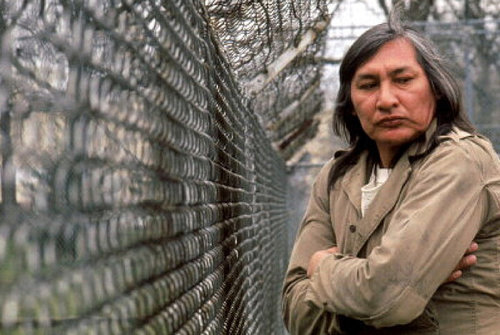

90 comments:
“What the Chronics are—or most of us—are machines with flaws inside that can’t be repaired, flaws born in, or flaws beat in…” (16). I think people find Kesey’s literary devices so intriguing because they are unique and help you interpret and understand, like this metaphor does. His comparing of the Chronicles to machines that can not be fixed helps a reader understand the Chronicles better. After reading that metaphor, I had a better understanding of Bromden and his situation. Him comparing the Chronicles to broken machines also had a small emotional effect on me. They are intriguing because they help open your eyes and mind, and they can be used to generate different kinds of feelings. Kesey’s use of literary devices helps us gain a better understanding and appreciation of his literary art.
"They don't bother not talking out loud about their hate secrets when I'm nearby because they think I'm deaf and dumb. Everybody thinks so. I'm cagey enough to fool them that much. If my being half Indian ever helped me in any way in this dirty life, it helped me being cagey, helped me all these years" (17). I think that Kesey's literary devices have intrigued so many people because they are so imaginative and descriptive. When a reader is reading one of these literary devices they get intrigued by the purely descriptive and imaginative focus that Kesey puts into them. In the literary device that I quoted above, he is speaking directly to the reader, the other characters cannot hear him. This I think creates a relationship between the reader and the author; further intriguing them. Imaginative and descriptive passages are something that Kesey is very skilled at and constantly keeps readers engages and wanting to know more.
"Across the room from the Acutes are the culls of the Combine's product, the Chronics."(15). From what I understand from reading so far, readers are able to understand Kesey's use of literary devices very easily. The way Kesey uses literary devices is hidden, but easy to find and understand. With this topic of turning out people to all be the same, it leads to many detailed and hidden messages about our culture as it is today, and how things were in the past. These are very intriguing details to the reader. I believe that the topic of this book plus the amount of literary devices makes it a very intriguing read. The book revolves around people that are not seen as fit for the real world. Most of these people are people of color, black, native, etc. This is very intriguing and makes sense at the same time. I am looking forward to continue in the book and find more and more intriguing literary devices.
"she's got the bag full of a thousand parts she aims to use in her duties today-- wheels and gears, cogs polished to a hard glitter, tiny pills that gleam like porcelain, needles forceps, watchmakers' pliers, roles of copper wire..." (4). The reason I picked this quote is it contains lots of imagery. When you hear this description you can imagine what the author is talking about. When the tools are described it makes the Nurse Kratchet sound very evil. It opens the reader's mind to think of how she could use her thousand tools in one day. Makes you realize how horrible the conditions must be in the asylum. Another quote that stands out, in the same manner, is, "She's going to tear the black basters limb from limb, she's so furious"(5). I think that the author placed these quotes close together to let the reader know that Nurse Kratchet is going to be very mean to the characters of the story.
Kesey writes "He knows his place. He most certainly doesn't challenge the wolf to combat" (64). The author uses a metaphor within these sentences to describe the patients versus the ward staff. "He", in context with the quote, is speaking of rabbits. Rabbits know their place and certainly wouldn't dream to challenge a wolf. The patients within the ward represent the rabbits and the staff (nurses, black boys, doctor, etc.) represent the wolf. The patients are weak and told that they are inferior due to being patients in the ward, and they must obey staff or else dire consequences must be faced. They are afraid and live in a constant state of conscious or subconscious fear. So many readers have found Kesey's literary devices to be intriguing because they expose society, real world issues, and are tastefully used to enhance the story and bring about ambiguity—which lets a reader interpret and think for themselves at a higher level.
One sentence from the novel that includes a literary device is found on page 31: “All three wear starched snow-white pants and white shirts with metal snaps down one side and white shoes polished like ice, and the shoes have red rubber soles silent as mice up and down the hall” (31). So many readers have found Kesey’s literary devices to be really intriguing because they are used so frequently, but with such high quality it impresses any reader. For instance, this particular sentence could arguably have 4 literary devices. Kesey talks about how their shoes are “white, polished like ice” which is a simile describing the shoes. Also, Kesey uses alliteration by describing the shoes as having “red rubber [soles]”. Directly after that Kesey uses alliteration again with “soles silent”. Directly after that Kesey uses another simile by saying the soles are “silent as mice up and down the hall”. As anyone can tell, Kesey’s use of literary devices embellish his works with informative descriptions and enhance the experience for the reader.
"No tracks on the ground but the ones he's making, and he sniffs in every direction with his cold red rubber nose and picks up no scent but his own fear, fear burning down into him like steam"(7-8). I think that people find Kesey's literary devices so intriguing because he puts his own twist on it. When writing, I think Kesey is outgoing and writes in his own tasteful matter. In the simile that I quoted above, I felt like he was really describing something to us as readers. In my opinion, when authors make things descriptive and detailed, it makes me understand and like the book a lot more. I like similes because they help me to understand things clearer by comparing something to it. He is describing that fear is inside of him and it is burning him down. When authors compare things to each other, it makes reading a lot more enjoyable. Not only are similes interesting, but any literary device makes reading better for anyone.
One sentence that caught my attention from the novel is, "They start the fog machine again and it's snowing down cold and white all over me like skim milk, so thick I might even be able to hide in it if they didn't have a hold on me" (7). Ken Kesey does a great job throughout the whole novel vividly describing events and allowing the reader to visualize the scene for themselves. In this particular sentence, there exists many literary devices such as imagery, simile, and symbolism. At this point in the novel, all of the vivid details have helped me understand the story takes place in a mental institution, and the fog may be a figment of their imagination. I think that readers become engulfed in the story so easily because of the vast amount of literary devices that Kesey uses. The literary devices allow readers to fully understand what is happening in the story, and it is so descriptive to the point where you feel like you are in the book. Readers can also figure out symbolism and other key parts of the novel quicker when the author uses literary devices.
“The black boy jerked at his arm again, and Pete stopped wigwagging his head. He stood up straight and steady, and his eyes snapped clear. Usually Pete’s eyes were half shut and all murked up, like there’s milk in them, but this time they came clear as blue neon” (52-53). The comparison to milk and blue neon in Pete’s eyes gives complete detail to the reader to get an image in their head when reading it. I think the reason why so many readers have found Kasey’s literary devices to be so intriguing because he doesn’t just use one in any given sentence, but he uses multiple mixtures to really detail his writing. This sentence has various examples of imagery, as well as at least two similes. Kesey’s writing is so intriguing because of all the detail he puts into it, and, not to mention, his detailed writing is way out there. The way he compares the Cronics to machines that can’t be fixed or the nurse to a robot is so imaginative and creative that it intrigues the reader to read on to find out what other comparisons Kesey is going to make in his writing. There are so many examples of Kesey’s use of literary devices in this novel that you can literally find multiple on every page!
I think that many readers find Kesey’s literary devices intriguing because he uses them constantly throughout the novel, and because they are usually easy to understand and relatable to things we run into during our everyday lives. One such example found in the novel is “You can see by his eyes how they burned him out over there; his eyes are all smoked up and gray and deserted inside like blown fuses (16-17).” Most people know what fuses are and what they look like when they blow (more so back in the 1960s than today) so being able to connect to the audience in such a way is a great method Kesey uses in getting the audience interested in the story he is trying to convey to them. It also makes the world in the story more believable by clearly describing to the audience what the world looks like so that they can picture it in their own heads.
“They laugh and then I hear them mumbling behind me, heads close together. Hum of black machinery, humming hate and death and other hospital secrets” (3). This is an example of a metaphor in the novel. This comparison is used to show how the people of the time still had racist thoughts in their heads about the different colors of people's skin. They compare the African Americans talking to that sound of old machinery as if they are still just tools for the field. Her literary device of comparisons is used subtly to relate to other periods of time. This makes it so the reader has to think deeper than the words on the page when reading the novel. Drawing us deeper into the novel to pick up her subtle mentionings of other problems. While doing this, the reader not only will understand the novel better and see more detail in it, but they will also be able to theorize about the book and find the deeper meaning to it than what the storyline says.
“Is this the usual procedure for these Group Therapy shindigs? Bunch of chickens at a peckin’ party?” (57). Kesey’s decision to describe the group therapy meetings as a pecking party was an expert way to accurately portray what was truly going on during that meeting along with adding to the readers’ understanding of McMurphy’s character. As I was reading this scene in the book, I could feel not only the tension between McMurphy and Harding, but I was also amused because of this somewhat odd metaphor employed by Kesey’s interesting character McMurphy. I think readers are intrigued by Kesey’s use of literary devices because, like the pecking party metaphor mentioned above, they not only give insight to the character using them, but they also add to the overall theme and message of the story. For Cuckoo’s Nest in particular, this pecking party metaphor shows the harm rather than help being done by Nurse Ratched and the mental institution as a whole. Kesey's literary devices don't simply entertain, they also provoke further thought from those reading his novels.
We are — the rabbits, one might say, of the rabbit world (67)!
The way Kesey uses literary devices takes over the readers mind. Ever since starting the book, I have been intrigued by every word. The work Kesey has put in to use literary devices to truly make you feel as though you are living Chief Bromden's life is breathtaking. The author makes you escape the world you are in an almost truly see and hear what Bromden is hearing, but more than that you feel the worry and concern he does. Going into the book knowing the Chief has a mental disability I expected to be confused with the work and what he was saying but it is quite the opposite actually. The book makes his reality seem real. So real in fact it has left me wondering what is actually real and what is not. I have studied schizophrenia in other classes especially from watching the movie “A Beautiful Mind” and knowing some of the delusions and made up images I wonder what is true and what isn’t in Kesey’s work. He truly takes you on an adventure into the mind of those we like to disregard because just as I sit here wondering what is real and what isn’t I am sure that there are others out there with true mental disabilities that wonder the same things all the time.
Hailey Stengel
"What the Chronics are—or most of us—are machines with flaws inside that can't be repaired, flaws born in, for flaws beat in over so many years of the guy running head-on into solid things that by the time the hospital found him he was bleeding rust in some vacant lot (16)." I think people find Kesey's literary devices so intriguing because they are very unique in a way that they make you think about what the author is trying to get across to the reader. They are insightful yet entertaining. While reading this particular section of the reading was how Kesey has the main character describe him and the other patients as the "Chronics". Chronic, in medical terminology, means that it can't be cured. It is a condition that can only be treated but not cured and will continue to get worse over time. Then the description of what a Chronic is—"a machine with flaws inside that can't be repaired"—is almost exactly what a patient with a chronic condition might consider themselves to be. A person who is in a mental hospital must have some sort of condition that can not be cured. Calling the patients Chronics is both mostly accurate but also defeating in a way. Something that is chronic cannot go away. This one of the best literary devices I have ever come across.
"...think about ah one time Papa and me were hunting birds in a stand of cedar trees near The Dalles" (6).
I think readers found Kesey’s literary devices intriguing because he put an interesting spin on the literary devices. His literary devices are hidden in the text but once you find what he is trying to portray it is easy to understand. You can even find devices within a device which is what sets his style apart. In an allegory you can see the imagery he uses to create is a memory and through the memory, you can usually find symbolism in it. Each one of them is unique. Multiple times throughout the story he uses allusions, where he goes back to times when he was with his Papa. All of the allusions go back to the times on the reservation, and better times in a way. In the story the world is divided into the inside and the “outside”, the world outside of the walls of the asylum. Outside everybody has a grip on their own imagination and to some it can be scary. When he talks about being with his Pa and family it is always on the outside and that is the place where he feels safe and comfortable. But on the inside of the asylum he questions many things and never truly feels safe, it is almost like he is running from fear a lot of the times.
"He shakes the hands of the Wheelers and Walkers and Vegetables, shakes hands that he has to pick up out of laps like picking up dead birds, mechanical birds, wonders of tiny bones and wires that have run down and fallen." (23). Kesey's literary devices are so intriguing because of the amount of effort and meaning obviously put behind them. These devices expand upon basic points and lead to an overall more interesting read. These different uses allow you to open your mind and look deeper into the true secrets within the hospital. I find it interesting that Kesey leaves subtle and noticeable hints throughout the novel, showing how degrading the hospital is towards the members living in it. He uses the terms chronic and vegetable often throughout it to describe the patients. This downgrades these patients from people to objects, giving an emotional aspect to the novel, both to the characters and the readers. Another reason Kesey's devices are so intriguing is that he uses them often, and he uses them well. I think that literary devices are used throughout this story as a way to point out key information hidden within the text and leave an open-ended interpretation of a statement that holds more importance than a reader would initially think.
"It's a loose weave and I can see inside it; there's no compact or lipstick or woman stuff, she's got that bag full of a thousand parts she aims to use in her duties today-wheels and gears, cogs polished to a hard glitter, tiny pills that gleam like porcelain, needles, forceps, watchmakers' pliers, rolls of copper wire..." (4). I think readers find Kesey's literary devices so intriguing because he uses the devices at exactly the right time and place. These devices are implemented into the text not only to make it more interesting, but also to offer more detail and give the reader a better idea. When Kesey's devices are used to describe people, readers are able to feel and relate to a character more than before. I especially like when Kesey uses devices to describe Nurse Ratched, because it really shows how evil she must've been. In the quote above, Kesey is describing Nurse Ratched's bag. I find it interesting how he uses even small things, such as a bag, to show what a character is like. Whenever Kesey uses a literary device, it flows perfectly and complements the sentence well. This just goes to show how much time and effort Kesey probably put into each one of these literary devices. When a reader steps back and analyzes these literary devices, it is easy to be amazed by the pure genius of Kesey.
“The ward is a factory for the Combine” (40). This is just one of many examples of literary devices Kesey uses in his novel. What makes them so fascinating, and maybe confusing, is that they aren’t necessarily traditional devices. Yes, the Combine is a metaphor, but it’s not something like “the water is clear as crystal”. His devices make you think, make you wonder… honestly they have made me uncomfortable at times. The use of the Combine is an excellent way of portraying the hum and mechanical sound of the asylum. Kesey’s imagery gives me a vivid imagination of what the asylum looks like. It also shows me how disturbing it is and how freaked out I would be if I were to actually see it, if it were actually real. Kesey uses literary device so well as to disturb me, yet intrigue me so that I keep reading. I want to know what happens to Chief. I want to know why the big nurse acts the way she does. Kesey’s mature and creative use of literary devices pulls his readers into his book.
I think that so many people find Kesey's literary devices intriguing because he has such a unique way of writing. "What the Chronics are—or most of us—are machines with flaws inside that can't be repaired, flaws born in, or flaws beat in over so many years of the guy running head-on into solid things that by the time the hospital found him he was bleeding rust in some vacant lot" (16). This sentence caught my attention because it is so descriptive of how they are living and gives you a better understanding. The description of these "Chronics" just shows the reader how the patients see themselves; they have flaws that cannot be repaired. Kesey does not just compare the Chronics to machines with flaws, he goes more in-depth with this metaphor. He is so descriptive throughout the whole novel which keeps the readers gripped. Although descriptive, Kesey's literary devices are open to the reader's interpretations which is also why the readers find his devices so intriguing.
In the very first chapter, Bromden states, “They start the fog machine again and it’s snowing down cold and white all over me like skim milk, so think I might even be able to hide in it if they didn’t have a hold on me” (7). I imagine the fog is not so literal and that it is rather referring to Chief Bromden’s psychological state. Perhaps the fog is a symbol of his clouded mind and slip from reality. In a broader sense, the symbol of fog can more generally represent a lack of insight or clarity. When Bromden starts to slip away from reality, he starts to mention an engulfing fog. I think many people have found Kesey’s writing so intriguing because of his completely pertinent symbols and references. Kesey finds ways to make people understand without them necessarily realizing why they might understand. His writing addresses relevant issues in a somewhat obscure way. Also, in addition to his incredible portrayal of real-life issues, his writing is genuinely enjoyable and intriguing to read. The flow and structure of the novel keep the reader engaged and entertained.
In the exposition of Kesey's work, you can find so many examples woven into the text. One example that stood out to me was "You can see by his eyes how they burned him out over there; his eyes are all smoked up and gray and deserted inside like blown fuses "(16). This one, in particular, stood out to me because of the way he is explaining the electroshock therapy. At this point in the book, Chief has never called it electroshock therapy but instead describes it in a way to explain the darkness around the therapy and also how it is seen through the eyes of someone who isn't capable of understanding. He explains it by saying it "burns people" out, as they send shocks through the head and burn their brain. To relate again back to his idea that they turn everyone into robots he relates the eyes as blown fuses when he is instead trying to say that the shock scrambled his brain in a way that he has a blank stare. He is so masterful in every sentence. This example sentence could be read over in the book as a small unimportant sentence, but he paints a picture of exactly how a mentally ill patient could think about the littlest scenes. Even his description of people comes from such a different point of view but the reader is never confused as to what is being said.
One of Keysey's obvious strengths in writing is his ability to incorporate literary devices. The sentence that stood out to me recently was "Other mornings I figure it's cagier to step right into place between A and C in the alphabet and move the route like everything else, without lifting my feet-powerful magnets in the floor maneuver personnel through the ward like arcade puppets..." (32). This sentence in the novel stood out to me because it provided me with the opportunity to imagine how hard it would be to go through the same boring, humiliating routine everyday. It makes me, and hopefully others, grateful for the freedoms I have in my everyday life. After imagining this piece of imagery in the book, I cannot fathom the harsh circumstances the characters from the book encounter through the story. To understand what citizens who were either insane or thought to be insane went through during this time period is nearly impossible.
One quote of Kesey’s that really caught my attention was, “What the Chronics are…are machines with flaws inside that can’t be repaired, flaws born in, or flaws beat in over so many years of the guy running head-on into solid things that by the time the hospital found him he was bleeding rust in some vacant lot” (16). Although the end of this quote caught me off guard, the surprising end is not the only reason this quote stuck out to me. I am very intrigued by Kesey’s pattern of using metaphors to compare the patients to machines. I find this thought very interesting, especially in terms of this quote. I feel like this quote best sums up this metaphor so far. I love the idea of the Chronics being machines, because machines are considered items that can be fixed until they are completely destroyed and tossed to the landfill. They lack any human emotions, and a true depth of feeling. This definitely describes the state of the Chronics at this point. At one time, they were considered machines that had the potential to be fixed. However, as time passed they were deemed too broken to fix and left to dry. The Chronics are in this position. Their flaws have been drilled and pointed out to the point they have become broken beyond repair and landed in a “vacant lot” or landfill. The patients in the institute are seen to the outside world as lacking true human emotion and not understanding the essence of humanity, just like machines. Just this one metaphor can be looked at so deeply from just one quote, and I believe that is why readers find Kesey’s devices to be intriguing. They are not just surface level, like many can be, rather there is depth and layers to the literary devices he provides. Kesey’s literary devices force readers to think deeper than an average novel, which is why I believe his devices are so intriguing.
Page 40 says, “All those spindles reeling and wheeling and shuttles jumping around and bobbins wringing the air with string, whitewashed walls and steel-gray machines…..Yes. This is what I know. The ward is a factory for the Combine.” Kesey uses great imagery and metaphors. In this passage, he explains a machine. He tells a story. The whole thing is a large metaphor. He presents the metaphor in story form. This keeps the metaphor interesting. This is a large reason why people find Kesey’s wok interesting. His metaphors pull the reader in. In this passage, he also chooses his words carefully. For example, “reeling and wheeling” are good choices. They rhyme. Not only are Kesey’s metaphors interesting, but the word choices in the metaphors are well planned. Kesey’s metaphors also pull the reader’s senses in the story. In the beginning of this example, we can hear the machines. We can hear them reeling and jumping. We can see the machines at work. We can see them wheeling and jumping and wringing. This is another reason people are drawn into Kesey’s writing.
One quote that I find intriguing that contains a literary device is this: "what the Chronics are—or most of us—are machines with flaws inside that can't be repaired, flaws born in, or flaws beat in over so many years of the guy running head-on into solid things that by the time the hospital found him he was bleeding rust in some vacant lot" (16). I think that readers find Kesey's literary devices so intriguing because of how specific and powerful they really are. For example, this quote contains a strong metaphor comparing the Chronics in the hospital to machines or robots. This metaphor is powerful and helps shape the reader's mindset of how the Chronics should be viewed in the book from now on. This metaphor also has meaning because it makes the reader question whether or not this view of the Chronics will change by the end of the novel.
"The Big Nurse is able to set the wall clock at whatever speed she wants by just turning one of those dials in the steel door; she takes a notion to hurry things up, she turns the speed up, and those hands whip around that disk like spokes in a wheel" (76). Many readers find the different literary theories in Kesey's novel because they seem so real, so convincing even though the novel is fiction. The way that Kesey can convey such reality to make it convincing. There are different theories; Kesey succeeds and makes everyone love the book even more.
One quote that stuck out to me was, "One by one they are able to disconnect the direct wires and operate on beams... They are in contact on a high-voltage wave length of hate, and the black boys are out there performing her bidding before she even thinks it" (31). Kesey does a great job of writing and using description throughout the book to show how Nurse Ratched controls the hospital. He uses metaphors to describe her workers as machines. After years of her controlling them they are finally on a “wave length” with her to know exactly what she would want without her having to write it down. It allows her to continue running the hospital whatever way she’d like because there’s no documental proof of her doing it. This imagery also dehumanizes the three boys because Kesey makes them appear like machines. The machines are committing this hateful acts instead of them.
"They start the fog machine again and it's snowing down cold and white all over me like skim milk (p 7)." I think that so many people have found Kesey's writing interesting because of the strangeness of it all. This particular passage I chose has to do with when Chief Bromden is getting his face shaved at the beginning of the novel. I chose this quote because I think it has such powerful imagery--you can really see how torn up and affected by shaving Bromden is. However, you also get to see how he views the shaving. Because Bromden is an unreliable narrator, it is so radical to see how he views mundane tasks, such as shaving or taking his medicine. Bromden believes that everything that is happening to him is linked to a robot who is trying to take over the world and also get inside of him. He believes this to be true, and it is, in his mind. We all know what shaving is really like, so to see him have such a reaction to a simple task really gives us an in-depth look into his mind. That look into his mind is very important, and I think is what makes this novel so powerful; the way Kesey is able to put us into the mindset of those in the insane asylum.
"Is this the usual procedure for these Group Therapy shindigs? Bunch of chickens at a peckin' party?" (57). Kesey uses the metaphor comparing their therapeutic meetings to a chicken's pecking party to show that they are everything but therapeutic. All of the patients are convinced that the meetings are meant for their well-being and that it helps them when really all it does is break the targeted man down. The ward controls the men inside this facility by continually demonstrating to them that they are still in dire need of help with all their problems. Kesey uses powerful literary devices throughout the novel to intrigue the readers and also connect something in the book to a more relatable real-world scenario that may be more understanding for the reader. The amount of thought and detail he puts into his literary devices is what really intrigues the readers in my opinion. While reading Kesey's books, you are never left wondering because every little detail is put into perspective.
As I was reading this book, literary devices were not hard to find. On every page there is at least two literary devices used and most the time more than that. One quote from the book that intrigued me was, “There’s a rhythm to it, like a thundering pulse” (87). This was said when Chief Bromden was describing the sounds of machines when everyone was sleeping and their whole floor was lowered down. This is not the only time he has described the machines and how they always make noise. The simile Kesey uses in that sentence is like many used throughout the book. They are helpful because they put an idea in your mind and give you the ability to be in the patient’s shoes. Kesey uses all types of literary devices which makes for an interesting read. The details are very interesting and I have been able to understand what it is like for Chief Bromden.
“He’s there pulling Ellis’s hand off the wall and shaking it just like he
was a politician running for something and Ellis’s vote was good as anybody’s” (21). This literary device is interesting because Keysey describes McMurphy as a congressman. He uses similes like this to bring more life to his characters. This also shows that McMurphy is walking in like he owns the place. Kesey has a way of bringing characters to life in a way I’ve never really seen before. I think readers can be interested in what the tone of the book is. Keysey describes characters like Nurse Ratched in a way where you’re not sure what is real. Readers cannot be quite sure if Chief Bromden is just imagining things, or if he really is seeing them. Readers are probably interested in Kesey's literary devices because of how odd they are. He keeps people interested, while also keeping them a little confused. Readers are probably interested in this look into an insane asylum, and how people were treated in that time.
“A success, they say, but I say he’s just another robot for the combine and might be better off as a failure, like Ruckly sitting there fumbling and drooling over his picture” (17). Quoted after talking about a guy who goes for and installation leaving the ward mean and mad and comes back a few weeks later, and “he’s the sweetest, nicest, best-behaved thing you ever saw” (17). This quote shows how people who are not considered “normal” need to be fixed and corrected to fit into society. These patients become robotic considered being a success, and although they are incapable of independent thought, they fit into society. Kesey’s literary devices have intruded so many readers for the reason of comparing robots to people. Using these comparisons make it easier for a reader to understand how the patient was changed. Kesey’s book One Flew Over the Cuckoo’s Nest portrays how society sees the patients as failures and unfit for the world.
In One Flew Over the Cuckoo's Nest Kesey writes, "Nobody can tell exactly why he laughs; there's nothing funny going on. But it's not the way that Public Relation laughs, it's free and loud and it comes out of his wide grinning mouth and spreads in rings bigger and bigger till it's lapping against the walls all over the ward." This sentence(s) stood out to me because in such an unsettling place Kesey describes the institution to be, the laughter McMurphy has is equally pleasant and taboo. When I read that sentence I can imagine that sort of laugh that booms down the halls and how off-putting that would be when you haven't heard laughter for so long. I think that people find his literary devices compelling because most people have never been to a mental institution so we almost rely on him to paint the picture for us because we don't have any prior knowledge, and he does it in a way that goes above and beyond what you may even want to know.
"Usually Pete's eyes are half shut and all murked up, like there's milk in them, but this time they came clear as blue neon" (52). This sentence from our book includes the literary devices of similes and imagery in it. Throughout the novel, there are bundles of analogies and small details to help you envision what each person feels and what each situation is like for those in the ward. I think so many readers have found Kesey's literary devices intriguing because none of them are cliche. Every literary device used is simply out of the box. The book is written with divergent thinking, using creative ideas to find many possible solutions. With the use of these literary devices, it leaves much of the book up to the reader to interpret. I think that is why so many people like the authors use of literary devices: it gives them a chance to influence the book. Everyone can create their own take on any book but with this book the use of devices helps guide you to see the book in a different way. A reader is not just reading words off of a page but painting a picture in their head.
Kesey uses imagery and metaphors; "--We'd be rabbits where ever we were--we're all in here because we can't adjust to our rabbithood. We need a good strong wolf like the nurse to teach us our place"(64). I believe people find Ken Kesey's literary devices intriguing because he uses them often; especially metaphors and strong imagery, I have noticed. In the quote I found, it was interesting how he compares the patients to rabbits, and Nurse Ratched to a wolf. This metaphor is strong because the patients, including Bromden, could easily overpower the nurse, but are tortured and manipulated to believe that they are so much lesser and small compared to her and that she is the most powerful influence on them. She is, but only because they are scared into obeying her.
One of the lines that stuck out to me was "Now his eyelids hang loose and thin from his brow like he's got a bat perched on the bridge of his nose p30." This really stuck out to me because it is such an interesting way to describe an old and worn face. When Kesey described this mans sagging face like this though, I understood exactly what he meant and could picture it. I am sure that many readers find his style interesting because the way that he described certain details that could be easily overlooked. Kesey does not overlook these details and then goes two steps further and describes them in perfect clarification, in a not expected way. I really enjoy his writing style, it is the best kind of different. I also like his style because of the person he chooses to tell us the story, and possibly unreliable source of information as he is possibly crazy. It keeps the reader having to think further and decide if what he is saying is true or not. That is what I really enjoy about this book.
"You can see by his eyes how they burned him out over there; his eyes are all smoked up and gray and deserted inside like blown fuses" (16). This sentence includes a simile that I find super interesting. Throughout the book, Ken Kesey will describe different characters with a strong simile description. A page does not go by that you will not find a literary device. The book is fluttered with them. The sentence I chose was to describe Ruckly after he came back to the ward. He strapped him to a table and then nobody saw him until this day. I think by having all of these literary devices it gives us a clearer view of what all of the characters look like. It also gives us room to interpret what we think. I do not think that any idea that anyone has is ever wrong when using literary devices. Readers really need to use their imagination when reading. Of course, not everything is possible. Therefore, readers get to imagine what they think is really going on. They get to put on their lenses and try to think rather than get told what is the right way and what actually happened.
“Most days I’d be out sweeping the hall and see who they’re signing in, but this morning, like I explain to you, the Big Nurse put a thousand pounds down me and I can’t budge out of the chair” 10. In this sentence, Ken Kesey uses hyperbole to exaggerate how much weight is holding him down. The way he uses this literary device in this particular part of the book is amazing because while he is exaggerating the weight, he is also continuing to describe this character because in a way he is tricked into thinking that he cannot get up. The way Ken Kesey uses literary devices is amazing because of how it greatly enhances the book and makes it easier and more enjoyable to read. Using different similes and metaphors in this book is one of Ken Kesey’s greatest achievements. The way he describes different scenarios using metaphors and similes makes this book way more interesting to read.
“The machinery–probably a cog-and-track affair at each corner of the shaft–is greased silent as death” (Kesey 86). Kesey uses very dark and grave figurative language throughout the course of the beginning of One Flew Over the Cuckoo’s Nest. Kesey wrote the novel as a response to his own experience of being involved in an experiment using mind altering drugs and after working as an attendant in a psychiatric ward. Using the dark language, Kesey brings to light the problems of psychiatric care and how the poor treatment affects individuals within its care. Also, the dark, often scary, language depicts how the inside of psychiatric patient’s mind is thinking. Many of the patients, like Chief Bromden, are paranoid and think that something bad is always going to happen to them. The language used in the novel depicts their disintegrating mind. Kesey, having experience himself in the world of drugs and wards, is able to accurately portray the thoughts and feeling of his characters through figurative language.
Kesey used many literary theories to make this book out to be so intriguing. I found various amounts of imagery in the book, but a specific one that caught my eye was on page 95, “By the time it dawned on the government men that they were being poked fun at, all the council who’d been sitting on the porch of our shack, putting pipes in the pockets of their red and black plaid wool shirts and taking them back out again, grinning at one another and at Papa–they had all busted up laughing fit to kill.” As I read this line, I could picture myself there because the details are so definite. Kesey uses vivid imagery like this throughout the whole book, which I believe is what really make this book come to life for so many readers. When authors put literary devices to such good use, readers can truly enjoy the book and get some learning experience throughout.
"One will hold up a second, spin a dial, push a button, throw a switch, and one side of his face flashes like lightning from the spark of connecting, and run on, up steel steps and along a corrugated iron catwalk..."(87). I believe people find Kesey's literary devices to be really intriguing because it lets the reader imagine what is happening. It gives them visual representation when they read, and they can see in their mind what is happening. In the quote I used, it used both imagery and a simile. This imagery gives you clear outlook on what is happening and lets your mind imagine it. The simile used also shows how his face lights up, but the simile compares it to something that we have all seen and then now we can picture what is happening.
“All of the rest of the knuckles were covered with scars and cuts...The palm was callused, and the calluses were cracked, and dirt was worked into the cracks. A road map of his travels down west...fingers were thick and strong closing over mine,” (25). This sentence is one of many examples of imagery in Ken Kesey’s book. He vividly describes certain details, which emphasize their importance to the reader. In this quote, he is intently describing a handshake that Mcmurphy had with Chief Bromden. This could be showing us that they will have some sort of importance or even connection later on in the book. Kesey intentionally added small details like these so readers can look into the deeper meanings of the book easily and they help readers feel like they are there experiencing the story. Kesey does an amazing job of subtly including these small clues into his story to help us truly understand what is happening.
The use of literary devices can be seen all throughout Kesey’s novel. His work is very interesting because it uses so many unique examples of similes, metaphors, imagery, and countless other examples. One sentence that stood out to me in particular was Kesey’s description of Chronics in the ward. He describes them as “machines with flaws inside that can’t be repaired, flaws born in, or flaws beat in over so many years of the guy running head-on into solid things that by the time the hospital found him he was bleeding rust in some vacant lot” (16). When Kesey compares the Chronics to machines, he basically declares how unhuman they are. They are flawed and broken by birth or by how the world has treated them, which is often something they have no control over. Even worse, they are machines that can not be fixed. This makes them completely unusable to society, therefore they must be sent away for someone else to deal with them.
I like when Kesey uses a simile making the world Bromdan sees feel as if he is in a cartoon. “Like a cartoon world, where the figures are flat and outlined in black, jerking through some kind of goofy story thst might be real real funny if it weren’t for the cartoon gigures being real guys…” (33). I think people find the literary devices so intriguing because they give us more to think about. They also make it possible for readers to be engaged by describing things in a different way. This makes the reader want to keep reading and give the reader a more creative and fun spin on the telling of the story. Literary devices are used to show things in a different way and open up the mind of the reader and allow them to imagine things in a certain way. They are a fun way to show the reader a thought that the author was trying to convey in a specific.
“Still — for the sake of argument, could you get it up over her even if she wasn’t old, even if she was young and had the beauty of Helen” (71). I think that this is a great example of allusion in literature as the Helen in question could be the infamous beauty Helen of Troy, the woman that started a war. It is interesting that he would use that analogy given the context of the scene in question and especially since it is coming from a mental patient, but I think that this helps make the allusion that much more impactful. I would be surprised if someone in a mental asylum started to quote and use examples of Homer’s epic in everyday life. I think Kesey uses that expectation and quietly slips it in there when the guys are talking about the loss of their abilities in a mental institution.
"What the Chronics are—or most of us—are machines with flaws inside that can't be repaired…” (16). Kesey uses this metaphor to install the idea of humans being machines, and the characters in the books are flawed machines because of their mental illnesses. Kesey uses many intriguing descriptions to help us picture the scene. Kesey does an amazing job of painting the scene for the us, the readers. I believe people are intrigued by Kesey’s works because of how his words pull the reader in and help them to understand the struggles of Chief Bromden and the other patients of the institution. He makes us all see what a person with schizophrenia goes through on the daily. Chief Bromden has been there the longest, but receives least amount of respect from the other patient. Overall, Kesey does a fantastic job of pulling his audience into the novel, and also explaining the struggles of the patients in the facility.
“You were safe from the enemy, but you were awfully alone” (130). I chose this quote because it has a lot of symbolism. In this chapter, Chief Bromden talks about the fog surrounding him. I believe the fog is a mental fog for Chief. A way for him to escape the reality of the insane asylum. He thinks the nurse creates this fog, but in reality he does it to explain his thoughts and the things he sees. When he says that you are safe from the enemy, it means he is safe from himself, the other patients, and Nurse Ratched. This Chief’s safe place, he is comfortable in the fog. The next part when he says he is alone. He has no one to talk to…The people in the asylum believe he is deaf and they don’t bother talking to him. When he is in the fog consumed in the fog he is by himself. He is only left with his thoughts and visions.
"I creep along the wall quiet as dust in my canvas shoes..." (3). This is an example of the spectacular literary devices that Ken Kesey employs throughout the novel. This one is my favorite because it starts the book off with a bang. It uses a simile that is very original and catches the reader's attention. I believe the reason that many people find that Ken Kasey's use of literary devices is so intriguing is that they are placed and worded so originally. His originality keeps the reader engaged and wanting to read more. Everything he writes has a deeper meaning. Kesey also employs great descriptive imagery that makes you feel like you are in the book. Some people do not like to read, but with Kesey's books, you don't even feel like you are reading. His literary devices give you further insight into what he is saying as if it were a movie.
"Whoever comes in the door is usually somebody disappointing, but there's always a chance otherwise, and when a key hits the lock all the heads come up like there's strings on them" (10). I think that many readers find Kesey's literary devices intriguing because they are a little outlandish. This sentence contains a simile. Even though that this is only one quoted sentence, the reader is intrigued by it. Every sentence and literary device that Kesey uses seems to draw the reader further and further into the reading. The wording, outlandishness, and devices all help to complement one another in such a way that readers can not seem to put the book down.
“The palm was callused, and the calluses were cracked, and dirt was worked into the cracks. A road map of his travels up and down the West. That palm made a scruffing sound against my hand” (25).
In this section, Kesey uses McMurry’s hand to describe him as a person. This description is both imagery and a metaphor. I think that the reason I enjoy Kesey’s literature is because when he uses literary devices, they don't feel like they are literary devices. He has graduated from using literary devices to improve his literature, and he now uses them to simply aid the flow of Bromden’s consciousness. Typically, when a device like this is used, there’s friction between the normal writing style of the book and the new literary device. This friction isn’t present in Kesey’s literature. I think that this is one of the reasons that many people enjoy his work.
Nurse Ratched's uniform holds symbolism in One Flew Over the Cuckoo’s Nest. “Her uniform, even after she’s been here half a day, is still starched so stiff it don’t exactly bend any place; it cracks sharp at the joints with a sound like a frozen canvas being folded” (42). This literary device helps the reader understand the control that Nurse Ratched has over the ward. She has total, untouched control. She runs a stiff, uptight ward where she has all the power. Kesey’s literature is filled to the brink with literary devices that are unusual and thought provoking. On every page, there is something that makes the reader pause and think about what was read. The reader is often left to wonder what is actually real and what holds a deeper meaning. The symbols are intriguing, and the words are descriptive; everything about Kesey’s writing reflects his creativity and intelligence. Readers find Kesey’s literary devices to be intriguing because they are unique and extremely powerful.
While reading One Flew Over the Cuckoo’s Nest, I found Kesey’s use of literary devices to be incredibly intriguing. In the following sentence, Kesey’s use of imagery allows the reader to develop a better understanding of the story and what is occurring in that specific portion. “...she’s swelling up, swells till her back’s splitting out the white uniform and she’s let her arms section out long enough to wrap around the three of them five, six times...” (Kesey 11). I think that so many readers have found Ken Kesey’s use of literary devices, such as imagery, foreshadowing, and allusion, to be so intriguing because of Kesey’s intelligence. He weaves many different literary devices seamlessly into his writing, that the reader doesn’t feel like it is forced, many writers have tried to do this, but have failed miserably. Ken Kesey allows readers to feel like they are a part of the story and similar to Chief Bromden watching everything occur in the mental institution.
"They are tall and sharp and bony and their faces are chipped into expressions that never change, like flint arrowheads. Their eyes came to points. If you brush against their hair it rasps the hide right off you." (30). This particular part of the book is very intriguing in how he characterizes the black boys. Kesey uses fantastic imagery to describe the boys' appearance. Tall, sharp, bony, flint arrowheads are only a few examples of the shocking adjectives he uses here. Kesey also characterizes the boys' character in the same few lines of literature. He says that their expressions never change, like flint arrowheads. He also uses some personification in that their hair will rasp the hide right off of you. This same line may be foreshadowing to the treatment of the patients. I think back to the catheters that rip the hair right from the patients bodies. This just shows why readers love Kesey's writing. It is so vivid that you have a true sense of the situation in your mind. Reading Ken Kesey's works seems more like being at a movie than reading a book. The adjectives are so precise and the various other literary techniques he utilizes, such as personification and foreshadowing, bring the full picture, rather than just an idea.
"And you, Mr. McMurphy," she says, smiling sweet as sugar, "if you are finished showing off your manly physique and gaudy underpants, I think you had better go back in the dorm and put on your greens" (100). Kesey uses a simile to describe the expression on Ms. Ratchet's face. Just one page prior, she was filled with fury, and certainly not smiling. By using a literary device, Kesey draws attention to the complete 180 of how Ms. Ratchet comes across to the patients. Chief Bromden sees right through her semblance. He understands that she is innately evil, though she puts on a guise portraying herself as sweet and loving. The use of a simile exaggerates how sweet Ms. Ratchet appeared, which shows how hard she was trying to maintain her kind, motherly mask. The literary device Kesey used here was simple yet effective. Sometimes less is more, and he knows this. Other literary devices throughout the novel are more complex, but he uses them in a way that does not make them seem excessive or out of place. This is why I, as well as others, find Kesey's use of literary devices so intriguing.
While reading this book, I knew you could find literary devices on every page. But, the one that intrigued me the most was when they were talking about Chronics, but more specifically Ellis. “Now he’s nailed against the wall in the same condition they lifted him off the table for the last time, in the same shape, arms out, palms cupped, with the same horror on his face. He’s nailed like that on the wall, like a stuffed trophy” (16). It was almost portrayed as the Crucifixion in the bible and how his bodied laid compared to how Ellis laid. I thought this was an interesting point in the book because it showed how Ellis deteriorated over time. He came in as an acute but in the end became a Chronic. Having imagery like this quote, helps readers portray images of these characters while reading and help readers define who they were or who they will become. Using literary devices in a story, helps the readers stay interested instead of drifting off into space while reading.
On page 53, Kesey writes that the patients didn’t see Pete’s “hand on the end of [his] arm pumping bigger and bigger as he clenched and unclenching it.” The hand eventually becomes a big rusty iron ball at the end of a chain.” This is one of the many instances of figurative language that Kesey uses in One Flew Over the Cuckoo’s Nest. The image of a hand growing larger, in Bromden’s eyes, in size, and in power is repeated in the novel, making it more noticeable and powerful. One of the reasons that readers may find Kesey’s figurative language appealing is the casual shift between realism and surrealism in the book. Scenes may be described in both realistic and figurative ways, switching between the two. The surreal is meant to be the real through the eyes of Bromden the narrator. Kesey was part of a movement that sought to be controversial and oppose society’s attempts to contain creative expression. However, was he wrong to use a serious condition, which he does not have, as a vehicle for his writing, taking inspiration from acid trips?
One quote from the book that I liked was, “They start the fog machine again and it’s snowing down cold and white all over me like skim milk, so thick I might even be able to hide in it if they didn’t have a hold on me. I can’t see six inches in front of me through the fog…” (7). A literary device that I think Ken Kesey does a great job of using is imagery. From this quote you form a picture of where Bromden is and what it would be like if you were in his position. Ken Kesey’s use of literary devices allow readers to gain more of an understanding of situations and see things in different ways. After reading this quote you get an idea that Bromden likes to be out of attention since he wants to hide in the fog. These literary devices give you more details to the characters and a better understanding of who they are. By including these qualities the readers are attracted to read more.
"Yes. This is what I know. The ward is a factory for the Combine. It's for fixing up mistakes made in the neighborhoods and in the schools and in the churches, the hospital is" (40). As the reader progresses through Ken Kesey's story, they are able to distinguish the use of various types of literary devices, such as the metaphor that is being displayed in the sentence provided above. Although a seemingly simple device to use, a metaphor such as this gives the reader the freedom to imagine what the internal structure of the hospital ward is like. Saying that the ward is a factory further supports the underlying theme of Bromden's opinion regarding the hospital, the patients, and the staff. There is a strict schedule that is completely controlled by the nurse, policies that cannot be broken, and the required actions that must be completed by both the staff and the patients. Also, a factory is not known for putting emotion into the things it transforms and creates. It is known to mass produce items that are 'correct' and can be a functional part of society. Bromden's direct relation of the two environments gives the reader a slight inkling as to the actual mental state of him as a character. If he is able to compare things and create vivid imagery so well, is he really as insane as the nurse perceives him to be? Kesey's use of literary devices all throughout the book allows the imagination of the reader to run freely and allows the reader to picture the horrors and happenings that are occurring within the ward.
"The ward is a factory for the Combine" (page 40). The literary device that this sentence contains is symbolism. The "Combine" symbolizes how the hospital or mental institute cuts down all the patients and creates them into what the ones in charge want them to be, submissive, quiet patients. It makes everything run smoother if the patients are like this. The "Combine" process is just like an actual combine cuts down and chops up corn stalks, turning them into kernels of corn, getting rid of whatever it doesn't like. In result of this, the combine turns unique individuals into the same person, no originality about them. So many readers are intrigued by Ken Kesey's use of literary devices because he uses so many which makes his story so much more than it appears to be on the surface. It takes the book to a new level of critical reading and thinking.
"When he lets his hands and face move like they want to and doesn't try to hold them back, they flow and gesture in a way that's real pretty to watch, but when he worries about them and tries to hold back he becomes a wild, jerky puppet doing a high-strung dance" (61). This analogy is particularly interesting to me because Chief finds Harding’s spasms beautiful, almost harmonious. Many of Chief's observations can be related to nature, which makes sense based on his Native roots. The theme of this book seems to be interspersed with nature analogies—Chief’s numerous flashbacks of his time with the tribe, his description of how Nurse Ratched runs the ward like a machine and how it is chaotic and not harmonious, and his descriptions of how things are at peace when you just settle in and let nature run its course. Chief Bromden brings a new perspective to the topic of mental disorders by describing them as spasmodic when suppressed and beautiful when expressed.
"My sound soaks up all other sounds. They start the fog machine again and it's snowing down cold and white all over me like skim milk, so thick I might even be able to hide in it if they didn't have a hold on me" (7). In the book, there are multiple references to fog, which continuously surround Chief Bromden. He thinks that Nurse Ratched is the one causing the fog around him. The fog could be a device for not knowing what's going on in his mind or possibly medical induced rather than actual fog. Also, the fog could be a defense mechanism for Chief Bromden because it allows him to hide his issues and fears. Many readers are intrigued by Kesey's use of literary devices because it makes the book so much more detailed and interesting. The use of literary devices gives the readers something to look into and further explore while reading the book.
"About the only time we get any letup from this time control is in the fogs; when time doesn't mean anything. It's lost in the fog, like everything else. (They haven't really fogged the place full force all day today, not since McMurphy came in. I bet he'd yell like a bull if they fogged it" (78). The fog symbolizes the mental state patients sometimes put themselves in when they are feeling scared or stressed. By blocking everything and everyone out, they can escape from reality. Since McMurphy came, however. Bromden has noticed that the patients haven't really been "going" to the fog because he makes them feel confident and safe.
“He sounds like he’s way above them, talking down like he’s sailing fifty yards overhead hollering at those below on the ground” (11). I think that Ken Kesey’s book is so easy to read because he is able to connect the audience with the book. He makes it seem so realistic, although is it not. He puts actions in there that contradicts the real world, but also he puts actions in there that relate much to capitalism we have now. The world that you feel like you are in while reading about Chief Bromden’s experiences are supernatural. Your footsteps follow every sentence that you read. His literary devices, which include things like symbolism, imagery, and comparisons are strong. I think it is interesting that he places different names to each “group” of people in the book. Vegetables, the acutes, and the chronics are just some of the names that we hear him discuss. I was not exactly sure what they all stood for in the beginning but then was able to grasp their meanings. For example, the chronics are the ones who are old and tired. He does many things to describe everybody. He does not leave anyone out.
“I creep along the wall quiet as dust in my canvas shoes,“ (3). I believe people find Kesey’s literary devices so intriguing because he allows you to notice it more. Just as he compares the silence to dust, it proves to you just how silent Bromden really was at that moment. He explains to a reader that it means more than just the words that he wrote down in the book. He is expanding upon a certain point to show a greater value. Kesey’s literary devices are so intriguing because they help the reader understand the story more. It may even make you feel as if you were there with the character. Without the use of literary devices, the story could seem not as important and maybe even dry. Meaning that it has less content to work with, it doesn’t really mean much to the person reading the novel. Without Kesey’s and other amazing composers literary devices, literature would never be as intriguing as it is to this day.
One phrase from the novel that includes a literary device is seen on page 64: "The ritual of our existence is based on the strong getting stronger by devouring the weak...the rabbits accept their role in the ritual and recognize the world as the strong. In defense, the rabbit becomes sly and frightened and elusive and he digs holes and hides when the world is about. And he endures, he goes on. He knows his place. He most certainly doesn't challenge the wolf to combat." I think this phrase shows more than what we actually read as a reader. Kesey uses this metaphor to describe the staff and the patients. The rabbits are like the patients and the wolves are like the staff. As we know, the patients are told to be weak and obey all of the staff including the black boys, nurses, and doctors. The patients are deemed to live in fear while in the institution. Kesey's usage of literary devices makes his work very intriguing to anyone who reads it. He gets the readers to picture what the patient's world looks like by using all of the literary devices. His literary devices allow the reader to dig deeper into his novels.
“What the Chronics are––or must of us––are machines with flaws inside that can’t be repaired, flaws born in, or flaws beat in over so many years of the guy running head-on into solid things that by the time the hospital found him he was bleeding rust in some vacant lot” (16). This quote from the novel caught my eye immediately. It gives a deeper understanding of the role that the Chronics play. They are all taught that they are all flawed and no good in society, so that is how they live their lives. It states that the Chronics are in the ward for good, so for them, there is no point in trying to get better when they cannot fix their flaws. The part of the metaphor that says “flaws born in, or flaws beat in” was what really hit me. With the born flaws, it is something the men are born with and cannot do anything to fix it even if they wanted to. The flaws beat in shows that they were hurt so badly that they have to live with these consequences. Kesey’s literary device helps the readers see how the Chronics truly feel and see themselves.
There are many literary devices within One Flew Over the Cuckoo’s Nest by Ken Kesey, and one of the most significant is the large amount of symbolism to be found. One of my personal favorites is how laughter is used to denote difference or rebellion against the routine found inside the ward. In the novel, Kesey states “Even when he isn’t laughing, that laughing sound hovers around him, the way the sound hovers around a big bell just quit ringing—it’s in his eyes, in the way he smiles and swaggers, in the way he talks” (12). This is seen as an early indicator that McMurphy is really truly different than the other patients, and that he won’t be able to help himself from trying to spread that difference around to said patients. Throughout the first part, McMurphy creates several situations that wouldn’t nearly have occurred without his different way of thinking to spur their existence along. I believe this innate symbolism is one of the reasons readers have found Kesey’s literary devices to be intriguing, as they really permeate into the fabric of the novel and help it to come to life in the mind of the reader, something many novels fail to do.
I think that so many people find Kesey's literary devices intriguing because he has such an interesting and new way of writing. One sentence from the book that I found captivating was “What the Chronics are––or must of us––are machines with flaws inside that can’t be repaired, flaws born in, or flaws beat in over so many years of the guy running head-on into solid things that by the time the hospital found him he was bleeding rust in some vacant lot” (16). I find this very disturbing and sad. Is this really how people with a mental illness view the world and people in it? I hope not. His comparison of the Chronicles to machines that can not be fixed helps a reader interpret the Chronicles better. After reading that metaphor, I had a better understanding of people like McMurphy, Harding, and Bromden and their situations. They are all taught that they are all flawed and no good in society, so that is how they live their lives. Kesey’s use of literary devices helps us gain a better understanding and appreciation on how the Chronics are viewed and how they view the world.
“I still hear the sound of the falls on the Columbia, always will--always--hear the whoop of the Charley Bear Belly stabbed himself a big chinook” (80). This flashback a helpful literary device in the way Kesey uses it to help give more background information on Chief Bromden's past life experiences and expose the identity crisis of keeping his indian heritage and developing behavior of the dominant white culture. The flash back is very descriptive and specific with where it takes place, the sounds that are heard, and emphasis of words as well. In particular Kesey alienates the word always from the rest of the sentence through the use of hyphens to show the importance of the word itself and how Chief Bromden will never forget the sounds he heard from that past life experience. Many readers may be intrigued by Kesey’s unique talent in the development of his literary devices compared to others used in books due to the word choice used and the tone that helps define the mood and setting that is being told.
A literary device that I have found very interesting while reading Kesey's novel is the continuous metaphor that the narrator uses to describe the mental ward and all the residents and staff in the institution. Chief Bromden, who's paranoid schizophrenia pulls him into the category of unreliable narraters, constantly refers to the ward and its people as being mechanical and makes references to how the ward is like a large, strictly run factory that takes in broken things from society and then ships the products back out to the world when they are all fixed up or "adjusted to surroundings" (28). The big nurse Ratched is described as the very head of the factory and even a machine herself. Bromden takes note of this saying "now she wields a sure power that extends in all directions on hairlike wires too small for anybody's eye but mine; I see her sit in the center of this web of wires like a watchful robot, tend her network with mechanical insect skill, current to send up to get the results she wants" (29). It is the detail that Kesey goes into when using these simple literary devices, such as extended metaphors, that makes his writing so intriguing and interesting.
Literary devices are scattered all over in the book One Flew Over the Cuckoo's Nest. I found them very helpful because they paint pictures of the situations that are occurring. One literary device that I found very intriguing was "You can see by his eyes how they burned him out over there; his eyes are all smoked up and gray and deserted inside like blown fuses" (16). This description instantly put the thought of someone who was just mentally abused/tortured in my head. I thought of how much damage was done to Ruckly to make his eyes smoked up and gray. They are compared to blown fuses, which is like saying that there is nothing left at all. Later on, Kesey describes what he will do the rest of the day and that consists of nothing but stare at an old photograph. There are many little things like this that can be seen as unimportant; however, these are what makes this book so great and fascinating.
Ken Kesey creates sentences of great format, each one unique and sparking a personal connection to the read, drawing them in even farther than before. One sentence stuck out to me and truly drew me in, it goes “The Acutes look spooked and uneasy when he laughs, the way kids look in a schoolroom when one ornery kid is raising too much hell with the teacher out of the room and they’re all scared the teacher might pop back in and take it into her head to make them all stay after” (19). When Kesey wrote this sentence it caught my interest because I know what it is like to be in just such a situation, making a connection with me causes me to read on with more passion for the book. I believe this is a way for Kesey to apply foreshadowing in a subtle fashion as well. Describing McMurphy as a troublesome child in a schoolhouse and saying he will get all the children detention is a great way for Kesey to let the reader know that McMurphy will soon repeat this troublesome behavior with those in the ward. Sometimes it seems as though Kesey takes his literary devices too far, rather than describing a McMurphy as a troublesome child, Kesey decides to describe an entire schoolroom scene. I believe this conscious decision made by the author is what makes Kesey so beloved. Because you know exactly what scene he sees in his mind and, through his writing, he is able to place that image into your mind as well.
Ken Kesey is a master of literary device. He finds ways to tell a story without just putting the words on the page but instead by making the reader, no matter age, gender, or orientation, think and use their own minds to make conclusions based on how they see it. The sentence from "One Flew Over the Cuckoos Nest" was "The rabbits accept their role in the ritual and recognize the wolf is strong (185)." Harding says this to McMurphy trying to make him realize that they are the inferior being in their situation. They have no other option but to conform and cower in the presence of Nurse Ratched. Just like in the real world how there will always be winners and there will always be losers, especially in a capitalistic society. Maybe the various drugs that Kesey was using to show this in such a way that makes people open up and look in their own lives to see if they are the rabbit or if they are the wolf
"The iron in his boot heels cracked lightning out of the tile." Pg.143
I find that Kesyey's work in general intriguing. It is interesting how he forms ideas that challenges society and the mind. "One Flew Over the Cuckoo's Nest" idea is questioning mental hospitals. He visualizes a mental hospital experience in realistic and imaginary ways. The literary devices he uses are very descriptive and makes me feel every time I read one. For example, this quote is used when MacMurphy challenges the big nurse. He is showing power and control he has. Throughout the novel, MacMurphy questions the system and attempts to gain control over the big nurse. "One Flew Over the Cuckoo's Nest" faces what is expected. MacMurphy is hands down the heroic character and gains the patients' and staff's respect quickly. However, he doesn't just lay over for the big nurse to walk all over him. Literary devices are used to describe his feelings and situations in depth for the reader to understand just how vivid the patient's experiences are.
“Hoo boy, I had to leave. Doc, let me tell you” --he leans forward with an elbow on a knee, lowering his voice to the doctor across the room--”that little hustler would of actually burnt me to a frazzle by the time she reached legal sixteen.”(45). Many readers have found Kesey’s literary devices intriguing because it changes up the flow of the read. His style of writing is different from almost everyone else's and it's nice to have a change of pace. Plus, he does it in such a way where the read is still fluent but it adds more realism to it. For example, when he has people talking in his books and he adds a dash and has another character start talking interrupting the first one it adds a bit of real life to it because we have all been interrupted or have interrupted someone before. It makes the conversations much more enjoyable to read because you can picture yourself having the exact same conversation and it going the exact same way. It also adds more realism to the character themselves because other times it's not someone else interrupting them but themselves interrupting themselves because they lose their train of thought or they catch something before they make a mistake. You get to see inside of their thoughts and see that they are indeed human and see the mistakes they make as well.
In the book, it explains what nurse Ratched wears. It says, "Her uniform, even after she's been here half a day, is still starched so stiff it don't exactly bend any place; it cracks sharp at the joints with a sound like a frozen canvas being folded. This literary device is being used to describe how the nurse looks and what her uniform looks like. It helps you visualize that her uniform is clean and neat and doesn't have any wrinkles in it. It is stiff and it would make a noise if you would fold it. This can describe how the nurse is. She portrays herself as clean and nice on the outside but is totally different on the inside. I believe she brainwashes her patients and it is almost like a cult. Her patients think what they are doing is good but in reality, she is just trying to be in charge and make them do whatever she wants.
"... Our MIss Ratched is a veritable angel of mercy and why just everyone knows it. She's unselfish as the wind." Pg. 61. These metaphors that Kesey used through the words of the character Harding imply just how much the system has beaten down on them. It paints a picture of how Nurse Ratched has tried to attempt to make all the patients see her in a particular way. Obviously, she wants to trick them into seeing her as a kind and compassionate leader that is always willing to help, but this is just a mask to here intentions to control all their actions and their entire lives. We know that Nurse Ratched was made into a powerful character, and it is a shame that Kesey decides to dehumanize this character by having the narrator, Cheif, see her as the essence of evil that lurks around the ward. This quote that describes the nurse is intriguing to me because I feel that none of the patients actually feel this way about her. They don't think she is an angel, but they are too scared to say something real because then they would be admitting to being in a place of no control.
"He claps his fat hands on the day room door (37)." Ken Kesey has the amazing ability to pull you into an unfamiliar world. This book doesn't at all feel like Kesey telling a story. It feels like Bromden telling a story from his insane perspective. We believe everything that we're told and we forget that Bromden is a member of this hospital just like everyone else. The subtlety of his literary devices in his writing is awesome to read through. So much flow exists and nothing ever seems out of place. He is wonderfully descriptive, yet the pace stays great. My favorite part so far was when he was describing the day and he gets to the part where he describes the chronics and what they're doing. It was so impactful that I had to take a picture of it for future reference. I felt like I was there and experiencing the day just like everyone else. He has a gift.
One of the literary elements in this novel is the flashbacks that Chief Bromden has during the novel. Chief Bromden is having memories of his father and going hunting. A flashback takes you back in time so the reader can understand the character more through the characters past events. An example of a flashback is, “I hid in the mop closet and listen, my heart beating in the dark, and I try to keep from getting scared, try to get my thoughts off someplace else -try to think back and remember things about the village and the big Columbia River, think about ah one time Papa and me were hunting birds in a stad of cedar trees near the Dalles…” Page 6. These flashbacks give us an idea of Chief Bromden’s past and what his life was like before he was put into a mental institution. Flashbacks give us a sense of how Bromden used to be and what he did and what he liked to do before.
The line that I chose is, "My sound soaks up all other sounds. They start the fog machine again and it's snowing down cold and white all over me like skim milk, so thick I might even be able to hide in it if they didn't have a hold on me" (7). Throughout the book there are many references to the fog which is constantly surrounding Chief Bromden. In his mind he believes that Nurse Ratched is keeping him in this fog. The fog keeps the characters from rebelling against Mrs. Ratchet and keeps them from thinking for themselves. Ken Kesey is very good at making the unreal seem real, many people (myself included), believe this is because he wrote this book while experimenting with acid. Due to the main character having a shifted mindset due to schizophrenia, I believe Ken Kesey was able to create immaculate literary devices by writing the book when his mindset was shifted. In my opinion, this is why readers find his literary devices so intriguing.
I chose the line "the big nurse gets real put out if anything keeps her outfit from running smooth" (41). This line is a direct reference to Nurse Ratcheds power which is symbolized by her white uniform. This is peculiar because white is usually a color that is associated with good but Nurse Ratched is definitely a bad person so it would make more sense for her to wear a black uniform which is a more stereotypical bad color but the fact that her uniform is white is just one of the many things that Ken Kesey puts a twist on that makes the novel stand out. One Flew Over the Cuckoos Nest is a book that excels at pointing out the flaws in society and it accomplishes that through its use of disregarding stereotypes and rebelling against what is considered to be rational or justifiable for society. The nurse's uniform is a representation of the ward itself in the sense that she always wants her ward to be run smoothly with no one interfering with her control over it and the spotless nature of her uniform symbolizes how no one has tried to defy her power. All in all, readers find the literary devices in this book so interesting because they tend to showcase a side of society that most people have not witnessed or perhaps do not want to witness.
When I read any sort of literature, the most important aspect of the piece is almost always the imagery. Therefore, the line where Ken Kesey describes one of the black men as if “he's got a bat perched on the bridge of his nose” (30) really had some extra power to it. The leathery texture and appearance of bats and how people usually regard the creatures with disgust says a lot about the world the author is creating and what that particular character is all about. In regards to the character, the description paints a picture of a leathery and withered face of a man who is full of hate, just as the Big Nurse prefers. Bats are often associated with cold and dark caves, places that most people generally aren’t all that keen to enter. This association helps the mind create the unsettling atmosphere of the insane asylum and feel more connected with how it would feel to be held and medicated there.
Page 128: " Nobody complains about all the fog. I know why, now: as bad as it is, you can slip back in it and feel safe. That's what McMurphy can't understand, us wanting to be safe. He keeps trying to drag us out of the fag, out in the open where we'd be easy to get at." This quote is from the two pages that stand out from the rest of the book, where both pages contain only one paragraph directly in the middle of the page. What I like most about One Flew Over the Cuckoos Nest is that Ken Kesey isn't direct with his writing. He doesn't clearly identify everything that's happening so that the reader has an easy understanding. He leaves nearly the entire book very vague and leaves it up to the reader to decide what it all means or whats happening. Due to this, everyone has a different depiction of the book such as what the symbols mean, each characters motives, the hidden meanings, etc. It's like one of those books where you get to choose how the story progresses. This book allows you to interpret it however you want, creating a story out of whichever way your brain chooses to decipher it.
“His head leans back, and tendons stand out like coiled ropes running from his heaving neck down both arms to his hands” (125). Keysey masterfully uses literary devices to paint pictures otherwise unimaginable. Most images in the book are things people have never seen or are unable to see because they do not know the necessary information, but Kesey is able to make people visualize these images by using comparisons that mean something to people. The one that I chose is impactful and bears with it a lot of strength. The quote comes in the middle of an intense scene when McMurphey is trying to show the other patients how important it is to try and fight instead of being spineless automatons. McMurphy is putting an incredible amount of effort into lifting an unliftable object and the sentence gives off a vibe of difficulty and extreme tensions. The sentence reads fast with a lot of action which contrasts strongly with the a large portion of the book where people are quietly going about their business afraid of action. The world also becomes more detailed through Kesey’s devices. A lot of the times the devices reflect Chief Bromden’s personality, so the literary devices also help build up character development and narratives. Overall, the words written by Kesey have the ability to stick in one’s mind after reading for quite some time as they think of the elegant and balanced sentences written.
"He sounds big" (11) is a very important quote to setting up McMurphy's character. It really highlights how McMurphy will act and what he will be like in the story. Size in this novel has a big role in determining what a character will act like or how they are trying to present themselves. The nurses are generally small because they are invisible. The nurses are always around and listening but they are not always seen and you get that feeling when they are described as being small. Even for Cheif (an almost larger than life character) to say that McMurphy sounds big is a huge deal. Chief Bromden is a large fellow in the novel and by him saying that McMurphy "sounds big" means that McMurphy is here as a presence and is here to cause trouble and mayhem to some extent. Cheif also sees himself as small and cut down by the nurses and society and by him saying that he sounds big may also mean that McMurphy hasn't been cut down by the wrath of the nurses quite yet.
"Is this the usual procedure for these Group Therapy shindigs? A bunch of chickens at a pecking party" (57). Ken Kesey uses literary devices differently than most authors. In this case, he lets the literary device be talked about by the characters. He also uses one literary device to lead into another literary device. The "pecking party" leads into the metaphor about the rabbits and the wolves. He seems to use a lot of metaphors, especially in this book. Since we have an unreliable character (he is schizophrenic, so we do not know what is real and what is not) it adds so much more literary devices into the story. One major symbol throughout the book: fog, is a metaphor wrapped inside of symbolism wrapped inside of imagery. Kesey does not use one device at once but instead intertwines multiple different devices in order to create more interest and dimension into the story.
“His head leans back, and tendons stand out like coiled ropes running from his heaving neck down both arms to his hands” (125). This sentence uses a simile. There are literary device after literary device in this book. The literary devices Kesey uses paint his novel. With the use of the similes, metaphors, and imagery the novel comes to life. I think that is why people find his literary devices so intriguing. There is a lot going on in the book with what the chief thinks is real and not real which sometimes makes things a little bit hard to decipher which is which, but the way each situation is explained gives the reader a really good idea of what is going on. The thing I love the most is directly related to this topic. Throughout the entire book I have been able to imagine everything that goes on in great detail. I have an idea of what the day room, nurses station, dorms, and so on, look like. To me that is what makes a book fun to read. A good story along with imagining (seeing) how everything plays out in my head.
“She’s swelling up, swells till her back’s splitting out the white uniform and she’s let her arms section out long enough to wrap around the three of them five, six times… So she really lets herself go and get painted smile twists, stretches to an open snarl, and she blows up bigger and bigger big as a tractor, so big I can smell the machinery inside the way you smell a motor pulling too big a load” (5). This imagery is one example of an expertly crafted metaphor used by Mr. Kesey. The what could have been a short one line sentence merely describing the nurse’s anger over the unproductive Black Boys is turned into a paragraph giving hugely deep insight that is crucial for the rest of the novel. The covers three huge topics, Nurse Ratched’s obsession with control, Bromden’s psychological profile, and the connotation of each character. First by showing Nurse Ratched’s size change and that her arms wrap around the Black Boys multiple times it shows that she is a powerful figure and has a controlling grasp of the hospital. Secondly, the entire scenario gives us an in-depth understanding of how Bromden sees the world, comparing Big Nurse to a tractor and outright discussing machinery is the condition he suffers from. Lastly, it shows a connotation to each of the characters, the Black Boys’ obedience the evil and all power nurse, and the fear that has been struck into the patients over a time unseen to the reader.
'And Billy, watching the brass brads on that woman's Levi's wink at him as she walked out of the day room, told Ellis to hell with that fisher of men business." It is really hard to just fly threw any sentence in this whole entire book because of how descriptive and specific he words his lines. This is the main reason why I feel like people like Kesey's book so much. Not to mention the fact that he was on the drug, LSD, during the time he took to write this novel so it gives us that affect where we are literally reading from the point of view of a crazy person. Just the situation of the whole book to is creepy but interesting and I feel like those two adjectives are the perfect combination for a good book that keeps you reading. The way they represent symbols throughout the novel too is super dark and sad but it makes you think and then you just want more. It is like the whole world is falling apart in this novel and you just get to witness it from a crazy person. This is why I think people like this novel so much.
"All up the coast I could see the signs of what the Combine had accomplished since I was last through this country, things like, for example - a train stopping at a station and laying a string of full-grown men in mirrored suits and machined hats, laying them like a hatch of identical insects, half-life things coming pht-pht-pht out of the last car, then hooting its electric whistle and moving on down the spoiled land to deposit another hatch" (240).
People find Kesey's literary devices intriguing because he finds ingenious ways to implement them. In this page, he took ordinary scenes from everyday life, things we would normally see with a passing glance, and imbue it with deeper meaning and literary understanding. In the case of Chief's vision of the fog, which symbolizes clarity and the lack thereof, Kesey finds a way to convey his message in way that is hard to not understand.
Post a Comment